

Hd Hyundai Mipo Bundle

How did Hd Hyundai Mipo rise to become a shipbuilding giant?
Embark on a journey through the Hd Hyundai Mipo SWOT Analysis, a company that has redefined the marine industry. From its humble beginnings to its current status as a global leader, the story of Hd Hyundai Mipo is one of strategic foresight and unwavering commitment. Discover how this Korean shipbuilding powerhouse has shaped the international shipping landscape.

Tracing the Hyundai Mipo history reveals a remarkable transformation, from a repair and maintenance provider to a key player in the global shipbuilding market. The company's strategic focus on eco-friendly designs and specialized vessels has positioned it at the forefront of sustainable shipping practices. Understanding the Hd Hyundai Mipo company overview provides crucial insights into the evolution of the Korean shipbuilding sector and its impact on the global economy, especially considering its relationship with HMM shipbuilding.
What is the Hd Hyundai Mipo Founding Story?
The genesis of HD Hyundai Mipo, formerly known as Hyundai Mipo Dockyard, began on April 28, 1975. It was established in Ulsan, South Korea. This strategic move by the Hyundai Group aimed to bolster the shipbuilding operations of Hyundai Heavy Industries (HHI) by specializing in ship repair and conversion services.
The founding of the company was a response to the growing global demand for ship maintenance and repair facilities. This was due to the expansion of the global shipping fleet. The company's initial focus was to provide comprehensive ship repair and conversion services. This leveraged the expertise within the Hyundai Group.
The company's early services included dry docking, hull repair, and machinery overhaul. It also included specialized conversions. The rapid construction of its facilities reflected the 'can-do' spirit that characterized the Hyundai Group's ventures. Initial funding primarily came from the Hyundai Group's internal capital. This demonstrated a strong commitment to vertical integration. The creation of the company was influenced by South Korea's rapid industrialization and export-led growth in the 1970s. A robust maritime infrastructure was essential to support the nation's economic ambitions.

Key Highlights of HD Hyundai Mipo's Founding
HD Hyundai Mipo's founding was a strategic move to support the shipbuilding industry.
- Founded in 1975 in Ulsan, South Korea.
- Focused on ship repair and conversion to complement Hyundai Heavy Industries (HHI).
- Fueled by the growing demand for ship maintenance services.
- Supported by internal capital from the Hyundai Group.
The Hyundai Mipo history is deeply intertwined with the growth of the Korean shipbuilding industry. The company's location in Ulsan, a major industrial hub, was crucial for its early success. The focus on ship repair and conversion was timely, as the global shipping market expanded. This created a need for specialized services. The company's ability to quickly establish its facilities was a key factor in capturing market opportunities. The company has played a significant role in the marine industry.
The relationship between Hd Hyundai Mipo and HHI was fundamental to its early operations. HHI's shipbuilding activities generated a steady stream of vessels needing repair and conversion. This helped to establish a strong foundation for HMM shipbuilding. The company's strategic location in South Korea was important for its growth. This was due to the country's rising economic importance in global trade. The company's early services included dry docking, hull repair, and machinery overhaul. It also included specialized conversions.
The company's role in the South Korean economy was significant. The company supported the nation's export-led growth. The company's initial funding from the Hyundai Group reflected a commitment to self-sufficiency. This was a common characteristic of South Korean conglomerates during that period. The rapid construction of its facilities mirrored the 'can-do' spirit of the Hyundai Group.
To understand how HD Hyundai Mipo has adapted its strategies over time, you can explore the Marketing Strategy of Hd Hyundai Mipo. This sheds light on its evolution.
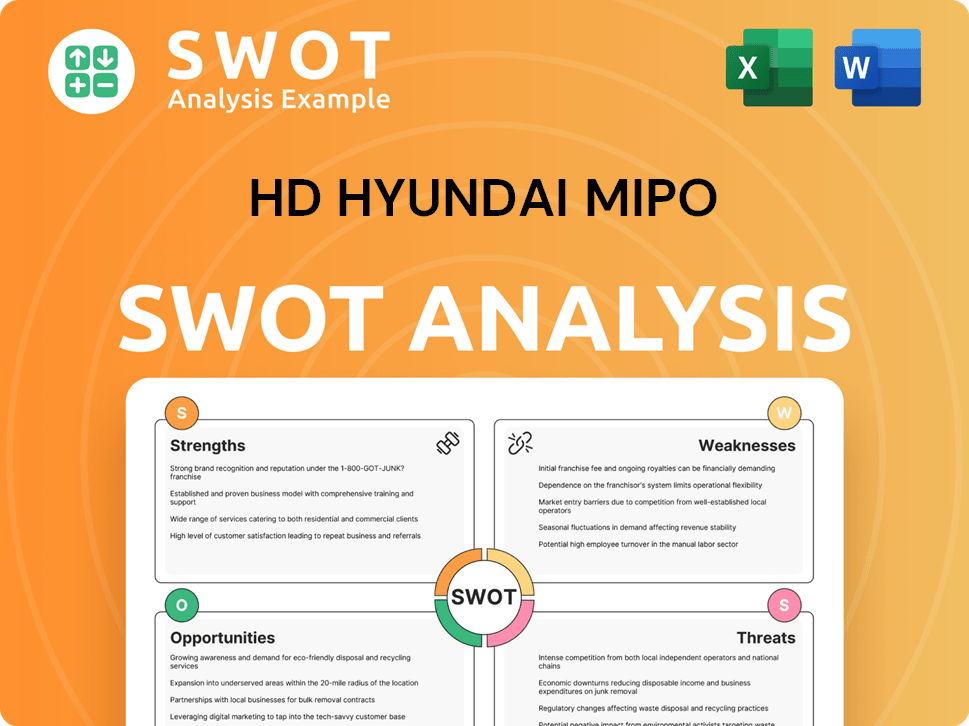
Hd Hyundai Mipo SWOT Analysis
- Complete SWOT Breakdown
- Fully Customizable
- Editable in Excel & Word
- Professional Formatting
- Investor-Ready Format
What Drove the Early Growth of Hd Hyundai Mipo?
The early phase of Hd Hyundai Mipo, then known as Hyundai Mipo Dockyard, focused on establishing itself as a leading ship repair and conversion facility. This involved expanding dry docks and repair berths to handle larger vessels and a wider array of services. Recognizing market shifts and rising demand, the company strategically transitioned into shipbuilding in the late 1980s and early 1990s, marking a significant pivot from repair to full-fledged shipbuilding.
 Early Shipbuilding Transition
The company initially constructed small to mid-sized vessels, gradually expanding its portfolio to include specialized ships like product carriers and chemical tankers. This strategic move allowed HD Hyundai Mipo to carve out a niche in the marine industry. Early clients included international shipping companies seeking high-quality vessels, which helped establish a strong reputation.
Product Portfolio Expansion
HD Hyundai Mipo expanded its product range to include specialized vessels such as product carriers, chemical tankers, and small container ships. This diversification helped the company cater to a broader market and reduce reliance on a single vessel type. The company's focus on specialized, high-value vessels allowed it to differentiate itself in the competitive Korean shipbuilding market.
Facility Upgrades and Expansion
Continuous upgrades and expansions of the Ulsan facilities supported the increased scale of operations. These improvements were crucial for accommodating the growing demand for newbuilds and maintaining the company's competitive edge. The investment in infrastructure reflected HD Hyundai Mipo's commitment to enhancing its shipbuilding capabilities.
Strategic Market Entry
Entry into new product categories, particularly the specialized tanker market, proved successful, allowing HD Hyundai Mipo to establish a niche. The market reception was positive, driven by the company's reputation for quality and timely delivery, inherited from its repair business. This strategic shift from repair to newbuild construction was pivotal, leading to sustained growth and a stronger market presence.
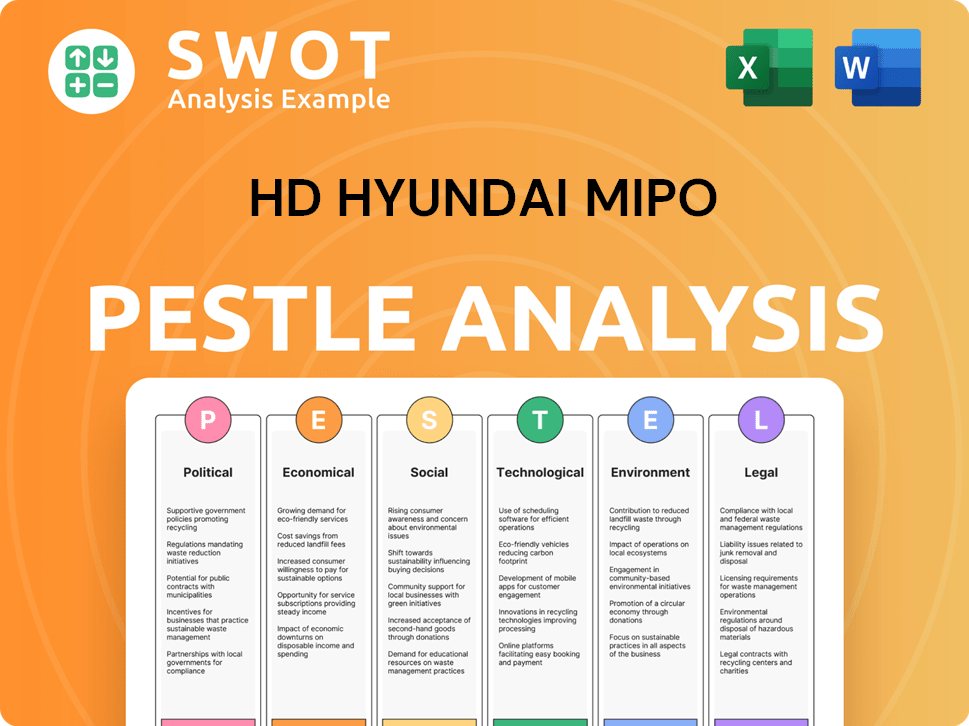
Hd Hyundai Mipo PESTLE Analysis
- Covers All 6 PESTLE Categories
- No Research Needed – Save Hours of Work
- Built by Experts, Trusted by Consultants
- Instant Download, Ready to Use
- 100% Editable, Fully Customizable
What are the key Milestones in Hd Hyundai Mipo history?
The brief history of Hd Hyundai Mipo showcases a journey marked by significant achievements in the marine industry and a commitment to innovation. From its inception, the company has consistently adapted to market dynamics, playing a crucial role in the Korean shipbuilding sector and the broader global shipping market.
| Year | Milestone |
|---|---|
| 1975 | Established as Hyundai Mipo Dockyard, marking the beginning of its journey in the Korean shipbuilding industry. |
| 1980s | Expanded its capabilities and began constructing a diverse range of vessels, establishing itself as a key player in the marine industry. |
| 1990s | Focused on specialized vessels, including chemical tankers and product carriers, enhancing its reputation for quality and innovation. |
| 2000s | Embraced eco-friendly designs and technologies, anticipating environmental regulations and setting new standards in shipbuilding. |
| 2010s-2020s | Continued to innovate in areas such as dual-fuel propulsion and energy-saving devices, solidifying its position in the global shipping market. |
Hd Hyundai Mipo has consistently been at the forefront of innovation within the marine industry. Its early adoption of eco-friendly and high-efficiency vessel designs has been a key differentiator.

Eco-Friendly Designs
Development of vessels with reduced emissions and improved fuel efficiency. This includes designs that comply with the latest environmental regulations, such as those set by the International Maritime Organization (IMO).
Dual-Fuel Propulsion Systems
Pioneering the use of alternative fuels, such as LNG, to reduce environmental impact. This technology is increasingly important as the marine industry moves toward sustainable practices.
Energy-Saving Devices
Implementation of technologies like air lubrication systems and optimized hull designs to minimize fuel consumption. These innovations help shipowners reduce operational costs and environmental footprints.
Advanced Chemical Tankers
Specialized designs for transporting chemicals safely and efficiently. These vessels often incorporate advanced safety features and are built to meet stringent industry standards.
Product Carriers
Building product carriers optimized for transporting refined petroleum products. These vessels are designed for efficiency and reliability, serving a critical role in global trade.
Digitalization and Smart Ship Technology
Integrating digital solutions for enhanced operational efficiency and performance monitoring. This includes the use of data analytics and IoT to optimize vessel operations and maintenance.
Despite its successes, Hd Hyundai Mipo has faced numerous challenges. Market downturns and increased competition from other shipbuilding companies have impacted order volumes and profitability.
Market Volatility
Fluctuations in global demand for shipbuilding, influenced by economic cycles and geopolitical events. This requires strategic agility and diversification of services.
Competitive Pressure
Intense competition from other shipbuilding companies, particularly in China, which can lead to price wars and reduced profit margins. This necessitates a focus on innovation and efficiency.
Economic Downturns
The impact of global economic crises, such as the 2008 financial crisis, which led to a decrease in new orders and overcapacity in the shipbuilding industry. This requires careful financial management and strategic planning.
Supply Chain Disruptions
Disruptions in the supply chain, such as those experienced during the COVID-19 pandemic, which can delay projects and increase costs. This requires robust supply chain management and risk mitigation strategies.
Environmental Regulations
Increasingly stringent environmental regulations, such as those set by the IMO, which require significant investments in new technologies and designs. This drives innovation in eco-friendly shipbuilding.
Project Management Complexity
Managing large-scale shipbuilding projects, which require careful coordination, timely delivery, and adherence to quality standards. This necessitates efficient project management practices and skilled workforce.
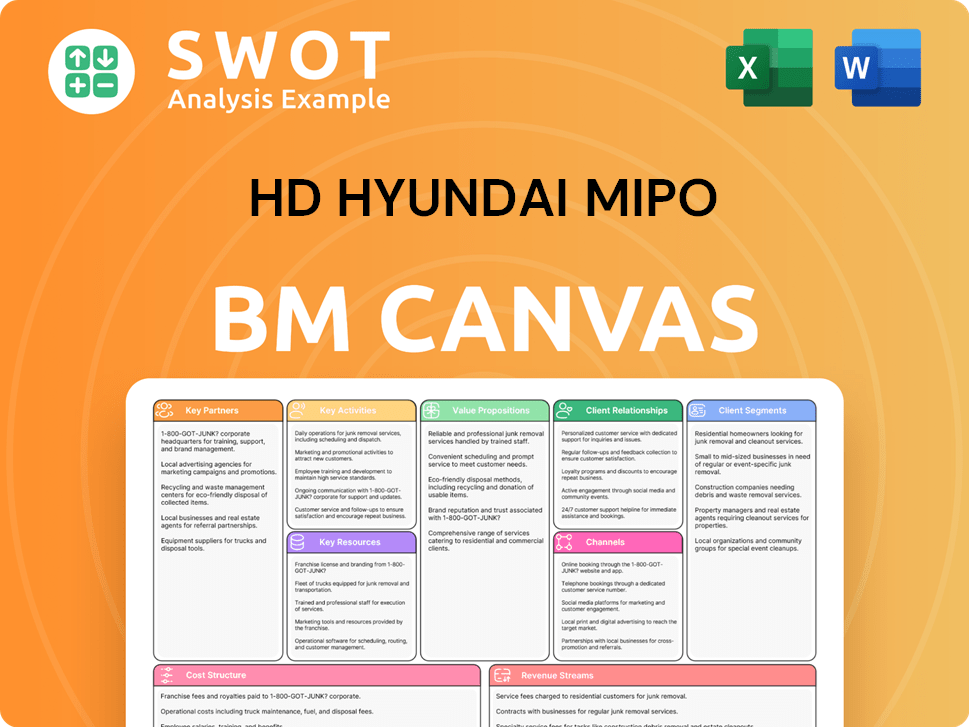
Hd Hyundai Mipo Business Model Canvas
- Complete 9-Block Business Model Canvas
- Effortlessly Communicate Your Business Strategy
- Investor-Ready BMC Format
- 100% Editable and Customizable
- Clear and Structured Layout
What is the Timeline of Key Events for Hd Hyundai Mipo?
The brief history of Hd Hyundai Mipo (HMM) company showcases its evolution in the marine industry and its contributions to Korean shipbuilding. The company has grown significantly since its founding, becoming a key player in the global shipping market. Its strategic location and focus on diverse ship types have cemented its position.
| Year | Key Event |
|---|---|
| 1973 | Hd Hyundai Mipo was established. |
| 1975 | The company delivered its first vessel. |
| 1980s-1990s | Hd Hyundai Mipo expanded its shipbuilding capabilities and global presence, contributing to the growth of the Korean shipbuilding industry. |
| 2000s | Hd Hyundai Mipo focused on innovation and efficiency in shipbuilding, improving its financial performance. |
| 2010s-2020s | The company continued to adapt to market changes, including the rise of sustainable shipbuilding practices and the evolving relationship with HMM. |
Market Trends and Sustainability
The marine industry is increasingly focused on sustainability, driving demand for eco-friendly ships. Hd Hyundai Mipo is likely to invest in technologies that reduce emissions and improve fuel efficiency. The company's future prospects depend on its ability to adapt to these trends, which are reshaping the Korean shipbuilding landscape.
Technological Advancements
Technological advancements, such as digitalization and automation, are transforming shipbuilding. Hd Hyundai Mipo can leverage these technologies to improve efficiency and reduce costs. This includes the adoption of smart shipbuilding practices and the use of advanced materials. The company could also focus on building ships that use alternative fuels.
Strategic Partnerships
Strategic partnerships can enhance Hd Hyundai Mipo's capabilities and market reach. Collaborations with other shipbuilding companies, technology providers, and shipping lines are crucial. These partnerships can facilitate knowledge sharing, access to new markets, and the development of innovative solutions. The relationship with HMM, and other major players in the marine industry, is critical.
Economic Factors and Global Shipping Market
Economic factors, such as global trade and fuel prices, significantly impact the shipbuilding industry. Hd Hyundai Mipo's financial performance is closely tied to these factors, as highlighted in this article about Hd Hyundai Mipo. The company must navigate fluctuations in the global shipping market and adapt to changes in demand for different ship types. The current market conditions and future outlook are important for strategic planning.
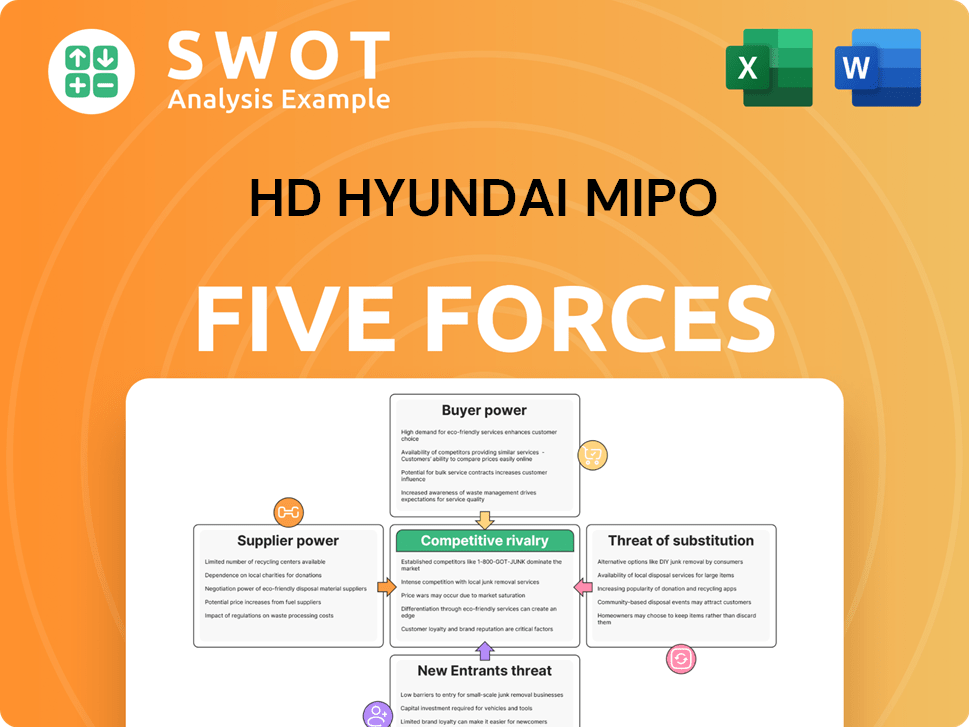
Hd Hyundai Mipo Porter's Five Forces Analysis
- Covers All 5 Competitive Forces in Detail
- Structured for Consultants, Students, and Founders
- 100% Editable in Microsoft Word & Excel
- Instant Digital Download – Use Immediately
- Compatible with Mac & PC – Fully Unlocked
Related Blogs

- What is Competitive Landscape of Hd Hyundai Mipo Company?
- What is Growth Strategy and Future Prospects of Hd Hyundai Mipo Company?
- How Does Hd Hyundai Mipo Company Work?
- What is Sales and Marketing Strategy of Hd Hyundai Mipo Company?
- What is Brief History of Hd Hyundai Mipo Company?
- Who Owns Hd Hyundai Mipo Company?
- What is Customer Demographics and Target Market of Hd Hyundai Mipo Company?
Disclaimer
All information, articles, and product details provided on this website are for general informational and educational purposes only. We do not claim any ownership over, nor do we intend to infringe upon, any trademarks, copyrights, logos, brand names, or other intellectual property mentioned or depicted on this site. Such intellectual property remains the property of its respective owners, and any references here are made solely for identification or informational purposes, without implying any affiliation, endorsement, or partnership.
We make no representations or warranties, express or implied, regarding the accuracy, completeness, or suitability of any content or products presented. Nothing on this website should be construed as legal, tax, investment, financial, medical, or other professional advice. In addition, no part of this site—including articles or product references—constitutes a solicitation, recommendation, endorsement, advertisement, or offer to buy or sell any securities, franchises, or other financial instruments, particularly in jurisdictions where such activity would be unlawful.
All content is of a general nature and may not address the specific circumstances of any individual or entity. It is not a substitute for professional advice or services. Any actions you take based on the information provided here are strictly at your own risk. You accept full responsibility for any decisions or outcomes arising from your use of this website and agree to release us from any liability in connection with your use of, or reliance upon, the content or products found herein.