

Horizon Robotics Bundle

Can Horizon Robotics Conquer the AI Chip Market?
The Horizon Robotics SWOT Analysis reveals a dynamic player in the rapidly expanding AI chip market. Driven by the surging demand for advanced computing, Horizon Robotics has strategically focused on high-performance, low-power AI processors, particularly for the autonomous driving and smart IoT sectors. Founded in 2015, the company's innovative AI chip technology aims to empower intelligent devices.

This exploration of Horizon Robotics' competitive landscape will dissect its position within the automotive industry and the broader AI chip market. We'll analyze its primary rivals and assess how its BPU architecture and strategic partnerships contribute to its competitive advantages, considering the company's financial performance and future outlook. Understanding Horizon Robotics' technology platform and ADAS solutions is crucial for evaluating its potential impact on the self-driving cars sector and beyond, including a detailed look at its competitors like NVIDIA and Mobileye.
Where Does Horizon Robotics’ Stand in the Current Market?
Horizon Robotics has established a strong market position within the AI chip industry, particularly in the autonomous driving and smart IoT segments. The company is a leading provider of AI processors for intelligent vehicles in China, with its Journey series chips being adopted by numerous automotive manufacturers. This demonstrates significant penetration in the automotive sector, a key area for its growth.
The company's primary product lines revolve around its Journey series AI chips, such as the Journey 5, which offers substantial computing power for advanced driver-assistance systems (ADAS) and autonomous driving. Its geographic presence is primarily concentrated in China, a leading market for electric vehicles and autonomous driving technology, though it is also exploring global expansion through partnerships. For more insights, check out the Target Market of Horizon Robotics.
Horizon Robotics serves a diverse range of customer segments, including automotive OEMs, Tier 1 suppliers, and smart IoT device manufacturers. Over time, the company has strategically shifted its positioning to become a critical enabler for the intelligent vehicle industry, moving beyond just chip provision to offering comprehensive solutions that include software and development tools. This diversification of offerings has strengthened its appeal to automotive clients seeking integrated AI solutions.
 Market Share and Penetration
While precise market share figures for 2024-2025 are still emerging, Horizon Robotics is recognized as a leader in providing AI processors for intelligent vehicles in China. The Journey series chips are widely adopted in various vehicle models within the Chinese automotive market. This strong presence highlights its competitive advantage in the region.
Customer Base and Partnerships
Horizon Robotics serves a diverse customer base, including automotive OEMs and Tier 1 suppliers. The company has formed strategic partnerships to expand its reach and offer comprehensive solutions. These partnerships are crucial for maintaining and growing its market position.
Product Portfolio and Technology
The Journey series AI chips are central to Horizon Robotics' product portfolio, offering advanced capabilities for ADAS and autonomous driving. The Journey 5 chip is a key product, providing substantial computing power. Continuous innovation in chip design and software is essential for its competitive edge.
Financial Performance and Outlook
Horizon Robotics has consistently secured significant funding rounds, indicating robust investor confidence and a healthy financial outlook. While specific financial data for 2024-2025 is not publicly available, the company's ability to attract investment suggests strong growth potential. The company's financial health is generally viewed positively compared to industry averages for AI chip startups.

Key Strengths and Competitive Advantages
Horizon Robotics' key strengths include its focus on the Chinese automotive market, its advanced AI chip technology, and its strategic partnerships. These factors contribute to its competitive advantages in the autonomous driving and AI chip market. The company's ability to provide comprehensive solutions, including both hardware and software, further strengthens its position.
- Strong presence in the Chinese automotive market.
- Advanced AI chip technology, particularly the Journey series.
- Strategic partnerships with automotive OEMs and Tier 1 suppliers.
- Comprehensive solutions, including hardware and software.
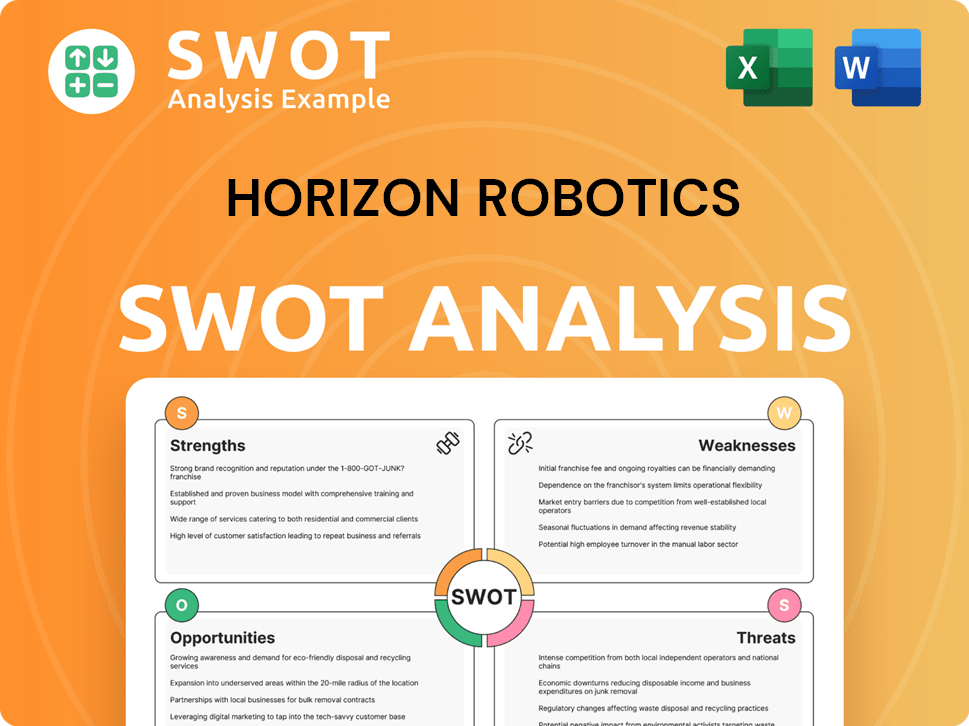
Horizon Robotics SWOT Analysis
- Complete SWOT Breakdown
- Fully Customizable
- Editable in Excel & Word
- Professional Formatting
- Investor-Ready Format
Who Are the Main Competitors Challenging Horizon Robotics?
The competitive landscape for Horizon Robotics is intense, primarily within the AI chip market, specifically for autonomous driving and ADAS solutions. The company faces both direct and indirect competition from established tech giants and agile startups. Understanding the key players and their strategies is crucial for evaluating Horizon Robotics' position in the market.
The automotive industry's rapid evolution towards self-driving cars and advanced driver-assistance systems (ADAS) has intensified the competition. Securing partnerships with major automotive OEMs is a key battleground, with design wins for AI platforms being critical for market share. The competitive dynamics are also shaped by mergers, alliances, and the emergence of new entrants focusing on niche areas or innovative AI architectures.
For more details on how Horizon Robotics generates revenue, you can explore Revenue Streams & Business Model of Horizon Robotics.

NVIDIA
NVIDIA is a dominant force in the AI chip market, particularly in the autonomous driving sector. They offer the DRIVE platform, an end-to-end solution for self-driving cars that leverages powerful GPUs. NVIDIA's technological prowess and extensive ecosystem, including a large developer community, pose a significant challenge.
Qualcomm
Qualcomm, with its Snapdragon Ride Platform, is a strong competitor, especially in the automotive industry. They provide integrated solutions for ADAS and autonomous driving. Qualcomm benefits from long-standing relationships with automotive manufacturers and expertise in mobile processors.
Huawei (Ascend Series)
Huawei, through its Ascend series AI processors, is a major domestic competitor in China. They leverage their resources and ties within the Chinese technology ecosystem. Huawei offers competitive AI solutions for various applications, including automotive.
Intel (Mobileye)
Intel's Mobileye division specializes in vision-based ADAS and autonomous driving technology. Mobileye competes by offering advanced driver-assistance systems. Their focus on vision-based solutions presents a different approach to the market.
AI Accelerator Startups
Various startups are developing specialized AI accelerators, often targeting specific niches or novel AI architectures. These companies challenge Horizon Robotics by offering innovative solutions. They focus on specialized AI accelerators to gain a competitive edge.
Tesla
Tesla's in-house AI chip development and its approach to self-driving technology also present a competitive dynamic. Tesla's integrated hardware and software solutions offer a closed-loop system. Their direct control over both hardware and software provides a unique advantage.
Key Competitive Dynamics
The competitive landscape is defined by several key factors impacting Horizon Robotics and its rivals. These factors shape the strategies and market positions of all players in the AI chip and autonomous driving sectors.
- Technological Prowess: NVIDIA's dominance in raw computing power and its software ecosystem.
- Integration and Partnerships: Qualcomm's strength in integrated solutions and established automotive relationships.
- Market Penetration: Huawei's strong presence in the Chinese market and comprehensive solutions.
- Ecosystem Development: Building a strong developer community and software support.
- Strategic Alliances: Partnerships between chipmakers and automotive software companies.
- Design Wins: Securing contracts to supply chips for new EV models.
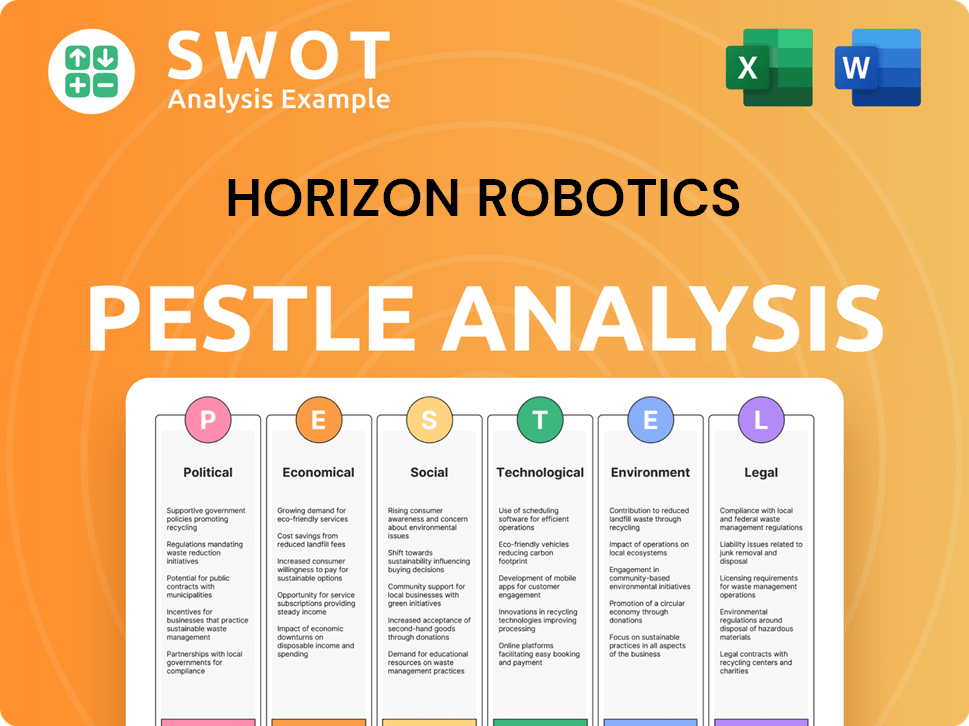
Horizon Robotics PESTLE Analysis
- Covers All 6 PESTLE Categories
- No Research Needed – Save Hours of Work
- Built by Experts, Trusted by Consultants
- Instant Download, Ready to Use
- 100% Editable, Fully Customizable
What Gives Horizon Robotics a Competitive Edge Over Its Rivals?
Horizon Robotics has carved a significant niche in the competitive landscape of the AI chip market, particularly within the autonomous driving and smart IoT sectors. Their strategic moves and technological advancements have positioned them as a key player, especially in the rapidly evolving automotive industry. The company’s focus on developing specialized AI chips for edge computing has set it apart, enabling high performance with low power consumption, a crucial factor for real-time applications.
Key milestones include the successful partnerships with major Chinese automotive manufacturers, which have led to the integration of Horizon Robotics' chips in production vehicles. This has not only solidified their market presence but also provided valuable data for continuous improvement and adaptation. The company's commitment to an open toolchain, including its OpenExplorer platform, further enhances its appeal by enabling developers to easily integrate and optimize their AI models on Horizon Robotics' chips.
The competitive edge of Horizon Robotics is rooted in its proprietary BPU (Brain Processing Unit) architecture, designed specifically for edge AI computing. This architecture provides a significant advantage in terms of efficiency and performance. Their deep understanding of the Chinese automotive market and strategic partnerships have also been crucial in securing design wins and expanding their market share. This focus on a complete solution, from hardware to software development kits, streamlines the development process for its clients and reduces their time to market.
Proprietary BPU Architecture
The company's BPU architecture is a core competitive advantage. It is designed for edge AI computing, offering high performance with low power consumption. This is critical for real-time processing in vehicles and IoT devices.
Strong Automotive Partnerships
Horizon Robotics has established strong partnerships with leading Chinese automotive manufacturers. These partnerships have led to design wins and the integration of their chips in production vehicles. This strong market penetration provides a significant competitive edge.
Open Toolchain and Ecosystem
The company's open toolchain, including the OpenExplorer platform, enables developers to easily integrate and optimize their AI models. This open approach fosters a stronger ecosystem and accelerates adoption among its target customers.
Complete Solution Provider
Horizon Robotics offers a complete solution, from hardware to software development kits. This streamlines the development process for clients and reduces their time to market, providing a significant advantage in the competitive landscape.
Competitive Advantages in Detail
Horizon Robotics' competitive advantages are multifaceted, encompassing technological innovation, strategic partnerships, and a deep understanding of market dynamics. Their focus on providing comprehensive solutions, combined with a strong ecosystem, positions them well in the AI chip market.
- BPU Architecture: The proprietary BPU architecture is specifically designed for edge AI computing, providing high performance with low power consumption, which is crucial for real-time processing in autonomous driving and smart IoT applications.
- Strategic Partnerships: The company has successfully forged partnerships with numerous leading Chinese automotive manufacturers, securing design wins and integrating its Journey series chips into production vehicles. This deep market penetration provides a significant competitive edge.
- Open Toolchain: The open toolchain, including the OpenExplorer platform, enables developers to easily integrate and optimize their AI models on Horizon Robotics' chips, fostering a strong ecosystem and accelerating adoption.
- Complete Solutions: Horizon Robotics offers complete solutions, including hardware and software development kits, which streamlines the development process for clients and reduces their time to market.
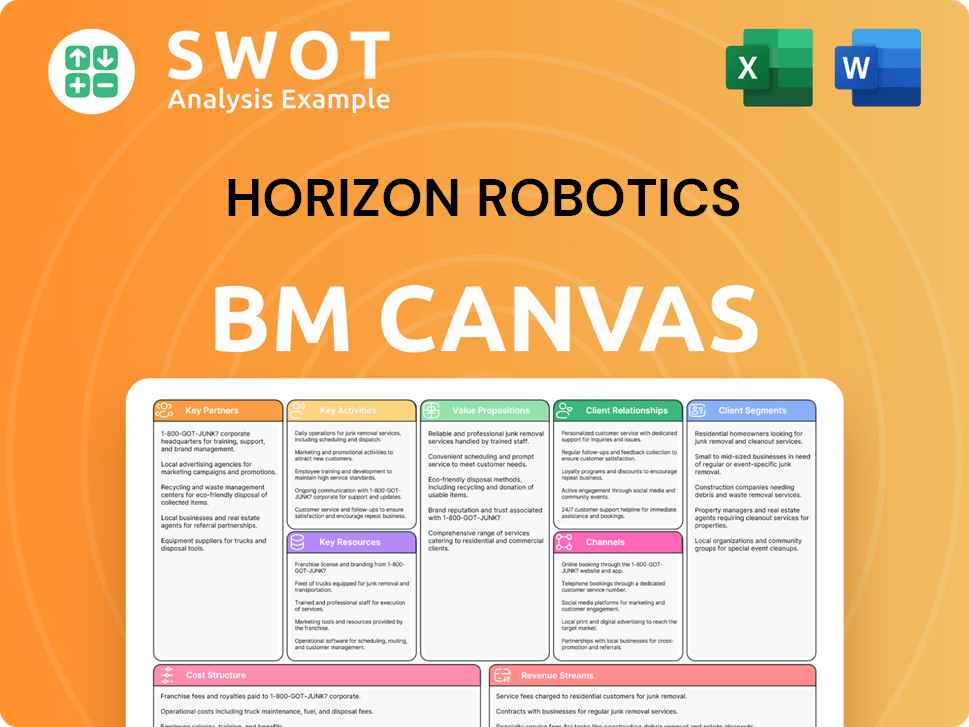
Horizon Robotics Business Model Canvas
- Complete 9-Block Business Model Canvas
- Effortlessly Communicate Your Business Strategy
- Investor-Ready BMC Format
- 100% Editable and Customizable
- Clear and Structured Layout
What Industry Trends Are Reshaping Horizon Robotics’s Competitive Landscape?
The AI chip market, where Horizon Robotics operates, is experiencing significant shifts. Technological advancements in AI algorithms and chip manufacturing, coupled with the growing demand for edge AI computing, are reshaping the industry. Regulatory changes, particularly in autonomous driving, are also influencing market dynamics. This creates a complex landscape of opportunities and challenges for companies like Horizon Robotics.
Horizon Robotics faces intense competition from established global players and the rapid pace of innovation, requiring continuous investment in research and development. Potential risks include declining demand in certain segments and increased regulation. However, significant growth opportunities exist through expansion into new markets, product innovation, and strategic partnerships. The Growth Strategy of Horizon Robotics focuses on leveraging its BPU architecture and open ecosystem to capitalize on the evolving automotive industry and the increasing adoption of AI at the edge.
Industry Trends in the AI Chip Market
The industry is driven by technological advancements in AI algorithms and chip manufacturing. There's a rising demand for edge AI computing, fueled by smart devices and autonomous systems. Regulatory changes, especially in autonomous driving, significantly impact the market.
Challenges for Horizon Robotics
Intense competition from established global players poses a significant challenge. Maintaining a technological edge demands continuous and substantial R&D investment. The risk of declining demand in specific segments and increased regulation are also key concerns.
Opportunities for Horizon Robotics
Expansion into emerging markets, particularly in automotive and IoT sectors, presents opportunities. Further product innovations, such as more powerful AI chips, could solidify market leadership. Strategic partnerships with OEMs and tech providers can accelerate growth.
Strategic Focus and Outlook
Horizon Robotics is likely to continue focusing on its BPU architecture and open ecosystem. The company aims to capitalize on the increasing adoption of AI at the edge. The transformation of the automotive industry towards full autonomy remains a key driver.
Key Competitive Factors
The competitive landscape for Horizon Robotics involves several critical factors. These include technological innovation, market access, and strategic partnerships. Understanding these elements is vital for assessing Horizon Robotics' future outlook within the AI chip market.
- Technological Advancement: Continuous innovation in AI chip design and performance.
- Market Expansion: Penetration into new geographical markets and sectors.
- Strategic Alliances: Partnerships with automotive manufacturers and technology providers.
- Regulatory Compliance: Navigating evolving standards in autonomous driving and data privacy.
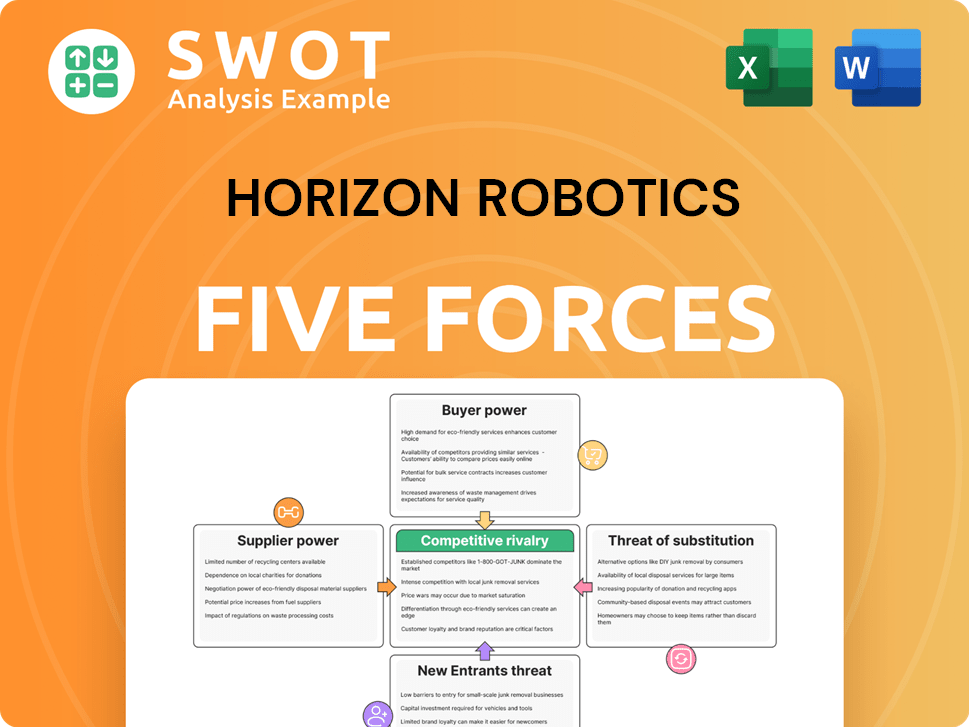
Horizon Robotics Porter's Five Forces Analysis
- Covers All 5 Competitive Forces in Detail
- Structured for Consultants, Students, and Founders
- 100% Editable in Microsoft Word & Excel
- Instant Digital Download – Use Immediately
- Compatible with Mac & PC – Fully Unlocked
Related Blogs

- What are Mission Vision & Core Values of Horizon Robotics Company?
- What is Growth Strategy and Future Prospects of Horizon Robotics Company?
- How Does Horizon Robotics Company Work?
- What is Sales and Marketing Strategy of Horizon Robotics Company?
- What is Brief History of Horizon Robotics Company?
- Who Owns Horizon Robotics Company?
- What is Customer Demographics and Target Market of Horizon Robotics Company?
Disclaimer
All information, articles, and product details provided on this website are for general informational and educational purposes only. We do not claim any ownership over, nor do we intend to infringe upon, any trademarks, copyrights, logos, brand names, or other intellectual property mentioned or depicted on this site. Such intellectual property remains the property of its respective owners, and any references here are made solely for identification or informational purposes, without implying any affiliation, endorsement, or partnership.
We make no representations or warranties, express or implied, regarding the accuracy, completeness, or suitability of any content or products presented. Nothing on this website should be construed as legal, tax, investment, financial, medical, or other professional advice. In addition, no part of this site—including articles or product references—constitutes a solicitation, recommendation, endorsement, advertisement, or offer to buy or sell any securities, franchises, or other financial instruments, particularly in jurisdictions where such activity would be unlawful.
All content is of a general nature and may not address the specific circumstances of any individual or entity. It is not a substitute for professional advice or services. Any actions you take based on the information provided here are strictly at your own risk. You accept full responsibility for any decisions or outcomes arising from your use of this website and agree to release us from any liability in connection with your use of, or reliance upon, the content or products found herein.