

NextTrip Bundle

Can NextTrip Conquer the Travel Tech Titans?
The travel technology sector is a battlefield of innovation, where consumer demands and technological leaps constantly reshape the landscape. NextTrip, Inc., a rising star in this arena, offers Software as a Service (SaaS) solutions, aiming to streamline travel content distribution and booking. Founded in 2017, the company has quickly evolved, making it crucial to understand its position within this dynamic market.

To truly grasp NextTrip's potential, a deep dive into its NextTrip SWOT Analysis is essential. This analysis will dissect the company's competitive standing, pinpointing its main rivals and exploring its unique strengths. Understanding the NextTrip competitive landscape, including NextTrip competitors and the broader travel industry competition, is key to evaluating its future prospects. Furthermore, a thorough NextTrip market analysis will reveal critical insights into its growth strategy and market challenges, including how it stacks up against giants like Expedia and Booking.com.
Where Does NextTrip’ Stand in the Current Market?
NextTrip, Inc. operates as a travel technology company, specializing in Software as a Service (SaaS) solutions. These solutions are primarily focused on travel content distribution and travel booking. This positions the company within the online travel agency (OTA) and broader travel technology sectors.
The company's core business revolves around its platform, which facilitates the booking of hotels, flights, and other travel-related services. This platform is designed to serve other businesses in the travel industry, providing them with the tools needed for robust booking and content management. The Target Market of NextTrip includes travel agencies and corporations.
NextTrip's value proposition lies in its specialized SaaS solutions. These provide a distinct advantage over broad-based OTAs by offering underlying technology for travel bookings. This focus allows NextTrip to cater to the B2B segment, enabling businesses to efficiently manage their travel-related operations.
 Market Focus
NextTrip concentrates on providing SaaS solutions for travel content distribution. This focus supports travel agencies and corporations. This strategy allows NextTrip to maintain a competitive edge in the travel industry.
Service Offering
The company's platform handles hotel and flight bookings, along with other travel services. It offers a comprehensive suite of tools. This enables businesses to streamline their travel operations.
Geographic Presence
NextTrip facilitates global travel bookings through its platform. Its services support a wide range of destinations. The company's reach extends to various regions worldwide.
Customer Base
NextTrip serves travel agencies, corporations, and potentially individual travelers via partners. It caters to diverse needs within the travel industry. The company's customer base is varied.

Competitive Advantages and Challenges
NextTrip's competitive advantages include its specialized SaaS solutions, which offer a distinct value proposition. The company faces challenges from established OTAs and the dynamic nature of the travel industry. The market analysis reveals the importance of adapting to digital transformation trends.
- Competitive Landscape: The NextTrip competitive landscape includes both established OTAs and emerging travel technology providers.
- Market Challenges: The travel industry competition is intense, with constant shifts in consumer behavior and technological advancements.
- Growth Strategy: NextTrip's growth strategy likely involves expanding its SaaS offerings and forming strategic partnerships within the travel ecosystem.
- Financial Performance: While specific figures are unavailable, NextTrip's sustained operation suggests a presence in the market.
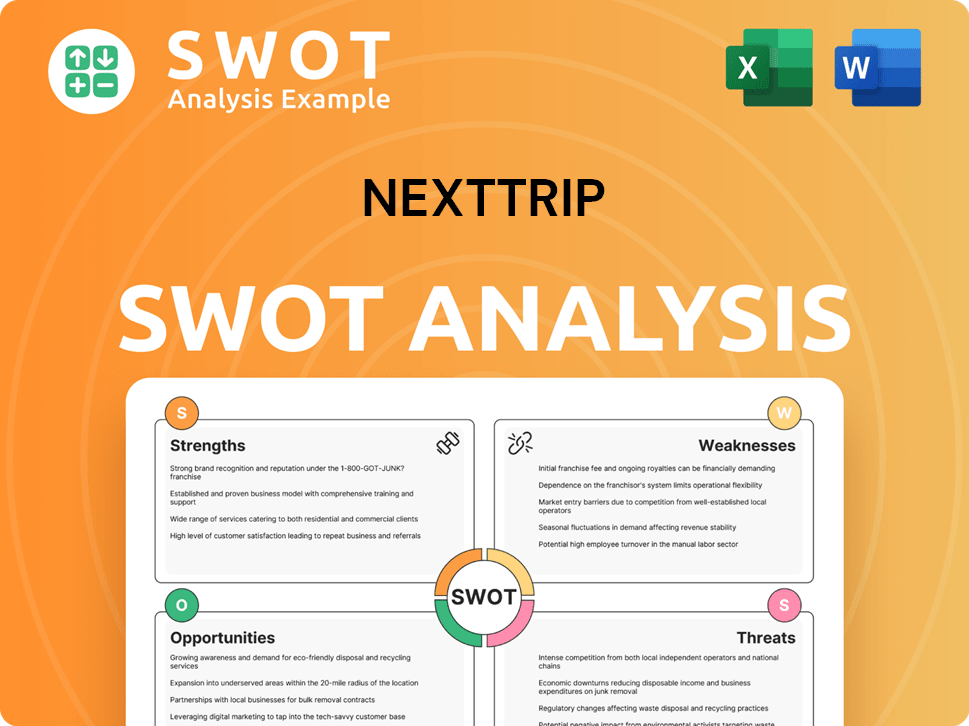
NextTrip SWOT Analysis
- Complete SWOT Breakdown
- Fully Customizable
- Editable in Excel & Word
- Professional Formatting
- Investor-Ready Format
Who Are the Main Competitors Challenging NextTrip?
The NextTrip competitive landscape is characterized by intense competition within the travel technology and online travel agency (OTA) sectors. This environment demands a thorough NextTrip market analysis to understand the challenges and opportunities. The company faces both direct and indirect competitors, each vying for market share in a dynamic industry.
Direct competition comes from established OTAs with significant brand recognition and resources. These competitors offer comprehensive travel booking services, including flights, hotels, car rentals, and vacation packages. Indirect competitors include technology providers and direct booking channels, which further complicate the competitive environment. Understanding these dynamics is crucial for NextTrip to develop effective strategies.
The travel industry is highly competitive, with numerous players vying for consumer spending. This competition affects pricing, marketing, and technological advancements. The ability to adapt to changing consumer preferences and technological innovations is critical for success. For a deeper understanding of the company's financial aspects, consider reading about the Revenue Streams & Business Model of NextTrip.

Direct Competitors
NextTrip competitors include major OTAs like Booking Holdings and Expedia Group. These companies have substantial market share and offer a wide range of travel services. They compete through extensive marketing, vast inventory, and customer loyalty programs.
Booking Holdings
Booking Holdings, which owns Booking.com, Priceline, Agoda, and Kayak, is a significant direct competitor. In 2023, the company reported gross bookings of $150.6 billion. Their scale and brand recognition give them a strong competitive edge.
Expedia Group
Expedia Group, encompassing Expedia, Hotels.com, Vrbo, and Travelocity, is another major player. They compete by offering diverse travel options and leveraging their established brand presence. Their marketing budgets and customer reach are substantial.
Indirect Competitors
Indirect competitors include global distribution systems (GDS) like Sabre, Amadeus, and Travelport. These companies provide essential technology and connectivity for travel agencies. Airlines and hotel chains also compete by investing in direct booking channels.
Technology Companies
Technology companies such as Google, with Google Flights and Google Hotels, are significant indirect competitors. They use their search dominance to capture travel planning traffic. Emerging players with AI-driven personalization also pose a threat.
Emerging Players
Emerging players in the travel tech space, especially those focused on AI-driven personalization or niche travel segments, challenge traditional business models. These companies often leverage innovative solutions to disrupt the market. Their agility and specialized offerings pose a threat to established players.
Key Competitive Factors
The travel industry competition is driven by several factors. Market share, brand recognition, and pricing strategies are critical. Technology, customer service, and the ability to offer personalized experiences also play a significant role.
- Market Share: The percentage of total sales a company holds in the market.
- Brand Recognition: The extent to which consumers are familiar with a brand.
- Pricing Strategies: How companies set prices to attract customers.
- Technology: The use of advanced tools to improve services.
- Customer Service: The support and assistance provided to customers.
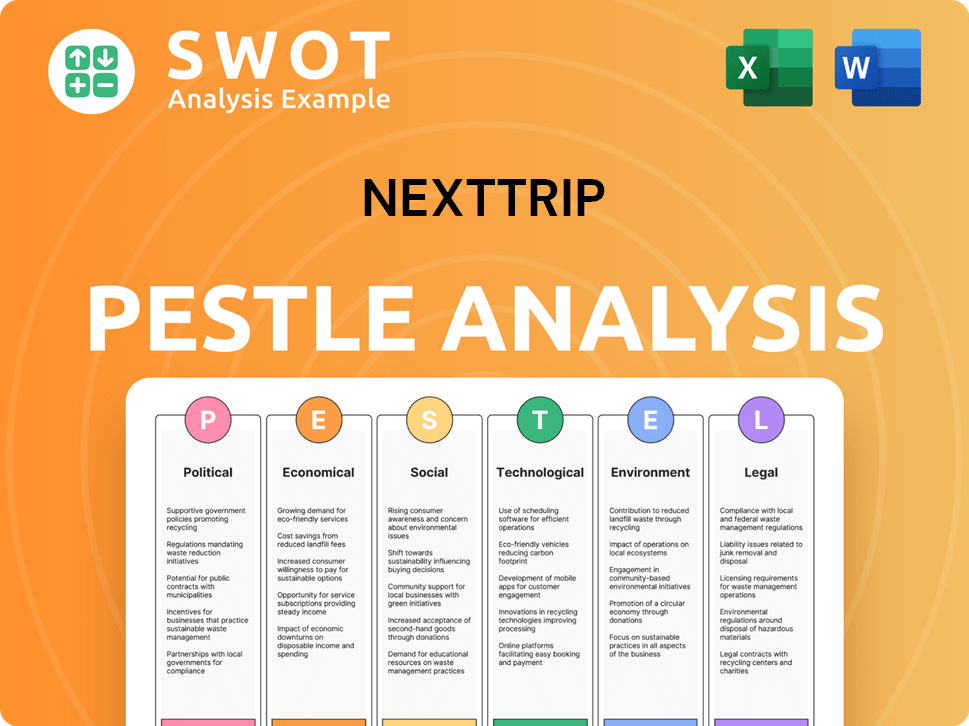
NextTrip PESTLE Analysis
- Covers All 6 PESTLE Categories
- No Research Needed – Save Hours of Work
- Built by Experts, Trusted by Consultants
- Instant Download, Ready to Use
- 100% Editable, Fully Customizable
What Gives NextTrip a Competitive Edge Over Its Rivals?
In the dynamic NextTrip competitive landscape, the company carves out its niche by offering Software as a Service (SaaS) solutions. Its primary focus on travel content distribution and booking technology sets it apart. This approach allows it to serve as a crucial technology provider within the travel ecosystem, rather than directly competing with consumer-facing online travel agencies.
A key competitive advantage lies in its proprietary technology platform. This platform provides a robust and scalable infrastructure for booking hotels, flights, and other travel-related services. This specialized focus enables NextTrip to offer comprehensive travel content distribution, streamlining operations for its clients. This efficiency, combined with a broad content offering, helps foster strong customer loyalty.
The company's competitive edge also stems from its ability to adapt to the evolving demands of the travel industry. NextTrip leverages these strengths in its partnerships and client acquisition strategies, positioning itself as a reliable and efficient technology provider. The sustainability of these advantages depends on continuous investment in research and development, adaptability to new technologies, and expansion of its network of travel content providers and distribution partners.
Proprietary Technology Platform
NextTrip's technology platform offers a scalable infrastructure for booking various travel services. This platform is a core differentiator in the NextTrip competitive landscape. The platform's efficiency supports client operations and broad content offerings.
Comprehensive Travel Content Distribution
The company provides a platform for aggregating and distributing diverse travel content. This streamlines operations for clients, acting as a one-stop solution. This comprehensive approach enhances customer loyalty among B2B clients who depend on seamless service.
Adaptability and Innovation
NextTrip continuously adapts its platform to meet the changing demands of the travel industry. Investment in R&D, adapting to new technologies, and expanding its network are critical. This ensures the sustainability of its competitive advantages.
Strategic Partnerships and Client Acquisition
The company leverages its strengths in partnerships and client acquisition strategies. This positions NextTrip as a reliable and efficient technology provider. This approach is key to maintaining its competitive edge in the market.
Key Competitive Advantages
NextTrip's competitive advantages are rooted in its SaaS model and specialized technology. This focus allows it to serve as a key technology provider, rather than a direct competitor to online travel agencies (OTAs). The company's ability to adapt and innovate is crucial for long-term success.
- Proprietary Technology: Offers a robust and scalable infrastructure for travel bookings.
- Comprehensive Content Distribution: Streamlines operations for clients by aggregating diverse travel content.
- Focus on B2B: Targets businesses within the travel ecosystem, fostering strong client relationships.
- Adaptability: Continuously evolves its platform to meet the changing demands of the travel industry.
NextTrip Business Model Canvas
- Complete 9-Block Business Model Canvas
- Effortlessly Communicate Your Business Strategy
- Investor-Ready BMC Format
- 100% Editable and Customizable
- Clear and Structured Layout

What Industry Trends Are Reshaping NextTrip’s Competitive Landscape?
The travel technology industry is experiencing rapid transformation, significantly impacting the NextTrip competitive landscape. Technological advancements, shifting consumer preferences, and regulatory changes are key drivers shaping the industry. Understanding these trends is crucial for NextTrip market analysis and strategic planning.
NextTrip competitors face both challenges and opportunities. The rise of super-apps, new market entrants, and economic fluctuations present potential risks. Conversely, emerging markets, product innovation, and strategic partnerships offer avenues for growth. This dynamic environment requires continuous adaptation and strategic foresight for sustained success.
Industry Trends
AI and machine learning are revolutionizing travel booking. Data privacy regulations, like GDPR and CCPA, are crucial. Consumers seek flexible, sustainable, and personalized travel options. This drives the need for adaptable SaaS solutions.
Future Challenges
Super-apps integrating various services may consolidate the market. New startups leveraging AI could disrupt the landscape. Economic downturns or global events may decrease demand. Increased regulation can impact operational costs.
Opportunities
Emerging markets in Asia and Africa offer growth potential. Product innovations, such as enhanced mobile booking experiences, can differentiate offerings. Strategic partnerships can expand reach and integrate the platform. These are all opportunities for NextTrip future outlook.
Strategic Implications
NextTrip competitive advantages will likely evolve towards AI-driven personalization. Investment in advanced analytics and strategic alliances is vital. Continuous platform adaptation is necessary to meet evolving demands. This ensures resilience and growth.
Key Strategic Considerations
To thrive, NextTrip must focus on several key areas. These include leveraging AI, adapting to regulatory changes, and forming strategic partnerships. Understanding the competitive landscape is essential for long-term success. For more insights, check out the analysis on Owners & Shareholders of NextTrip.
- Prioritize AI-driven personalization to enhance user experience.
- Ensure robust data security and compliance with all regulations.
- Explore and develop strategic partnerships to expand market reach.
- Continuously innovate and adapt the platform to meet evolving travel demands.
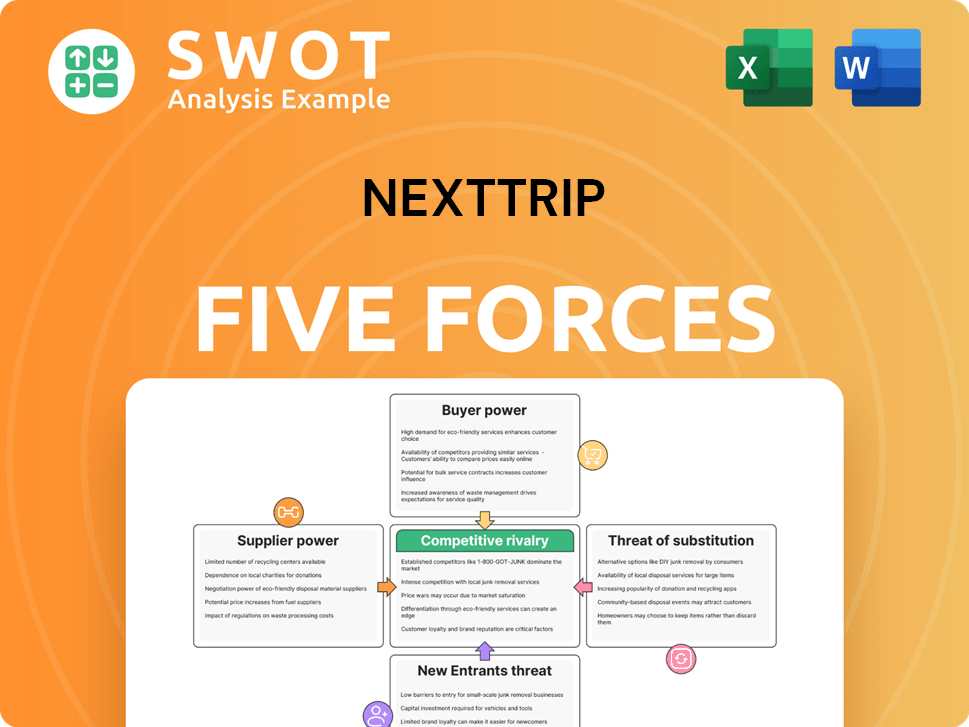
NextTrip Porter's Five Forces Analysis
- Covers All 5 Competitive Forces in Detail
- Structured for Consultants, Students, and Founders
- 100% Editable in Microsoft Word & Excel
- Instant Digital Download – Use Immediately
- Compatible with Mac & PC – Fully Unlocked
Related Blogs

- What are Mission Vision & Core Values of NextTrip Company?
- What is Growth Strategy and Future Prospects of NextTrip Company?
- How Does NextTrip Company Work?
- What is Sales and Marketing Strategy of NextTrip Company?
- What is Brief History of NextTrip Company?
- Who Owns NextTrip Company?
- What is Customer Demographics and Target Market of NextTrip Company?
Disclaimer
All information, articles, and product details provided on this website are for general informational and educational purposes only. We do not claim any ownership over, nor do we intend to infringe upon, any trademarks, copyrights, logos, brand names, or other intellectual property mentioned or depicted on this site. Such intellectual property remains the property of its respective owners, and any references here are made solely for identification or informational purposes, without implying any affiliation, endorsement, or partnership.
We make no representations or warranties, express or implied, regarding the accuracy, completeness, or suitability of any content or products presented. Nothing on this website should be construed as legal, tax, investment, financial, medical, or other professional advice. In addition, no part of this site—including articles or product references—constitutes a solicitation, recommendation, endorsement, advertisement, or offer to buy or sell any securities, franchises, or other financial instruments, particularly in jurisdictions where such activity would be unlawful.
All content is of a general nature and may not address the specific circumstances of any individual or entity. It is not a substitute for professional advice or services. Any actions you take based on the information provided here are strictly at your own risk. You accept full responsibility for any decisions or outcomes arising from your use of this website and agree to release us from any liability in connection with your use of, or reliance upon, the content or products found herein.