

Arab National Bank Bundle

Can Arab National Bank Sustain Its Ascent in the Saudi Banking Sector?
Arab National Bank (ANB), a financial powerhouse in Saudi Arabia, has undergone a remarkable transformation, propelled by its commitment to digital innovation and strategic alignment with Vision 2030. From its inception in 1979, ANB has evolved into a leading financial institution, boasting a significant market share and a forward-thinking approach to banking. This exploration delves into ANB's Arab National Bank SWOT Analysis, growth strategy, and future prospects, providing a comprehensive overview of its journey and ambitions.

ANB's proactive embrace of digital transformation, coupled with its strategic planning, positions it at the forefront of the evolving banking sector in Saudi Arabia. The bank's financial performance, marked by reduced operational costs and enhanced customer experiences, underscores its commitment to sustainable growth. This analysis will explore ANB's expansion plans, strategic goals, and the impact of economic policies, offering valuable insights for investors and stakeholders interested in the future of banking in the region, including investment opportunities in Saudi Arabia.
How Is Arab National Bank Expanding Its Reach?
Arab National Bank's (ANB) expansion initiatives are closely aligned with Saudi Arabia's Vision 2030, focusing on both market penetration and diversification within the Banking Sector in Saudi Arabia. The bank is strategically positioning itself to capitalize on growth sectors highlighted by Vision 2030, particularly in wholesale banking and FinTech support. This strategic alignment is crucial for ANB's Growth Strategy and future prospects.
A significant element of their strategy involves expanding their retail portfolio, with a specific emphasis on mortgages. Furthermore, in corporate banking, the focus is on diversification and project financing, leveraging ANB's position as a leading financial institution in the country. These initiatives are designed to enhance ANB's financial performance and maintain a strong market share.
ANB is actively pursuing digital expansion through innovative ventures, alliances, and ecosystem fusion. They are committed to empowering SMEs, recognizing their importance in economic development, and have launched programs like the 'ANB SME Toolkit'.
 Digital Expansion
ANB is enhancing its digital capabilities through innovative ventures and strategic alliances. This includes a focus on FinTech collaboration to meet market demands and provide tailored solutions. The bank is leveraging technology to personalize customer experiences.
SME Empowerment
ANB is committed to supporting Small and Medium Enterprises (SMEs) through various programs. The 'ANB SME Toolkit' provides financial advice, market analysis, and networking opportunities. This initiative supports the growth prospects of ANB's customer base.
Investment Banking and Advisory Services
ANB is enhancing its investment options for retail and private banking clients. The bank is expanding and diversifying its investment banking and advisory offerings. This strategic move is part of ANB's strategic planning.
FinTech Collaboration
ANB is collaborating with FinTech companies to enhance customer experiences. An example is the partnership with Finshape to deliver customized banking experiences. This collaboration aims to empower customers with personalized financial tools and services.
ANB's expansion plans in 2024 and beyond emphasize extending its market lead and providing tailored solutions through FinTech enablement. These initiatives are designed to boost ANB's profitability and ensure its long-term sustainability. Specific data regarding the impact of these initiatives will be available in future financial statements, but the strategic direction is clear: ANB is investing in digital transformation and customer-centric services to maintain its competitive edge.

Key Expansion Areas
ANB's growth strategy focuses on several key areas to drive expansion and enhance its market position. These initiatives are crucial for ANB's future in the competitive banking landscape.
- Enhancing digital banking services through FinTech partnerships.
- Expanding the retail portfolio, particularly in mortgages.
- Diversifying corporate banking services and project financing.
- Supporting SMEs through financial tools and networking opportunities.
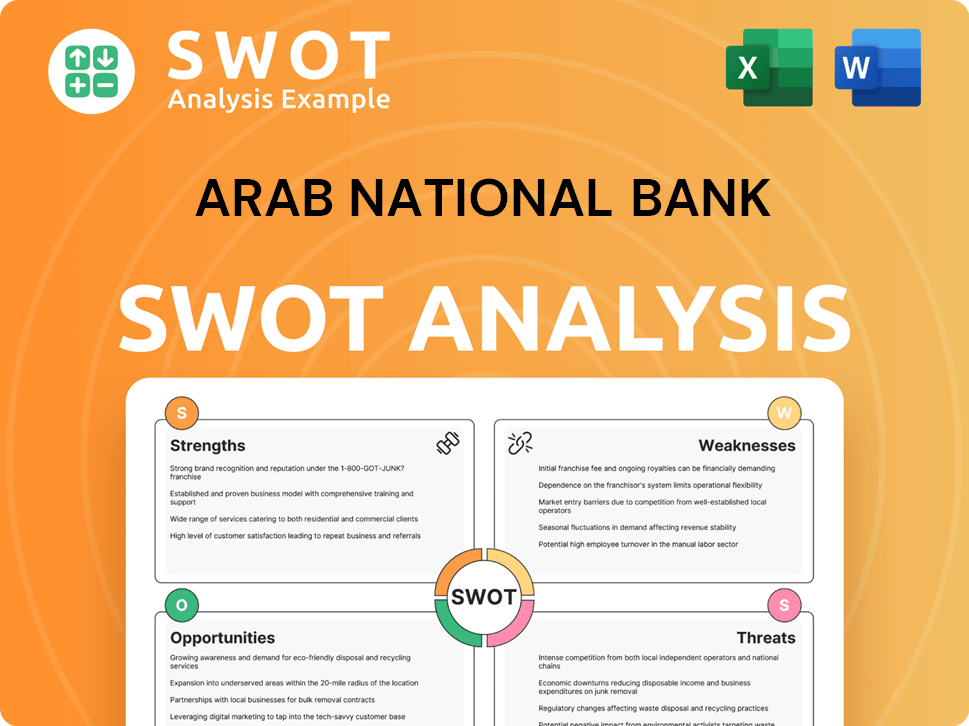
Arab National Bank SWOT Analysis
- Complete SWOT Breakdown
- Fully Customizable
- Editable in Excel & Word
- Professional Formatting
- Investor-Ready Format
How Does Arab National Bank Invest in Innovation?
The innovation and technology strategy of Arab National Bank (ANB) is central to its growth strategy and future prospects. This focus on digital transformation and technology adoption is designed to enhance customer experience and operational efficiency. ANB's strategic initiatives are closely aligned with the evolving needs of the banking sector in Saudi Arabia.
ANB's commitment to technology is evident in its significant investments and strategic partnerships. The bank's approach includes embracing modern architecture, implementing smart tech solutions, and nurturing top IT talent. These efforts support ANB's strategic planning and contribute to its financial performance.
This strategy is crucial for ANB's competitive positioning and its ability to capitalize on investment opportunities in Saudi Arabia. The bank's digital transformation strategy is a key element of its long-term growth strategy.

Digital Transformation Foundation
ANB's digital journey began in early 2021, built on a three-pronged technology strategy. The bank focused on modern architecture, smart tech delivery, and IT talent.
Core Banking System Upgrade
ANB upgraded its core banking system with Infosys Finacle's next-generation architecture. This upgrade provides a flexible and open platform for innovation.
AI and Machine Learning Integration
ANB leverages AI and Machine Learning (ML) to personalize banking experiences. Chatbots provide 24/7 customer service, enhancing customer service.
Fraud Prevention Partnership
In March 2025, ANB partnered with IBM and ejada to implement IBM Safer Payments. This AI-driven solution focuses on real-time fraud prevention.
Metaverse Technology for Financial Education
ANB launched ANB Verse in September 2024, using VR and AR for immersive learning experiences. This initiative supports entrepreneurs and was recognized by the Middle East Technology Excellence Awards 2024.
Alignment with Saudi Vision 2030
ANB's digital innovation supports Saudi Arabia's goal for cashless payments to reach 70% by 2025. This alignment boosts ANB's expansion plans.
Key Outcomes and Strategic Impact
ANB's technology strategy has delivered tangible results and supports its long-term strategic goals. The bank's focus on digital transformation is crucial for its future in the banking sector.
- 80% reduction in branch turnaround times.
- A healthy cost-to-income ratio of 33.24%.
- Enhanced customer service through AI-powered chatbots.
- Proactive fraud prevention measures using AI.
- Innovative financial education through metaverse technology.
- Alignment with Saudi Arabia's digital payment goals. For more details on the bank's approach, see Marketing Strategy of Arab National Bank.
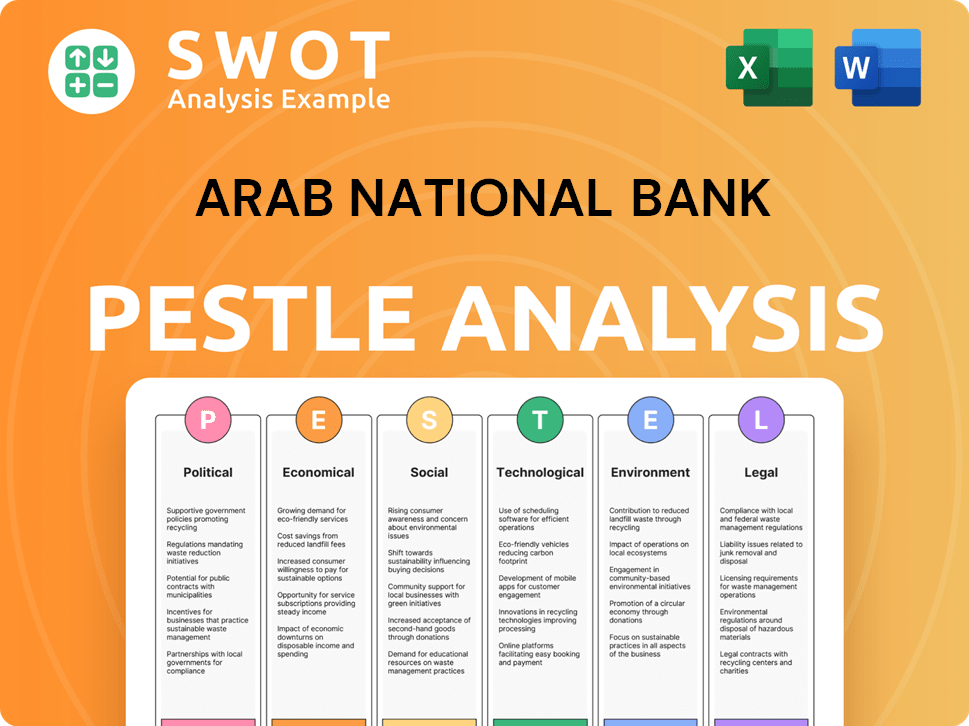
Arab National Bank PESTLE Analysis
- Covers All 6 PESTLE Categories
- No Research Needed – Save Hours of Work
- Built by Experts, Trusted by Consultants
- Instant Download, Ready to Use
- 100% Editable, Fully Customizable
What Is Arab National Bank’s Growth Forecast?
The financial outlook for Arab National Bank (ANB) reflects a strong growth trajectory, supported by robust financial performance and strategic initiatives. ANB's commitment to the Saudi Arabian banking sector is evident in its consistent growth and strategic planning. The bank's focus on enhancing its financial performance and expanding its customer base positions it well for future success.
ANB's strategic planning includes initiatives to boost profitability and expand its market share. The bank's financial statements reveal a clear focus on sustainable banking practices and risk management. These efforts are designed to capitalize on investment opportunities within Saudi Arabia and ensure long-term growth.
The bank's future prospects are further enhanced by its digital transformation strategy, which aims to improve customer service and operational efficiency. This strategic approach, combined with its strong capital position, makes ANB an attractive investment in the evolving banking sector in Saudi Arabia.
Financial Highlights (Q1 2025)
In Q1 2025, ANB reported a net profit of SAR 1.30 billion, marking a 5.50% increase year-over-year. Earnings per share (EPS) rose to SAR 0.65. Total assets reached SAR 264.65 billion, reflecting a 13.64% increase. Client deposits grew to SAR 195.61 billion, up 12.07% compared to the previous year.
Financial Performance (2024)
For the full year 2024, ANB's profits increased by 21.98% year-over-year, reaching SAR 4.96 billion. Total operating income for Q1 2024 was US$615.9 million, a 6% increase. The net income before Zakat and income tax grew by 21.2% compared to the prior year.
Analyst Ratings and Forecasts
Jefferies initiated coverage on ANB stock in June 2025 with a 'Buy' rating and a price target of SAR 26.00. Analysts project earnings growth of 1.3% and revenue growth of 6.6% per annum. The bank's dividend yields are projected to average over 6% annually from 2025 to 2027.
Strategic Advantages
ANB's strong capital position, with a 16.6% CET1 capital adequacy ratio, supports its growth strategy. The bank's focus on fee income generation will help offset net interest income pressures. ANB's strong liquidity profile and mid-market presence are attractive factors for investors. Learn more about the Owners & Shareholders of Arab National Bank.
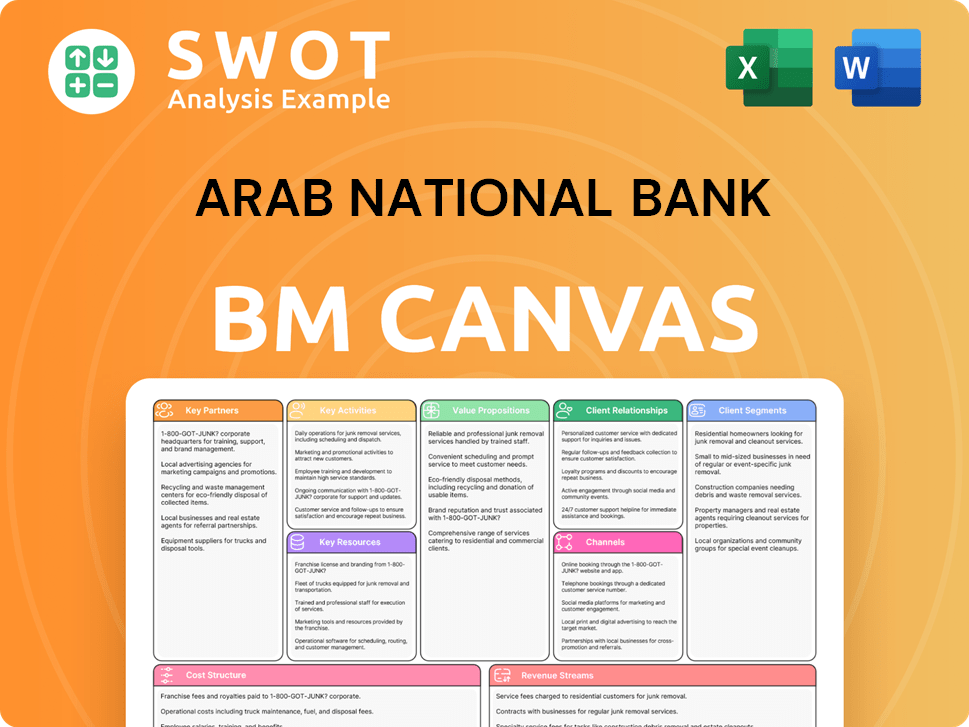
Arab National Bank Business Model Canvas
- Complete 9-Block Business Model Canvas
- Effortlessly Communicate Your Business Strategy
- Investor-Ready BMC Format
- 100% Editable and Customizable
- Clear and Structured Layout
What Risks Could Slow Arab National Bank’s Growth?
The path for Arab National Bank (ANB) towards achieving its growth strategy is not without potential risks and obstacles. The competitive landscape of the Banking Sector in Saudi Arabia, coupled with the rapid pace of technological advancements, presents ongoing challenges. Strategic Planning and ANB Future Prospects are closely tied to how effectively these challenges are managed.
Market competition, particularly from other banks undergoing digital transformations, demands continuous adaptation and innovation. Regulatory changes and the need to maintain compliance, especially with directives from the Saudi Central Bank (SAMA), also add complexity. These factors require ANB to stay agile and strategically focused to maintain and grow its market position.
Technological disruption is a significant risk in the digital banking arena. While ANB is investing heavily in technology, the speed of FinTech innovation could pose challenges. Cybersecurity risks and system vulnerabilities, highlighted by the rising average cost of data breaches in the Middle East, which reached SAR 32.8 million in 2024, are also critical concerns.
Competition and Market Dynamics
The Banking Sector in Saudi Arabia is highly competitive, with several established players and new entrants. ANB's market share analysis reveals that competition is intensifying due to digital transformation initiatives by other banks. Strategic Planning must account for these dynamics to maintain ANB's competitive edge.
Regulatory and Compliance Risks
Regulatory changes from the Saudi Central Bank (SAMA) require constant adaptation and investment. Compliance with new regulations, such as enhanced fraud monitoring, demands substantial resources. The bank must ensure it meets all regulatory requirements to avoid penalties and maintain operational integrity.
Technological and Cybersecurity Threats
Reliance on complex digital infrastructure introduces cybersecurity risks and potential system vulnerabilities. ANB must invest in robust cybersecurity measures. The rising average cost of data breaches in the Middle East, which reached SAR 32.8 million in 2024, underscores the importance of these investments.
Internal Resource Constraints
Attracting and retaining top IT talent is crucial for executing ANB's technology strategy. Competition for skilled professionals could impede the bank's digital transformation efforts. Strategic goals may be impacted if these resource constraints are not effectively managed.
Economic Factors
Declining interest rates can impact net interest income, requiring ANB to focus on fee income generation. A higher private sector leverage could have adverse implications for asset quality. Non-performing loans (NPLs) are anticipated to increase to about 1.7% of systemwide loans by the end of 2025 from 1.3% at September 2024.
Funding and Market Uncertainties
Reliance on external funding to support Vision 2030 related growth exposes ANB to international market uncertainties. External funding strategies need careful management to mitigate risks. ANB must navigate these challenges to ensure sustainable banking practices and achieve its expansion plans in Saudi Arabia.
Strategic Planning and Risk Mitigation
ANB’s strategic planning must incorporate robust risk management strategies. These include diversifying revenue streams to offset the impact of declining interest rates, investing heavily in cybersecurity, and ensuring compliance with all regulatory requirements. The bank should also focus on attracting and retaining top IT talent to support its digital transformation initiatives. For more insights, read about the Brief History of Arab National Bank.
Financial Performance and Outlook
ANB’s financial performance will be influenced by its ability to manage these risks effectively. The anticipated increase in non-performing loans (NPLs) to about 1.7% by the end of 2025, from 1.3% at September 2024, requires careful monitoring and proactive measures. The bank's ability to maintain its financial performance depends on its strategic agility and risk management capabilities.
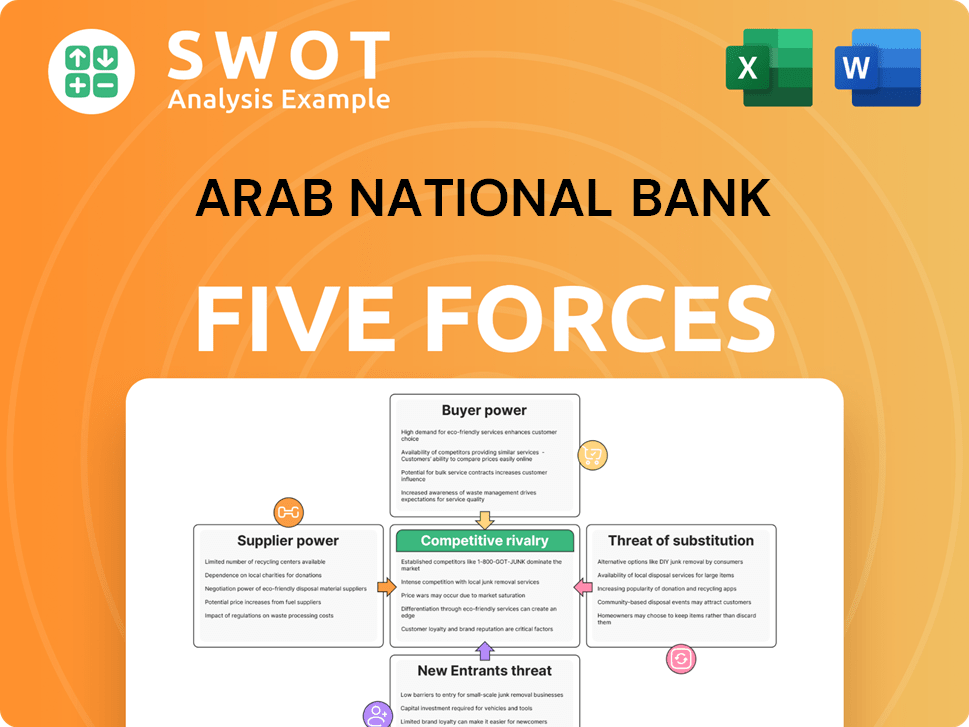
Arab National Bank Porter's Five Forces Analysis
- Covers All 5 Competitive Forces in Detail
- Structured for Consultants, Students, and Founders
- 100% Editable in Microsoft Word & Excel
- Instant Digital Download – Use Immediately
- Compatible with Mac & PC – Fully Unlocked
Related Blogs

- What are Mission Vision & Core Values of Arab National Bank Company?
- What is Competitive Landscape of Arab National Bank Company?
- How Does Arab National Bank Company Work?
- What is Sales and Marketing Strategy of Arab National Bank Company?
- What is Brief History of Arab National Bank Company?
- Who Owns Arab National Bank Company?
- What is Customer Demographics and Target Market of Arab National Bank Company?
Disclaimer
All information, articles, and product details provided on this website are for general informational and educational purposes only. We do not claim any ownership over, nor do we intend to infringe upon, any trademarks, copyrights, logos, brand names, or other intellectual property mentioned or depicted on this site. Such intellectual property remains the property of its respective owners, and any references here are made solely for identification or informational purposes, without implying any affiliation, endorsement, or partnership.
We make no representations or warranties, express or implied, regarding the accuracy, completeness, or suitability of any content or products presented. Nothing on this website should be construed as legal, tax, investment, financial, medical, or other professional advice. In addition, no part of this site—including articles or product references—constitutes a solicitation, recommendation, endorsement, advertisement, or offer to buy or sell any securities, franchises, or other financial instruments, particularly in jurisdictions where such activity would be unlawful.
All content is of a general nature and may not address the specific circumstances of any individual or entity. It is not a substitute for professional advice or services. Any actions you take based on the information provided here are strictly at your own risk. You accept full responsibility for any decisions or outcomes arising from your use of this website and agree to release us from any liability in connection with your use of, or reliance upon, the content or products found herein.