

Capcom Bundle

How did Capcom become a gaming giant?
Journey through the captivating Capcom SWOT Analysis and discover the remarkable transformation of Capcom, a Japanese game company, from its humble beginnings to its current status as a global video game developer. From arcade machines to blockbuster franchises, Capcom's history is a testament to innovation and strategic prowess. Explore the key milestones that shaped this industry titan.

Founded in 1979, Capcom's evolution showcases its resilience and adaptability in the ever-changing gaming landscape. The company's early focus on arcade games paved the way for groundbreaking titles that would define genres and captivate audiences worldwide. Understanding the brief history of Capcom games provides valuable insights into the company's enduring success and its continued impact on the gaming industry.
What is the Capcom Founding Story?
The story of the Capcom company begins in Japan, rooted in the burgeoning arcade scene of the late 1970s and early 1980s. This era marked the genesis of a video game empire, starting with the vision of Kenzo Tsujimoto. His initial venture laid the groundwork for what would become a global leader in the video game industry.
The company's evolution from its inception to its current status showcases strategic foresight and adaptability. From its early days focusing on arcade games to its expansion into consoles and beyond, Capcom has consistently innovated. This journey highlights the company's resilience and its ability to stay relevant in a rapidly changing market.
Capcom's founding on June 11, 1983, marked a pivotal moment, setting the stage for decades of gaming innovation. The name 'Capcom,' derived from 'CAPsule COMputer,' reflected the company's mission to create engaging, securely packaged games. This vision propelled Capcom to the forefront of the video game industry.

The Genesis of Capcom
The foundation of Capcom was laid on May 30, 1979, with the establishment of I.R.M. Corporation by Kenzo Tsujimoto in Matsubara, Osaka, Japan.
- I.R.M. Corporation was created to develop and sell electric applied game machines.
- In 1981, I.R.M. established a subsidiary, Japan Capsule Computer Co., Ltd., later renamed Sanbi Co., Ltd.
- Kenzo Tsujimoto officially founded Capcom Co., Ltd. on June 11, 1983, in Hirano, Osaka, specifically for software sales.
- The name 'Capcom' is an abbreviation of 'CAPsule COMputer,' symbolizing the creation of new gaming experiences.
The initial focus was on manufacturing and distributing arcade games. The company's first product was the medal game 'Little League,' released in July 1983, followed by the arcade video game 'Vulgus' in May 1984. While early funding details aren't explicitly detailed, the evolution from I.R.M. and Sanbi suggests a bootstrapping approach, leveraging successes in arcade ventures. Tsujimoto's background in electronics and his experience with Irem Corporation provided essential industry knowledge.
Capcom's early arcade games, like 'Vulgus,' set the stage for its future success. The company aimed to focus on original arcade games and in-house development. This strategic direction helped establish Capcom as a key player in the gaming world.
The company's history shows its commitment to innovation and its ability to adapt to changing market trends. From its early arcade games to its later console releases, Capcom has consistently pushed boundaries. This adaptability has been crucial to its sustained success.
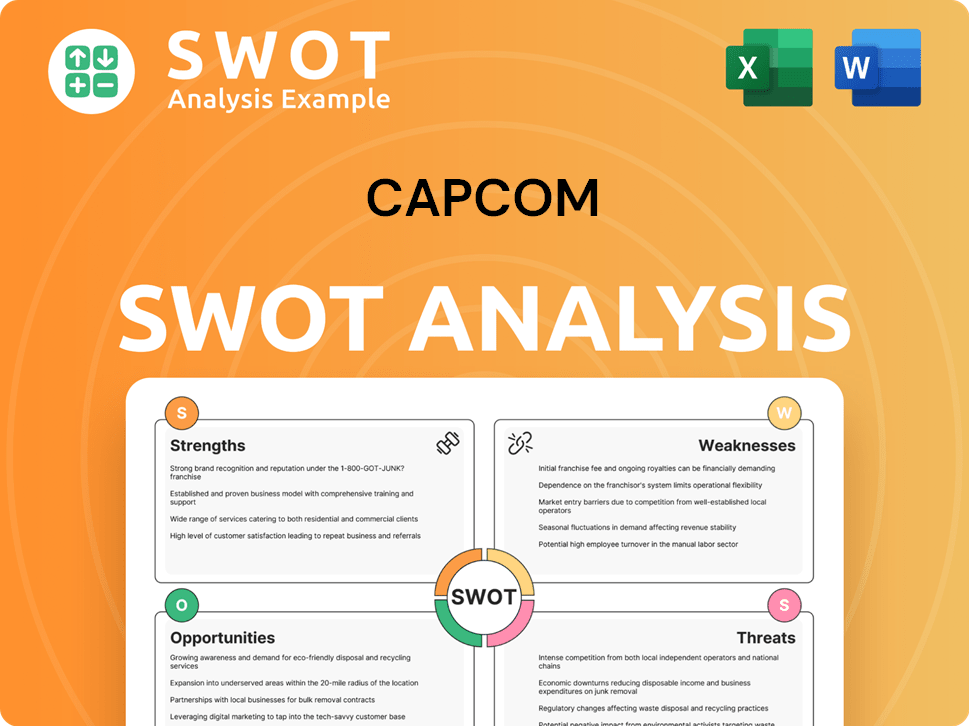
Capcom SWOT Analysis
- Complete SWOT Breakdown
- Fully Customizable
- Editable in Excel & Word
- Professional Formatting
- Investor-Ready Format
What Drove the Early Growth of Capcom?
The early growth of the Capcom company was characterized by a strategic shift from coin-operated machines to home video games. After the release of its first arcade video game 'Vulgus' in May 1984, the company quickly followed with '1942' in December 1984, which helped establish its name on the global video game map. This period saw the company rapidly expanding its presence and influence within the burgeoning video game industry. The company's focus on both arcade and home console markets during this time was a key element of its early success.
 Early Arcade Success
The initial success of the Capcom company was significantly driven by its arcade titles. '1942,' released in December 1984, was a major hit, helping to establish Capcom in the gaming world. Other arcade games like 'Commando' and 'Ghosts 'n Goblins,' released in 1985, further boosted their popularity. These games were instrumental in building the company's reputation and financial foundation.
Expansion into Home Consoles
Recognizing the potential of the home console market, Capcom began to concentrate on this sector in 1985. They released '1942' for the Nintendo Entertainment System (NES). This strategic move was crucial, as the company adapted many of its arcade titles for the NES, including 'Commando' and 'Ghosts 'n Goblins' in 1986. This expansion helped Capcom reach a broader audience.
Corporate Restructuring and Growth
In January 1989, Capcom underwent a significant internal restructuring. Sanbi Co., Ltd. merged with its subsidiaries, Japan Capsule Computer and the original Capcom Co., Ltd., officially becoming the 'new' Capcom Co., Ltd. This consolidation streamlined operations and solidified the company's identity. This restructuring set the stage for future growth and expansion.
Global Strategy and Market Presence
Throughout its early years, Capcom focused on developing original content and expanding its global reach. The establishment of CAPCOM U.S.A., INC., in California in August 1985, for distribution in the USA, was a key step in this strategy. The company's early success was a direct result of its ability to adapt to the changing market and develop innovative games.
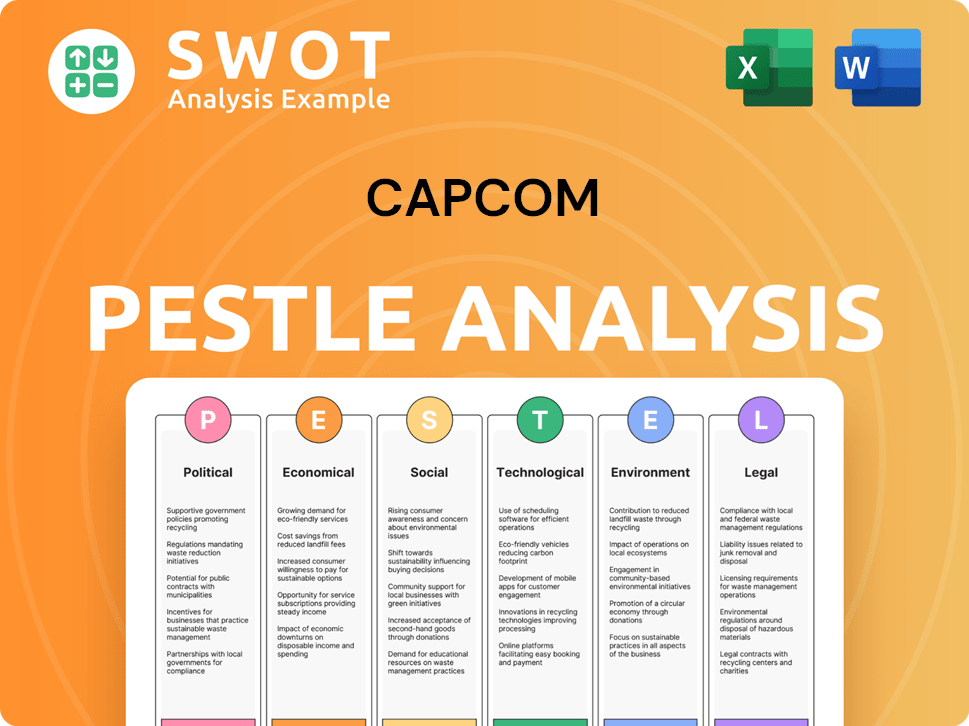
Capcom PESTLE Analysis
- Covers All 6 PESTLE Categories
- No Research Needed – Save Hours of Work
- Built by Experts, Trusted by Consultants
- Instant Download, Ready to Use
- 100% Editable, Fully Customizable
What are the key Milestones in Capcom history?
The Capcom history is marked by significant achievements that have shaped the video game developer landscape. From its early days to its current status as a leading Japanese game company, Capcom has consistently delivered innovative and popular titles, establishing itself as a key player in the industry.
| Year | Milestone |
|---|---|
| 1987 | The release of 'Mega Man' marked the beginning of a cornerstone franchise for Capcom. |
| 1991 | 'Street Fighter II' was released, becoming a global phenomenon and setting a new standard for fighting games. |
| 1996 | 'Resident Evil' debuted, pioneering the survival horror genre and becoming one of Capcom's most successful franchises. |
| 2001 | 'Devil May Cry' launched, establishing a new benchmark for action-adventure games. |
| 2004 | The 'Monster Hunter' series was first launched, becoming a global phenomenon. |
| 2025 | Capcom achieved over 10% operating income growth for its tenth consecutive year in the fiscal year ended March 31, 2025. |
Capcom has consistently pushed boundaries in game development, leading to numerous innovations. Their ability to create new genres and refine existing ones has solidified their position in the history of gaming.

Pioneering Genres
Capcom pioneered genres, such as survival horror with 'Resident Evil.' This innovation has influenced countless games and established new standards in the industry.
Franchise Building
The company excels at building successful franchises like 'Street Fighter,' 'Mega Man,' and 'Monster Hunter.' These franchises have not only generated significant revenue but also maintained a strong fanbase.
Technological Advancements
Capcom has consistently utilized technological advancements to enhance gameplay and graphics. This commitment to innovation has kept them at the forefront of the industry.
Cross-Media Expansion
They have successfully expanded their intellectual properties (IPs) across various media, including films and merchandise. This diversification has increased their revenue streams and brand visibility.
Digital Distribution
Capcom has adapted to the shift towards digital media delivery. This strategic move has allowed them to reach a wider audience and streamline distribution.
Internal Development Focus
The company has prioritized internal R&D to produce high-quality content. This focus on in-house development ensures greater control over quality and innovation.
Throughout its journey, Capcom has faced several challenges. Adapting to market changes and maintaining quality have been crucial for their continued success.
Market Shifts
Capcom has had to adapt to the evolving market, including the rise of digital distribution and mobile gaming. This required strategic adjustments to remain competitive.
Quality Control
Ensuring high-quality content, especially when outsourcing development, has been a challenge. Capcom's focus on internal development aims to address this issue.
Competitive Threats
The video game industry is highly competitive, requiring Capcom to continually innovate and maintain its market position. This necessitates constant adaptation and strategic planning.
Digital Transition
The shift towards digital media delivery presented challenges that Capcom addressed by increasing digitally deliverable content. This strategic pivot was crucial for adapting to consumer preferences.
IP Diversification
Leveraging IPs in events and merchandise has been crucial for diversifying earnings. This strategy has helped Capcom to strengthen the link between visual media and merchandising.
Financial Performance
Maintaining consistent financial success, such as over 10% operating income growth, requires continuous strategic adjustments. This ensures long-term sustainability in the dynamic gaming market.
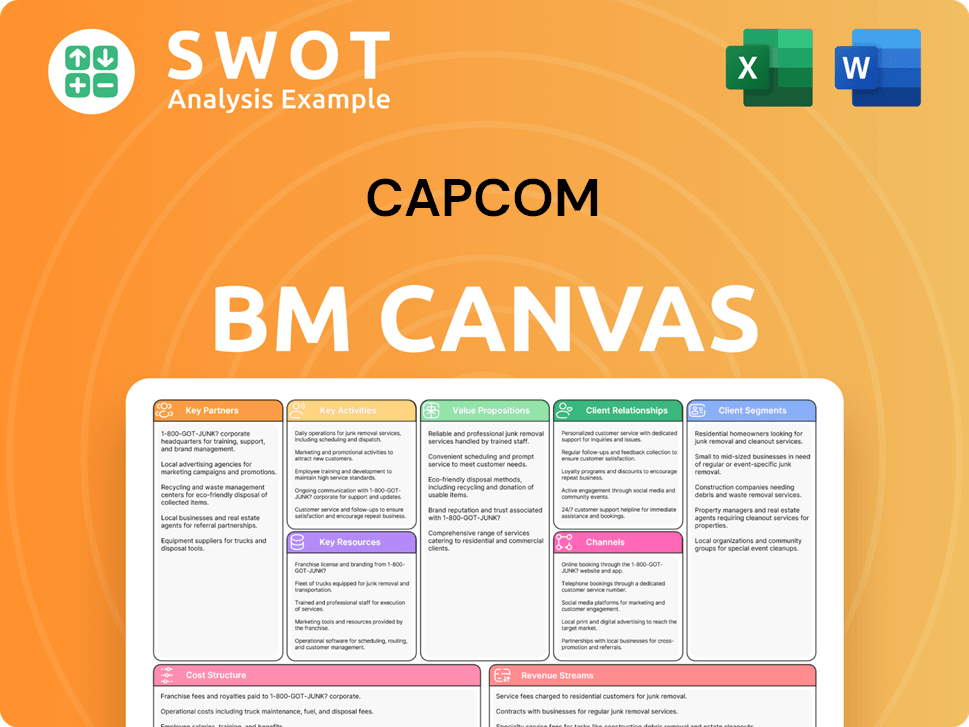
Capcom Business Model Canvas
- Complete 9-Block Business Model Canvas
- Effortlessly Communicate Your Business Strategy
- Investor-Ready BMC Format
- 100% Editable and Customizable
- Clear and Structured Layout
What is the Timeline of Key Events for Capcom?
The Capcom history is a story of innovation and strategic evolution within the video game industry. From its humble beginnings in Osaka to its global presence today, Capcom has consistently delivered iconic titles and franchises. The company's journey, marked by both creative successes and strategic shifts, reflects its adaptability and commitment to the evolving gaming landscape.
| Year | Key Event |
|---|---|
| 1979 | Kenzo Tsujimoto established I.R.M. Corporation, the precursor to Capcom, focusing on electronic game machines. |
| 1983 | Capcom Co., Ltd. was founded for software sales, and the company released its first coin-op game, 'Little League.' |
| 1987 | Capcom launched the 'Street Fighter' and 'Mega Man' franchises, which became cornerstones of the company's success. |
| 1991 | The release of 'Street Fighter II' triggered a major boom in the arcade industry, solidifying Capcom's market position. |
| 1996 | 'Resident Evil' was released, pioneering the survival horror genre and establishing a new genre for the company. |
| 2004 | The 'Monster Hunter' franchise was launched, becoming a major contributor to Capcom's global sales. |
| 2024 | Capcom implemented a 2-for-1 stock split, reflecting its financial health and strategic outlook. |
| 2025 | Capcom reported record-high net sales and operating income for the fiscal year ended March 31, driven by successful titles like 'Monster Hunter Wilds.' |
Expansion of Production Capacity
Capcom plans to increase its production capacity to release 4-5 new titles annually. This expansion is part of a broader strategy to achieve its long-term goal of 100 million sales units for its video games. Aggressive hiring and expedited training programs are key components of this growth plan, alongside the integration of AI to enhance efficiency.
Global Market Focus
The company is accelerating its global expansion, especially in emerging markets. Increased support for PC platforms is also a priority to capitalize on the growing worldwide gaming population. These initiatives are designed to broaden Capcom's reach and revenue streams, ensuring sustained growth in the competitive video game market.
Financial Projections
Capcom anticipates continued growth in its Digital Contents business. For the fiscal year ending March 31, 2026, the company projects net sales of 190,000 million yen and an operating income of 73,000 million yen. These projections underscore the company's confidence in its strategic direction and market position.
Stock Performance Outlook
Analyst predictions for Capcom Co Ltd ADR (CCOEY) stock indicate a bullish course. The expected average price for 2025 is $24.64, with a potential rise to $131.50 by 2050. This positive outlook reflects investor confidence in Capcom's long-term growth prospects and strategic execution.
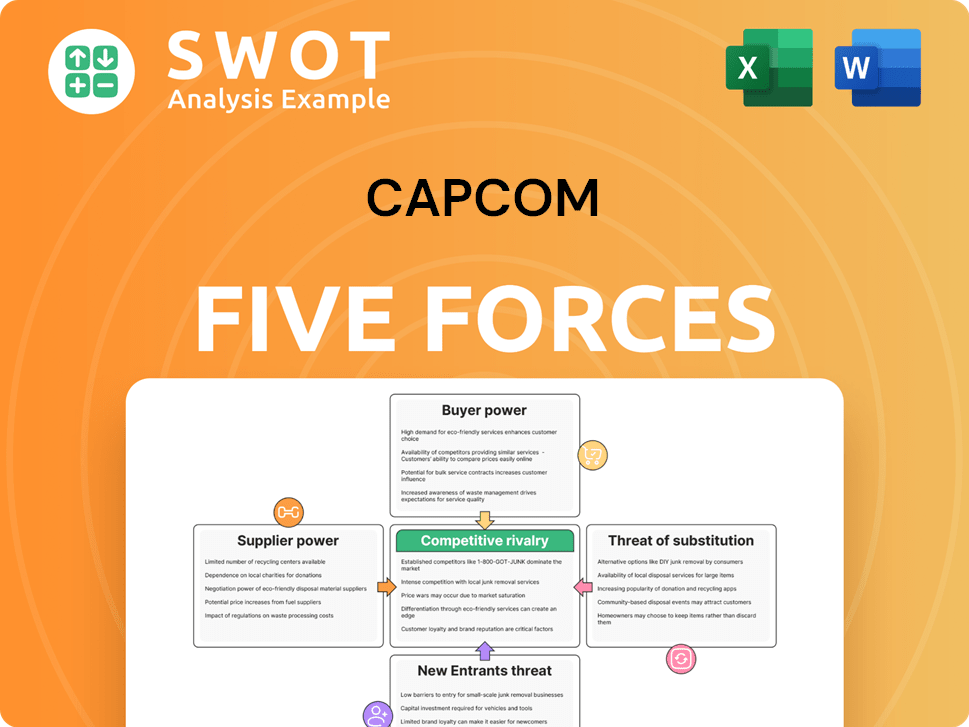
Capcom Porter's Five Forces Analysis
- Covers All 5 Competitive Forces in Detail
- Structured for Consultants, Students, and Founders
- 100% Editable in Microsoft Word & Excel
- Instant Digital Download – Use Immediately
- Compatible with Mac & PC – Fully Unlocked
Related Blogs

- What is Competitive Landscape of Capcom Company?
- What is Growth Strategy and Future Prospects of Capcom Company?
- How Does Capcom Company Work?
- What is Sales and Marketing Strategy of Capcom Company?
- What is Brief History of Capcom Company?
- Who Owns Capcom Company?
- What is Customer Demographics and Target Market of Capcom Company?
Disclaimer
All information, articles, and product details provided on this website are for general informational and educational purposes only. We do not claim any ownership over, nor do we intend to infringe upon, any trademarks, copyrights, logos, brand names, or other intellectual property mentioned or depicted on this site. Such intellectual property remains the property of its respective owners, and any references here are made solely for identification or informational purposes, without implying any affiliation, endorsement, or partnership.
We make no representations or warranties, express or implied, regarding the accuracy, completeness, or suitability of any content or products presented. Nothing on this website should be construed as legal, tax, investment, financial, medical, or other professional advice. In addition, no part of this site—including articles or product references—constitutes a solicitation, recommendation, endorsement, advertisement, or offer to buy or sell any securities, franchises, or other financial instruments, particularly in jurisdictions where such activity would be unlawful.
All content is of a general nature and may not address the specific circumstances of any individual or entity. It is not a substitute for professional advice or services. Any actions you take based on the information provided here are strictly at your own risk. You accept full responsibility for any decisions or outcomes arising from your use of this website and agree to release us from any liability in connection with your use of, or reliance upon, the content or products found herein.