

Light & Wonder Bundle

How Did Light & Wonder Conquer the Gaming World?
Light & Wonder, a titan in the cross-platform gaming arena, boasts a fascinating Light & Wonder SWOT Analysis. From its humble beginnings, this LNW company has reshaped the entertainment landscape. Its evolution showcases a strategic adaptation to technological leaps and market demands, solidifying its position as a key player in the global entertainment sector.

Delving into the Light and Wonder history reveals a compelling narrative of innovation and expansion. Originally known as Scientific Games, the company's journey from lottery ticket provider to a comprehensive gaming and entertainment powerhouse is a testament to its foresight. Exploring the Light & Wonder company background provides valuable insights into the strategic decisions and key milestones that have shaped its trajectory within the dynamic gaming industry.
What is the Light & Wonder Founding Story?
The story of Light & Wonder, a prominent player in the gaming industry, begins with its predecessor, Scientific Games. Founded on May 24, 1973, in Atlanta, Georgia, the company's roots are firmly planted in innovation and a keen understanding of market opportunities.
The founders, John Koza and Daniel Bower, brought together expertise in computer science and marketing. Their vision was to revolutionize the lottery market, addressing inefficiencies and security concerns prevalent at the time. This innovative approach laid the groundwork for the company's future success and expansion.

Founding and Early Days of Scientific Games
Scientific Games was established to capitalize on the growing lottery market, introducing a secure and efficient instant lottery ticket.
- The initial product was a pull-tab instant game, which quickly gained popularity.
- Funding came from personal investments and early contracts with state lotteries.
- Security features were a key differentiator, crucial for the lottery industry's regulatory landscape.
- The founders' combined skills in technology and marketing were instrumental.
The initial business model focused on providing secure instant lottery tickets to state lotteries. Their first product, a pull-tab instant game, gained rapid acceptance. The company secured early funding through a combination of personal investment and contracts with state lotteries. The development of robust security features was a critical differentiator, essential for navigating the regulatory demands of the lottery industry. The founders' combined expertise in technology and marketing proved vital in establishing Scientific Games as a reliable service provider.
Scientific Games' early success was driven by a focus on technological innovation and market understanding. This foundation set the stage for its evolution into Light & Wonder. To understand more about the company's business model, you can read about it in this article: Revenue Streams & Business Model of Light & Wonder.
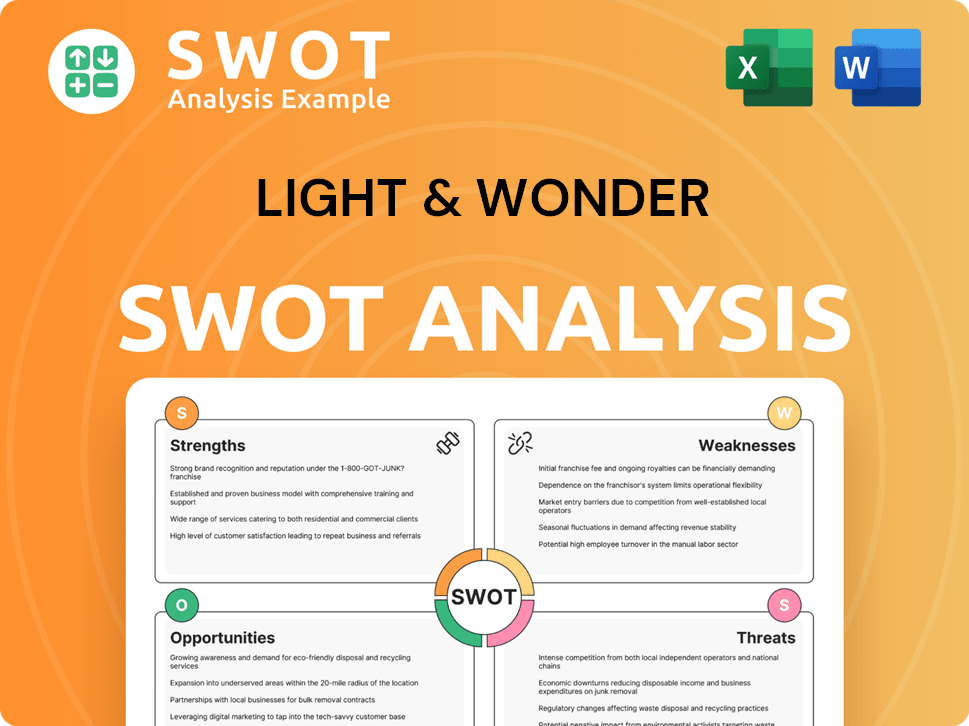
Light & Wonder SWOT Analysis
- Complete SWOT Breakdown
- Fully Customizable
- Editable in Excel & Word
- Professional Formatting
- Investor-Ready Format
What Drove the Early Growth of Light & Wonder?
The early growth of Light & Wonder, formerly known as Scientific Games, was marked by its rapid expansion in the instant lottery market. This period, spanning the late 1970s and early 1980s, saw the company secure numerous contracts with state lotteries across the United States. This expansion was fueled by the increasing popularity of instant tickets and the company's focus on enhancing security features.
 Dominance in the Instant Ticket Market
Scientific Games quickly established itself as a dominant player in the instant ticket market. The company's focus on innovation in instant game formats and security features played a crucial role in maintaining trust within the lottery industry. This early success laid the foundation for future growth and diversification within the Light & Wonder competitors landscape.
International Expansion and Market Entry
A significant milestone in the company timeline was its entry into international markets during the 1980s. This expansion extended its reach beyond the U.S., solidifying its global presence. The company also began exploring adjacent markets, setting the stage for its future diversification into various gaming sectors.
Financial and Strategic Developments
While specific dates for early capital raises are not readily available, the company's sustained growth indicates successful financial backing, likely through a combination of reinvested earnings and strategic partnerships. Leadership transitions during this period focused on professionalizing management and scaling operations to meet the demands of a rapidly expanding market. Market reception to Scientific Games' offerings was overwhelmingly positive, as state lotteries sought secure and engaging products to generate revenue.
Competitive Landscape and Innovation
The competitive landscape, while present, was less intense than in later years, allowing Scientific Games to establish a strong foothold. Strategic shifts during this period focused on continuous innovation in instant ticket technology and a gradual expansion into related gaming sectors, setting the stage for its eventual transformation into Light & Wonder. The company's early focus on security and innovative game formats helped it secure a significant share of the lottery market.
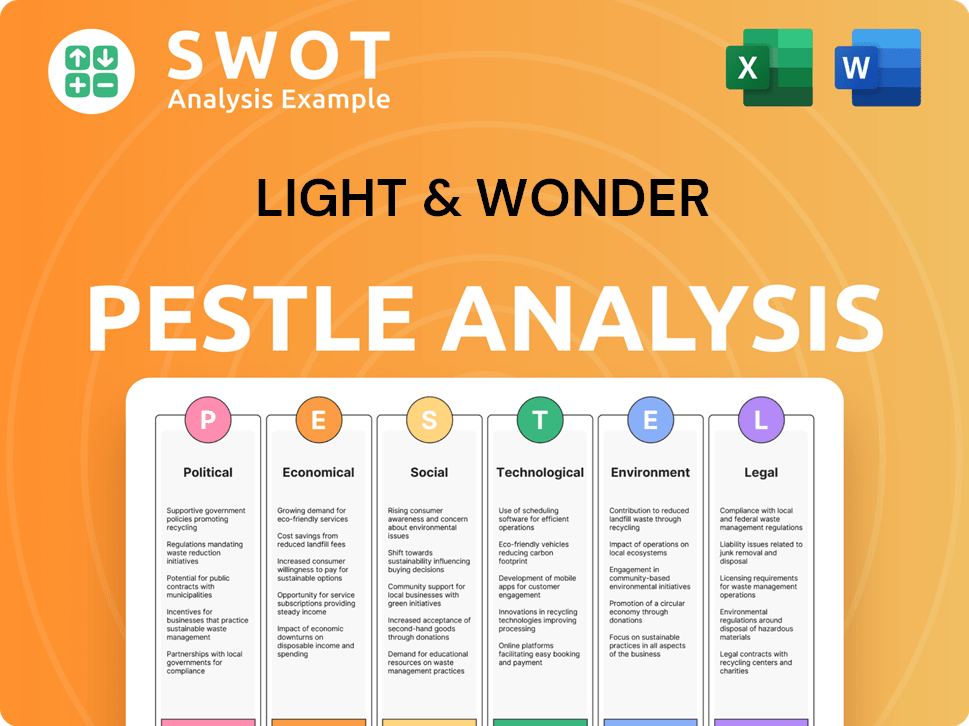
Light & Wonder PESTLE Analysis
- Covers All 6 PESTLE Categories
- No Research Needed – Save Hours of Work
- Built by Experts, Trusted by Consultants
- Instant Download, Ready to Use
- 100% Editable, Fully Customizable
What are the key Milestones in Light & Wonder history?
The journey of Light & Wonder, formerly known as Scientific Games, is marked by significant milestones and strategic pivots within the gaming industry. This company timeline reveals a history of innovation and adaptation, reflecting its evolution in a dynamic market. The company's ability to navigate challenges and embrace new opportunities has shaped its current position in the market.
| Year | Milestone |
|---|---|
| 1970s | Development of the first secure instant lottery ticket, revolutionizing the lottery industry. |
| Ongoing | Continuous advancements in printing technology and security features, securing numerous patents. |
| Ongoing | Major partnerships with state lotteries globally, solidifying its position as a leading provider. |
| 2013 | Acquisition of WMS Industries, expanding its portfolio into casino gaming machines. |
| 2014 | Acquisition of Bally Technologies, further increasing its presence in casino gaming. |
| 2022 | Rebranding from Scientific Games to Light & Wonder, signaling a renewed focus on cross-platform content. |
Light & Wonder has consistently pushed boundaries through innovative solutions. A key innovation was the creation of secure instant lottery tickets, which transformed the lottery sector. The company's continuous investment in technology and strategic acquisitions has further fueled its innovation pipeline.

Secure Instant Lottery Tickets
The development of secure instant lottery tickets in the 1970s was a groundbreaking innovation, revolutionizing the lottery industry by providing a secure and efficient way to conduct lotteries. This innovation set the stage for the company's future advancements in gaming technology.
Advancements in Printing Technology
Continuous advancements in printing technology have been a core focus, enhancing the security and integrity of lottery tickets and other gaming products. These advancements have helped maintain the company's competitive edge.
Strategic Acquisitions
The acquisitions of WMS Industries and Bally Technologies expanded the company's portfolio into casino gaming machines and digital content, broadening its reach and capabilities in the gaming market. These acquisitions were pivotal in shaping the company's growth.
Digital Content and Platforms
The company has invested in digital content and platforms to adapt to the evolving digital landscape, including interactive and online gaming solutions. This strategic move has been crucial for maintaining relevance.
Cross-Platform Content
With the rebrand to Light & Wonder, the company emphasized a focus on cross-platform content, aiming to provide a unified entertainment experience across various channels. This strategy reflects a commitment to adapting to changing consumer preferences.
Integration of Gaming Technologies
Light & Wonder has developed a core strength in its ability to integrate diverse gaming technologies and content, adapting to changing consumer preferences and regulatory environments. This integration has been essential for maintaining a competitive edge.
Light & Wonder has faced challenges, including market downturns and intense competition, particularly in the digital gaming space. Adapting to the digital shift required significant investment and strategic adjustments, leading to acquisitions and a rebrand. The company's ability to navigate these challenges demonstrates its resilience.
Market Downturns
The company has faced market downturns that have impacted its financial performance, necessitating strategic adjustments to maintain profitability and market share. These downturns have tested the company's adaptability.
Competitive Threats
Intense competition, particularly with the rise of digital gaming, has required Light & Wonder to continuously innovate and differentiate its offerings to stay ahead in the market. This competition has driven the company to evolve.
Adapting to the Digital Landscape
Adapting its traditional lottery business to the evolving digital landscape, including the need for interactive and online gaming, required significant investments in new technologies and strategic pivots. This adaptation has been crucial for survival.
Acquisition Integration
Successfully integrating acquired companies, such as Bally Technologies and WMS Industries, has been a challenge, requiring careful management of different cultures and technologies. Effective integration has been key to expanding its portfolio.
Rebranding and Restructuring
Product failures or less successful ventures have often led to strategic restructuring and rebranding efforts, such as the rebrand from Scientific Games to Light & Wonder in 2022. These efforts have aimed to refocus the company's strategy.
Regulatory Changes
Navigating changing regulatory environments in the gaming industry has been an ongoing challenge, requiring the company to adapt its products and services to comply with new laws and guidelines. This adaptation is crucial for maintaining market access.
For a deeper dive into the company's strategic moves, consider exploring the Marketing Strategy of Light & Wonder.
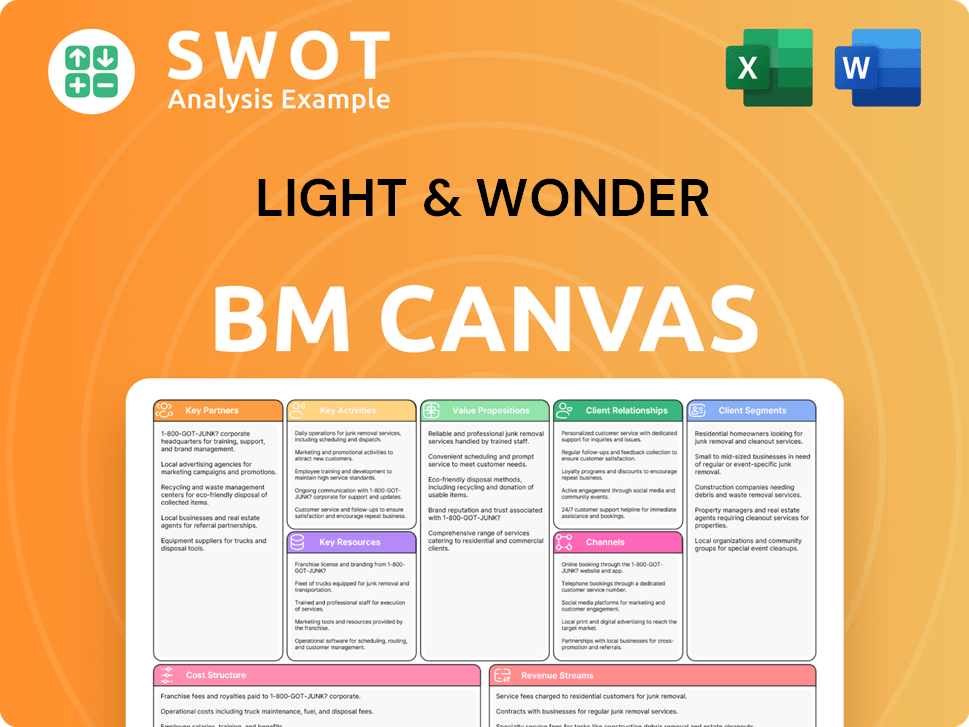
Light & Wonder Business Model Canvas
- Complete 9-Block Business Model Canvas
- Effortlessly Communicate Your Business Strategy
- Investor-Ready BMC Format
- 100% Editable and Customizable
- Clear and Structured Layout
What is the Timeline of Key Events for Light & Wonder?
The Light & Wonder history is marked by strategic shifts and expansions within the gaming industry. Founded as Scientific Games in 1973, the company pioneered instant lottery tickets and expanded globally in the 1980s. The 2000s saw diversification through acquisitions, including lottery system providers. Key acquisitions like WMS Industries in 2013 and Bally Technologies in 2014 significantly boosted its presence in slot machines and casino management systems. In 2017, it sold its lottery business to focus on gaming and iGaming. The company rebranded to Light & Wonder in 2022, reflecting a broader entertainment vision and commitment to cross-platform content. In 2023 and 2024, LNW continues to strengthen its position in the iGaming market, focusing on content aggregation and platform development.
| Year | Key Event |
|---|---|
| 1973 | Scientific Games was founded, introducing instant lottery tickets. |
| 1980s | Expansion into international lottery markets. |
| 2013 | Acquisition of WMS Industries, entering the slot machine and interactive gaming markets. |
| 2014 | Acquisition of Bally Technologies, expanding into gaming machines and casino management systems. |
| 2017 | Sale of its lottery business to focus on gaming and iGaming. |
| 2022 | Rebrands from Scientific Games to Light & Wonder. |
| 2023-2024 | Strengthens its position in the iGaming market. |
iGaming Growth
Light & Wonder is focused on the iGaming sector, which is projected to reach approximately $150 billion by 2030. This growth is driven by increasing internet penetration and mobile gaming adoption. The company aims to capitalize on this expansion by providing engaging content across various platforms.
Strategic Initiatives
Light & Wonder is investing in research and development to enhance its game content and technology. It's also expanding into new regulated jurisdictions and pursuing strategic partnerships. These initiatives align with its cross-platform vision, aiming to deliver innovative player experiences.
Cross-Platform Strategy
The company's strategy focuses on delivering engaging content across land-based, iGaming, and social platforms. This approach allows Light & Wonder to reach a wider audience and capitalize on the diverse preferences of players. This strategy is critical for future growth.
Innovation and Player Experience
Leadership emphasizes a commitment to innovation and delivering unparalleled player experiences. This focus on cutting-edge technology and player satisfaction is central to Light & Wonder’s vision. They aim to revolutionize entertainment through their products.
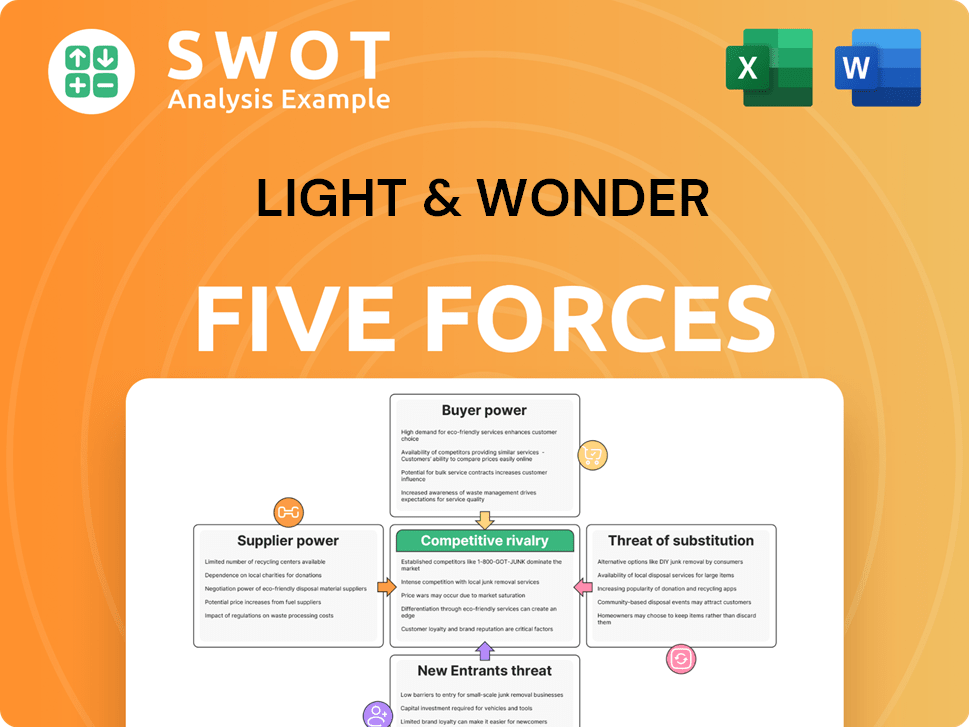
Light & Wonder Porter's Five Forces Analysis
- Covers All 5 Competitive Forces in Detail
- Structured for Consultants, Students, and Founders
- 100% Editable in Microsoft Word & Excel
- Instant Digital Download – Use Immediately
- Compatible with Mac & PC – Fully Unlocked
Related Blogs

- What is Competitive Landscape of Light & Wonder Company?
- What is Growth Strategy and Future Prospects of Light & Wonder Company?
- How Does Light & Wonder Company Work?
- What is Sales and Marketing Strategy of Light & Wonder Company?
- What is Brief History of Light & Wonder Company?
- Who Owns Light & Wonder Company?
- What is Customer Demographics and Target Market of Light & Wonder Company?
Disclaimer
All information, articles, and product details provided on this website are for general informational and educational purposes only. We do not claim any ownership over, nor do we intend to infringe upon, any trademarks, copyrights, logos, brand names, or other intellectual property mentioned or depicted on this site. Such intellectual property remains the property of its respective owners, and any references here are made solely for identification or informational purposes, without implying any affiliation, endorsement, or partnership.
We make no representations or warranties, express or implied, regarding the accuracy, completeness, or suitability of any content or products presented. Nothing on this website should be construed as legal, tax, investment, financial, medical, or other professional advice. In addition, no part of this site—including articles or product references—constitutes a solicitation, recommendation, endorsement, advertisement, or offer to buy or sell any securities, franchises, or other financial instruments, particularly in jurisdictions where such activity would be unlawful.
All content is of a general nature and may not address the specific circumstances of any individual or entity. It is not a substitute for professional advice or services. Any actions you take based on the information provided here are strictly at your own risk. You accept full responsibility for any decisions or outcomes arising from your use of this website and agree to release us from any liability in connection with your use of, or reliance upon, the content or products found herein.