

Bath & Body Works Bundle

Can Bath & Body Works Maintain Its Fragrant Dominance?
In the ever-evolving world of personal care and home fragrance, Bath & Body Works SWOT Analysis reveals a fascinating battleground. From its humble beginnings in Ohio, the company has blossomed into a retail powerhouse, captivating consumers with its enticing scents and diverse product lines. But who are the key players vying for market share, and how does Bath & Body Works stay ahead?

This exploration delves into the Bath & Body Works competition, providing a comprehensive market analysis Bath & Body Works and examining the competitive landscape Bath & Body Works faces. We'll analyze the Bath & Body Works competitors, their strategies, and how Bath & Body Works maintains its market share in the dynamic Bath & Body Works industry. Understanding the Bath & Body Works market position analysis and its competitive advantages is crucial for investors and strategists alike.
Where Does Bath & Body Works’ Stand in the Current Market?
The company holds a leading market position within the home fragrance and personal care industry, especially in North America. It consistently ranks among the top retailers in its segments, with strong performance in categories like hand soaps, sanitizers, and candles. Its core operations revolve around a wide array of body care products, home fragrances, and hand soaps and sanitizers.
Geographically, the company maintains a significant presence across the United States and Canada, with a growing international footprint. Its customer base spans a broad demographic, resonating with consumers seeking affordable luxury and seasonal novelty. Over time, the company has strategically expanded its digital presence, recognizing the shift towards e-commerce, which has further solidified its market reach. This focus helps it navigate the Growth Strategy of Bath & Body Works.
Financially, the company demonstrates robust health. For the fourth quarter of 2023, the company reported net sales of $2.28 billion. Projected net sales for the full year 2024 are between $6.39 billion and $6.49 billion. This financial scale, coupled with consistent profitability, positions it favorably against industry averages. While its strength is undeniable in its core markets, the company continues to explore opportunities in emerging international markets to further strengthen its global standing.
 Market Share Leadership
The company is a segment leader in home fragrance and personal care, particularly in North America. Its market share in key categories like hand soaps, sanitizers, and candles is substantial. This strong market position is a key factor in the company's overall success and competitive advantages.
Product Line Dominance
The primary product lines include a wide array of body care (lotions, shower gels, fragrances), home fragrances (candles, wallflowers), and hand soaps and sanitizers. The diverse product offerings cater to a broad consumer base, ensuring a strong presence in the personal care industry. This comprehensive portfolio supports its market position analysis.
Geographic Footprint
The company has a significant presence across the United States and Canada, with a growing international footprint. Expansion through franchise partnerships and direct-to-consumer online channels is a key strategy. This broad geographic reach enhances its overall market share.
Financial Health
For the fourth quarter of 2023, the company reported net sales of $2.28 billion. Projected net sales for the full year 2024 are between $6.39 billion and $6.49 billion. Consistent profitability and strong financial performance are critical to its competitive landscape.

Key Market Dynamics
The company's market position is shaped by its strong brand recognition and customer loyalty. Its ability to adapt to changing consumer preferences and trends is crucial. The company’s focus on both physical retail and e-commerce channels supports its market share.
- Strong brand recognition and customer loyalty.
- Adaptation to changing consumer preferences and trends.
- Strategic expansion of digital presence.
- Focus on affordable luxury and seasonal novelty.
Bath & Body Works SWOT Analysis
- Complete SWOT Breakdown
- Fully Customizable
- Editable in Excel & Word
- Professional Formatting
- Investor-Ready Format

Who Are the Main Competitors Challenging Bath & Body Works?
The competitive landscape for Bath & Body Works is multifaceted, encompassing a range of direct and indirect rivals. Understanding the Bath & Body Works competition is crucial for assessing its market position and strategic opportunities. This analysis considers both established players and emerging trends shaping the personal care and home fragrance industries.
The Bath & Body Works industry is dynamic, with competition driven by product innovation, pricing, and effective marketing. This overview of key competitors provides a comprehensive perspective on the challenges and opportunities facing the company. Market analysis for Bath & Body Works reveals a complex interplay of factors influencing its performance.
Bath & Body Works competitors range from specialty retailers to mass-market brands, each vying for market share. The competitive dynamics are also influenced by mergers and acquisitions, such as larger beauty companies acquiring smaller, innovative brands to expand their portfolios and reach new consumer segments. These 'battles' for market share often revolve around product innovation, pricing strategies, and effective digital engagement.

Direct Competitors
Direct competitors focus on personal care and home fragrance products, similar to Bath & Body Works. These rivals often target the same consumer segments and product categories.
The Body Shop
The Body Shop is known for its ethically sourced, natural ingredient-based products. It targets a similar customer segment, emphasizing sustainability and ethical practices.
LUSH Cosmetics
LUSH Cosmetics emphasizes handmade, fresh, and often unpackaged products. It appeals to consumers interested in natural and environmentally friendly options.
Indirect Competitors
Indirect competitors are larger mass-market retailers and beauty conglomerates. They offer similar product categories but operate on a broader scale.
Procter & Gamble and Unilever
Procter & Gamble (Old Spice, Olay) and Unilever (Dove, Axe) compete on a broader scale, leveraging extensive distribution networks and diverse product portfolios.
Target and Walmart
These retailers offer private-label personal care and home fragrance lines, often at lower price points, attracting budget-conscious consumers.
Bath & Body Works market share is influenced by these competitors, along with emerging players and online-first brands. Direct-to-consumer (DTC) brands leverage social media and personalized marketing to gain traction. For example, brands focusing on specific fragrance profiles or sustainable packaging can carve out significant market share. For further insights, consider reading about the Growth Strategy of Bath & Body Works.
Key Competitive Factors
Several factors influence the competitive landscape, including product innovation, pricing, and marketing strategies. These factors are crucial for understanding Bath & Body Works' competitive advantages.
- Product Innovation: Developing new fragrances, formulations, and product lines to attract and retain customers.
- Pricing Strategies: Offering competitive prices and promotions to maintain market share.
- Digital Engagement: Leveraging social media and online platforms for marketing and sales.
- Distribution Networks: Utilizing retail stores, online channels, and partnerships to reach consumers.
- Brand Loyalty: Building a strong brand reputation and customer loyalty through quality products and experiences.
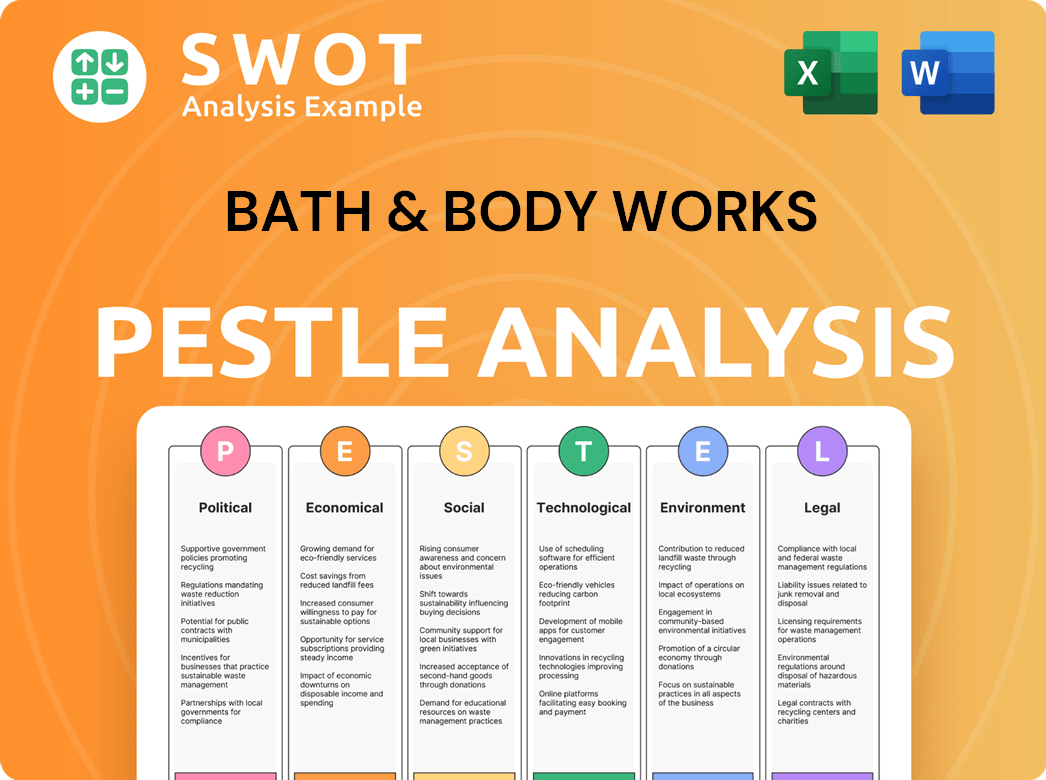
Bath & Body Works PESTLE Analysis
- Covers All 6 PESTLE Categories
- No Research Needed – Save Hours of Work
- Built by Experts, Trusted by Consultants
- Instant Download, Ready to Use
- 100% Editable, Fully Customizable
What Gives Bath & Body Works a Competitive Edge Over Its Rivals?
Understanding the competitive landscape of the personal care industry is crucial for investors and strategists. This analysis focuses on the competitive advantages that position the company within this dynamic market. The company's success is driven by a combination of brand strength, product innovation, and strategic market positioning.
The company has cultivated a strong brand image and customer loyalty. Its ability to innovate and adapt to changing consumer preferences is a key factor in maintaining its market position. This analysis will delve into the specific competitive advantages that the company leverages to succeed in a crowded market, examining its strengths and how they contribute to its overall performance.
The company's competitive advantages are multifaceted, contributing to its strong market position. These advantages include brand equity, product innovation, retail presence, and operational efficiencies. The company's ability to maintain these advantages is critical for sustained success. Analyzing these factors gives insights into the company's ability to compete effectively.
Brand Recognition and Customer Loyalty
The company benefits from strong brand recognition and a loyal customer base. This is achieved through distinctive scents and engaging in-store experiences. The company's loyalty program further reinforces customer retention, providing valuable data. Owners & Shareholders of Bath & Body Works can see how this translates into financial performance.
Product Innovation and Seasonal Offerings
The company excels in product innovation and seasonal introductions. This includes new fragrances and limited-edition collections. This strategy keeps the brand fresh and drives frequent store visits. The company consistently refreshes its product offerings.
Retail Footprint and Omnichannel Strategy
The company's extensive retail footprint and omnichannel strategy offer a significant advantage. Physical stores allow customers to experience products firsthand, while a strong e-commerce platform provides convenience. This integrated approach caters to diverse shopping preferences. The company's approach to sales is both diverse and effective.
Supply Chain and Economies of Scale
Efficient supply chain and economies of scale are also key. The company leverages its size and established supplier relationships. This enables cost efficiencies and effective inventory management. This contributes to competitive pricing and consistent product availability.
Key Competitive Advantages
The company's competitive advantages are significant in the personal care industry. These advantages are sustained through brand strength, product innovation, and a strong retail presence. The company's ability to maintain these advantages is critical for long-term success, allowing it to navigate the competitive landscape effectively.
- Strong brand equity and customer loyalty.
- Continuous product innovation and seasonal offerings.
- Extensive retail footprint and omnichannel strategy.
- Efficient supply chain and economies of scale.
Bath & Body Works Business Model Canvas
- Complete 9-Block Business Model Canvas
- Effortlessly Communicate Your Business Strategy
- Investor-Ready BMC Format
- 100% Editable and Customizable
- Clear and Structured Layout
What Industry Trends Are Reshaping Bath & Body Works’s Competitive Landscape?
The personal care and home fragrance industry is dynamic, with several trends influencing companies like Bath & Body Works. Understanding these trends is crucial for a robust market analysis Bath & Body Works. The industry's competitive landscape is shaped by technological advancements, shifting consumer preferences, and economic factors.
Navigating these elements requires strategic adaptation to maintain and enhance market position. The Bath & Body Works industry faces both challenges and opportunities, necessitating a proactive approach to product development, marketing, and operational strategies. Companies must be agile to address evolving consumer demands and competitive pressures.
Industry Trends
E-commerce and digital marketing continue to reshape retail, demanding ongoing investment in online platforms. Consumer preferences are evolving toward sustainable and ethically sourced products. Regulatory changes and potential economic fluctuations also play a significant role.
Future Challenges
Increased competition from specialized and mass-market retailers is a constant threat. Economic conditions, including inflation, can impact consumer spending. Adapting to changing consumer preferences and regulatory requirements presents ongoing challenges for companies.
Opportunities
Expansion into emerging international markets offers significant growth potential. Product innovation, such as new categories and personalized experiences, can drive sales. Strategic partnerships and brand collaborations provide avenues for increased market reach.
Strategic Considerations
Leveraging brand strength and innovating rapidly are crucial for maintaining a competitive edge. Adapting to global economic shifts and consumer behavior is essential. Companies must effectively navigate these elements to ensure resilience in the market.
The Bath & Body Works competition includes both direct and indirect rivals. Direct competitors often include specialty retailers and established brands within the personal care and home fragrance sectors. Indirect competitors may encompass mass-market retailers and online marketplaces that offer similar products. Understanding the competitive landscape is vital for strategic decision-making, as highlighted in this article on the Marketing Strategy of Bath & Body Works.
Key Factors
Bath & Body Works market share and competitive positioning are influenced by several factors. These include the effectiveness of marketing strategies, product innovation, and pricing strategies. The ability to adapt to changing consumer preferences and economic conditions is also critical.
- Market Dynamics: The personal care market is experiencing growth. According to recent reports, the global personal care market size was valued at approximately $510 billion in 2023 and is expected to reach $600 billion by 2025.
- Consumer Behavior: Consumers are increasingly focused on product ingredients and sustainability. There's a growing demand for natural and ethically sourced products.
- Competitive Strategies: Successful companies are focusing on omnichannel retail strategies, including enhanced e-commerce platforms and in-store experiences.
- Financial Performance: Companies must maintain strong financial performance to remain competitive. For example, in 2024, the company reported a revenue of approximately $7.5 billion.
Bath & Body Works Porter's Five Forces Analysis
- Covers All 5 Competitive Forces in Detail
- Structured for Consultants, Students, and Founders
- 100% Editable in Microsoft Word & Excel
- Instant Digital Download – Use Immediately
- Compatible with Mac & PC – Fully Unlocked

Related Blogs

- What are Mission Vision & Core Values of Bath & Body Works Company?
- What is Growth Strategy and Future Prospects of Bath & Body Works Company?
- How Does Bath & Body Works Company Work?
- What is Sales and Marketing Strategy of Bath & Body Works Company?
- What is Brief History of Bath & Body Works Company?
- Who Owns Bath & Body Works Company?
- What is Customer Demographics and Target Market of Bath & Body Works Company?
Disclaimer
All information, articles, and product details provided on this website are for general informational and educational purposes only. We do not claim any ownership over, nor do we intend to infringe upon, any trademarks, copyrights, logos, brand names, or other intellectual property mentioned or depicted on this site. Such intellectual property remains the property of its respective owners, and any references here are made solely for identification or informational purposes, without implying any affiliation, endorsement, or partnership.
We make no representations or warranties, express or implied, regarding the accuracy, completeness, or suitability of any content or products presented. Nothing on this website should be construed as legal, tax, investment, financial, medical, or other professional advice. In addition, no part of this site—including articles or product references—constitutes a solicitation, recommendation, endorsement, advertisement, or offer to buy or sell any securities, franchises, or other financial instruments, particularly in jurisdictions where such activity would be unlawful.
All content is of a general nature and may not address the specific circumstances of any individual or entity. It is not a substitute for professional advice or services. Any actions you take based on the information provided here are strictly at your own risk. You accept full responsibility for any decisions or outcomes arising from your use of this website and agree to release us from any liability in connection with your use of, or reliance upon, the content or products found herein.