

Cenovus Energy Bundle

How Does Cenovus Energy Stack Up in Today's Energy Arena?
Cenovus Energy, a key player in the North American energy sector, has been making strategic moves, including the significant 2023 acquisition of the Toledo refinery. This integrated approach, from oil sands to refined products, positions Cenovus uniquely. But how does Cenovus navigate the complex Cenovus Energy SWOT Analysis in this dynamic landscape?

This exploration of the Cenovus Energy competitive landscape will dissect its position within the oil and gas industry, examining its major competitors and market share. We'll analyze Cenovus Energy's strengths and weaknesses, offering a comprehensive energy sector analysis to understand its strategic advantages and how it stacks up against rivals like Suncor. Understanding Cenovus Energy's market analysis is crucial for anyone looking to understand the Canadian oil sands and the company's future outlook.
Where Does Cenovus Energy’ Stand in the Current Market?
Cenovus Energy holds a significant market position within the North American energy industry, particularly in the Canadian oil sands and heavy oil production. The company's robust operational scale and strategic integration efforts have solidified its standing among the top producers in Canada. A detailed Cenovus Energy market analysis reveals a strong focus on expanding its downstream capabilities, which enhances its competitive edge.
The company's core operations involve the extraction, production, and refining of crude oil, natural gas, and natural gas liquids. Its primary product lines include crude oil, natural gas, and natural gas liquids, with a strong emphasis on oil sands development and production. This strategic focus allows it to serve a diverse customer base, ranging from refiners and industrial users to wholesale and retail fuel distributors. Cenovus has a substantial geographic presence primarily in Western Canada, particularly in Alberta, with key oil sands assets such as Foster Creek, Christina Lake, and Sunrise.
Cenovus Energy's value proposition centers on its integrated business model, which encompasses upstream production and downstream refining. This integration provides greater control over the value chain, reducing reliance on third-party refining and enhancing profitability. Financially, Cenovus demonstrates robust health, reporting adjusted funds flow of $3.0 billion in Q4 2023 and $11.7 billion for the full year 2023. This financial strength supports future investments and market maneuvers, positioning it favorably within the oil and gas industry.
 Market Share and Production Capacity
Cenovus Energy consistently ranks among the top producers in Canada. In Q4 2023, the company reported total production of 808,000 barrels of oil equivalent per day (BOE/d). Oil sands production was at 603,600 barrels per day (bbls/d), and total downstream throughput was 477,000 bbls/d. This substantial production capacity underscores its significant market share in the Canadian oil sands.
Geographic Presence and Asset Portfolio
Cenovus has a strong geographic presence in Western Canada, particularly in Alberta. Key assets include Foster Creek, Christina Lake, and Sunrise. Its downstream operations, including refineries in Canada and the United States, extend its reach into key North American markets. This diversified asset portfolio supports its integrated business model and enhances its competitive positioning.
Financial Performance and Strategic Moves
Cenovus reported adjusted funds flow of $3.0 billion in Q4 2023 and $11.7 billion for the full year 2023. Strategic moves, such as the full ownership of the Toledo refinery in 2023, have enhanced its downstream capabilities. These financial results and strategic initiatives reflect its commitment to growth and value creation, solidifying its position in the energy sector analysis.
Customer Base and Market Reach
Cenovus serves a diverse customer base, including refiners, industrial users, and fuel distributors. Its integrated model allows it to manage the entire value chain, from production to distribution. This broad market reach and diversified customer base support its overall market position and resilience in the face of industry fluctuations.

Key Competitive Advantages
Cenovus Energy's competitive advantages include its integrated business model, strong financial performance, and strategic asset portfolio. Its focus on oil sands production and refining provides a stable revenue stream. These factors contribute to its strong market position and ability to compete effectively within the Cenovus Energy competitive landscape.
- Integrated Operations: Combining upstream production with downstream refining.
- Financial Strength: Robust financial results provide flexibility for investments.
- Strategic Assets: Key oil sands assets and refinery ownership.
- Customer Diversity: Serving a wide range of customers from refiners to distributors.
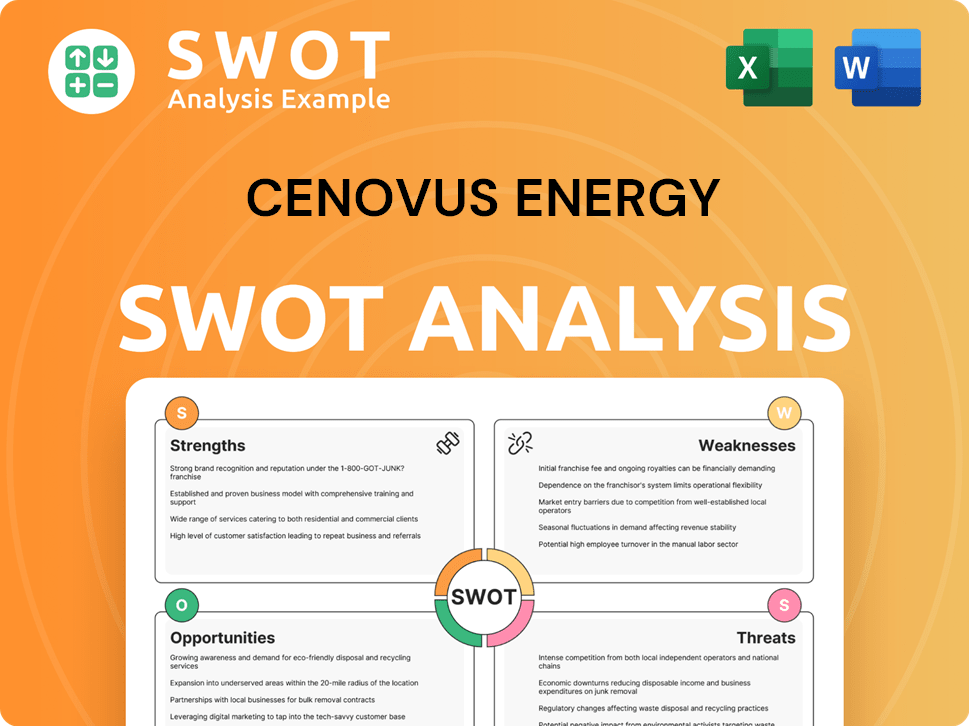
Cenovus Energy SWOT Analysis
- Complete SWOT Breakdown
- Fully Customizable
- Editable in Excel & Word
- Professional Formatting
- Investor-Ready Format
Who Are the Main Competitors Challenging Cenovus Energy?
The Cenovus Energy competitive landscape is shaped by a dynamic interplay of direct and indirect competitors. The company navigates a complex market, contending with established players and emerging trends within the oil and gas industry. Understanding these competitive forces is crucial for assessing Cenovus Energy's market analysis and future prospects.
Cenovus Energy competitors span both the upstream and downstream sectors. The company faces challenges from integrated energy giants, independent producers, and the evolving landscape of renewable energy. Analyzing these competitive dynamics provides insights into Cenovus Energy's financial performance vs competitors and its strategic positioning.
Cenovus Energy's position in the Canadian oil market is influenced by its ability to compete effectively. Factors such as production costs, refining capacity, and market access are critical. For a deeper dive into the company's growth strategies, consider reading about the Growth Strategy of Cenovus Energy.

Key Competitors in the Oil Sands
The most significant direct competitors for Cenovus in the Canadian oil sands include Suncor Energy, Canadian Natural Resources Limited (CNRL), and Imperial Oil. These companies have substantial operations and directly compete for market share and resources.
Suncor Energy
Suncor is a fully integrated energy company with extensive oil sands operations, refining capacity, and a retail network. Suncor directly challenges Cenovus in both production and downstream markets. In 2024, Suncor's production was approximately 776,000 barrels of oil equivalent per day (boe/d).
Canadian Natural Resources Limited (CNRL)
CNRL is the largest independent crude oil and natural gas producer in Canada. Known for its diverse asset base and focus on cost efficiency, CNRL competes aggressively on production costs and volume. CNRL's total production in 2024 reached about 1.3 million boe/d.
Imperial Oil
Imperial Oil is a major producer, refiner, and marketer of petroleum products. Backed by ExxonMobil, it benefits from technological expertise and global market access. Imperial Oil's refining capacity is a key competitive factor. In 2024, Imperial Oil's production averaged around 430,000 boe/d.
Competitive Dynamics
These competitors challenge Cenovus through various means, including market share for refined products, operational efficiency, and technological advancements. High-profile competition often involves talent acquisition, infrastructure access, and market share in key refining hubs.
Indirect Competition
Indirect competition comes from the broader energy transition, with renewable energy companies and electric vehicle manufacturers influencing long-term demand for fossil fuels. While not direct competitors in oil and gas production, their growth impacts the overall market sentiment and investment flows in the energy sector.
Competitive Advantages and Challenges
Cenovus Energy's strengths and weaknesses analysis reveals its position relative to competitors. Understanding these factors is crucial for assessing Cenovus Energy's competitive advantages and challenges. Cenovus Energy's refining capacity compared to peers and its strategic alliances also play a significant role.
- Production Capacity: Cenovus has a substantial production capacity, but it is often compared to larger players like CNRL and Suncor. In 2024, Cenovus's total production was approximately 780,000 boe/d.
- Refining Capacity: Cenovus has significant refining capacity, which helps it to capture more value from its production. However, it competes with Suncor and Imperial Oil, which also have large refining operations.
- Cost Efficiency: Cost management is a key factor. CNRL is often highlighted for its operational efficiency. Cenovus focuses on reducing costs to improve profitability.
- Market Access: Access to pipelines and export markets is crucial. Competition for pipeline capacity and access to global markets impacts profitability.
- ESG Performance: Environmental, Social, and Governance (ESG) factors are increasingly important. Cenovus Energy's ESG performance and competitors are under scrutiny, with investors and stakeholders focusing on sustainability.
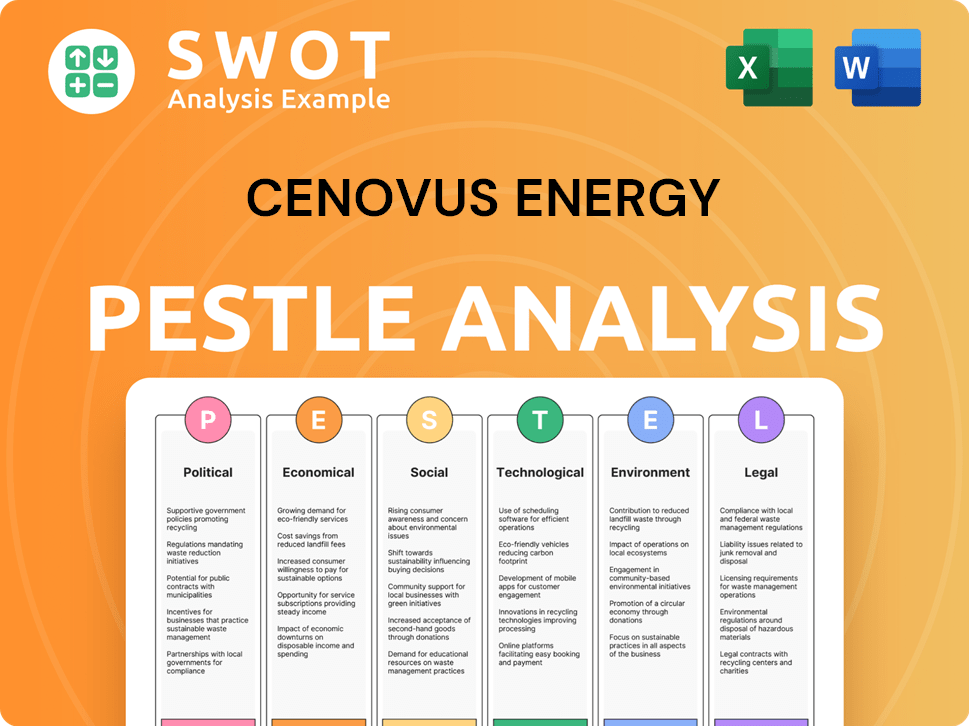
Cenovus Energy PESTLE Analysis
- Covers All 6 PESTLE Categories
- No Research Needed – Save Hours of Work
- Built by Experts, Trusted by Consultants
- Instant Download, Ready to Use
- 100% Editable, Fully Customizable
What Gives Cenovus Energy a Competitive Edge Over Its Rivals?
Understanding the competitive landscape of Cenovus Energy requires a deep dive into its strategic advantages. The company's success is intricately linked to its operational efficiency, strategic asset management, and ability to navigate the volatile energy market. This analysis provides a comprehensive view of Cenovus Energy's strengths and how they position it within the oil and gas industry.
Cenovus Energy's competitive edge is shaped by its integrated operations and strategic focus on cost management. The company's ability to leverage its assets and optimize its production processes is crucial in maintaining its market position. A closer look at its operational strategies reveals how Cenovus Energy tackles challenges and capitalizes on opportunities within the energy sector.
Examining the company's strategic moves and market position provides insights into its long-term growth prospects. Cenovus Energy's approach to innovation and sustainability also plays a significant role in its competitive standing. For a deeper understanding of the company's origins, you can refer to Brief History of Cenovus Energy.
Integrated Oil Sands Assets
Cenovus Energy's ownership of large-scale oil sands assets is a core competitive advantage. These assets, including Foster Creek and Christina Lake, provide a stable production base with long-life reserves. This allows for economies of scale, reducing per-barrel operating costs.
Downstream Integration
The company's downstream integration, particularly its refining assets like the Toledo refinery, provides direct access to markets. This integration helps stabilize earnings by mitigating the impact of crude oil price differentials. It ensures a reliable outlet for heavy oil production.
Strategic Location and Infrastructure
Cenovus benefits from its strategic location in Western Canada. This location provides access to vast oil and gas resources and established transportation infrastructure. The company's focus on operational efficiency and cost management supports competitive operating margins.
Technological Innovation
Cenovus Energy employs proprietary steam-assisted gravity drainage (SAGD) technology. This technology contributes to efficient extraction and lower steam-oil ratios, enhancing cost competitiveness. Continuous innovation and adaptation are crucial in the face of industry shifts.
Key Competitive Advantages
Cenovus Energy's competitive advantages include its integrated oil sands assets, downstream integration, strategic location, and technological innovation. These factors contribute to its operational efficiency and market position. The company's focus on cost management and strategic asset optimization further enhances its competitive standing.
- Production Capacity: Cenovus Energy's total production in Q1 2024 was approximately 800,000 barrels of oil equivalent per day (boe/d).
- Refining Capacity: The company's refining capacity, including its U.S. refineries, is around 740,000 barrels per day.
- Operating Costs: Cenovus has been focused on reducing operating costs, with a target to maintain competitive operating margins.
- Strategic Partnerships: Cenovus has been involved in strategic alliances to enhance its market presence and operational capabilities.
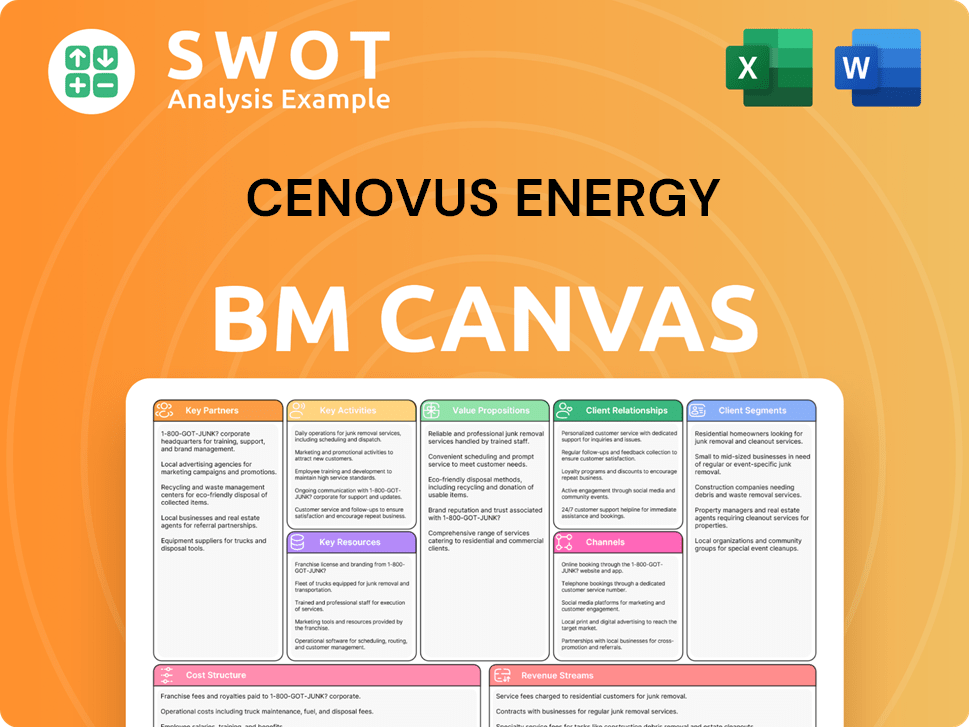
Cenovus Energy Business Model Canvas
- Complete 9-Block Business Model Canvas
- Effortlessly Communicate Your Business Strategy
- Investor-Ready BMC Format
- 100% Editable and Customizable
- Clear and Structured Layout
What Industry Trends Are Reshaping Cenovus Energy’s Competitive Landscape?
The Owners & Shareholders of Cenovus Energy face a complex competitive landscape, significantly influenced by industry trends, future challenges, and opportunities. The company's position is shaped by its operations in the oil and gas industry, particularly within the Canadian oil sands. Understanding these dynamics is crucial for assessing its future prospects and competitive standing.
The oil and gas sector is undergoing a transformation, with increasing emphasis on environmental sustainability and the energy transition. Cenovus must navigate these changes while managing operational and financial risks. The company's success hinges on its ability to adapt to shifting market demands, technological advancements, and geopolitical uncertainties.
Industry Trends
The primary industry trend impacting Cenovus is the global push toward decarbonization and the energy transition. This includes regulatory pressures for emissions reductions and growing investor interest in ESG-compliant companies. Technological advancements are also driving efficiency and innovation, with digitalization and AI optimizing operations.
Future Challenges
Cenovus faces challenges such as declining demand for heavy oil in certain regions and increasing carbon taxes. The volatility of global oil and gas markets and geopolitical events pose significant risks. Aggressive new competitors entering niche markets also present a challenge.
Opportunities
Significant opportunities exist for Cenovus in optimizing its existing asset base through technological enhancements. Expanding downstream integration to capture more value and exploring new energy technologies or low-carbon solutions are also potential growth areas. Strategic investments in emissions reduction technologies will be crucial.
Market Analysis
Cenovus's market position is influenced by its production capacity and refining capabilities. The company's ability to compete depends on its operational efficiency, financial performance, and strategic alliances. Understanding the competitive landscape requires analyzing its strengths, weaknesses, and opportunities.
Cenovus Energy Competitive Landscape
In 2024, the competitive landscape for Cenovus includes major players like Suncor Energy and various international oil companies. The company's success depends on its ability to navigate the energy transition and manage operational and financial risks effectively. Cenovus's strategic focus on operational excellence and emissions reduction will be critical.
- Oil and Gas Industry: The industry faces pressure to reduce emissions and invest in sustainable practices.
- Canadian Oil Sands: Cenovus operates within the Canadian oil sands, which have unique challenges related to production and environmental impact.
- Strategic Alliances: Cenovus participates in the Pathways Alliance to achieve net-zero emissions from oil sands operations by 2050.
- Financial Performance: In the first quarter of 2024, Cenovus reported a net loss of $500 million.
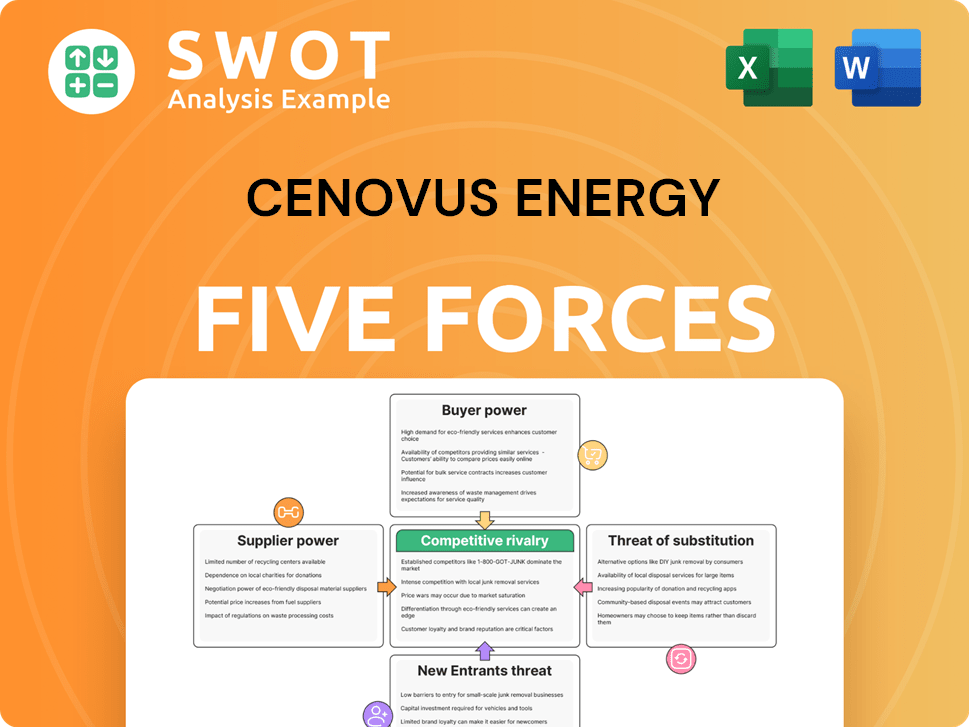
Cenovus Energy Porter's Five Forces Analysis
- Covers All 5 Competitive Forces in Detail
- Structured for Consultants, Students, and Founders
- 100% Editable in Microsoft Word & Excel
- Instant Digital Download – Use Immediately
- Compatible with Mac & PC – Fully Unlocked
Related Blogs

- What are Mission Vision & Core Values of Cenovus Energy Company?
- What is Growth Strategy and Future Prospects of Cenovus Energy Company?
- How Does Cenovus Energy Company Work?
- What is Sales and Marketing Strategy of Cenovus Energy Company?
- What is Brief History of Cenovus Energy Company?
- Who Owns Cenovus Energy Company?
- What is Customer Demographics and Target Market of Cenovus Energy Company?
Disclaimer
All information, articles, and product details provided on this website are for general informational and educational purposes only. We do not claim any ownership over, nor do we intend to infringe upon, any trademarks, copyrights, logos, brand names, or other intellectual property mentioned or depicted on this site. Such intellectual property remains the property of its respective owners, and any references here are made solely for identification or informational purposes, without implying any affiliation, endorsement, or partnership.
We make no representations or warranties, express or implied, regarding the accuracy, completeness, or suitability of any content or products presented. Nothing on this website should be construed as legal, tax, investment, financial, medical, or other professional advice. In addition, no part of this site—including articles or product references—constitutes a solicitation, recommendation, endorsement, advertisement, or offer to buy or sell any securities, franchises, or other financial instruments, particularly in jurisdictions where such activity would be unlawful.
All content is of a general nature and may not address the specific circumstances of any individual or entity. It is not a substitute for professional advice or services. Any actions you take based on the information provided here are strictly at your own risk. You accept full responsibility for any decisions or outcomes arising from your use of this website and agree to release us from any liability in connection with your use of, or reliance upon, the content or products found herein.