

PostNL Bundle

How Does PostNL Navigate the Cutthroat Logistics Arena?
The European delivery sector is a battlefield, reshaped by e-commerce and consumer demands. PostNL, a cornerstone of Dutch commerce, finds itself in the thick of this transformation. Understanding the PostNL SWOT Analysis is crucial to grasp its position.

This deep dive into the
Where Does PostNL’ Stand in the Current Market?
PostNL holds a dominant market position within the Netherlands, particularly in mail and parcel delivery. Its extensive infrastructure and historical legacy provide a strong foundation. The company's core operations are concentrated in the Netherlands, Belgium, and Luxembourg.
PostNL's primary offerings include domestic and international mail services, parcel delivery for both business and consumer segments, and comprehensive e-commerce solutions. The company has strategically expanded its parcel and e-commerce logistics offerings in response to declining mail volumes. This shift involved significant investments in automation and digital platforms to meet the growing demands of the online retail sector.
The company's market share in the Dutch postal market remains a leading position, although specific figures for 2024-2025 are subject to ongoing reporting. PostNL's established network gives it a significant advantage, especially in last-mile delivery within the Benelux region. You can learn more about PostNL's business model by reading this article: Revenue Streams & Business Model of PostNL.
 PostNL's Market Share
PostNL consistently maintains a leading market share in the Dutch postal market. This strong market presence is a key factor in the PostNL competitive landscape. The company's historical dominance and established infrastructure contribute to its significant market share.
Core Services
PostNL's core services include domestic and international mail, parcel delivery, and e-commerce solutions. These services cater to both business and consumer needs. The company's comprehensive offerings support its strong market position.
Geographic Focus
PostNL's primary operations are concentrated in the Netherlands, Belgium, and Luxembourg. Strategic international partnerships extend its reach. This regional focus allows PostNL to maintain a strong presence in key markets.
Financial Performance
In 2023, PostNL reported a normalized EBIT of €104 million, reflecting its operational performance. This financial result demonstrates the company's ability to navigate a challenging economic environment. The company's scale and established network provide a significant advantage.

Strategic Positioning
PostNL has actively shifted its positioning to adapt to market changes, particularly in response to declining mail volumes. This PostNL business strategy involves a significant expansion of its parcel and e-commerce logistics offerings. The company is investing heavily in automation and digital platforms to cater to the growing online retail sector.
- Focus on e-commerce solutions to meet market demands.
- Investments in automation to improve efficiency.
- Strategic partnerships to expand reach.
- Adaptation to changing market dynamics.
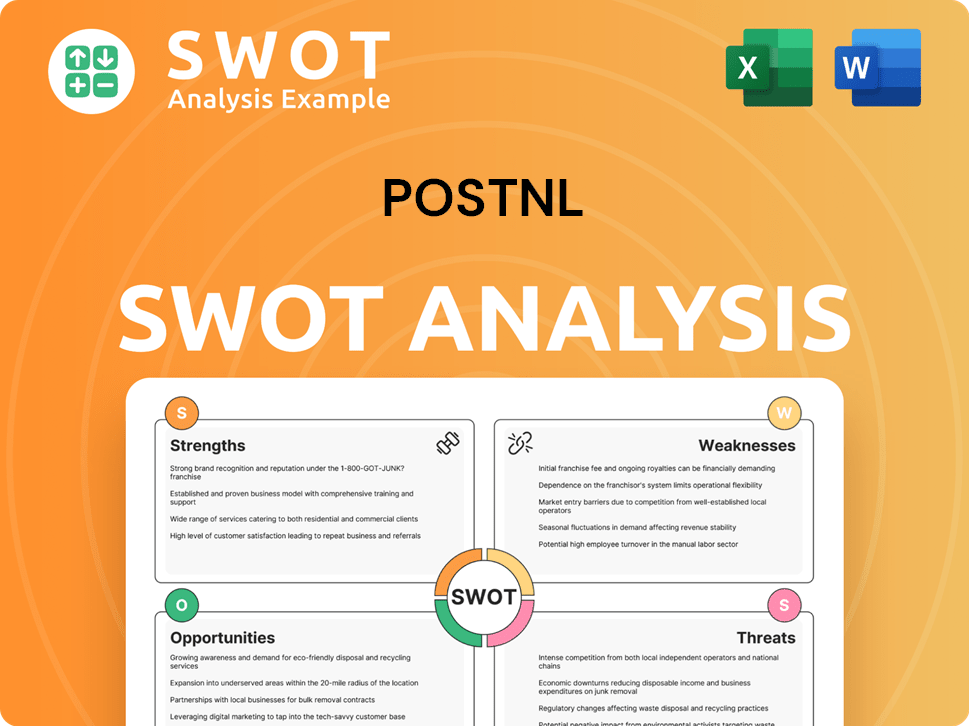
PostNL SWOT Analysis
- Complete SWOT Breakdown
- Fully Customizable
- Editable in Excel & Word
- Professional Formatting
- Investor-Ready Format
Who Are the Main Competitors Challenging PostNL?
The PostNL competitive landscape is shaped by a diverse range of players, from global giants to specialized local services. Understanding these competitors is crucial for analyzing PostNL's market position and its strategic responses. The company faces challenges and opportunities in both its mail and parcel delivery segments, requiring constant adaptation to maintain and grow its market share.
PostNL's business strategy is heavily influenced by the actions of its competitors and the evolving demands of the market. This includes adapting to changes in consumer behavior, technological advancements, and the increasing importance of sustainability. The competitive environment necessitates continuous innovation and efficiency improvements to stay ahead.
PostNL's industry analysis reveals a dynamic environment where mergers, acquisitions, and strategic alliances are common. These moves reshape the competitive landscape, impacting PostNL's market share and requiring it to continually assess its strengths and weaknesses.

International Logistics Giants
DHL, UPS, and FedEx are major competitors, offering extensive global networks and advanced technology. They challenge PostNL with broad service portfolios and strong brand recognition, especially for international shipments. These companies often have significant financial resources to invest in infrastructure and innovation.
Domestic and Regional Players
DPD and GLS compete with PostNL, often specializing in specific niches or offering competitive pricing. They focus on efficient operations and targeted services within particular regions. This competition puts pressure on PostNL to maintain its cost-effectiveness and service quality.
E-commerce and Last-Mile Delivery Services
The rise of e-commerce has led to new entrants focusing on speed and convenience, particularly in urban areas. These services often use innovative delivery methods and technologies. This trend impacts PostNL's delivery services, pushing it to adapt and innovate to stay competitive.
Mail Segment Competitors
Smaller, specialized mail distributors and digital communication alternatives impact traditional mail volumes. These changes require PostNL to diversify its services and explore new revenue streams. The shift to digital communication presents a significant challenge for the mail segment.
Mergers and Alliances
Various collaborations between logistics providers constantly reshape the competitive dynamics, leading to consolidation and new service offerings. These strategic moves can alter market share and influence PostNL's strategies. The industry is in a state of constant flux.
Technological Advancements
Technological advancements in delivery are crucial for PostNL's future outlook and competitive threats. Innovations in tracking, automation, and delivery optimization are essential for maintaining a competitive edge. These advancements impact operational efficiency and customer experience.
Analyzing the PostNL competitive landscape requires a deep understanding of these key players. For instance, DHL Parcel Netherlands is actively expanding its network and services within the region, posing a direct challenge to PostNL. The competition extends beyond just delivery services; it includes factors like pricing, customer service, and technological integration. To learn more about the specific customer groups PostNL targets, read this article about Target Market of PostNL.
Key Competitive Factors
Several factors are critical in the competition within the logistics industry. These include the breadth of services offered, pricing strategies, network coverage, and technological capabilities. Understanding these factors helps in evaluating PostNL's strengths and weaknesses analysis.
- Service Portfolio: The range of services offered, including mail, parcel, express delivery, and specialized solutions.
- Pricing Strategy: Competitive pricing models that attract customers, including volume discounts and customized rates.
- Network Coverage: The extent of the delivery network, including domestic and international reach.
- Technological Capabilities: The use of technology for tracking, automation, and customer service.
- Customer Service: The quality of customer support, including responsiveness and problem resolution.
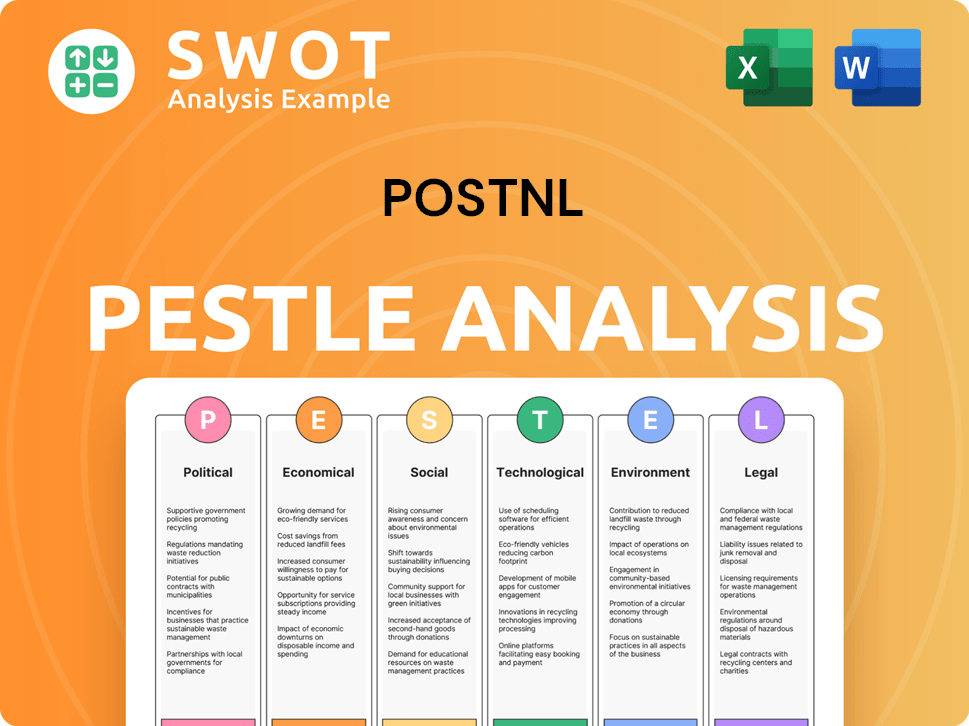
PostNL PESTLE Analysis
- Covers All 6 PESTLE Categories
- No Research Needed – Save Hours of Work
- Built by Experts, Trusted by Consultants
- Instant Download, Ready to Use
- 100% Editable, Fully Customizable
What Gives PostNL a Competitive Edge Over Its Rivals?
The competitive advantages of PostNL are largely centered around its robust distribution network, particularly within the Benelux region. This network includes a comprehensive system of sorting centers, delivery depots, and parcel points. These elements facilitate efficient last-mile delivery, covering both urban and rural areas. The company's established brand recognition and high level of consumer trust, developed over its history as a national postal service, are also significant differentiators in the PostNL competitive landscape.
PostNL leverages its technological infrastructure to enhance its logistics processes. This includes improving tracking capabilities and offering innovative e-commerce solutions. For instance, the digitalization and automation of sorting centers contribute to operational efficiencies. Furthermore, PostNL's commitment to sustainability, such as the goal of emission-free delivery in inner cities by 2025, aligns with evolving consumer preferences and regulatory demands. This could provide a competitive edge in the PostNL industry analysis.
These advantages have evolved from a traditional mail focus to a more diversified e-commerce and logistics emphasis, adapting to market shifts. However, these strengths face threats from the aggressive expansion of international competitors and the ongoing need for technological investments to maintain a leading position. For a deeper understanding of their marketing strategies, you can explore the Marketing Strategy of PostNL.
Extensive Distribution Network
PostNL's extensive network within the Benelux region is a key advantage. This network includes sorting centers, delivery depots, and parcel points. This enables efficient last-mile delivery.
Strong Brand Equity and Trust
The company benefits from strong brand equity and high consumer trust. These have been built over decades as the national postal service. This is a significant differentiator in the PostNL market analysis.
Technological Infrastructure
PostNL uses its technological infrastructure to optimize logistics. This includes better tracking and innovative e-commerce solutions. Digitalization and automation enhance operational efficiencies.
Sustainability Initiatives
The company is committed to sustainability, aiming for emission-free delivery in inner cities by 2025. This aligns with consumer preferences and regulatory pressures. This commitment offers a competitive advantage.
Key Competitive Advantages
PostNL's competitive edge is supported by its established infrastructure, brand recognition, and technological advancements. These factors enable efficient operations and customer trust. However, the company faces challenges from international competitors and the need for continuous innovation.
- Extensive distribution network in the Benelux region.
- Strong brand equity and high consumer trust.
- Technological infrastructure for optimized logistics and e-commerce solutions.
- Commitment to sustainability with emission-free delivery initiatives.
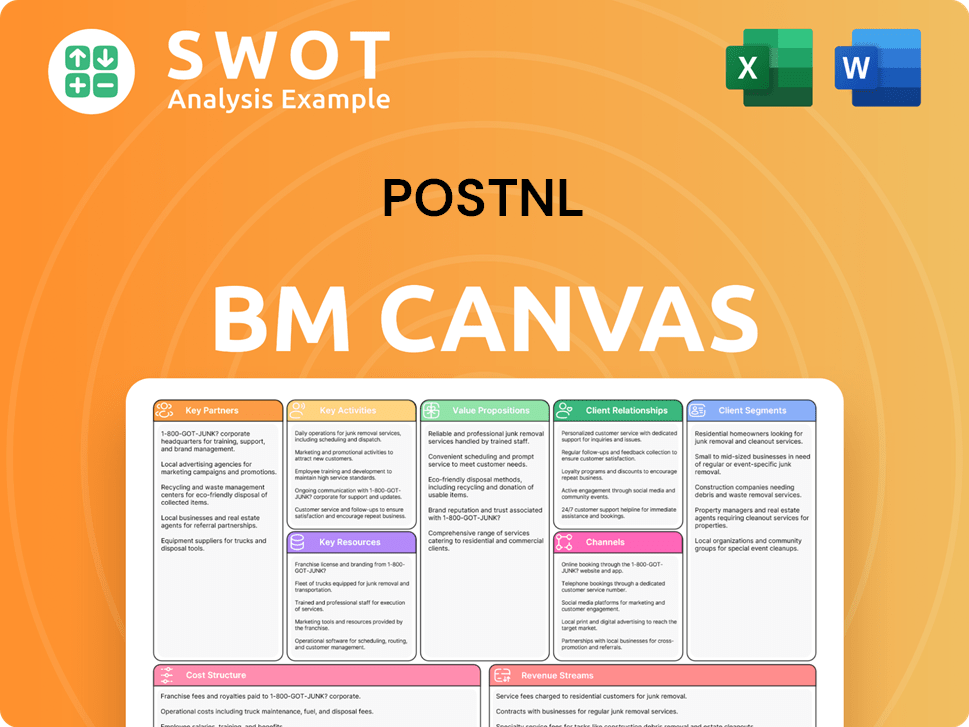
PostNL Business Model Canvas
- Complete 9-Block Business Model Canvas
- Effortlessly Communicate Your Business Strategy
- Investor-Ready BMC Format
- 100% Editable and Customizable
- Clear and Structured Layout
What Industry Trends Are Reshaping PostNL’s Competitive Landscape?
The mail and parcel industry is undergoing significant transformations, driven by e-commerce growth and technological advancements. This evolution shapes the PostNL competitive landscape, influencing its strategic direction and operational focus. Understanding these trends is crucial for evaluating PostNL's market analysis and future prospects.
PostNL faces both opportunities and challenges in this dynamic environment. The shift towards sustainable logistics and the need for technological adaptation are key factors. A comprehensive understanding of these elements helps in assessing PostNL's business strategy and its ability to maintain a competitive edge.
Industry Trends
E-commerce continues to fuel parcel volume growth, demanding faster and more flexible delivery options. Technological advancements like AI and automation are reshaping logistics. Regulatory changes, especially regarding environmental standards, are also impacting the industry.
Future Challenges
Declining traditional mail volumes and intense price competition pose significant challenges. Continuous investment in technology and infrastructure is crucial to meet escalating demands. Geopolitical shifts and economic uncertainties could impact international trade and supply chains.
Opportunities
Expanding e-commerce logistics services, including cross-border solutions, presents a major opportunity. Leveraging data analytics for personalized customer experiences can drive growth. Strategic partnerships and innovative delivery models, such as drone delivery, offer potential for expansion.
Strategic Focus
PostNL's competitive position will likely evolve towards integrated e-commerce solutions and sustainable logistics. This requires strategic capital deployment and continuous adaptation to capitalize on emerging market demands. A focus on innovation is key.
PostNL must navigate these trends to maintain its position. The company's ability to adapt to technological changes and meet the demands of e-commerce will be critical. For a historical context, you can read a Brief History of PostNL. The company's success will hinge on its ability to address the PostNL competitive landscape effectively.
Key Strategies and Data Points
PostNL is focusing on sustainable logistics, aiming for emission-free last-mile delivery in inner cities by 2025. This involves significant investments in electric vehicles and infrastructure. The company is also investing in automation to improve efficiency.
- E-commerce Growth: E-commerce continues to grow, with parcel volumes increasing significantly.
- Sustainability Initiatives: PostNL is investing in sustainable delivery options to meet environmental regulations.
- Technological Advancements: Implementing AI and automation to optimize logistics.
- Financial Performance: PostNL's financial results reflect the changing market dynamics, with a need for strategic investments.
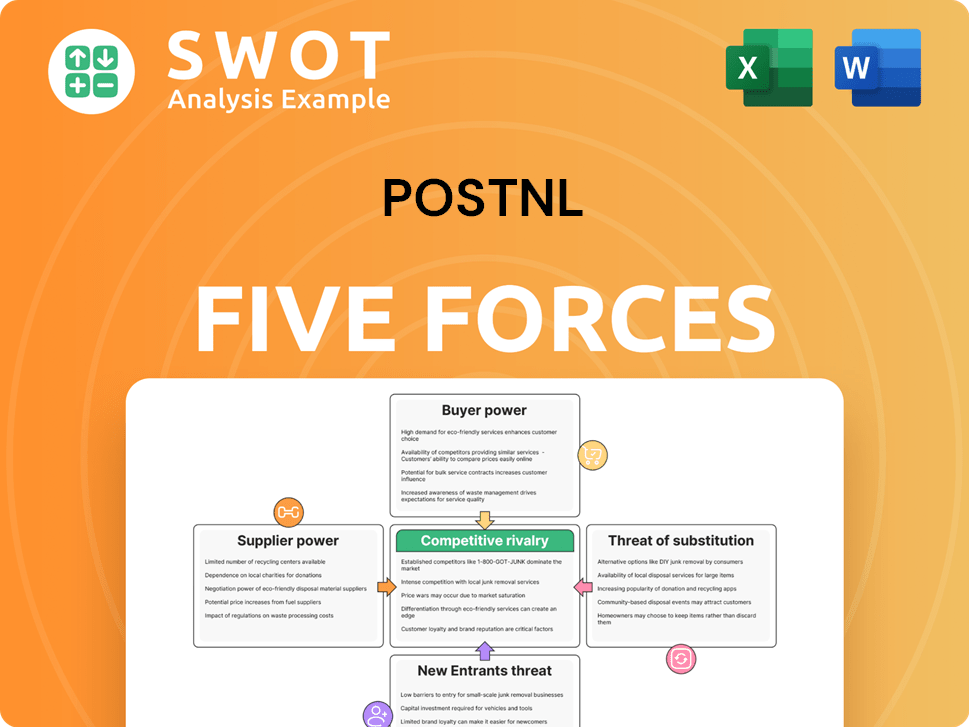
PostNL Porter's Five Forces Analysis
- Covers All 5 Competitive Forces in Detail
- Structured for Consultants, Students, and Founders
- 100% Editable in Microsoft Word & Excel
- Instant Digital Download – Use Immediately
- Compatible with Mac & PC – Fully Unlocked
Related Blogs

- What are Mission Vision & Core Values of PostNL Company?
- What is Growth Strategy and Future Prospects of PostNL Company?
- How Does PostNL Company Work?
- What is Sales and Marketing Strategy of PostNL Company?
- What is Brief History of PostNL Company?
- Who Owns PostNL Company?
- What is Customer Demographics and Target Market of PostNL Company?
Disclaimer
All information, articles, and product details provided on this website are for general informational and educational purposes only. We do not claim any ownership over, nor do we intend to infringe upon, any trademarks, copyrights, logos, brand names, or other intellectual property mentioned or depicted on this site. Such intellectual property remains the property of its respective owners, and any references here are made solely for identification or informational purposes, without implying any affiliation, endorsement, or partnership.
We make no representations or warranties, express or implied, regarding the accuracy, completeness, or suitability of any content or products presented. Nothing on this website should be construed as legal, tax, investment, financial, medical, or other professional advice. In addition, no part of this site—including articles or product references—constitutes a solicitation, recommendation, endorsement, advertisement, or offer to buy or sell any securities, franchises, or other financial instruments, particularly in jurisdictions where such activity would be unlawful.
All content is of a general nature and may not address the specific circumstances of any individual or entity. It is not a substitute for professional advice or services. Any actions you take based on the information provided here are strictly at your own risk. You accept full responsibility for any decisions or outcomes arising from your use of this website and agree to release us from any liability in connection with your use of, or reliance upon, the content or products found herein.