

Sealed Air Bundle

Can Sealed Air Maintain Its Leading Edge in the Packaging Industry?
The packaging industry is experiencing a seismic shift, driven by the rise of e-commerce and a growing demand for sustainable solutions. Sealed Air Corporation, the inventor of Bubble Wrap, has been a key player in this transformation since 1960. This analysis dives deep into the Sealed Air SWOT Analysis and its competitive landscape, offering critical insights for investors and industry professionals.

This exploration of the Sealed Air competitive landscape will identify its main competitors and evaluate its market position within the dynamic packaging industry. We'll dissect Sealed Air's competitive advantages, analyze its financial performance, and examine its strategic responses to emerging industry trends. Understanding the Sealed Air business and its rivals is crucial for anyone seeking to make informed decisions in this evolving market.
Where Does Sealed Air’ Stand in the Current Market?
Sealed Air Corporation maintains a strong market position within the global packaging industry. The company is a key player in both protective and food packaging sectors. A comprehensive Sealed Air market analysis reveals its consistent ranking among the top packaging companies worldwide, although specific 2024-2025 market share figures are still under evaluation.
The core operations of Sealed Air revolve around its primary product lines. These include CRYOVAC® brand food packaging, SEALED AIR® brand protective packaging, and various automated packaging systems. These offerings serve a broad customer base. This includes food processing, e-commerce fulfillment, industrial manufacturing, and healthcare sectors. To understand the company's financial performance, one can refer to Revenue Streams & Business Model of Sealed Air.
Sealed Air's value proposition lies in providing innovative packaging solutions that enhance product protection, extend shelf life, and improve operational efficiency. The company focuses on sustainability and automation to meet evolving market demands. This approach allows Sealed Air to maintain a competitive edge in a dynamic industry.
 Market Presence
Sealed Air operates in over 100 countries, showcasing a significant global presence. This widespread reach enables the company to capitalize on regional growth opportunities. It also helps mitigate risks associated with reliance on a single market. The company's geographical diversification is a key aspect of its Sealed Air competitive strategy.
Financial Performance
For the full year 2023, Sealed Air reported net sales of $5.47 billion. This reflects a slight decrease from the previous year, primarily due to volume and price declines. Despite this, the company demonstrated strong cash flow generation. Net cash provided by operating activities reached $989 million in 2023.
Strategic Focus
Sealed Air has strategically shifted its focus towards sustainable packaging solutions and automation. This aligns with the growing consumer and industry demand for environmentally responsible practices and operational efficiency. This strategic pivot has allowed them to capture market share in high-growth areas.
Key Markets
The company holds a particularly strong position in North America and Europe. It leverages established distribution networks and brand recognition. These regions are crucial for Sealed Air's overall market performance. Understanding these key markets is essential for a comprehensive Sealed Air competitive landscape analysis.

Competitive Advantages
Sealed Air's competitive advantages include a diverse product portfolio, a global presence, and a focus on innovation and sustainability. Its strong brand recognition and established customer relationships also contribute to its market strength. Analyzing Sealed Air's key rivals reveals how these advantages position the company.
- Strong brand recognition in key markets.
- A broad product portfolio catering to various industry needs.
- Focus on sustainable packaging solutions to meet market demand.
- Global presence with operations in over 100 countries.
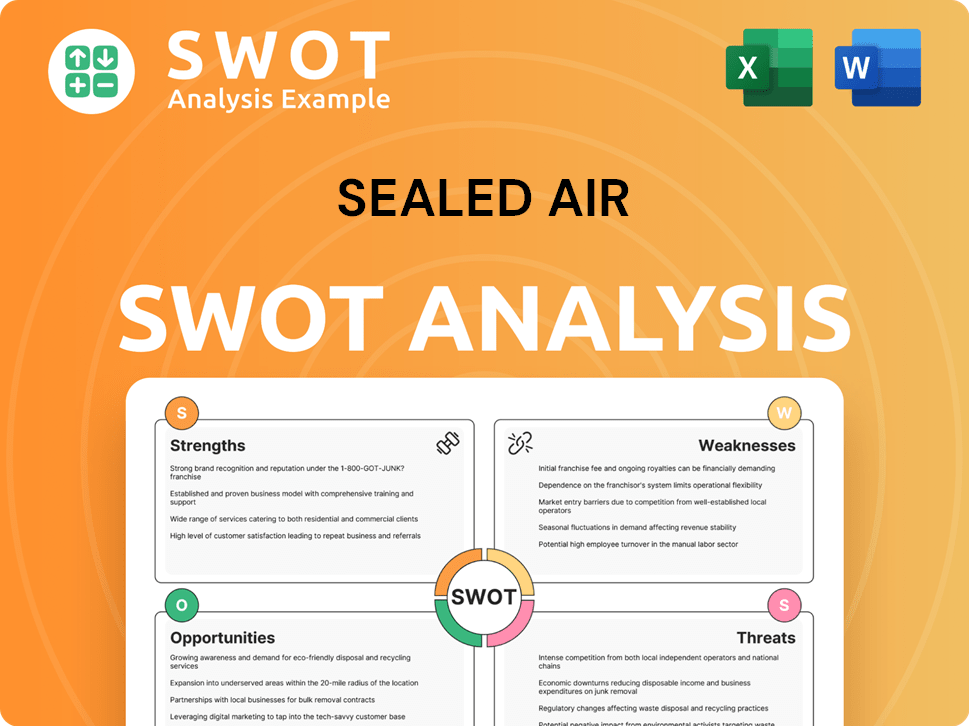
Sealed Air SWOT Analysis
- Complete SWOT Breakdown
- Fully Customizable
- Editable in Excel & Word
- Professional Formatting
- Investor-Ready Format
Who Are the Main Competitors Challenging Sealed Air?
The Sealed Air competitive landscape is characterized by intense competition within the global packaging industry. The company faces challenges from both large, diversified corporations and specialized niche players. Understanding the Sealed Air market analysis involves assessing its position relative to key rivals and the strategies they employ. The Sealed Air business is significantly impacted by these competitive dynamics.
Key competitors of Sealed Air include companies that offer similar packaging solutions. These companies compete on factors such as product innovation, pricing, and geographical reach. The competitive environment also includes emerging players focused on sustainable packaging solutions.
The Sealed Air industry is dynamic, with companies constantly adapting to changing market demands and technological advancements. Understanding the competitive landscape is crucial for investors and stakeholders to assess the company's performance and future prospects. For a deeper dive into the company's strategic goals, consider reading about the Growth Strategy of Sealed Air.

Key Competitors
Direct competitors of Sealed Air include established packaging companies. These companies offer a wide range of packaging solutions and compete across various market segments. Their strategies include innovation, cost efficiency, and global expansion.
WestRock Company
WestRock is a major player in the packaging industry, providing sustainable paper and packaging solutions. They compete with Sealed Air in segments like corrugated packaging and consumer packaging. WestRock's integrated model allows for cost efficiencies.
Amcor plc
Amcor is a global leader in developing and producing responsible packaging. They directly rival Sealed Air in food and healthcare packaging. Amcor’s extensive global reach provides a strong competitive offering.
Berry Global Group
Berry Global Group offers a broad range of packaging and engineered products. They compete with Sealed Air in protective and food packaging. Berry Global has expanded its market presence through acquisitions.
Sonoco Products Company
Sonoco is a diversified global provider of packaging products. They compete in industrial and consumer packaging markets. Sonoco offers a broad range of packaging solutions.
Competitive Strategies
Competitors employ various strategies to gain market share. These strategies involve innovation, sustainability, and cost-effectiveness. Securing large contracts with major clients is a key battleground.
Additional Competitive Factors
Beyond the main players, the Sealed Air competitive landscape is influenced by several other factors. These include emerging companies focused on sustainable packaging and the impact of mergers and acquisitions within the industry. Furthermore, indirect competitors and alternative packaging methods also affect the market.
- Emerging companies focusing on bio-based or compostable packaging.
- Mergers and acquisitions reshaping the competitive dynamics.
- Indirect competitors, such as in-house packaging operations.
- Alternative packaging methods, like reusable containers.
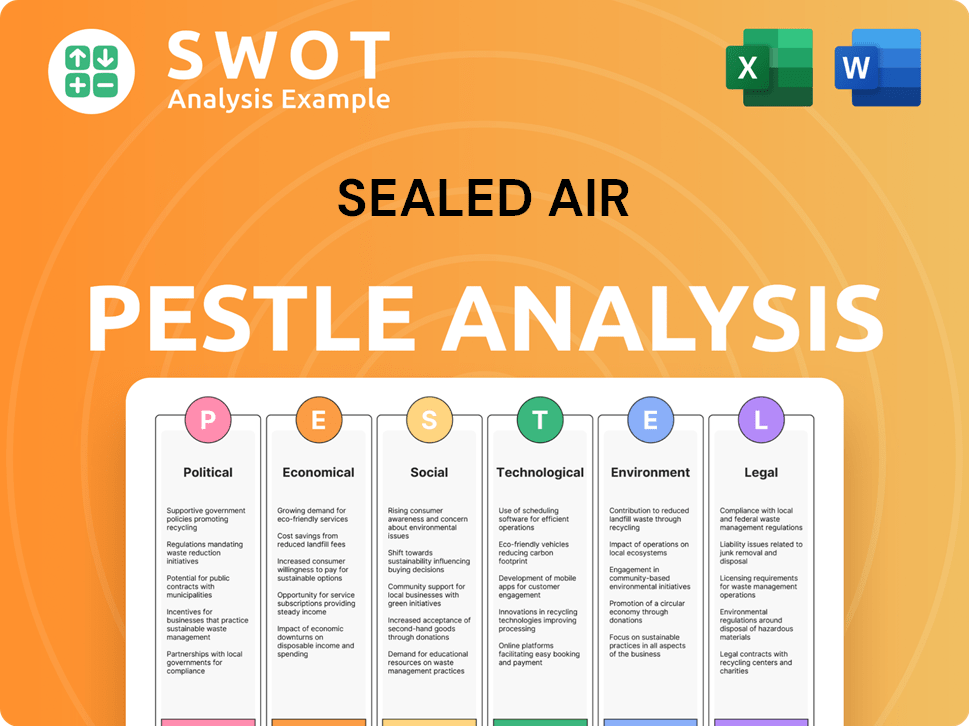
Sealed Air PESTLE Analysis
- Covers All 6 PESTLE Categories
- No Research Needed – Save Hours of Work
- Built by Experts, Trusted by Consultants
- Instant Download, Ready to Use
- 100% Editable, Fully Customizable
What Gives Sealed Air a Competitive Edge Over Its Rivals?
Analyzing the Sealed Air competitive landscape reveals a company that distinguishes itself through proprietary technologies, strong brand recognition, and a comprehensive global distribution network. The company's strategic moves, including continuous investment in research and development, have been pivotal in maintaining its competitive edge within the packaging industry. This focus on innovation is crucial for navigating the evolving demands of the market and staying ahead of Sealed Air competitors.
One of the primary competitive advantages of Sealed Air lies in its intellectual property, particularly surrounding core products like Bubble Wrap and CRYOVAC® food packaging. The company has consistently invested in research and development, leading to innovations in material science, packaging design, and automation. This commitment to innovation is essential for maintaining a strong market position and driving future growth, as highlighted in a recent analysis of the Marketing Strategy of Sealed Air.
Brand equity is another significant asset for Sealed Air. The Bubble Wrap brand is synonymous with protective packaging, fostering strong customer recognition and loyalty. Similarly, the CRYOVAC brand is highly regarded in the food industry for its advanced food safety and preservation capabilities. These established brands provide a significant barrier to entry for new competitors and allow Sealed Air to command premium pricing in certain segments. The company's extensive global distribution network and long-standing customer relationships also provide a substantial advantage, ensuring efficient delivery and strong customer support across diverse markets.
Key Milestones
Over the past few years, Sealed Air has focused on expanding its sustainable packaging solutions. This includes increasing the use of recycled content and designing packaging for recyclability. These initiatives are in response to growing consumer and regulatory demands for environmentally friendly products. In 2024, the company announced further investments in sustainable packaging technologies.
Strategic Moves
Sealed Air has been strategically focused on operational efficiencies and economies of scale to maintain cost competitiveness. The company's vertically integrated operations and supply chain strengths contribute to consistent product availability and reliability. Recent strategic moves include partnerships to enhance traceability and efficiency through smart packaging solutions. As of 2024, the company continues to explore acquisitions to strengthen its market position.
Competitive Edge
The company's competitive edge is sustained through a combination of proprietary technologies, strong brand equity, and a robust global distribution network. Sealed Air leverages its operational efficiencies and economies of scale to maintain cost competitiveness while delivering high-quality products. The focus on smart packaging solutions that integrate digital technologies for enhanced traceability and efficiency further strengthens its position in the market.
Market Analysis
A Sealed Air market analysis reveals a company well-positioned to capitalize on the growing demand for sustainable packaging solutions. The company's strong brand recognition and extensive distribution network provide a significant advantage over competitors. The packaging industry is expected to grow, with a projected value of over $1.1 trillion by 2027, presenting significant opportunities for Sealed Air.
Key Competitive Advantages
The primary competitive advantages of Sealed Air include strong brand recognition, proprietary technologies, and a global distribution network. The company's focus on innovation and sustainable packaging solutions positions it favorably in the market. Sealed Air faces competition from various players in the packaging industry, including both large multinational corporations and smaller, specialized firms.
- Proprietary Technologies: Exclusive technologies like Bubble Wrap and CRYOVAC.
- Brand Equity: Strong brand recognition and customer loyalty.
- Global Distribution Network: Extensive reach and efficient delivery.
- Innovation: Continuous investment in R&D, including sustainable packaging.
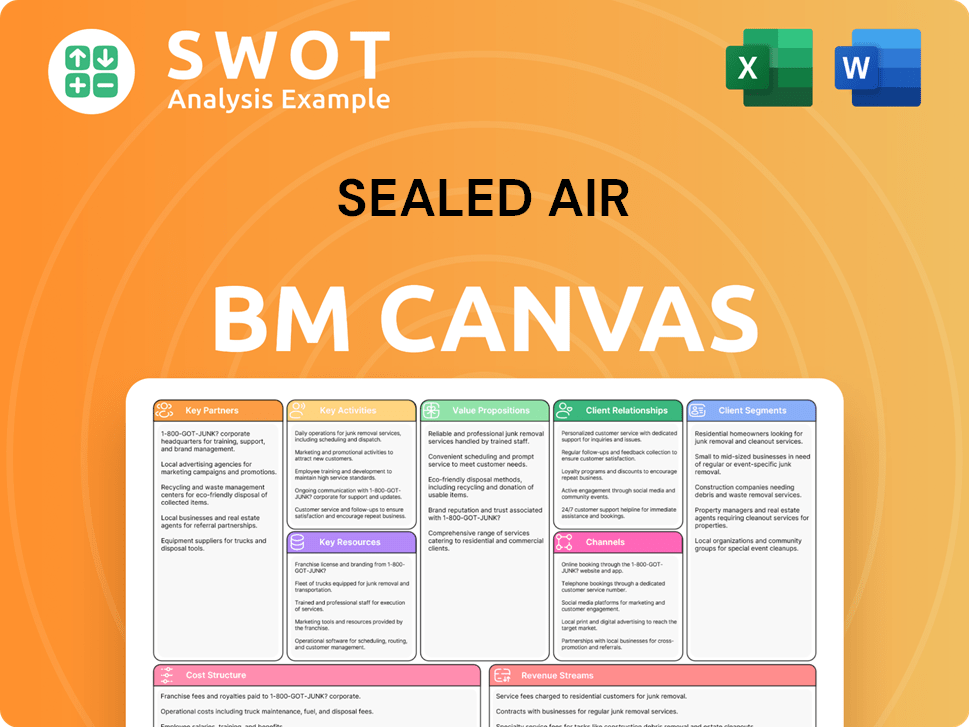
Sealed Air Business Model Canvas
- Complete 9-Block Business Model Canvas
- Effortlessly Communicate Your Business Strategy
- Investor-Ready BMC Format
- 100% Editable and Customizable
- Clear and Structured Layout
What Industry Trends Are Reshaping Sealed Air’s Competitive Landscape?
Analyzing the Sealed Air competitive landscape reveals a packaging industry undergoing significant transformation. The company faces both challenges and opportunities driven by evolving consumer preferences, technological advancements, and regulatory pressures. A thorough Sealed Air market analysis is essential to understand its position and prospects.
The Sealed Air industry is affected by trends such as the growing demand for sustainable packaging and the expansion of e-commerce. These factors influence the company's strategic direction and require continuous adaptation. This chapter examines the key industry trends, future challenges, and opportunities shaping the company's trajectory.
Industry Trends
The packaging industry is experiencing a surge in demand for sustainable solutions, driven by consumer and regulatory pressures. E-commerce growth fuels the need for protective packaging. Technological advancements, particularly in automation and smart packaging, are also reshaping the market.
Future Challenges
Sealed Air faces challenges including complex global regulations on plastic waste, raw material price volatility, and increased competition. Adapting to the circular economy and managing digital integration are crucial for maintaining a competitive edge. The company needs to navigate these challenges to ensure long-term success.
Opportunities
Opportunities for Sealed Air include expanding into emerging markets and innovating in sustainable materials. Leveraging digital technologies to offer value-added services, such as predictive maintenance, represents a significant growth area. Focusing on circular economy principles and customized solutions is key.
Strategic Focus
Sealed Air's strategy should emphasize sustainable innovation and automation. This approach is critical for long-term success. The company must adapt to evolving market dynamics and consumer preferences to maintain its competitive position. This involves continuous investment and strategic decision-making.
The packaging industry is dynamic, presenting both risks and opportunities. The strategies of Sealed Air must align with these changes. For example, the company's focus on sustainability is crucial, as evidenced by the increasing demand for eco-friendly materials. The company's ability to manage raw material costs and adapt to new regulations will also be critical. For more insights, consider exploring the Growth Strategy of Sealed Air.
Key Factors Influencing Sealed Air
Several factors significantly impact Sealed Air's performance and market position. These include consumer demand for sustainable packaging, the growth of e-commerce, and technological advancements. Sealed Air must adapt to these factors to maintain its competitive edge.
- Sustainability: The shift towards eco-friendly packaging is a major driver.
- E-commerce: Growth in online retail increases demand for protective packaging.
- Innovation: Technological advancements, especially in automation, are crucial.
- Regulations: Compliance with global plastic waste regulations is essential.
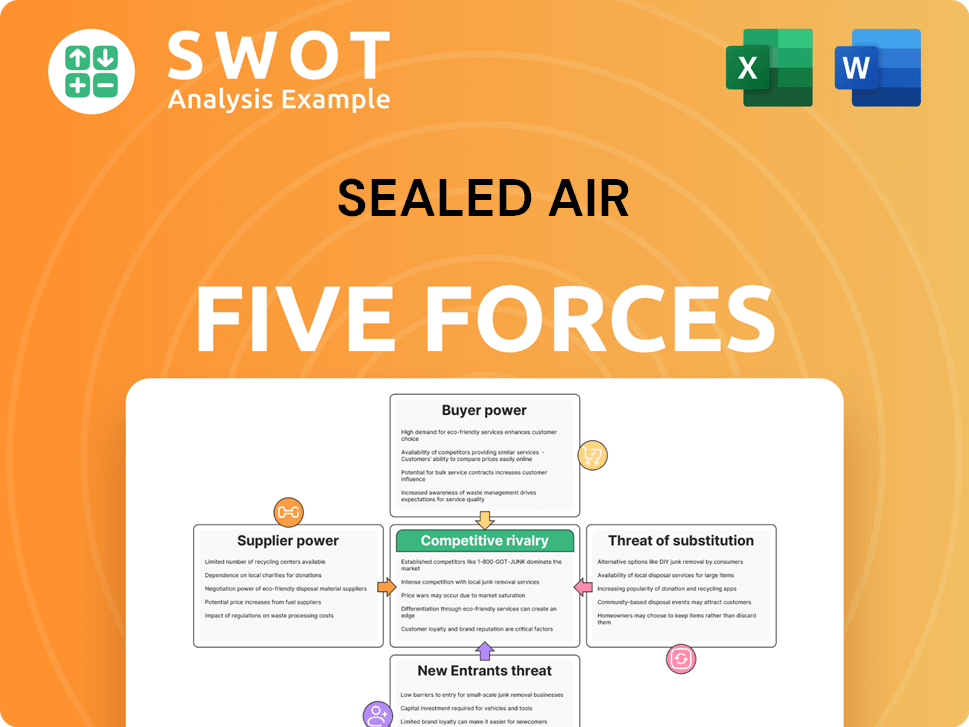
Sealed Air Porter's Five Forces Analysis
- Covers All 5 Competitive Forces in Detail
- Structured for Consultants, Students, and Founders
- 100% Editable in Microsoft Word & Excel
- Instant Digital Download – Use Immediately
- Compatible with Mac & PC – Fully Unlocked
Related Blogs

- What are Mission Vision & Core Values of Sealed Air Company?
- What is Growth Strategy and Future Prospects of Sealed Air Company?
- How Does Sealed Air Company Work?
- What is Sales and Marketing Strategy of Sealed Air Company?
- What is Brief History of Sealed Air Company?
- Who Owns Sealed Air Company?
- What is Customer Demographics and Target Market of Sealed Air Company?
Disclaimer
All information, articles, and product details provided on this website are for general informational and educational purposes only. We do not claim any ownership over, nor do we intend to infringe upon, any trademarks, copyrights, logos, brand names, or other intellectual property mentioned or depicted on this site. Such intellectual property remains the property of its respective owners, and any references here are made solely for identification or informational purposes, without implying any affiliation, endorsement, or partnership.
We make no representations or warranties, express or implied, regarding the accuracy, completeness, or suitability of any content or products presented. Nothing on this website should be construed as legal, tax, investment, financial, medical, or other professional advice. In addition, no part of this site—including articles or product references—constitutes a solicitation, recommendation, endorsement, advertisement, or offer to buy or sell any securities, franchises, or other financial instruments, particularly in jurisdictions where such activity would be unlawful.
All content is of a general nature and may not address the specific circumstances of any individual or entity. It is not a substitute for professional advice or services. Any actions you take based on the information provided here are strictly at your own risk. You accept full responsibility for any decisions or outcomes arising from your use of this website and agree to release us from any liability in connection with your use of, or reliance upon, the content or products found herein.