

DigitalOcean Bundle

How Does DigitalOcean Power the Cloud?
In the ever-evolving world of DigitalOcean SWOT Analysis, understanding the inner workings of cloud providers is paramount. DigitalOcean has carved a niche by simplifying

This exploration delves into DigitalOcean's core offerings, from its
What Are the Key Operations Driving DigitalOcean’s Success?
The core of DigitalOcean's operations revolves around simplifying cloud infrastructure. Its value proposition centers on making cloud computing accessible and straightforward, particularly for developers and small to medium-sized businesses (SMBs). The company offers Infrastructure-as-a-Service (IaaS) and Platform-as-a-Service (PaaS) solutions, designed to be user-friendly and efficient.
DigitalOcean's flagship product, Droplets, provides Linux-based virtual machines, serving as the foundation for many applications. Beyond Droplets, the platform includes managed databases, object storage (Spaces), Kubernetes for container orchestration, and various developer tools. This comprehensive suite caters to a broad customer base, from individual developers to scaling startups and SMBs looking to transition to the cloud.
Operationally, DigitalOcean emphasizes ease of use and rapid deployment. The platform is designed for intuitive navigation, allowing users to quickly deploy resources. This is supported by a global network of data centers strategically positioned to minimize latency for users worldwide. The company's operational processes focus on continuous platform development, ensuring high availability, performance, and security. DigitalOcean differentiates itself through clear billing, extensive documentation, and a strong community focus, including tutorials and support forums.
 Key Offerings
DigitalOcean provides a range of services, including Droplets (virtual machines), managed databases, object storage (Spaces), and Kubernetes. These services are designed to support various needs, from simple web hosting to complex application deployments. The platform is known for its ease of use and developer-friendly tools.
Target Audience
The primary target audience includes developers, startups, and SMBs. DigitalOcean's services are tailored to meet the needs of those who value simplicity, ease of use, and cost-effectiveness. The platform is particularly popular among those looking to quickly deploy and scale applications.
Operational Efficiency
DigitalOcean focuses on operational efficiency through automation and a streamlined user experience. This includes features like one-click app installations and a user-friendly control panel. The company's global data center network ensures low latency and high availability for users worldwide.
Competitive Advantages
DigitalOcean distinguishes itself through its ease of use, transparent pricing, and strong community support. The platform's simplicity makes it an attractive option for those new to cloud computing. The company also offers extensive documentation and a vibrant community, providing users with the resources they need to succeed.

Key Features and Benefits
DigitalOcean's DigitalOcean platform offers several key features designed to benefit users. These features include easy-to-use interfaces, scalable resources, and affordable pricing. The platform is designed to streamline the cloud experience, making it accessible to a wide range of users.
- Simple Interface: The platform's intuitive design allows users to quickly deploy and manage resources.
- Scalability: Users can easily scale their resources up or down based on their needs.
- Cost-Effectiveness: DigitalOcean offers competitive pricing plans, making it an affordable option for many users.
- Global Data Centers: Data centers are strategically located to provide low latency and high availability.
DigitalOcean's commitment to simplicity and developer-friendliness has made it a popular choice. However, it's essential to consider the competitive landscape. For a deeper understanding of how DigitalOcean stacks up against its rivals, consider exploring the Competitors Landscape of DigitalOcean.
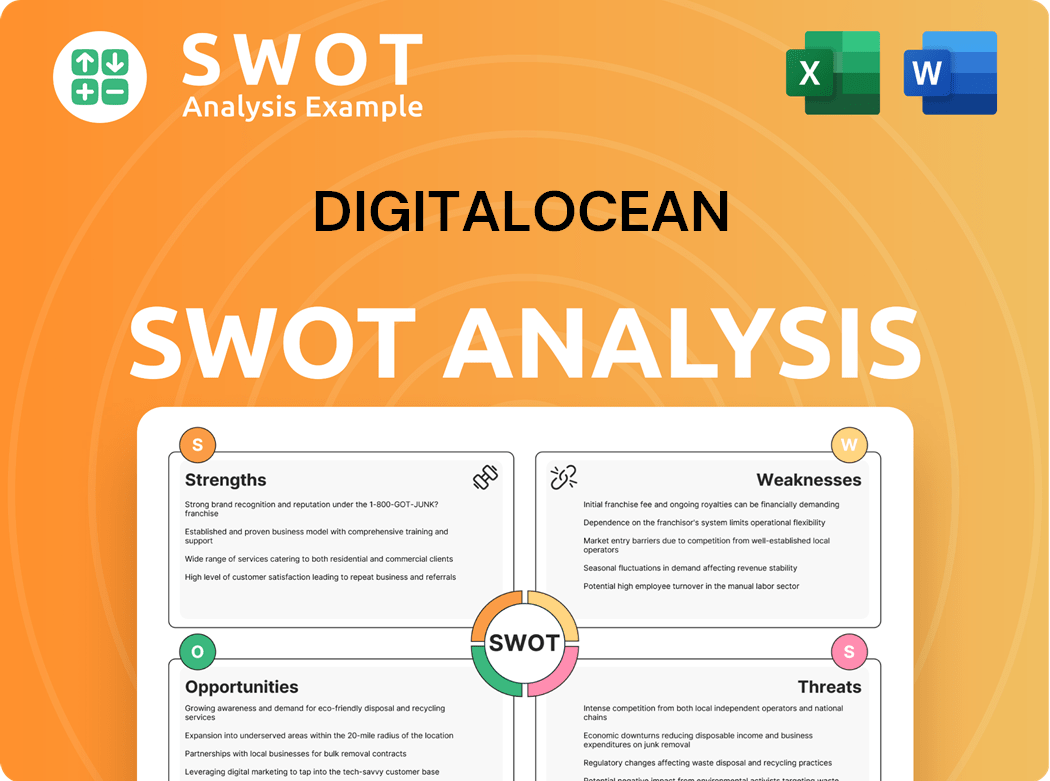
DigitalOcean SWOT Analysis
- Complete SWOT Breakdown
- Fully Customizable
- Editable in Excel & Word
- Professional Formatting
- Investor-Ready Format
How Does DigitalOcean Make Money?
DigitalOcean's revenue model is primarily built on providing cloud computing services. The company utilizes a pay-as-you-go model, offering predictable monthly billing based on resource consumption. This approach allows customers to scale their usage and costs as their needs evolve, making it attractive for developers and small to medium-sized businesses (SMBs).
The core of DigitalOcean's monetization strategy revolves around subscriptions to its various cloud products. These include virtual machines (Droplets), managed databases, object storage (Spaces), and Kubernetes. Customers are charged based on the resources they use, such as CPU, memory, storage, and bandwidth. For instance, the pricing for Droplets is transparent, enabling users to easily estimate their monthly expenses.
While specific revenue breakdowns by product aren't always publicly detailed, the subscription model forms the foundation of its monetization. The company's focus on user-friendliness and developer-centric tools encourages greater adoption and usage of its services, indirectly boosting revenue through increased consumption of cloud resources. The company's consistent growth in revenue, reaching $692.6 million in 2023, demonstrates the effectiveness of its subscription-based strategy.

Subscription-Based Model
DigitalOcean's revenue streams are primarily driven by subscriptions. Customers pay for the resources they consume, such as CPU, memory, storage, and bandwidth. This pay-as-you-go model provides flexibility and cost predictability.
Cloud Product Offerings
The company offers a suite of cloud products. These include Virtual Machines (Droplets), managed databases, object storage (Spaces), and Kubernetes. Each service contributes to the overall revenue through its subscription model.
Transparent Pricing
DigitalOcean is known for its straightforward and competitive pricing. This is particularly appealing to developers and SMBs. Transparent pricing helps users easily estimate their monthly costs.
Tiered Pricing
For some services, DigitalOcean employs tiered pricing. This allows customers to scale their usage and costs as their needs evolve. This flexibility supports business growth.
Developer-Centric Approach
DigitalOcean's focus on ease of use and developer-centric tools drives adoption. This approach encourages greater usage of its services. Increased consumption of cloud resources contributes to revenue growth.
Revenue Growth
The company has demonstrated consistent revenue growth. In 2023, DigitalOcean's revenue reached $692.6 million. This growth highlights the effectiveness of its subscription-based monetization strategy.
Key Revenue Drivers and Monetization Strategies
DigitalOcean's success is rooted in its clear monetization strategies. The company's focus on the DigitalOcean platform and its user-friendly approach has helped fuel its growth. For more insights, see the Marketing Strategy of DigitalOcean.
- Cloud Computing Services: The core revenue stream comes from providing Cloud computing solutions, particularly Virtual private server (VPS) instances known as Droplets.
- Subscription Model: Customers are billed monthly based on their resource consumption, offering predictable costs.
- Transparent Pricing: Simple and competitive pricing attracts developers and SMBs.
- Scalable Services: Tiered pricing allows customers to scale resources as needed.
- Developer-Friendly Tools: Ease of use encourages adoption and increased resource usage.
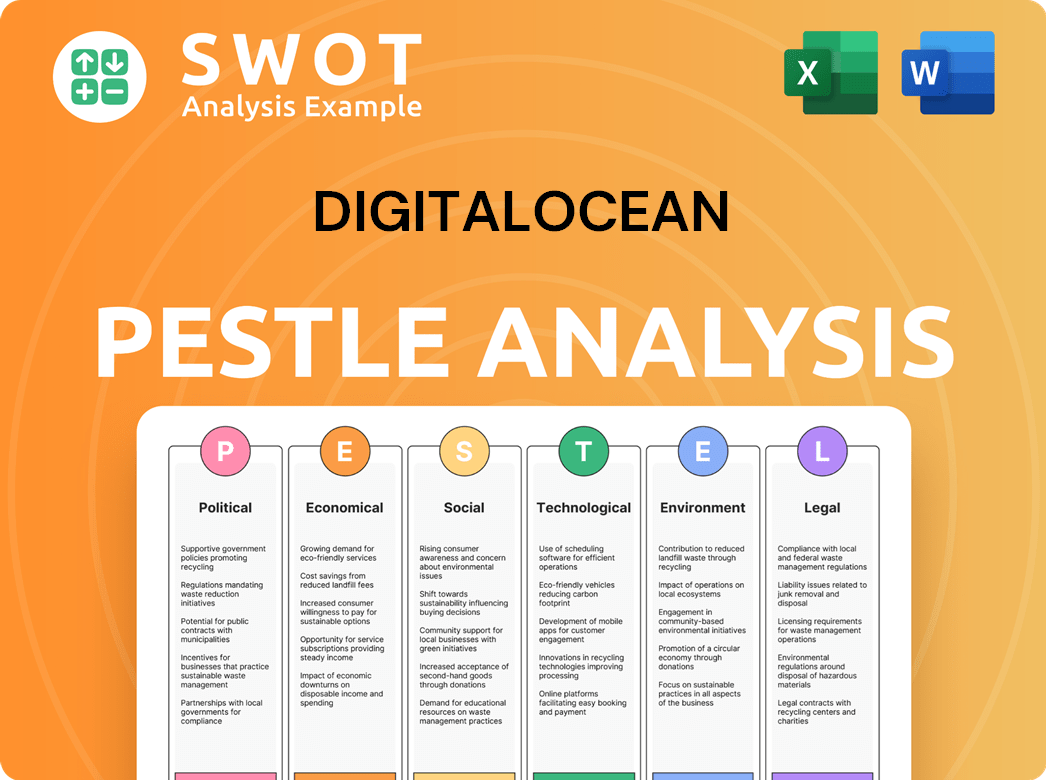
DigitalOcean PESTLE Analysis
- Covers All 6 PESTLE Categories
- No Research Needed – Save Hours of Work
- Built by Experts, Trusted by Consultants
- Instant Download, Ready to Use
- 100% Editable, Fully Customizable
Which Strategic Decisions Have Shaped DigitalOcean’s Business Model?
DigitalOcean's journey has been marked by significant milestones and strategic initiatives that have shaped its standing in the cloud computing landscape. The company's initial public offering (IPO) in March 2021 was a pivotal moment, providing substantial capital for expansion and development. This move allowed DigitalOcean to enhance its infrastructure and broaden its service offerings, solidifying its position within the competitive cloud market.
The company has consistently introduced new services to cater to evolving application requirements. Strategic acquisitions, such as the purchase of Cloudways in August 2022 for $350 million, have expanded its managed hosting capabilities. This move has enabled DigitalOcean to offer a more accessible path to the cloud for businesses, particularly those without extensive technical expertise. These actions demonstrate DigitalOcean's commitment to growth and its ability to adapt to market demands.
DigitalOcean's competitive edge is rooted in its strong brand recognition within the developer community, its focus on simplicity and ease of use, and its transparent, predictable pricing model. This 'developer-first' approach fosters strong customer loyalty and word-of-mouth adoption. DigitalOcean continues to adapt by focusing on its core SMB and startup market, refining its product offerings, and investing in developer experience to maintain its differentiation in a highly competitive cloud market. For businesses looking to understand the specific audience DigitalOcean targets, consider exploring the Target Market of DigitalOcean.
Key Milestones
The IPO in March 2021 was a significant financial milestone, providing the capital for expansion. The acquisition of Cloudways in August 2022 for $350 million broadened its managed hosting capabilities. These strategic moves have been crucial in shaping DigitalOcean's growth trajectory.
Strategic Moves
DigitalOcean has consistently introduced new services like managed databases and Kubernetes. The company has focused on expanding its global data center presence to improve service availability. These moves demonstrate DigitalOcean's commitment to adapting to market demands and enhancing its offerings.
Competitive Edge
DigitalOcean's brand recognition within the developer community is a key advantage. Its focus on simplicity and ease of use sets it apart from competitors. The transparent pricing model fosters customer loyalty and word-of-mouth adoption.
Operational Challenges
DigitalOcean faces challenges common to cloud providers, including scaling infrastructure and managing security threats. The company must continuously adapt to evolving technology and market demands. Maintaining a competitive edge requires ongoing investment and innovation.
Financial and Market Data
In Q1 2024, DigitalOcean reported revenue of $187.1 million, a 12% increase year-over-year, with a gross margin of 63%. The company's focus on SMBs and startups continues to drive growth, with a customer base of approximately 700,000 users. DigitalOcean's market capitalization as of May 2024 is around $3.8 billion, reflecting its strong position in the cloud market.
- Revenue growth of 12% year-over-year in Q1 2024.
- Gross margin of 63% in Q1 2024.
- Approximately 700,000 customers as of May 2024.
- Market capitalization of approximately $3.8 billion as of May 2024.
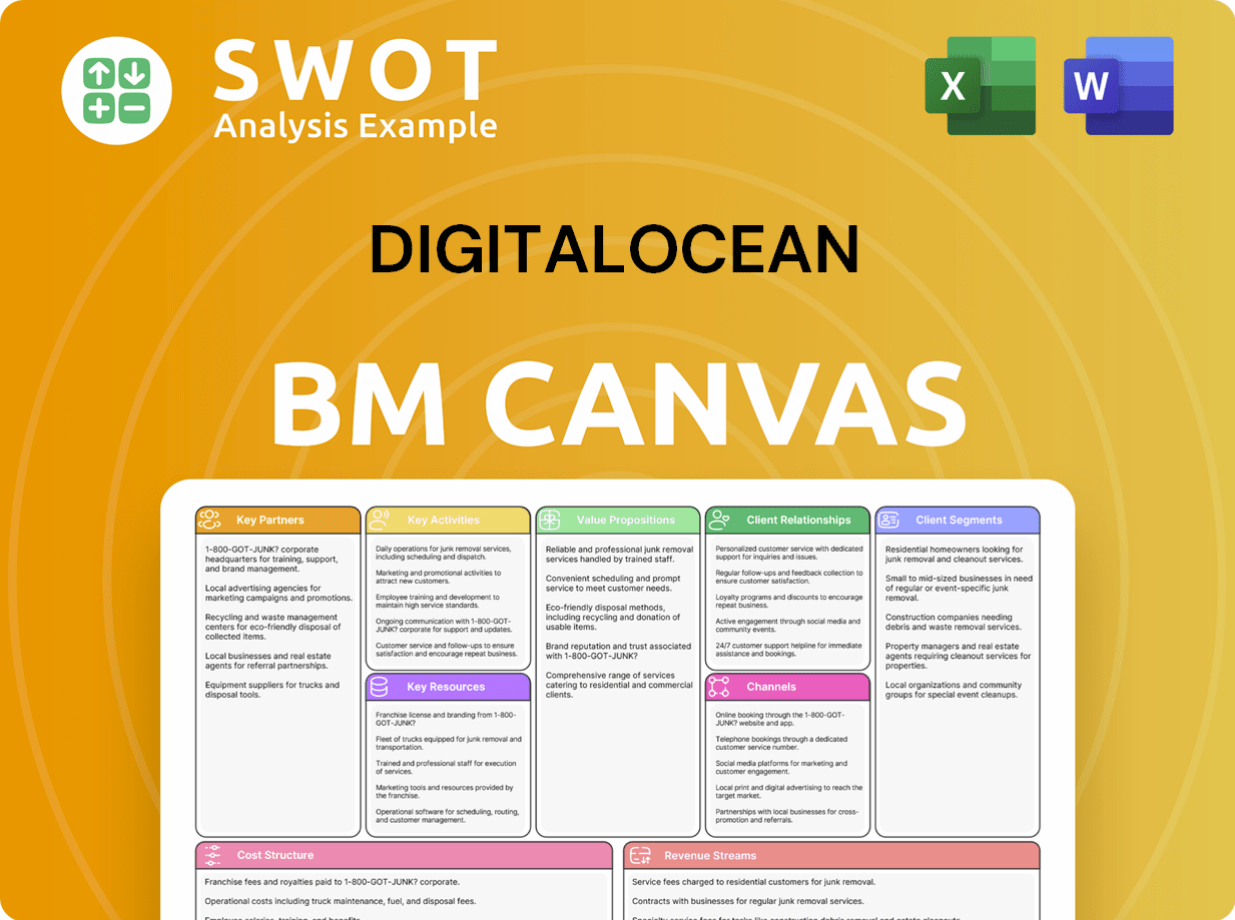
DigitalOcean Business Model Canvas
- Complete 9-Block Business Model Canvas
- Effortlessly Communicate Your Business Strategy
- Investor-Ready BMC Format
- 100% Editable and Customizable
- Clear and Structured Layout
How Is DigitalOcean Positioning Itself for Continued Success?
DigitalOcean carves out a specific niche in the cloud computing sector, focusing on developers, startups, and small to medium-sized businesses (SMBs). This approach allows it to compete effectively by offering a simplified user experience, predictable pricing, and strong community support. While it doesn't directly rival industry giants like AWS or Azure in terms of overall market share, DigitalOcean has cultivated a loyal customer base within its target segments. This focus has enabled the company to build a strong reputation within its specific market.
The company faces several key risks, including intense competition from both large cloud providers and other niche players. Technological shifts, such as advancements in serverless computing, could also impact its offerings. Moreover, regulatory changes concerning data privacy and sovereignty present ongoing compliance challenges. Despite these challenges, DigitalOcean continues to adapt and innovate, focusing on the needs of its core customer base.
Industry Position
DigitalOcean strategically positions itself as a user-friendly alternative within the Infrastructure as a Service (IaaS) market. It concentrates on providing a simplified experience, making it a preferred choice for developers and SMBs. This targeted approach allows DigitalOcean to compete effectively against larger providers by offering specialized services and support tailored to its core customer base.
Risks
Key risks for DigitalOcean include heightened competition from major cloud providers and other niche services. Technological advancements, such as serverless computing, could disrupt its offerings. Compliance with evolving data privacy regulations across different regions also poses ongoing challenges. The company must continually adapt to maintain its market position.
Future Outlook
DigitalOcean's future strategy involves expanding its product portfolio and enhancing its platform capabilities to better serve its target market. The company is also exploring new geographical markets to increase its revenue. By continuing to simplify cloud infrastructure and making it more accessible, DigitalOcean aims to sustain its growth and solidify its position in the cloud computing industry.
Strategic Initiatives
DigitalOcean's strategic initiatives focus on expanding its product offerings, enhancing platform capabilities, and exploring new markets. The company aims to simplify cloud infrastructure, making it more accessible for developers and SMBs. This approach is designed to drive revenue growth and maintain its competitive advantage within the cloud computing industry.
Key Growth Strategies
To maintain its competitive edge, DigitalOcean focuses on several key growth strategies. These include expanding its product offerings, enhancing platform features, and targeting new geographical markets. The company also emphasizes simplifying cloud infrastructure to attract and retain developers and SMBs. For more details, check out the Brief History of DigitalOcean.
- Expanding Product Portfolio: Introducing new services and features to meet evolving customer needs.
- Enhancing Platform Capabilities: Improving the performance, reliability, and user experience of the DigitalOcean platform.
- Geographical Expansion: Targeting new markets to increase its customer base and revenue streams.
- Simplified Cloud Infrastructure: Making cloud computing more accessible and user-friendly for developers and SMBs.
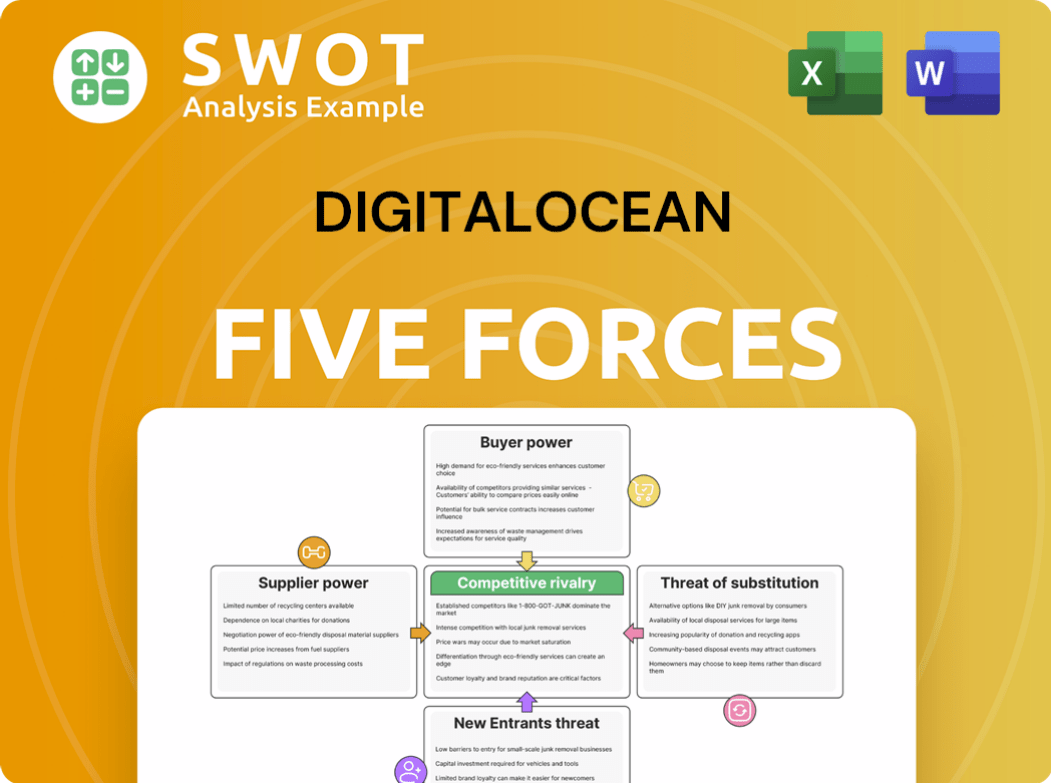
DigitalOcean Porter's Five Forces Analysis
- Covers All 5 Competitive Forces in Detail
- Structured for Consultants, Students, and Founders
- 100% Editable in Microsoft Word & Excel
- Instant Digital Download – Use Immediately
- Compatible with Mac & PC – Fully Unlocked
Related Blogs

- What are Mission Vision & Core Values of DigitalOcean Company?
- What is Competitive Landscape of DigitalOcean Company?
- What is Growth Strategy and Future Prospects of DigitalOcean Company?
- What is Sales and Marketing Strategy of DigitalOcean Company?
- What is Brief History of DigitalOcean Company?
- Who Owns DigitalOcean Company?
- What is Customer Demographics and Target Market of DigitalOcean Company?
Disclaimer
All information, articles, and product details provided on this website are for general informational and educational purposes only. We do not claim any ownership over, nor do we intend to infringe upon, any trademarks, copyrights, logos, brand names, or other intellectual property mentioned or depicted on this site. Such intellectual property remains the property of its respective owners, and any references here are made solely for identification or informational purposes, without implying any affiliation, endorsement, or partnership.
We make no representations or warranties, express or implied, regarding the accuracy, completeness, or suitability of any content or products presented. Nothing on this website should be construed as legal, tax, investment, financial, medical, or other professional advice. In addition, no part of this site—including articles or product references—constitutes a solicitation, recommendation, endorsement, advertisement, or offer to buy or sell any securities, franchises, or other financial instruments, particularly in jurisdictions where such activity would be unlawful.
All content is of a general nature and may not address the specific circumstances of any individual or entity. It is not a substitute for professional advice or services. Any actions you take based on the information provided here are strictly at your own risk. You accept full responsibility for any decisions or outcomes arising from your use of this website and agree to release us from any liability in connection with your use of, or reliance upon, the content or products found herein.