

Designer Brands Bundle

Can Designer Brands Inc. Outmaneuver its Rivals?
The fashion retail arena is a battlefield of shifting consumer tastes and relentless competition. Designer Brands Inc., anchored by its DSW banner, is a key player striving to maintain its edge. Understanding the Designer Brands SWOT Analysis is crucial to grasping its position in this dynamic environment. Recent strategic shifts highlight the company's efforts to adapt and thrive amidst both established and emerging competitors.

This deep dive into the Designer Brands competitive landscape will dissect the challenges and opportunities within the luxury fashion industry competition. We will examine the company's brand positioning strategy and competitive advantage, identifying key competitors and analyzing their market share. Furthermore, we'll explore strategies for Designer Brands to differentiate themselves and navigate the evolving pressures of the fashion brand rivals, including the impact of fast fashion and the future of designer brand competition.
Where Does Designer Brands’ Stand in the Current Market?
Designer Brands Inc. carves out a significant market position in North America's footwear and accessories retail sector, mainly through its DSW Designer Shoe Warehouse brand. The company reported net sales of approximately $3.1 billion in fiscal year 2023, showcasing its substantial presence in the industry. DSW is well-known for its extensive selection of both brand-name and private-label footwear.
The company's offerings span a wide range, including athletic, casual, dress, and seasonal footwear for men, women, and children, along with a growing selection of accessories. Geographically, Designer Brands Inc. has a strong foothold in the United States and Canada, operating hundreds of stores and robust e-commerce platforms. This solid foundation allows the company to effectively reach a broad customer base seeking value and variety in their footwear choices.
Designer Brands Inc. has strategically evolved its market approach, focusing on its owned brands to boost margins and differentiate its products. This includes strategic acquisitions and developments aimed at strengthening its private label presence, moving beyond being solely a multi-brand retailer. The company's financial health, supported by substantial sales figures and ongoing investments in digital transformation and owned brands, highlights its significance within the industry.
 Market Share and Ranking
While specific market share figures for the entire footwear and accessories market can vary, DSW consistently ranks among the top footwear retailers in North America. This strong ranking underscores the brand's popularity and market penetration. The company's ability to maintain a high ranking reflects its effective strategies in a competitive market.
Product and Service Focus
The primary focus is on providing a wide assortment of footwear and accessories, catering to diverse customer preferences. This includes a mix of well-known brands and private-label options, ensuring a broad appeal. The company's emphasis on variety and value helps it to attract and retain a wide customer base.
Geographic Presence
Designer Brands Inc. has a strong presence across the United States and Canada. This extensive geographic footprint allows for broad market coverage. The company operates a large network of stores and robust e-commerce platforms, facilitating easy access for customers.
Competitive Pressures
The company faces ongoing competition from online pure-plays and traditional department stores, especially in competitive urban markets. These competitors put pressure on pricing and market share. Staying competitive requires continuous adaptation and innovation.

Key Elements of Market Position
Designer Brands Inc. maintains a strong market position due to its extensive retail network and diverse product offerings. Its ability to offer both branded and private-label products at competitive prices is a significant advantage. The company's strategic investments in digital transformation and owned brands further strengthen its position.
- Wide Product Assortment: Offers a vast selection of footwear and accessories.
- Strategic Brand Development: Focuses on strengthening its private label presence.
- Geographic Reach: Operates across the United States and Canada with a strong store and online presence.
- Financial Strength: Supported by substantial sales and ongoing investments.
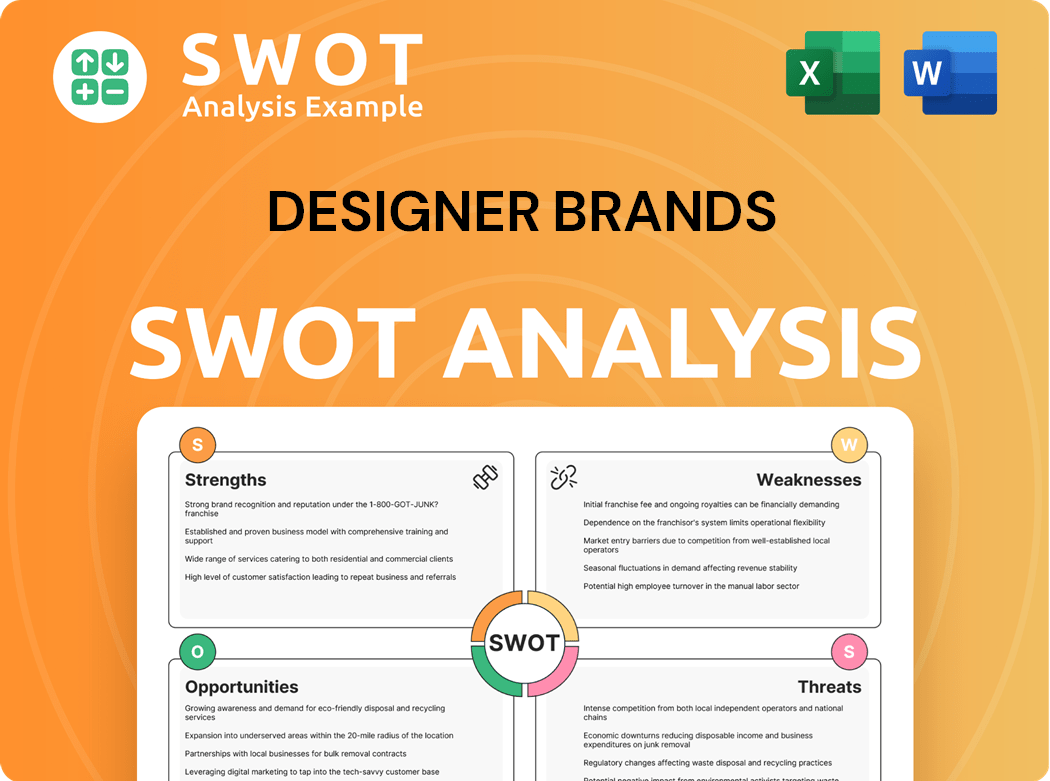
Designer Brands SWOT Analysis
- Complete SWOT Breakdown
- Fully Customizable
- Editable in Excel & Word
- Professional Formatting
- Investor-Ready Format
Who Are the Main Competitors Challenging Designer Brands?
The competitive landscape for Designer Brands Inc. is complex, encompassing a wide array of rivals across the footwear and accessories retail sectors. Understanding this landscape is crucial for strategic planning and maintaining a competitive edge. The company faces both direct and indirect competition, each presenting unique challenges and opportunities.
Direct competitors include established footwear retailers with extensive store networks and strong brand recognition. Indirect competitors range from department stores to e-commerce giants, all vying for consumer spending in the fashion and accessories market. The evolving nature of consumer preferences and technological advancements further shapes the competitive dynamics.
The Marketing Strategy of Designer Brands plays a vital role in navigating this competitive environment, requiring continuous adaptation and innovation to stay ahead.

Direct Competitors
Direct competitors include large footwear retailers. These companies often have a similar target market and product offerings, creating direct competition for customer spending. They compete on factors like price, selection, and store location.
Foot Locker
Foot Locker is a major player in the athletic footwear and apparel market. It has a strong focus on brand partnerships, which drives its sales and market presence. Foot Locker's extensive store footprint gives it a significant advantage.
Genesco
Genesco operates a diverse portfolio of brands, including Johnston & Murphy and Journeys. This diversification allows it to cater to multiple consumer segments, increasing its market reach. Genesco's varied offerings create a broad competitive scope.
Caleres
Caleres owns brands like Famous Footwear and Sam Edelman. Famous Footwear competes directly with DSW, targeting a family-oriented value proposition. Caleres' brand portfolio allows it to cover different price points and consumer preferences.
Indirect Competitors
Indirect competitors present challenges through different business models or product offerings. These competitors may not directly sell the same products but still compete for consumer spending. They often have unique strengths.
Department Stores
Department stores such as Macy's and Nordstrom offer extensive footwear selections. They often carry luxury and designer brands, competing with DSW's higher-end offerings. Their established reputation and wide product range are key strengths.
Key Competitive Factors
Several factors influence the competitive landscape, including e-commerce, emerging brands, and off-price retailers. These factors drive the need for constant adaptation and innovation. Understanding these elements is crucial for maintaining a competitive advantage.
- E-commerce Giants: Amazon and Zappos offer convenience, vast selections, and competitive pricing, significantly disrupting traditional retail. In 2024, online sales accounted for a substantial portion of total retail sales.
- Emerging Players: Direct-to-consumer (DTC) brands and niche players, particularly in sustainable footwear or custom designs, capture specific consumer preferences. These brands often leverage agile business models and targeted marketing strategies.
- Off-Price Retailers and Big-Box Stores: These retailers expand their footwear assortments, increasing competition on price and value. This trend puts pressure on traditional retailers to adjust their pricing and promotional strategies.
- Mergers and Alliances: Companies seek to consolidate market share and enhance supply chain efficiencies through mergers and alliances. These strategic moves reshape the competitive dynamics, creating larger, more integrated entities.
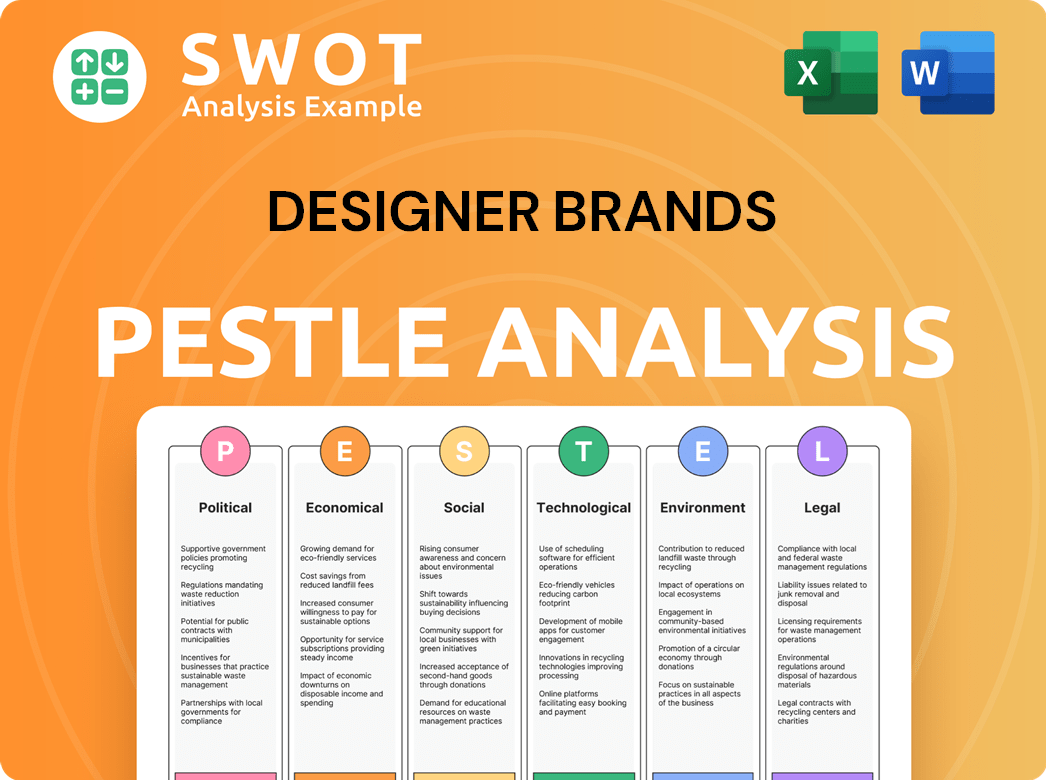
Designer Brands PESTLE Analysis
- Covers All 6 PESTLE Categories
- No Research Needed – Save Hours of Work
- Built by Experts, Trusted by Consultants
- Instant Download, Ready to Use
- 100% Editable, Fully Customizable
What Gives Designer Brands a Competitive Edge Over Its Rivals?
The competitive landscape for Designer Brands Inc. is shaped by its diverse strengths, including its extensive brand portfolio and robust omnichannel presence. The company's ability to offer a wide array of footwear and accessories through banners like DSW Designer Shoe Warehouse positions it as a significant player in the market. This strategic approach allows Designer Brands to cater to varied consumer preferences and price points, setting it apart from competitors.
Designer Brands Inc. has cultivated strong brand equity and customer loyalty, particularly through its VIP loyalty program. This program provides valuable customer data, which informs inventory management and personalized marketing efforts. The integration of physical stores with a growing e-commerce platform enhances customer convenience, with services like in-store pickup and returns. These initiatives contribute to the company's competitive advantage in the dynamic fashion retail environment.
The company's focus on owned brands, such as Vince Camuto and Jessica Simpson, provides greater control over product design, sourcing, and margins. Investments in supply chain optimization and data analytics further enhance operational efficiencies and insights into consumer trends. These advantages are continually evolving as the company adapts to market shifts, focusing on digital innovation and strategic brand management to maintain its competitive edge.
Extensive Brand Portfolio
Designer Brands Inc. boasts a broad portfolio of brands, including DSW Designer Shoe Warehouse, which offers a vast selection of footwear and accessories. This diverse assortment caters to a wide range of consumer preferences and price points, making DSW a one-stop shop. This wide selection is a key element in the Designer brands competitive landscape.
Omnichannel Retail Model
The company's robust omnichannel retail model integrates physical stores with its e-commerce platform. This allows customers to shop seamlessly online and in-store, offering services like in-store pickup and returns. This integration enhances customer convenience and supports the company's market position. This is a key aspect of brand positioning strategy.
Customer Loyalty Program
Designer Brands Inc. leverages its VIP loyalty program to foster customer loyalty and gather valuable data. This program provides insights that inform inventory management and personalized marketing efforts. The program's success contributes to repeat business and customer retention. This is a key factor in the competitive advantage designer brands.
Owned Brands Strategy
The company is increasing its focus on owned brands like Vince Camuto and Jessica Simpson. This strategy allows for greater control over product design, sourcing, and margins. This approach reduces reliance on third-party brands and enhances profitability. This strategy is crucial for the Designer brand market analysis.
Key Competitive Advantages
Designer Brands Inc. has several key advantages that set it apart in the competitive footwear and accessories market. These include its extensive brand portfolio, strong customer loyalty programs, and a robust omnichannel retail model. These factors contribute to its ability to attract and retain customers.
- Extensive Brand Portfolio: Offering a wide selection of brands and price points.
- Omnichannel Retail: Seamless integration of physical stores and e-commerce.
- Customer Loyalty: Utilizing VIP programs for repeat business and data collection.
- Owned Brands: Greater control over product design and margins.
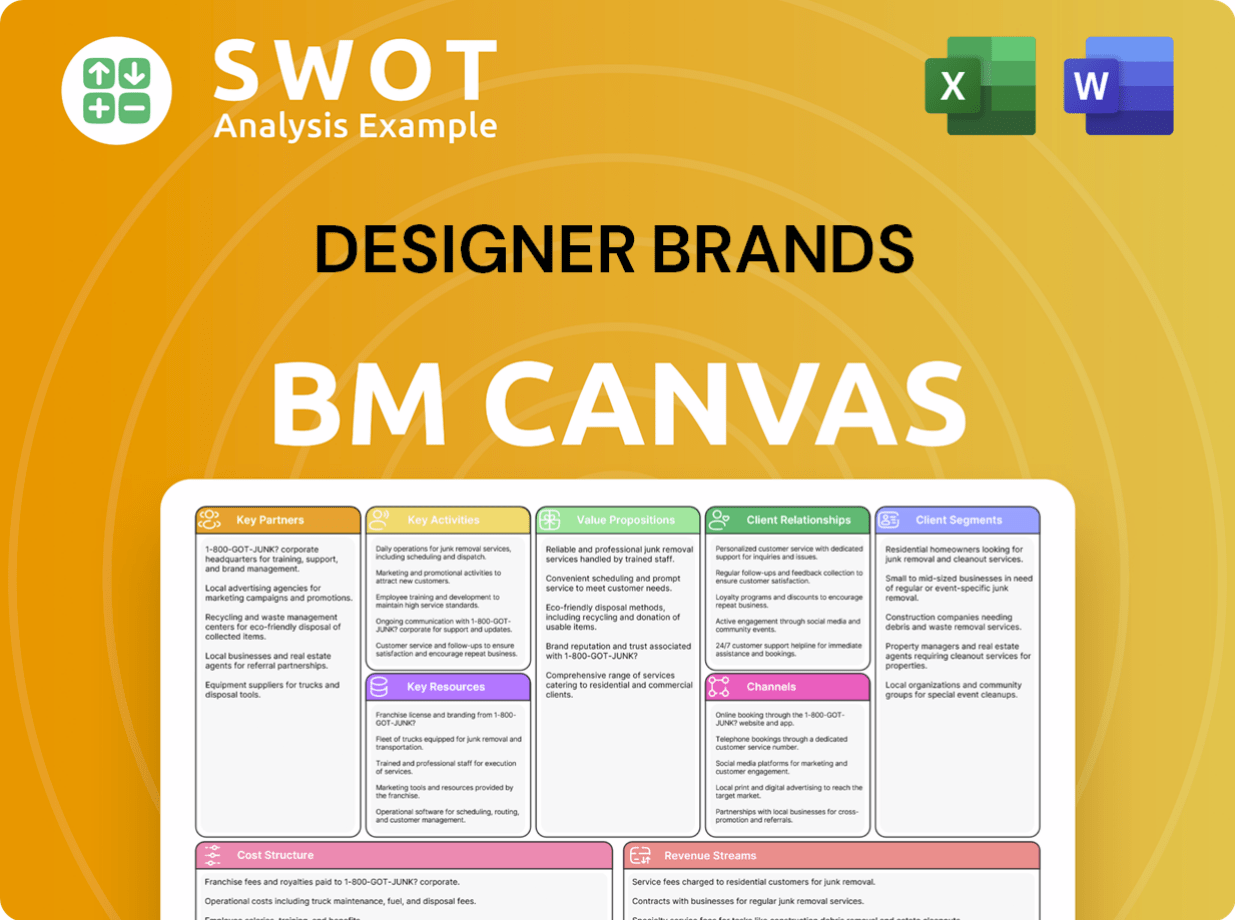
Designer Brands Business Model Canvas
- Complete 9-Block Business Model Canvas
- Effortlessly Communicate Your Business Strategy
- Investor-Ready BMC Format
- 100% Editable and Customizable
- Clear and Structured Layout
What Industry Trends Are Reshaping Designer Brands’s Competitive Landscape?
The Designer Brands competitive landscape is currently influenced by significant shifts in the fashion and footwear industries. These changes include evolving consumer preferences, technological advancements, and regulatory pressures. Understanding these dynamics is crucial for assessing the company's position, potential risks, and future outlook.
The industry faces challenges from market fragmentation, the rise of direct-to-consumer brands, and increased competition from fast-fashion retailers. However, opportunities exist in emerging markets, product innovation, and strategic partnerships. The company's ability to adapt, innovate, and capitalize on these trends will determine its long-term success.
Industry Trends
E-commerce continues to grow, with online sales in the apparel and footwear market projected to reach approximately $187 billion in 2024. Sustainability is a major focus, with consumers increasingly demanding ethically produced goods. Supply chain automation and digital transformation are crucial for operational efficiency.
Future Challenges
Increased competition from fast-fashion retailers and niche brands poses a threat. Declining demand in traditional retail segments and the need to adapt to changing consumer preferences are also key challenges. Regulatory changes, particularly concerning international trade and sustainability, can impact operational costs.
Opportunities
Expansion into emerging markets, where demand for branded footwear is rising, offers significant growth potential. Product innovation, particularly in comfort technology and sustainable materials, provides avenues for differentiation. Strategic partnerships can unlock new revenue streams and improve operational efficiency.
Strategic Responses
The company is focusing on expanding its owned brands portfolio. Enhancing digital capabilities and optimizing its store footprint are also key strategies. These initiatives are designed to improve the company’s brand positioning strategy and overall market competitiveness.
Key Success Factors
Adapting to changing consumer preferences and technological advancements is crucial. Building a strong online presence and offering seamless omnichannel experiences is essential. Furthermore, focusing on sustainable practices and ethical sourcing can enhance brand appeal. For a deeper understanding of the business model, consider reading Revenue Streams & Business Model of Designer Brands.
- Innovation in product design and materials.
- Effective supply chain management.
- Strategic marketing and brand building.
- Strong partnerships and collaborations.
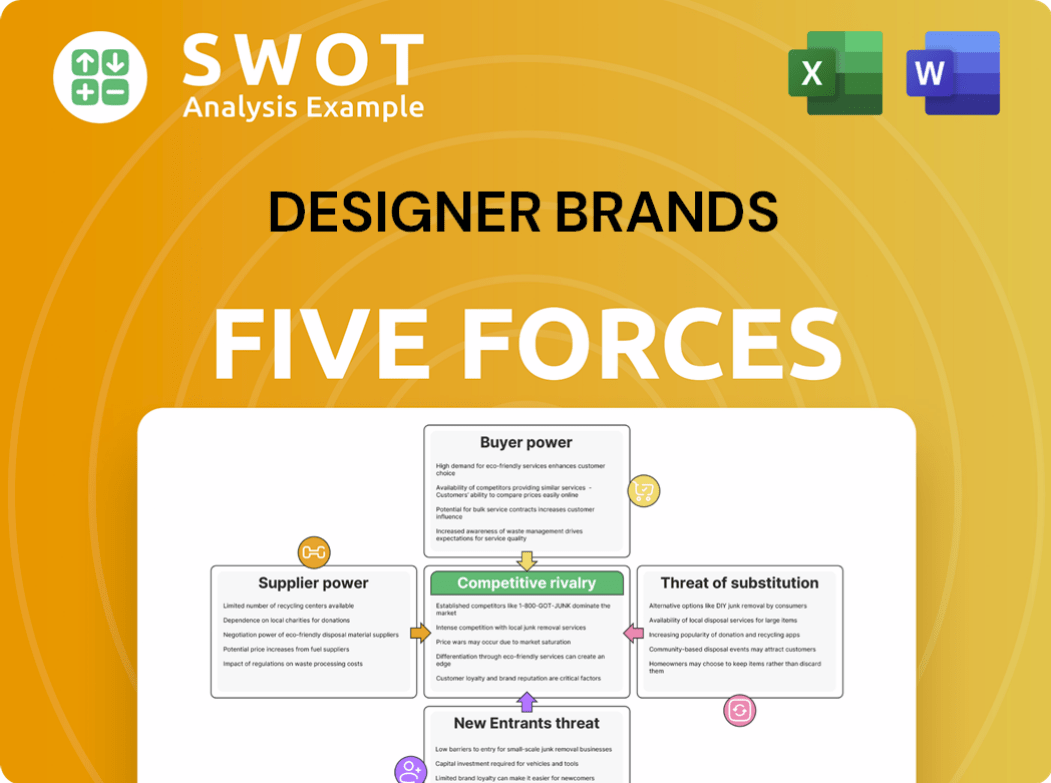
Designer Brands Porter's Five Forces Analysis
- Covers All 5 Competitive Forces in Detail
- Structured for Consultants, Students, and Founders
- 100% Editable in Microsoft Word & Excel
- Instant Digital Download – Use Immediately
- Compatible with Mac & PC – Fully Unlocked
Related Blogs

- What are Mission Vision & Core Values of Designer Brands Company?
- What is Growth Strategy and Future Prospects of Designer Brands Company?
- How Does Designer Brands Company Work?
- What is Sales and Marketing Strategy of Designer Brands Company?
- What is Brief History of Designer Brands Company?
- Who Owns Designer Brands Company?
- What is Customer Demographics and Target Market of Designer Brands Company?
Disclaimer
All information, articles, and product details provided on this website are for general informational and educational purposes only. We do not claim any ownership over, nor do we intend to infringe upon, any trademarks, copyrights, logos, brand names, or other intellectual property mentioned or depicted on this site. Such intellectual property remains the property of its respective owners, and any references here are made solely for identification or informational purposes, without implying any affiliation, endorsement, or partnership.
We make no representations or warranties, express or implied, regarding the accuracy, completeness, or suitability of any content or products presented. Nothing on this website should be construed as legal, tax, investment, financial, medical, or other professional advice. In addition, no part of this site—including articles or product references—constitutes a solicitation, recommendation, endorsement, advertisement, or offer to buy or sell any securities, franchises, or other financial instruments, particularly in jurisdictions where such activity would be unlawful.
All content is of a general nature and may not address the specific circumstances of any individual or entity. It is not a substitute for professional advice or services. Any actions you take based on the information provided here are strictly at your own risk. You accept full responsibility for any decisions or outcomes arising from your use of this website and agree to release us from any liability in connection with your use of, or reliance upon, the content or products found herein.