

TreeHouse Foods Bundle

How Does TreeHouse Foods Navigate the Choppy Waters of the Private Label Market?
The private label food industry is a battlefield, and TreeHouse Foods is a major player in the arena. Consumers are increasingly turning to private label options, creating a dynamic shift in the food and beverage sector. This surge in demand has intensified competition, making it crucial for companies like TreeHouse Foods to stay ahead.

To understand TreeHouse Foods' position, we must analyze its TreeHouse Foods SWOT Analysis, competitors, and market strategies. This deep dive will explore the company's competitive advantages and disadvantages within the private label food industry. Understanding the TreeHouse Foods competitive landscape, including its market share and financial performance, is key to grasping its future prospects and navigating the evolving private label market trends.
Where Does TreeHouse Foods’ Stand in the Current Market?
TreeHouse Foods holds a significant position in the North American private label food and beverage sector. As a leading manufacturer, it primarily serves retail grocery and foodservice customers, offering a broad range of products. The company's operational scale and extensive product portfolio are key factors in its market presence.
The company's core operations revolve around manufacturing and distributing private label food and beverage products. Its value proposition lies in providing retail partners with competitive pricing, consistent quality, and a wide product range. This enables retailers to offer their own branded products, competing effectively against national brands.
TreeHouse Foods reported net sales of approximately $3.5 billion for the fiscal year 2023, demonstrating its substantial size within the industry. The company has strategically focused on categories where it can achieve market leadership and operational efficiency, such as snacking and beverages. This strategic focus helps maintain profitability despite the thinner margins often associated with private label products.
 Market Share and Position
TreeHouse Foods is a major player in the private label food industry, though specific market share data can be fragmented. The company's broad product portfolio and operational scale support its strong market position. It competes effectively by offering competitive pricing and a wide range of products.
Product Portfolio and Strategy
The product range includes baked goods, beverages, condiments, snacks, and meals. This comprehensive approach allows it to serve as a complete private label solution provider. The company has strategically divested certain businesses to concentrate on higher-growth or more profitable segments.
Geographic Presence and Reach
Its primary geographic presence is in the United States, with a robust network of manufacturing plants and distribution centers. This infrastructure supports broad market reach, enabling efficient distribution of its products. The company's focus is on providing quality products to its retail partners.
Financial Performance and Outlook
In fiscal year 2023, TreeHouse Foods reported net sales of $3.5 billion. The company aims to maintain profitability through operational efficiencies and strategic customer relationships. For more insights, consider exploring the Marketing Strategy of TreeHouse Foods.

Key Competitive Advantages
TreeHouse Foods' competitive advantages include its extensive product portfolio and operational scale, enabling it to offer competitive pricing and a wide range of products. Its focus on private label allows it to cater directly to retailers' needs, providing them with branded alternatives.
- Broad Product Range: Offering a variety of products across multiple categories.
- Operational Efficiency: Streamlined manufacturing and distribution processes.
- Strategic Customer Relationships: Strong partnerships with major retailers.
- Market Leadership: A leading position in the private label food industry.
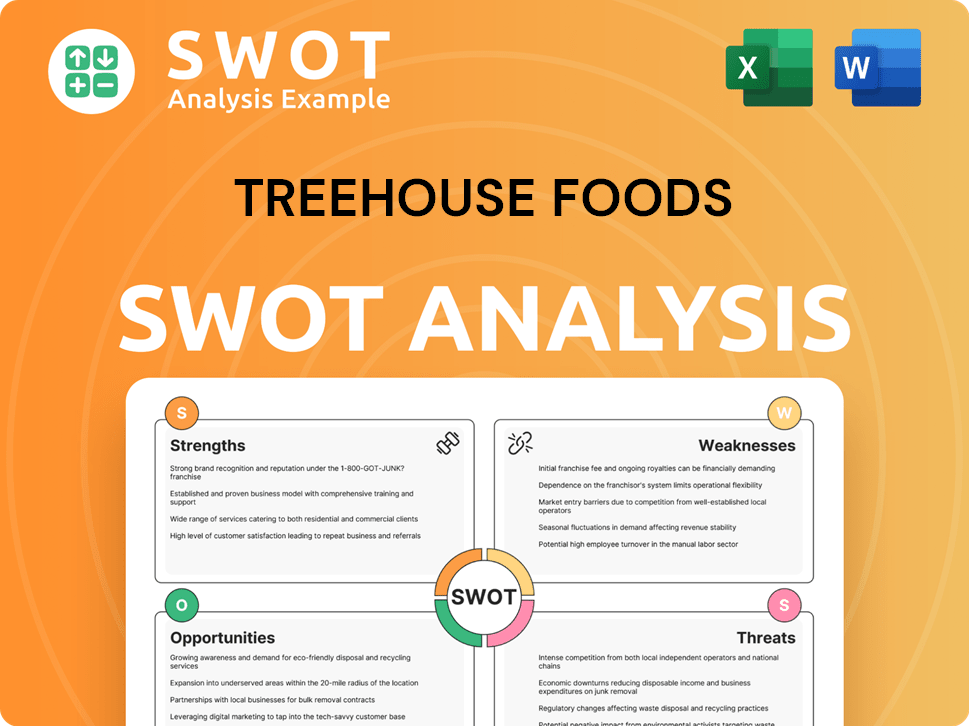
TreeHouse Foods SWOT Analysis
- Complete SWOT Breakdown
- Fully Customizable
- Editable in Excel & Word
- Professional Formatting
- Investor-Ready Format
Who Are the Main Competitors Challenging TreeHouse Foods?
The TreeHouse Foods competitive landscape is characterized by intense rivalry within the private label food and beverage sector. This market is highly contested, with competition stemming from both large, diversified food corporations and smaller, specialized manufacturers. Understanding the TreeHouse Foods market analysis requires a close examination of these key players and their strategies.
The company faces pressure to maintain its market position and profitability. The private label food industry is dynamic, with evolving consumer preferences and retail dynamics. The ability to offer competitive pricing, maintain high-quality products, and ensure reliable supply chains is crucial for success in this competitive environment.
TreeHouse Foods competitors include a mix of major players and niche specialists. These companies employ various strategies, including economies of scale, product innovation, and strategic partnerships, to gain market share and meet the demands of major retailers and consumers.

Conagra Brands
Conagra Brands is a significant competitor, despite its focus on branded products. It has a substantial private label business, particularly in frozen foods and snacks. Conagra's broad distribution network and scale provide a competitive edge.
Post Holdings
Post Holdings has expanded its private label presence through acquisitions, especially in cereal and other consumer packaged goods. This expansion has made Post Holdings a key player in the private label market.
Smaller and Mid-Sized Private Label Manufacturers
Numerous smaller and mid-sized companies specialize in specific product categories or regional markets. These companies can offer greater flexibility and niche product innovation. They often focus on specific areas to compete effectively.
Retailer-Owned Private Label Manufacturing
Some major grocery chains have developed their own in-house private label manufacturing capabilities. This reduces their reliance on external suppliers, intensifying competition. This trend impacts companies like TreeHouse Foods.
Emerging Players
New or emerging players, particularly those focusing on specialty, organic, or plant-based private label products, also present a disruptive force. These companies cater to evolving consumer preferences and challenge traditional market shares.
Competitive Dynamics
The competitive dynamics often involve 'battles' for shelf space and contract bids with major retailers. Factors such as cost, product quality, innovation, and supply chain reliability are critical. Mergers and alliances reshape the competitive balance.
The private label food industry is constantly evolving, with companies adapting to changing consumer demands and retail strategies. For more insights into how the company is navigating this landscape, consider reading about the Growth Strategy of TreeHouse Foods. The competitive landscape demands continuous innovation, efficient operations, and strong relationships with retailers to maintain and grow market share.
Key Competitive Factors
Several factors are critical for success in the TreeHouse Foods competitive landscape, including product quality, pricing, and supply chain efficiency.
- Cost Management: Efficient operations and cost control are essential to offer competitive pricing.
- Product Innovation: Developing new products and adapting to changing consumer preferences is crucial.
- Supply Chain Reliability: Maintaining a robust and reliable supply chain is vital for meeting retailer demands.
- Retailer Relationships: Strong partnerships with major retailers are essential for securing shelf space and contracts.
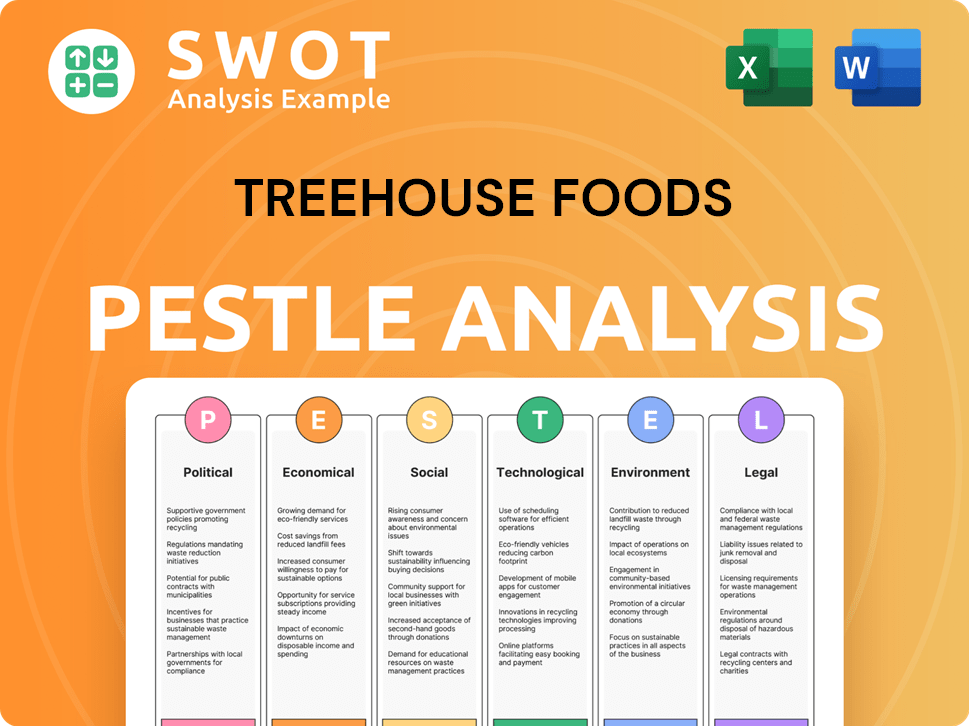
TreeHouse Foods PESTLE Analysis
- Covers All 6 PESTLE Categories
- No Research Needed – Save Hours of Work
- Built by Experts, Trusted by Consultants
- Instant Download, Ready to Use
- 100% Editable, Fully Customizable
What Gives TreeHouse Foods a Competitive Edge Over Its Rivals?
The competitive landscape for TreeHouse Foods is shaped by several key advantages. A deep understanding of the Brief History of TreeHouse Foods helps to contextualize its current market position. These strengths allow the company to compete effectively in the private label food industry, differentiating it from its competitors.
TreeHouse Foods' strategic moves and competitive edge are centered around its robust operational capabilities and extensive product offerings. The company has consistently invested in its infrastructure and product development to meet the evolving demands of its customers. This focus has enabled TreeHouse Foods to maintain a strong position in the market.
TreeHouse Foods' competitive advantages are multifaceted, allowing it to thrive in the private label food industry. The company's ability to offer a wide range of products, coupled with its efficient supply chain, forms the basis of its competitive edge. These elements are crucial for success in the dynamic food manufacturing companies sector.
Manufacturing Footprint and Supply Chain
TreeHouse Foods boasts a significant manufacturing footprint across North America. This extensive network includes numerous production facilities and distribution centers. This allows for economies of scale and efficient delivery of private label products, which translates into competitive pricing for its customers.
Broad Product Portfolio
The company offers a wide array of private label goods, including snacks, beverages, and meals. This comprehensive selection simplifies sourcing for retailers, making TreeHouse Foods a 'one-stop-shop'. This breadth allows the company to adapt to changing consumer preferences and expand into new categories.
Product Development and Innovation
TreeHouse Foods leverages its expertise in product development to create high-quality private label alternatives. The company focuses on innovation to meet consumer demands. This approach allows it to compete effectively with national brands.
Operational Excellence
A strong emphasis on operational excellence and continuous improvement in manufacturing processes contributes to cost-effectiveness and product consistency. This operational efficiency is a key factor in maintaining a competitive edge. This includes a focus on streamlining processes and reducing waste.
Key Competitive Advantages
TreeHouse Foods' competitive advantages include its extensive manufacturing network, broad product portfolio, and focus on product innovation. These strengths are crucial for navigating the private label food industry. The company aims to sustain its advantages through strong customer relationships and ongoing investment in infrastructure.
- Extensive Manufacturing Network: A wide network of production facilities and distribution centers.
- Broad Product Portfolio: Offers a comprehensive range of private label goods.
- Product Innovation: Focus on creating high-quality private label alternatives.
- Operational Efficiency: Continuous improvement in manufacturing processes.
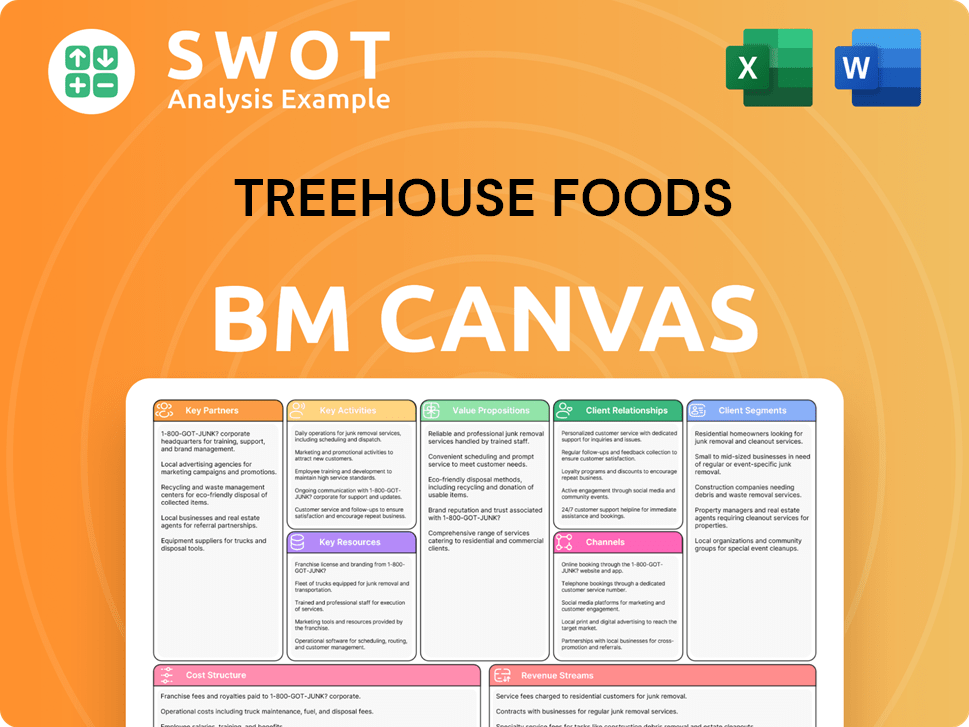
TreeHouse Foods Business Model Canvas
- Complete 9-Block Business Model Canvas
- Effortlessly Communicate Your Business Strategy
- Investor-Ready BMC Format
- 100% Editable and Customizable
- Clear and Structured Layout
What Industry Trends Are Reshaping TreeHouse Foods’s Competitive Landscape?
The private label food and beverage industry is experiencing dynamic shifts, significantly impacting companies like TreeHouse Foods. Key trends include the rising consumer preference for private label products, driven by value and innovation, and the growing demand for healthier and sustainable food options. These factors present both opportunities and challenges for TreeHouse Foods as it navigates the competitive landscape.
The future outlook for TreeHouse Foods involves adapting to changing consumer demands, managing supply chain complexities, and maintaining a competitive edge through operational efficiency and strategic product development. Understanding the competitive dynamics and market trends is crucial for assessing the company's potential for growth and profitability in the coming years. For a deeper dive, explore the Revenue Streams & Business Model of TreeHouse Foods.
Industry Trends
The private label food industry continues to grow, fueled by consumer demand for value and variety. Health and sustainability are becoming increasingly important, with consumers seeking organic, non-GMO, and plant-based options. These trends create opportunities for innovation and product diversification within the TreeHouse Foods competitive landscape.
Future Challenges
Increased competition from established and new players, including niche brands, intensifies pricing pressures. Regulatory changes regarding labeling and sustainability pose ongoing challenges, requiring continuous investment. Economic shifts, such as inflation and supply chain disruptions, impact costs and operational efficiency. These factors affect the TreeHouse Foods market analysis.
Opportunities
Leveraging scale to invest in automation and technology can improve efficiency. Exploring new market segments, such as direct-to-consumer private label offerings, presents growth potential. Expanding into international markets where private label penetration is lower offers further opportunities. This can help improve the TreeHouse Foods industry position.
Strategic Considerations
Agility in responding to consumer trends and managing supply chain complexities is crucial. Delivering high-quality, cost-effective private label solutions remains essential. Continuous operational optimization and strategic product development are key to maintaining a competitive advantage. The company's ability to remain resilient depends on these factors.
Key Strategies for TreeHouse Foods
TreeHouse Foods must focus on several key strategies to navigate the TreeHouse Foods competitive landscape effectively. This includes enhancing its product portfolio and optimizing its supply chain to meet evolving consumer demands and manage costs.
- Product Innovation: Developing new products that cater to health-conscious and sustainable consumers.
- Operational Efficiency: Investing in automation and technology to improve efficiency and reduce costs.
- Market Expansion: Exploring new market segments and potentially expanding into international markets.
- Retail Partnerships: Deepening relationships with retail partners to secure shelf space and drive sales.
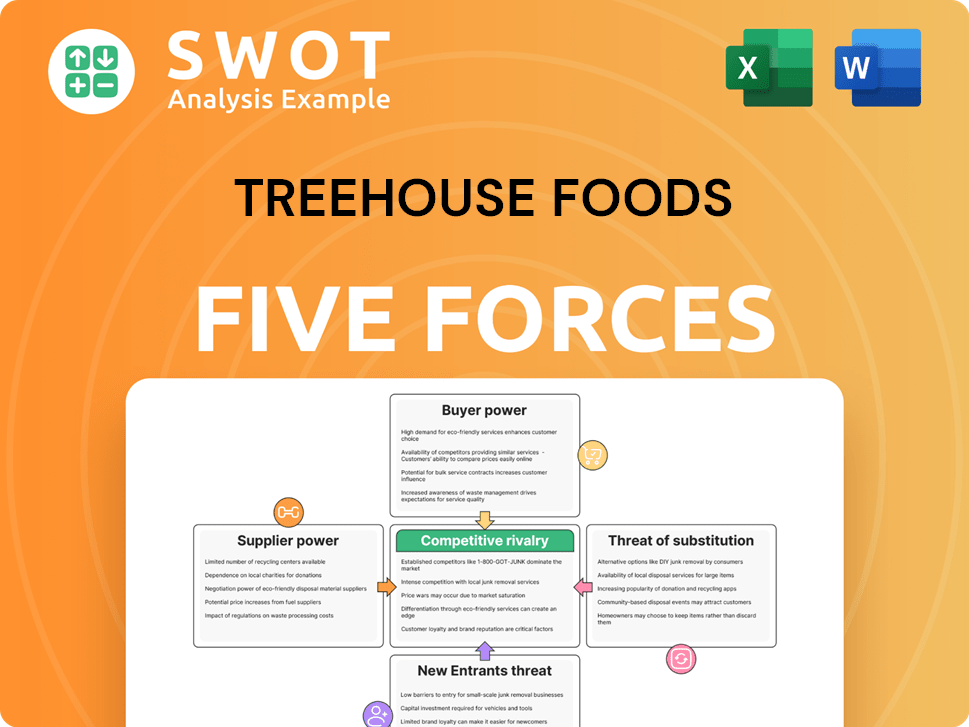
TreeHouse Foods Porter's Five Forces Analysis
- Covers All 5 Competitive Forces in Detail
- Structured for Consultants, Students, and Founders
- 100% Editable in Microsoft Word & Excel
- Instant Digital Download – Use Immediately
- Compatible with Mac & PC – Fully Unlocked
Related Blogs

- What are Mission Vision & Core Values of TreeHouse Foods Company?
- What is Growth Strategy and Future Prospects of TreeHouse Foods Company?
- How Does TreeHouse Foods Company Work?
- What is Sales and Marketing Strategy of TreeHouse Foods Company?
- What is Brief History of TreeHouse Foods Company?
- Who Owns TreeHouse Foods Company?
- What is Customer Demographics and Target Market of TreeHouse Foods Company?
Disclaimer
All information, articles, and product details provided on this website are for general informational and educational purposes only. We do not claim any ownership over, nor do we intend to infringe upon, any trademarks, copyrights, logos, brand names, or other intellectual property mentioned or depicted on this site. Such intellectual property remains the property of its respective owners, and any references here are made solely for identification or informational purposes, without implying any affiliation, endorsement, or partnership.
We make no representations or warranties, express or implied, regarding the accuracy, completeness, or suitability of any content or products presented. Nothing on this website should be construed as legal, tax, investment, financial, medical, or other professional advice. In addition, no part of this site—including articles or product references—constitutes a solicitation, recommendation, endorsement, advertisement, or offer to buy or sell any securities, franchises, or other financial instruments, particularly in jurisdictions where such activity would be unlawful.
All content is of a general nature and may not address the specific circumstances of any individual or entity. It is not a substitute for professional advice or services. Any actions you take based on the information provided here are strictly at your own risk. You accept full responsibility for any decisions or outcomes arising from your use of this website and agree to release us from any liability in connection with your use of, or reliance upon, the content or products found herein.