

Campbell Soup Bundle

How is Campbell Soup Company Navigating the Modern Market?
From its humble beginnings in 1869, Campbell Soup Company has become a household name, but how does it stay relevant in today's dynamic food and beverage industry? This analysis dives deep into the Campbell Soup SWOT Analysis to explore how Campbell's adapts its sales and marketing strategies to meet evolving consumer demands. We'll uncover the tactics behind its iconic brands and its push for product innovation in the competitive soup market.

This exploration of Campbell Soup Company sales and marketing strategy is critical for understanding its performance within the consumer packaged goods sector. We'll examine Campbell Soup Company's marketing campaigns, and how it addresses the challenges of the modern food landscape. This detailed analysis will provide insights into Campbell Soup Company's brand strategy, its sales performance over time, and its approach to digital marketing and customer relationship management, offering a comprehensive Soup market analysis.
How Does Campbell Soup Reach Its Customers?
The sales strategy of the company, a key player in the food and beverage industry, hinges on a diverse array of sales channels. This multi-channel approach ensures its products, which include a wide range of consumer packaged goods, are readily available to consumers. The company's strategy is designed to meet the evolving demands of the market, incorporating both traditional and modern methods to reach a broad customer base.
The company's distribution network is a blend of established relationships and modern e-commerce platforms. It leverages its long-standing partnerships with major retailers and is also making significant strides in digital adoption. This strategy reflects the company's commitment to adapting to changing consumer behaviors and market trends, ensuring its products remain accessible and competitive.
The company's sales channels are crucial for its market presence and sales performance. The company's success in the soup market analysis and broader food industry is significantly influenced by its ability to effectively manage and optimize these channels. This includes adapting to the growth of online grocery shopping, a trend that has been accelerated by recent events.
 Retail Partnerships
The company maintains strong relationships with mass merchandisers, supermarkets, and club stores. These partnerships are crucial for shelf space and visibility, ensuring products are easily accessible to consumers. Direct sales teams manage relationships with large retail chains and wholesale distributors.
E-commerce Platforms
The company has a robust online presence, with products available on major e-commerce platforms. Key platforms include Amazon, Walmart.com, and Target.com. This allows consumers the convenience of online purchasing and home delivery, aligning with current shopping trends.
Convenience and Impulse Purchase Locations
The company's snack division, which includes brands like Goldfish and Snyder's of Hanover, benefits from extensive distribution networks. These networks are particularly effective in convenience stores and other impulse-purchase locations. This channel helps capture sales from consumers making quick purchase decisions.
Digital Presence and Direct-to-Consumer (DTC)
While the company invests in its own digital presence, its primary e-commerce strategy relies on third-party retailers. This approach aligns with the broader consumer packaged goods industry trends. The company is increasing its focus on digital advertising and e-commerce capabilities.
The company's approach to sales channels is dynamic, continuously adapting to market changes and consumer preferences. The company's strategy includes a focus on digital advertising and e-commerce capabilities to meet the growing demand for online grocery shopping. The company's multi-channel approach ensures broad consumer access, regardless of shopping preference. For more insights into the company's target consumer base, explore the Target Market of Campbell Soup.

Key Strategic Shifts
The company has been increasing its focus on digital advertising and e-commerce capabilities to meet the growing demand for online grocery shopping. This shift is a response to changing consumer behaviors and market trends within the food and beverage industry.
- Emphasis on third-party e-commerce platforms.
- Strategic partnerships for distribution.
- Continuous analysis of channel performance.
- Adaptation to online grocery shopping trends.
Campbell Soup SWOT Analysis
- Complete SWOT Breakdown
- Fully Customizable
- Editable in Excel & Word
- Professional Formatting
- Investor-Ready Format

What Marketing Tactics Does Campbell Soup Use?
The marketing tactics employed by the Campbell Soup Company are diverse, leveraging both digital and traditional channels to boost Campbell Soup Company sales. This approach aims to build brand awareness, generate leads, and ultimately drive sales across its extensive product portfolio. The strategy is designed to resonate with consumers and maintain a strong presence in the competitive food and beverage industry.
Digital marketing plays a crucial role in Campbell Soup Company marketing, with content marketing, SEO, and paid advertising forming the core of its online strategy. These efforts are complemented by influencer partnerships and a strong social media presence to engage consumers directly. Data-driven insights are then used to refine and personalize marketing messages.
Traditional media, such as television commercials, radio, and print advertisements, still hold significance, especially for established brands. The company focuses on customer segmentation and personalization to tailor marketing messages and offers. Recent innovations include increased investment in retail media networks and exploring emerging advertising technologies to enhance targeting capabilities and return on investment.

Digital Marketing Strategies
Digital marketing is a core component of Campbell Soup Company's strategy, utilizing content marketing, SEO, and paid advertising. These strategies drive organic traffic and reach targeted audiences. The company also employs email marketing to nurture customer relationships and promote new products.
Content Marketing and SEO
Content marketing is a key tactic, with recipes, meal ideas, and brand stories shared across websites and social media. SEO ensures that brands rank highly for relevant keywords, driving organic traffic. This approach is crucial for maintaining visibility in the soup market analysis.
Social Media and Influencer Marketing
Social media platforms like Instagram, Facebook, TikTok, and Pinterest are central to engagement. Influencer partnerships, particularly for younger demographics, promote specific product lines. This strategy helps in understanding Brief History of Campbell Soup and its evolution.
Traditional Media and Advertising
Television commercials remain a powerful tool for broad reach and brand building, especially for iconic brands. Radio and print advertisements are also utilized for localized promotions. This approach ensures a wide reach across various consumer segments.
Data-Driven Marketing and Personalization
Campbell's uses customer segmentation and personalization to tailor marketing messages and offers. Advanced analytics tools help understand consumer behavior and optimize marketing spend. This data-driven approach informs new product development and targeted ad campaigns.
Recent Innovations and Trends
Recent innovations include increased investment in retail media networks and exploring emerging advertising technologies. These efforts aim to enhance targeting capabilities and improve return on investment. The focus is on staying ahead of Campbell's soup future marketing trends.
Key Marketing Tactics
The company's marketing mix is multifaceted, incorporating digital and traditional strategies. The focus is on consumer engagement, data-driven insights, and adapting to market trends. These tactics support Campbell Soup Company's strategy for sustained growth.
- Content marketing, including recipes and brand stories, to engage consumers and inspire product usage.
- SEO to drive organic traffic to digital properties.
- Paid advertising, including SEM and programmatic display ads, to reach targeted audiences.
- Email marketing campaigns for customer nurturing and promotions.
- Influencer partnerships to reach specific demographics and promote product lines.
- Social media engagement on platforms like Instagram, Facebook, TikTok, and Pinterest.
- Television commercials for broad reach and brand building.
- Data-driven marketing using customer segmentation and personalization.
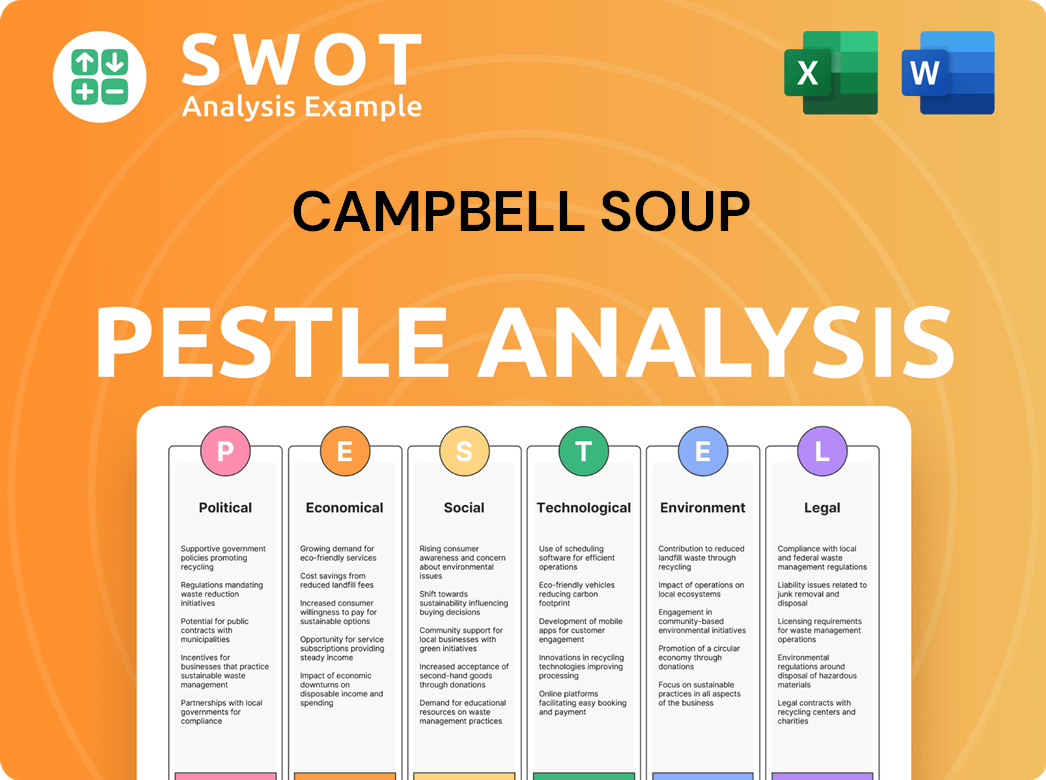
Campbell Soup PESTLE Analysis
- Covers All 6 PESTLE Categories
- No Research Needed – Save Hours of Work
- Built by Experts, Trusted by Consultants
- Instant Download, Ready to Use
- 100% Editable, Fully Customizable
How Is Campbell Soup Positioned in the Market?
The brand positioning of the company is deeply rooted in its heritage, focusing on providing comforting, convenient, and affordable food products. This strategy has allowed the company to maintain a strong presence in the food and beverage industry. The core message often centers around warmth, nourishment, and ease of preparation, emphasizing the role its products play in everyday family life. This approach is vital for effective Growth Strategy of Campbell Soup.
The iconic red and white label is instantly recognizable, fostering brand recognition and familiarity. The marketing tone is friendly and reassuring, aiming to connect with consumers on an emotional level. The customer experience promises reliable quality and consistent taste, catering to busy lifestyles. This brand consistency is meticulously maintained across all channels, from product packaging to digital advertisements.
The company's appeal to its target audience—families, busy individuals, and those seeking convenient meal solutions—is primarily through value and familiarity. For traditional soup lines, the appeal is often rooted in nostalgia and the comfort of a classic meal. Newer offerings, like 'Well Yes!' soups or its plant-based products, differentiate through health consciousness and sustainability.
Value Proposition
The company offers comforting, convenient, and affordable food products. This value proposition focuses on ease of preparation and consistent taste. It caters to busy lifestyles and families seeking reliable meal solutions.
Target Audience
The primary target audience includes families, busy individuals, and those seeking convenient meal solutions. The company also targets health-conscious consumers with its newer product lines. This broad appeal helps maintain a strong market share.
Brand Messaging
The core message emphasizes warmth, nourishment, and ease of preparation. Marketing often highlights the role of products in everyday family life. The tone is approachable, friendly, and reassuring, aiming for emotional connection.
Competitive Differentiation
Differentiation comes from attributes like health consciousness, clean ingredients, and sustainability. The company emphasizes efforts in sustainable sourcing and packaging. This adaptability helps differentiate in the competitive food and beverage industry.
Key Strategies
The company's strategy includes maintaining brand consistency across all channels. It also focuses on adapting to consumer preferences. This involves innovation in product offerings, such as expanding organic and plant-based options.
- Campbell Soup Company sales are supported by consistent branding and product innovation.
- Campbell Soup Company marketing efforts focus on emotional connections and value.
- Campbell Soup Company strategy includes adapting to consumer trends and preferences.
- The company's responsiveness to shifts in consumer sentiment and competitive threats is crucial.
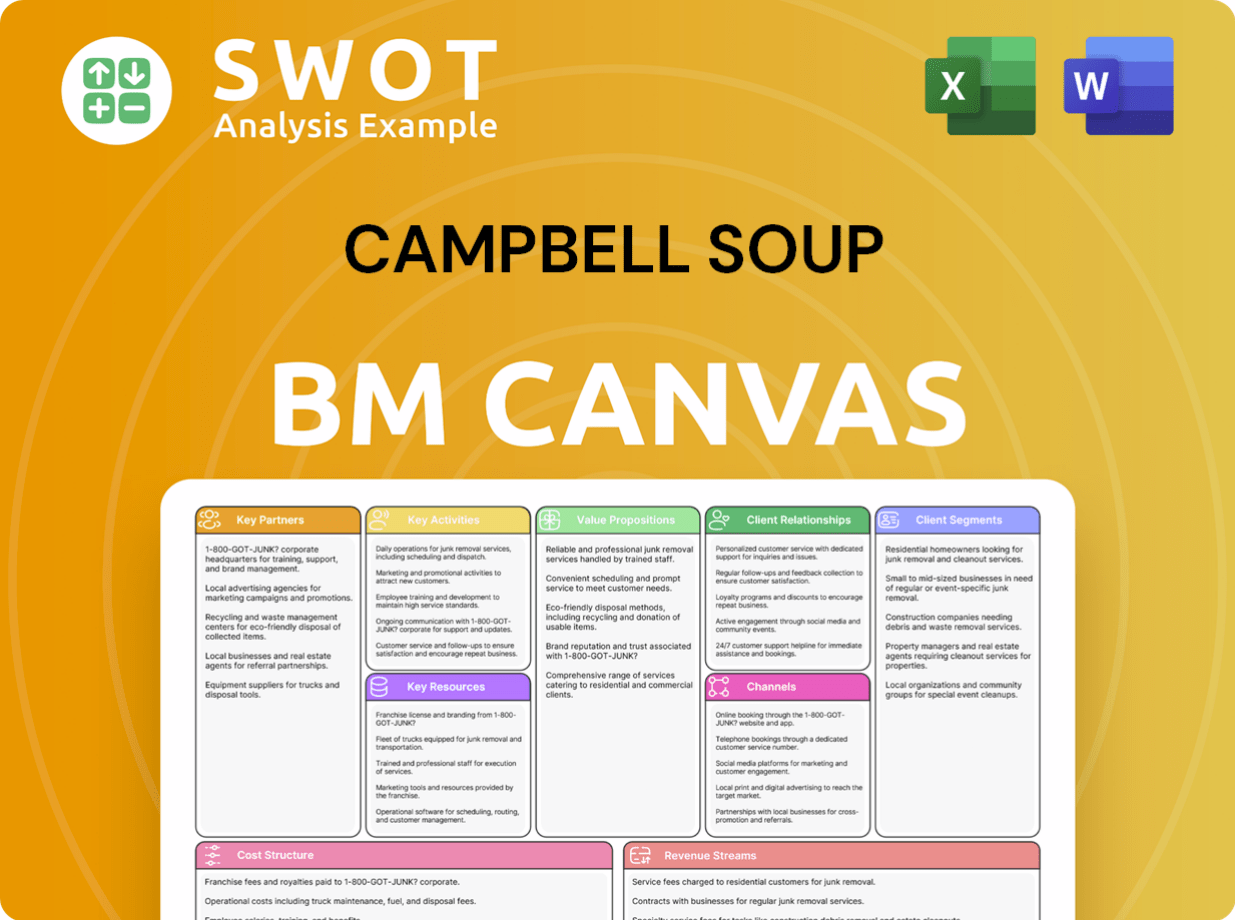
Campbell Soup Business Model Canvas
- Complete 9-Block Business Model Canvas
- Effortlessly Communicate Your Business Strategy
- Investor-Ready BMC Format
- 100% Editable and Customizable
- Clear and Structured Layout
What Are Campbell Soup’s Most Notable Campaigns?
The Campbell Soup Company has a rich history of impactful sales and marketing campaigns, each designed to strengthen its brand and drive growth. These strategies have evolved over time to meet changing consumer preferences and market dynamics. The company's approach blends traditional advertising with modern digital techniques, ensuring broad reach and relevance in the competitive food and beverage industry.
Understanding the evolution of Campbell Soup Company's marketing strategies provides key insights into how it has maintained its position in the soup market analysis. From iconic campaigns to innovative product launches, the company has continually adapted to remain a household name. These campaigns have been instrumental in building brand loyalty and driving sales performance over time.
The company's Campbell Soup Company strategy includes a focus on product innovation, consumer engagement, and effective distribution. Recent campaigns highlight the company's commitment to adapting to modern consumer needs. This approach supports the company's long-term goals in the food and beverage industry.
'M'm! M'm! Good!' Campaign
Launched in 1935, this campaign is a historical landmark. Its objective was to create a memorable association with the comfort and taste of Campbell's soups. The campaign's longevity and widespread recognition demonstrate the power of consistent branding and a clear, appealing message.
'Well Yes!' Campaign
Launched in 2016, this campaign targeted health-conscious consumers. The objective was to signal a modern evolution of the brand. Main channels included digital advertising, social media, and in-store promotions. This campaign helped to reposition Campbell's soup brand strategy.
Goldfish Brand Campaigns
These campaigns focus on engaging younger audiences through interactive content. In 2024, partnerships with influencers and social media trends were used. The objective was to increase brand engagement and drive sales among families and children. These campaigns typically lead to significant increases in social media engagement.
Seasonal and Holiday Promotions
Ongoing promotional campaigns tied to seasonal events and holidays are key. These campaigns use cross-promotions and in-store displays to drive impulse purchases. This strategy helps maintain top-of-mind awareness and boost sales volume.
These campaigns are integral to Campbell Soup Company marketing and Campbell Soup Company sales strategies. To learn more about the financial aspects of the company, consider exploring the Revenue Streams & Business Model of Campbell Soup.
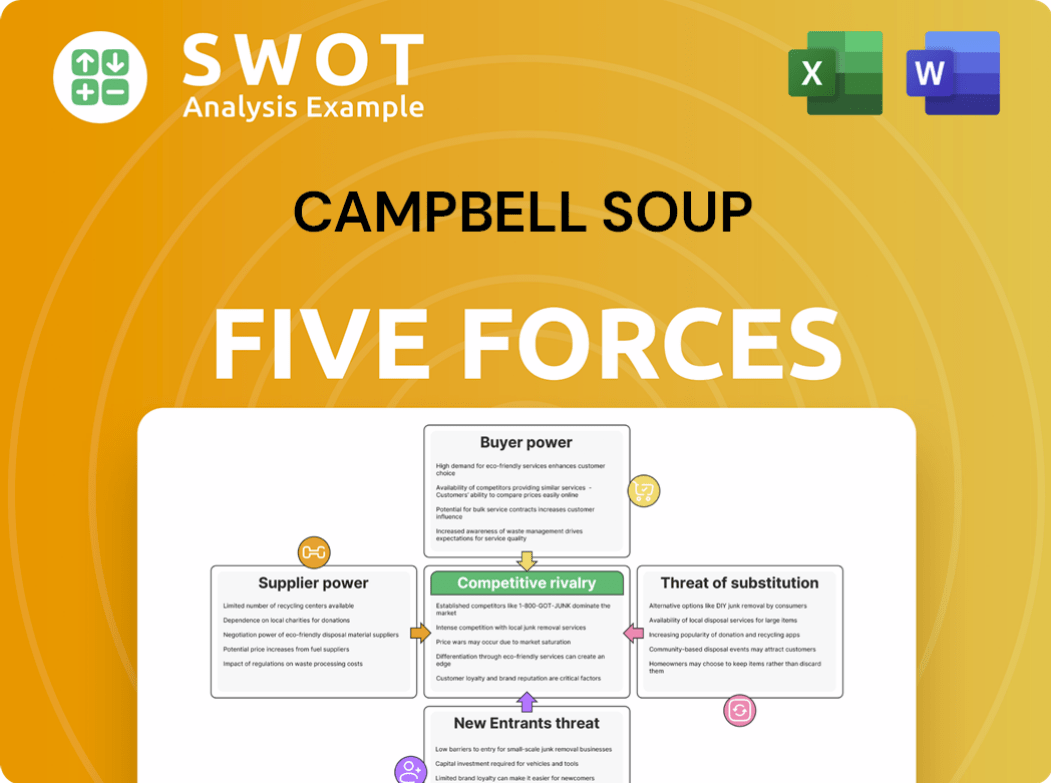
Campbell Soup Porter's Five Forces Analysis
- Covers All 5 Competitive Forces in Detail
- Structured for Consultants, Students, and Founders
- 100% Editable in Microsoft Word & Excel
- Instant Digital Download – Use Immediately
- Compatible with Mac & PC – Fully Unlocked
Related Blogs

- What are Mission Vision & Core Values of Campbell Soup Company?
- What is Competitive Landscape of Campbell Soup Company?
- What is Growth Strategy and Future Prospects of Campbell Soup Company?
- How Does Campbell Soup Company Work?
- What is Brief History of Campbell Soup Company?
- Who Owns Campbell Soup Company?
- What is Customer Demographics and Target Market of Campbell Soup Company?
Disclaimer
All information, articles, and product details provided on this website are for general informational and educational purposes only. We do not claim any ownership over, nor do we intend to infringe upon, any trademarks, copyrights, logos, brand names, or other intellectual property mentioned or depicted on this site. Such intellectual property remains the property of its respective owners, and any references here are made solely for identification or informational purposes, without implying any affiliation, endorsement, or partnership.
We make no representations or warranties, express or implied, regarding the accuracy, completeness, or suitability of any content or products presented. Nothing on this website should be construed as legal, tax, investment, financial, medical, or other professional advice. In addition, no part of this site—including articles or product references—constitutes a solicitation, recommendation, endorsement, advertisement, or offer to buy or sell any securities, franchises, or other financial instruments, particularly in jurisdictions where such activity would be unlawful.
All content is of a general nature and may not address the specific circumstances of any individual or entity. It is not a substitute for professional advice or services. Any actions you take based on the information provided here are strictly at your own risk. You accept full responsibility for any decisions or outcomes arising from your use of this website and agree to release us from any liability in connection with your use of, or reliance upon, the content or products found herein.