

GS Retail Bundle

How Did GS Retail Conquer the South Korean Retail Market?
From humble beginnings to a retail powerhouse, GS Retail's story is a fascinating journey of strategic growth and adaptation. Discover how this South Korean giant, initially focused on convenience, transformed the nation's retail landscape. This article delves into the GS Retail SWOT Analysis, its founding, and evolution, offering valuable insights for investors and business strategists alike.

GS Retail, a significant player in the Retail industry Korea, began its journey with a clear vision, quickly establishing itself as a leader in the South Korean convenience store market. Understanding the brief history of GS25 convenience stores is crucial to grasping GS Retail's success. Its expansion and ability to cater to evolving consumer demands have been key to its enduring presence, solidifying its position within the GS Group.
What is the GS Retail Founding Story?
The story of GS Retail, a prominent player in the South Korean convenience store market, begins in 1971. Initially operating as Lak Hui Sales Co., Ltd., the company set out to provide essential goods and services to local communities. This early vision laid the groundwork for what would become a vast retail network, catering to the evolving needs of South Korean consumers.
The founders of what would become GS Retail company identified a significant opportunity in the burgeoning retail sector. This was driven by increasing urbanization and a growing demand for modern shopping experiences. The company's early focus was on traditional retail, offering a variety of everyday products to meet consumer needs.
Early funding for the company likely came from its parent company, LG Group (formerly Lucky-Goldstar Group). This provided a stable base for initial operations and expansion. The rebranding to GS Retail in 2005, following the separation of LG Group into LG and GS Holdings, marked a pivotal moment. This strategic move helped the retail arm to refine its independent identity and pursue aggressive growth strategies in the retail sector. For more insights into their marketing approach, you can explore the Marketing Strategy of GS Retail.
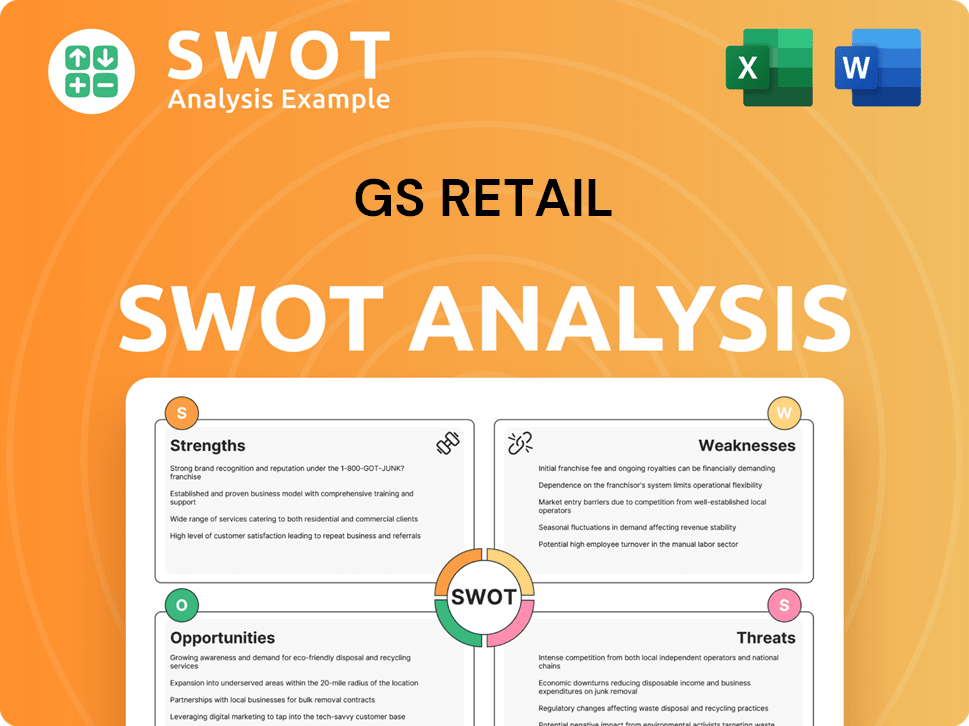
GS Retail SWOT Analysis
- Complete SWOT Breakdown
- Fully Customizable
- Editable in Excel & Word
- Professional Formatting
- Investor-Ready Format
What Drove the Early Growth of GS Retail?
The early growth of GS Retail was marked by strategic moves into various retail formats, significantly impacting the Retail industry Korea. The introduction of GS25 (originally LG25) in 1990 was a game-changer, capitalizing on the rising demand for quick shopping solutions. This expansion solidified its presence across South Korea. Later, the company diversified further into supermarkets with GS THE FRESH (formerly GS Supermarket), broadening its consumer reach.
 Strategic Expansion
GS Retail expanded its footprint by entering the convenience store market with GS25, a pivotal moment in its history. This move allowed it to tap into the growing need for quick and convenient shopping options. The expansion into supermarkets with GS THE FRESH further diversified its offerings, catering to a wider range of consumer needs.
Acquisitions and Partnerships
Strategic acquisitions and partnerships were crucial for GS Retail, helping it strengthen its market position and broaden its geographic reach. Early team expansion focused on building a strong operational framework to support its growing network of stores. This approach enabled the company to consolidate its presence and enhance its competitive edge within the South Korean convenience store market.
Adaptation and Innovation
GS Retail continuously adapted its product offerings and services to align with market demands and competitive dynamics. This included integrating online platforms to complement its physical stores. Investments in logistics and supply chain management significantly improved efficiency and customer satisfaction, solidifying GS Retail's position as a leading retailer. For more insights, see the Growth Strategy of GS Retail.
Early Milestones
The early history of GS Retail involved significant investments in logistics and supply chain management. This enhanced both efficiency and customer satisfaction. The company's commitment to adapting to changing consumer trends has been a key factor in its sustained growth and success. The evolution of GS Retail's branding also played a crucial role.
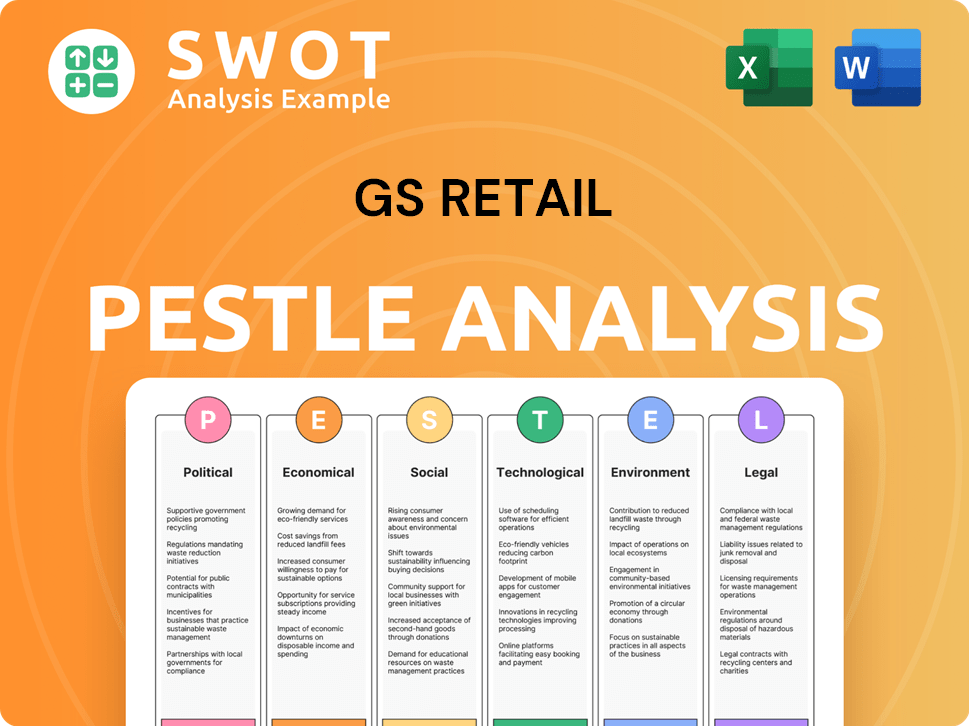
GS Retail PESTLE Analysis
- Covers All 6 PESTLE Categories
- No Research Needed – Save Hours of Work
- Built by Experts, Trusted by Consultants
- Instant Download, Ready to Use
- 100% Editable, Fully Customizable
What are the key Milestones in GS Retail history?
The GS Retail company has a rich history marked by significant milestones that have shaped its position in the South Korean convenience store market. From its inception, the company has consistently expanded its footprint and diversified its offerings to meet evolving consumer demands, becoming a key player in the Retail industry Korea.
| Year | Milestone |
|---|---|
| 1990 | Established as LG Distribution, marking the beginning of its journey in the retail sector. |
| 2005 | Rebranded as GS Retail, reflecting its integration into the GS Group and a strategic shift in focus. |
| 2010s | Expanded its network significantly, becoming one of the largest convenience store chains in South Korea. |
| 2020 | Accelerated its digital transformation efforts, particularly in response to changing consumer behaviors and market trends. |
| 2023 | Reported strong financial results, with revenue growth driven by increased sales and strategic expansions. |
GS Retail has been at the forefront of innovation in the retail sector. Early adoption of advanced retail technologies, such as point-of-sale (POS) systems and inventory management solutions, has optimized store operations. The expansion of online platforms, including the GS Fresh Mall, demonstrates a strategic pivot to address the shift towards online shopping.

Early Technology Adoption
Implementing POS systems and inventory management solutions to streamline operations.
Online Platform Expansion
Launching platforms like GS Fresh Mall to cater to online grocery shopping.
Delivery Service Enhancement
Strengthening delivery options to meet the growing demand for convenience.
Private Label Brand Development
Expanding private label brands to offer unique products and enhance customer loyalty.
Payment System Integration
Integrating various payment systems to provide customers with flexible payment options.
Fresh Food Offerings
Enhancing fresh food offerings to attract customers and differentiate from competitors.
GS Retail company has faced several challenges, including intense competition and changing consumer preferences. The rapid growth of e-commerce and shifts in consumer behavior have necessitated continuous adaptation and investment in digital transformation. To understand more about their target market, you can read about the Target Market of GS Retail.
Intense Market Competition
Facing strong competition from other convenience store chains and online retailers.
Evolving Consumer Preferences
Adapting to changing consumer behaviors and preferences, including the rise of online shopping.
Economic Fluctuations
Navigating economic fluctuations that can impact consumer spending and business performance.
Digital Transformation
Investing in digital transformation to enhance online presence and customer experience.
Supply Chain Management
Optimizing the supply chain to ensure product availability and freshness.
Regulatory Changes
Adapting to regulatory changes that affect the retail sector.
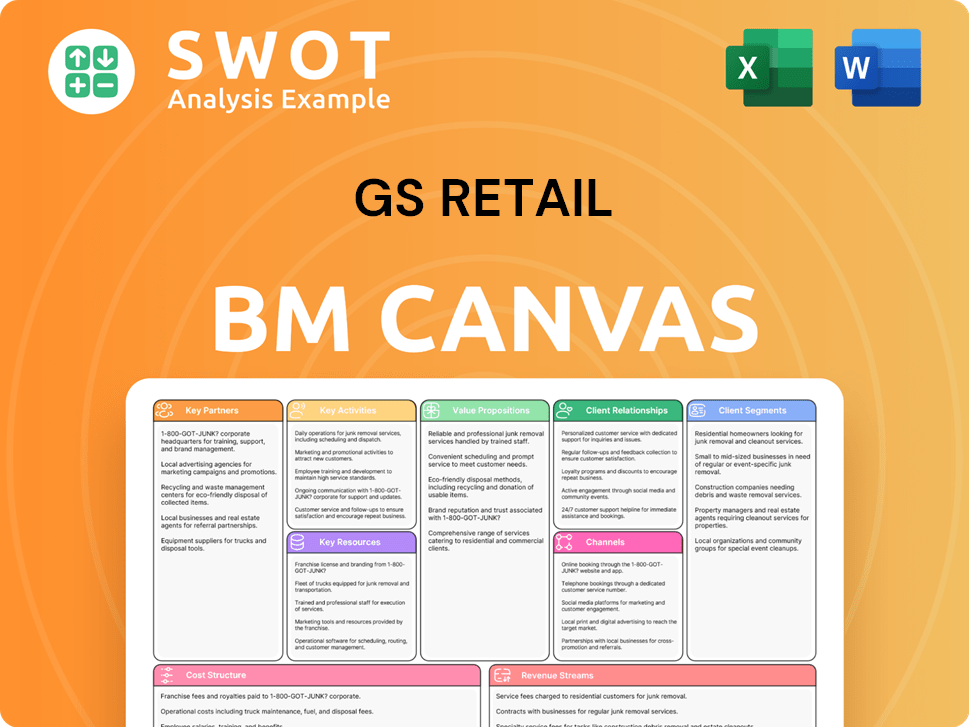
GS Retail Business Model Canvas
- Complete 9-Block Business Model Canvas
- Effortlessly Communicate Your Business Strategy
- Investor-Ready BMC Format
- 100% Editable and Customizable
- Clear and Structured Layout
What is the Timeline of Key Events for GS Retail?
The Mission, Vision & Core Values of GS Retail traces its roots back to 1971 when it was established as Lak Hui Sales Co., Ltd. The company later launched the GS25 convenience store chain in 1990, which significantly impacted the South Korean convenience store market. Following separation from LG Group, the company rebranded to GS Retail in 2005, and has since expanded its operations, including the growth of GS THE FRESH supermarkets and the launch of online grocery services.
| Year | Key Event |
|---|---|
| 1971 | Established as Lak Hui Sales Co., Ltd., marking the beginning of the GS Retail company. |
| 1990 | Launched the LG25 (later GS25) convenience store chain, which would become a major player in the Retail industry Korea. |
| 2005 | Rebranded to GS Retail after separating from LG Group, signaling a new phase of development. |
| 2010s | Significant expansion of the GS THE FRESH supermarket chain, broadening the company's retail presence. |
| 2018 | Launched 'GS Fresh Mall' for online grocery delivery, adapting to digital trends. |
| 2020 | Accelerated digital transformation and O2O services, driven by increased e-commerce demand. |
| 2021 | Continued focus on strengthening logistics and delivery infrastructure to support online services. |
| 2023-2024 | Strategic investments in new technologies and partnerships to enhance customer experience and operational efficiency. |
| 2024-2025 | Continued expansion of convenience store network and diversification of services, focusing on future growth. |
Online and Offline Synergy
GS Retail is focused on optimizing its online and offline synergy to enhance the shopping experience. This involves integrating its digital platforms with its physical stores. The goal is to offer consumers a seamless and convenient shopping experience, which is a crucial element in the current retail landscape.
Quick Commerce and Digital Marketing
The company plans to expand its quick commerce services and strengthen its digital marketing capabilities. This includes enhancing delivery options and improving online marketing strategies. These efforts are designed to attract and retain customers in a competitive market, which is essential for sustained growth.
New Retail Formats and Services
GS Retail is expected to explore new retail formats and services to adapt to changing consumer trends. This includes testing innovative store concepts and offering new service offerings. The company aims to remain competitive by anticipating and meeting evolving consumer demands.
Profitability and Efficiency
Analyst predictions suggest a continued focus on profitability through efficient store operations and robust online platforms. This involves optimizing store layouts and improving supply chain management. The company's strategy aligns with its founding vision of providing convenient retail services.
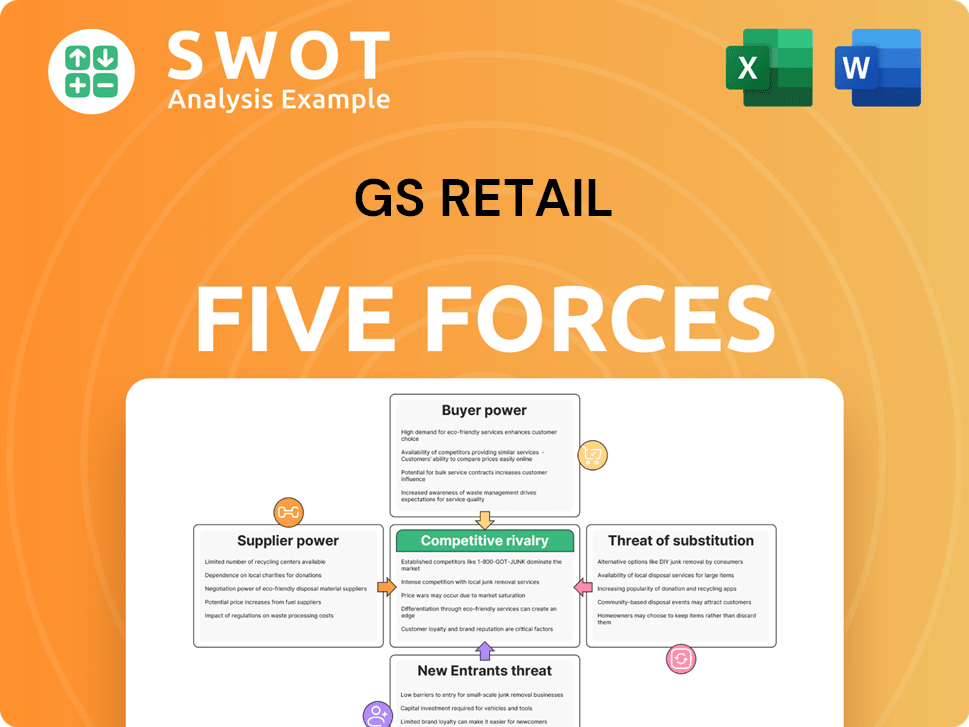
GS Retail Porter's Five Forces Analysis
- Covers All 5 Competitive Forces in Detail
- Structured for Consultants, Students, and Founders
- 100% Editable in Microsoft Word & Excel
- Instant Digital Download – Use Immediately
- Compatible with Mac & PC – Fully Unlocked
Related Blogs

- What is Competitive Landscape of GS Retail Company?
- What is Growth Strategy and Future Prospects of GS Retail Company?
- How Does GS Retail Company Work?
- What is Sales and Marketing Strategy of GS Retail Company?
- What is Brief History of GS Retail Company?
- Who Owns GS Retail Company?
- What is Customer Demographics and Target Market of GS Retail Company?
Disclaimer
All information, articles, and product details provided on this website are for general informational and educational purposes only. We do not claim any ownership over, nor do we intend to infringe upon, any trademarks, copyrights, logos, brand names, or other intellectual property mentioned or depicted on this site. Such intellectual property remains the property of its respective owners, and any references here are made solely for identification or informational purposes, without implying any affiliation, endorsement, or partnership.
We make no representations or warranties, express or implied, regarding the accuracy, completeness, or suitability of any content or products presented. Nothing on this website should be construed as legal, tax, investment, financial, medical, or other professional advice. In addition, no part of this site—including articles or product references—constitutes a solicitation, recommendation, endorsement, advertisement, or offer to buy or sell any securities, franchises, or other financial instruments, particularly in jurisdictions where such activity would be unlawful.
All content is of a general nature and may not address the specific circumstances of any individual or entity. It is not a substitute for professional advice or services. Any actions you take based on the information provided here are strictly at your own risk. You accept full responsibility for any decisions or outcomes arising from your use of this website and agree to release us from any liability in connection with your use of, or reliance upon, the content or products found herein.