

GS Retail Bundle

Who are GS Retail's Customers?
In the dynamic world of retail, understanding GS Retail SWOT Analysis customer demographics and target markets is crucial for sustained success. The retail industry is constantly evolving, particularly in South Korea, where shifts in consumer behavior are reshaping the landscape. This analysis dives deep into the GS Retail customer profile, exploring how the company adapts to meet the changing needs of its target audience.

The South Korean retail market's growth, while slowing overall, highlights the importance of strategic market segmentation. This exploration will uncover the GS Retail target market, examining factors like customer age groups, income levels, and location data. By understanding GS Retail consumer behavior and purchasing habits, we can see how the company tailors its offerings and maintains its market share.
Who Are GS Retail’s Main Customers?
The primary customer segments for GS Retail are centered around consumers (B2C), focusing on convenience and accessibility. This is evident through its diverse retail formats, including convenience stores like GS25, supermarkets such as GS THE FRESH, and hotels. The convenience store segment, especially GS25, is a significant player, with approximately 14,000 stores across South Korea, indicating a broad reach across various demographics.
The target market for GS Retail is influenced by factors such as the increasing number of single-person households in South Korea, which drives demand for smaller, cost-effective products in the supermarket segment. The focus on convenience and proximity suggests a target market that values quick solutions for daily needs. The rapid growth of convenience store sales in South Korea, surpassing department stores in 2024, highlights the increasing importance of this segment.
GS Retail's expansion into international markets, such as Vietnam and Mongolia, with its GS25 brand, also indicates an expanding target segment that includes international consumers interested in Korean products and culture. This growth strategy is part of a broader plan, as discussed in the growth strategy of GS Retail.
 Convenience Store Customers
The convenience store segment, particularly GS25, caters to a broad demographic, including young people who utilize these stores as multifunctional cultural spaces. This segment is a key part of GS Retail's customer demographics. The target market values convenience and quick solutions for daily needs, as the stores offer a wide variety of products and services.
Supermarket Customers
The supermarket segment, such as GS THE FRESH, targets customers influenced by demographic trends like the increasing number of single-person households. This customer profile seeks smaller-scale and cost-effective products. The target market is focused on value and efficiency in their grocery shopping.
International Consumers
GS Retail's expansion into international markets, such as Vietnam and Mongolia, indicates an expanding target segment. This includes international consumers interested in Korean products and culture. This is driven by the popularity of K-foods and other Korean cultural exports.
Hotel Guests
The hotel segment caters to travelers and tourists, offering accommodation and related services. This customer base includes a mix of domestic and international visitors. The target market is focused on comfort, convenience, and hospitality services.

Key Customer Demographics and Market Segmentation
GS Retail's customer demographics are diverse, with a strong emphasis on convenience and accessibility. The target market includes various age groups, income levels, and lifestyles. Understanding customer preferences is essential for tailoring products and services.
- Customer Age Groups: Catering to young people who use convenience stores as cultural spaces.
- Income Levels: Targeting a broad range of income levels, with an emphasis on value and affordability.
- Location Data: Focusing on locations with high foot traffic and accessibility.
- Consumer Behavior: Understanding purchasing habits and preferences to optimize product offerings.
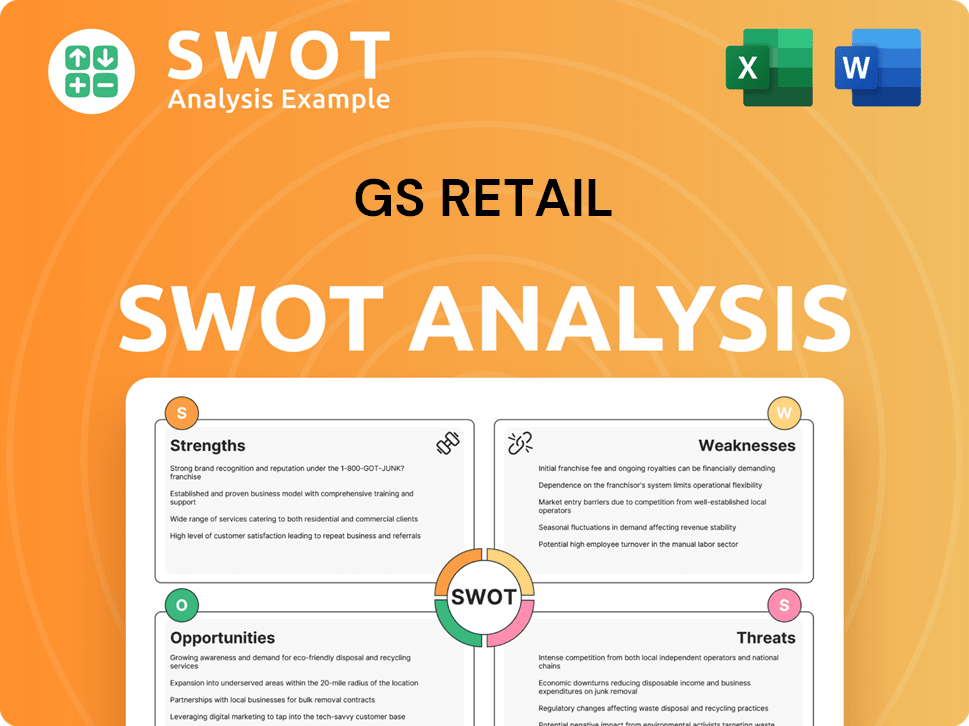
GS Retail SWOT Analysis
- Complete SWOT Breakdown
- Fully Customizable
- Editable in Excel & Word
- Professional Formatting
- Investor-Ready Format
What Do GS Retail’s Customers Want?
Understanding customer needs and preferences is crucial for the success of any retail business. For GS Retail, this involves a deep dive into the evolving lifestyles and demands of its diverse customer base. The company's ability to adapt and cater to these needs directly impacts its market share and overall profitability within the retail industry.
The core of GS Retail's strategy revolves around convenience and providing solutions for modern living. This includes a focus on ready-to-eat options and services that streamline daily routines. The company's approach to market segmentation is also key, allowing it to tailor its offerings to specific consumer profiles and preferences.
The rise of single-person households in South Korea has significantly reshaped consumer behavior, influencing purchasing habits towards convenience-focused products. This shift has driven the growth of the home meal replacement (HMR) market, which was projected to reach approximately KRW 5 trillion (US$3.7 billion) in 2022. GS Retail, through its convenience stores, is actively addressing these trends by expanding its product variety and offering services like fresh food delivery.

Convenience as a Priority
Convenience is a primary driver of customer behavior at GS Retail. This includes the availability of ready-to-eat meals and easy access to essential goods.
Evolving Lifestyles
Changes in lifestyles, such as the increase in single-person households, influence consumer preferences. These changes drive demand for specific product categories.
Focus on Essentials
Economic pressures often lead consumers to prioritize essential items. GS Retail adapts by ensuring a wide range of necessary products are readily available.
Private Brand Success
GS Retail's private brand (PB) products, like Omori Kimchi Stew Ramen and Café25 fresh milk café latte, have demonstrated strong performance. These products cater to specific tastes and preferences.
Localization Strategy
GS Retail employs a localization strategy for international markets. This involves adapting offerings to local food cultures and consumer trends.
Multifunctional Hubs
Convenience stores are evolving into multifunctional hubs. Services like parcel delivery and pet insurance sales are integrated to meet diverse customer demands.
GS Retail's approach to understanding its target market involves several key strategies. The company focuses on providing a wide range of products and services that cater to the fast-paced lifestyles of its customers. This includes offering both essential items and convenient options like ready-to-eat meals. The company's private brand products also play a significant role in meeting specific consumer preferences. To further understand the company's growth strategy, you can read about the Growth Strategy of GS Retail.
Key Customer Preferences
GS Retail’s success hinges on understanding and meeting various customer needs. These preferences are diverse and often influenced by lifestyle and economic factors.
- Convenience: Customers seek easy access to products and services, particularly ready-to-eat meals and quick shopping experiences.
- Variety: A wide selection of products, including both essentials and specialty items, is crucial to attract and retain customers.
- Value: Customers are increasingly price-conscious, making competitive pricing and promotions important.
- Quality: Offering high-quality products, especially in the food category, is essential for building customer trust and loyalty.
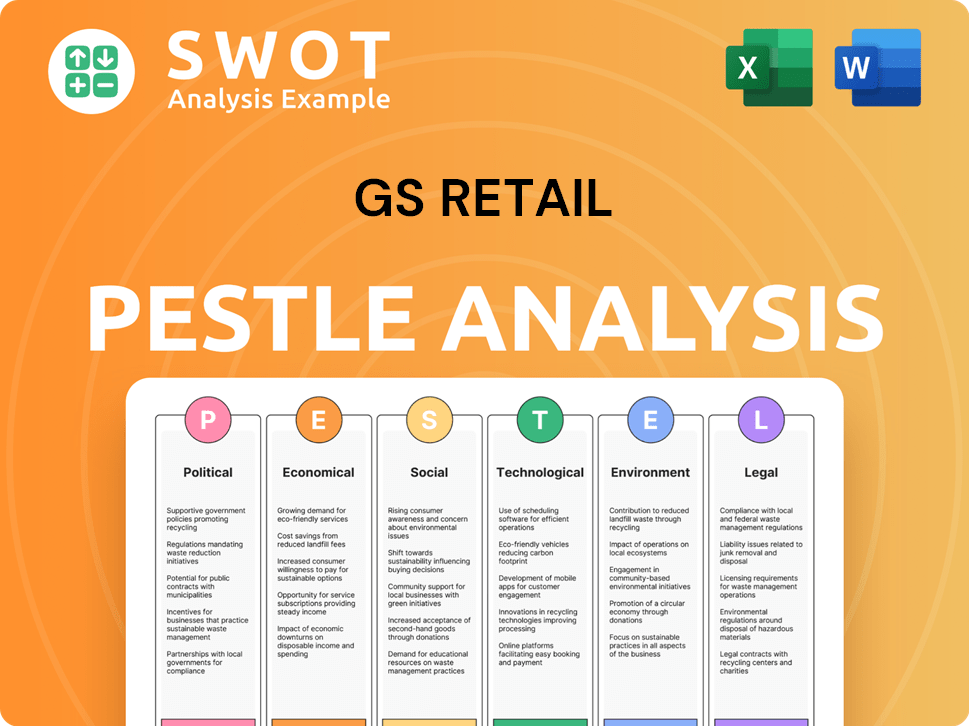
GS Retail PESTLE Analysis
- Covers All 6 PESTLE Categories
- No Research Needed – Save Hours of Work
- Built by Experts, Trusted by Consultants
- Instant Download, Ready to Use
- 100% Editable, Fully Customizable
Where does GS Retail operate?
The geographical market presence of GS Retail is primarily centered in South Korea. The company operates a substantial number of convenience stores under the GS25 banner and supermarkets named GS THE FRESH. This strong domestic foundation is crucial for understanding the overall market strategy and customer base of GS Retail.
As of 2024, GS25 alone had approximately 14,000 stores across South Korea, demonstrating a significant footprint within the country's retail sector. This extensive network underscores the company's deep penetration into the South Korean market and its ability to cater to a wide range of customer needs. The convenience store sector is a key driver of growth in the South Korean retail industry.
Beyond its domestic market, GS Retail has been actively expanding its international presence, particularly in Southeast Asia and Mongolia. This expansion strategy is driven by the increasing demand for K-foods and the company's focus on adapting to local consumer trends. This international growth is a key component of GS Retail's long-term strategy, designed to diversify its revenue streams and increase its global brand recognition. For more information about the company, you can check out Owners & Shareholders of GS Retail.
Vietnam Expansion
GS25 entered Vietnam in 2018 and has rapidly grown its presence. By March 2025, it had 350 branches across the country. Plans are in place to reach 500 stores by the end of 2025 and 700 by 2027, indicating a strong commitment to the Vietnamese market. This growth includes entering northern Vietnam with six new stores in Hanoi in March 2025.
Mongolian Market Entry
GS25 opened its first store in Mongolia in May 2021. The number of outlets surged to 273 from 34 in 2021. This rapid expansion demonstrates the company's ability to adapt to new markets and capitalize on consumer demand for its products and services, particularly K-foods.
Export Performance
GS Retail's export performance exceeded $9 million in 2024. The company is targeting $10 million by next year, showcasing a growing global presence. The export items have reached over 600, targeting more than 30 countries across Europe, North America, the Middle East, Africa, and Asia.
Localization Strategy
GS Retail adapts to local food cultures and consumer trends in its international markets. This localization strategy is key to its success in diverse markets. It allows the company to build strong relationships with local consumers and gain a competitive edge in the retail industry.
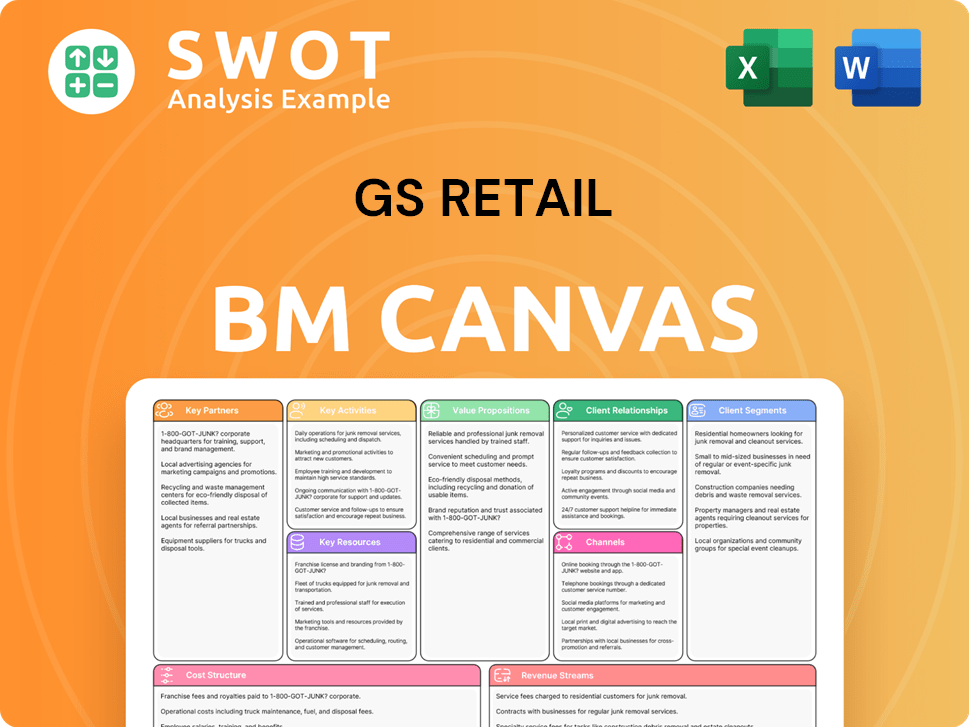
GS Retail Business Model Canvas
- Complete 9-Block Business Model Canvas
- Effortlessly Communicate Your Business Strategy
- Investor-Ready BMC Format
- 100% Editable and Customizable
- Clear and Structured Layout
How Does GS Retail Win & Keep Customers?
GS Retail's approach to customer acquisition and retention is multi-faceted, utilizing both traditional and digital channels to engage its target market. The company's extensive network of physical stores, particularly its convenience stores like GS25 (with around 14,000 locations in South Korea), forms a strong foundation for acquiring customers by ensuring accessibility and convenience. Digital platforms also play a crucial role, with the company developing mobile applications and online services to enhance its retail offerings and cater to evolving consumer preferences.
Retention strategies at GS Retail focus on building strong customer relationships and adapting to changing consumer behaviors. The company emphasizes a 'Customer First' approach and data-driven decision-making, reflecting its 'GS Way' management philosophy. This includes efforts to personalize customer experiences, though specific details on current CRM systems are not extensively available in recent public information. The expansion of services within convenience stores, such as parcel delivery and international mail, demonstrates a commitment to meeting evolving customer needs.
Strategic partnerships and international expansion also contribute to both acquisition and retention. For instance, in February 2025, GS Retail partnered with Musinsa to launch Musinsa Standard Express. Additionally, GS25's expansion into Vietnam through a partnership with Dongwha Pharm, as well as its export success driven by K-content partnerships, showcase innovative approaches to reach and serve customers in new markets. However, a personal data leakage affecting approximately 1.58 million cases between June 2024 and February 2025 may impact customer trust, necessitating enhanced security measures.
Physical Store Network
GS Retail leverages its extensive network of physical stores, especially the GS25 convenience stores, as a primary channel for customer acquisition. With approximately 14,000 stores in South Korea, these locations provide convenient access for a broad range of customers. This widespread presence is crucial for capturing a diverse customer base and ensuring high visibility within the retail industry.
Digital Platforms and Mobile Apps
The company also focuses on digital channels to enhance its retail offerings. This includes mobile applications and online platforms that cater to the evolving needs of consumers. These digital tools are designed to improve the customer experience and support the company's efforts in understanding the competitive landscape within the retail industry.
Customer Relationship Management (CRM)
While specific details on current CRM systems are not extensively detailed in recent public information, the company's focus on 'empathizing through data' and 'building trust with products and services' indicates a commitment to personalized experiences. This approach is crucial for fostering customer loyalty and adapting to the evolving consumer profile.
Strategic Partnerships
GS Retail forms strategic alliances to expand its reach and enhance its service offerings. The partnership with Musinsa for Musinsa Standard Express and the collaboration with Dongwha Pharm in Vietnam are examples of how the company is expanding its market segmentation and attracting new customers. These partnerships are essential for driving acquisition and retention.
Home Meal Replacement (HMR)
The growth of home meal replacement (HMR) offerings is a key retention strategy. This caters to the need for convenience and provides customers with a broader range of food options. This expansion helps maintain customer loyalty by meeting diverse dietary needs and preferences.
Expanding In-Store Services
Offering a wider array of services within convenience stores, such as parcel delivery and international mail, is another retention strategy. These added services make stores more appealing and convenient, encouraging customers to return regularly. This approach enhances the customer lifestyle analysis by catering to their daily needs.
International Expansion
GS Retail's export success, fueled by K-content partnerships, demonstrates an effective acquisition strategy by tapping into global cultural trends and expanding into new markets like the U.S. and Australia with popular products. This expansion supports the company's target market analysis by diversifying its consumer base.
Data Security Measures
Addressing the personal data leakage affecting approximately 1.58 million cases between June 2024 and February 2025 is crucial. Enhancing security measures is vital to rebuild customer trust and maintain a positive brand image. This will help in retaining existing customers and attracting new ones.
Customer Loyalty Programs
While specific details are not widely available, the emphasis on a 'Customer First' approach suggests potential customer loyalty programs. These programs can incentivize repeat purchases and enhance customer loyalty, contributing significantly to retention strategies. These programs can provide valuable insights into customer purchasing habits.
Data-Driven Decision Making
GS Retail uses data-driven decision-making to understand customer preferences and behaviors. This approach allows the company to personalize experiences and tailor its offerings to meet the specific needs of different customer segments. This enhances the understanding of GS Retail customer demographics and their purchasing habits.
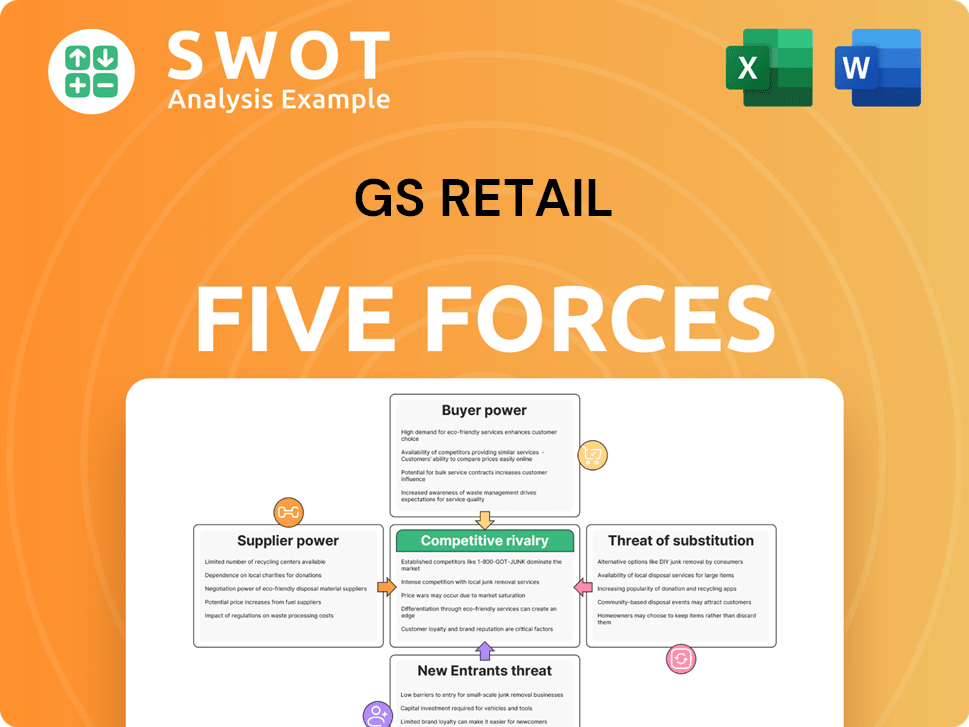
GS Retail Porter's Five Forces Analysis
- Covers All 5 Competitive Forces in Detail
- Structured for Consultants, Students, and Founders
- 100% Editable in Microsoft Word & Excel
- Instant Digital Download – Use Immediately
- Compatible with Mac & PC – Fully Unlocked
Related Blogs

- What are Mission Vision & Core Values of GS Retail Company?
- What is Competitive Landscape of GS Retail Company?
- What is Growth Strategy and Future Prospects of GS Retail Company?
- How Does GS Retail Company Work?
- What is Sales and Marketing Strategy of GS Retail Company?
- What is Brief History of GS Retail Company?
- Who Owns GS Retail Company?
Disclaimer
All information, articles, and product details provided on this website are for general informational and educational purposes only. We do not claim any ownership over, nor do we intend to infringe upon, any trademarks, copyrights, logos, brand names, or other intellectual property mentioned or depicted on this site. Such intellectual property remains the property of its respective owners, and any references here are made solely for identification or informational purposes, without implying any affiliation, endorsement, or partnership.
We make no representations or warranties, express or implied, regarding the accuracy, completeness, or suitability of any content or products presented. Nothing on this website should be construed as legal, tax, investment, financial, medical, or other professional advice. In addition, no part of this site—including articles or product references—constitutes a solicitation, recommendation, endorsement, advertisement, or offer to buy or sell any securities, franchises, or other financial instruments, particularly in jurisdictions where such activity would be unlawful.
All content is of a general nature and may not address the specific circumstances of any individual or entity. It is not a substitute for professional advice or services. Any actions you take based on the information provided here are strictly at your own risk. You accept full responsibility for any decisions or outcomes arising from your use of this website and agree to release us from any liability in connection with your use of, or reliance upon, the content or products found herein.