

Red Lobster Bundle

What's the Story Behind Red Lobster?
Dive into the Red Lobster SWOT Analysis to uncover the secrets of this iconic seafood restaurant chain. From its humble beginnings in 1968, Red Lobster has become a household name, but what's the real story behind its success? Explore the captivating Red Lobster history and discover how this seafood restaurant chain transformed the casual dining landscape.

The Red Lobster company, founded by Bill Darden, initially aimed to make fresh seafood accessible to everyone, a vision that propelled its rapid expansion. Understanding the history of Red Lobster means exploring its evolution from a single Florida location to a global presence. This journey includes significant milestones, challenges, and adaptations that have shaped the Red Lobster restaurants we know today.
What is the Red Lobster Founding Story?
The Red Lobster history began on January 18, 1968. Bill Darden, a seasoned restaurateur, opened the first restaurant in Lakeland, Florida. His vision was to make seafood an accessible, everyday dining option.
Darden saw an opportunity to offer quality seafood at affordable prices in a casual setting. This approach contrasted with the perception of seafood as a luxury item. The initial restaurant served as a blueprint for future locations.
The name 'Red Lobster' clearly indicated the restaurant's focus. Darden used his own resources and possibly local investors to fund the venture. His experience, including opening 'The Green Frog' at age 19, gave him the expertise to succeed. The late 1960s, with a growing middle class, provided a favorable environment for Red Lobster's concept.

Key Facts: Red Lobster's Founding
The first Red Lobster restaurant opened in Lakeland, Florida, on January 18, 1968.
- Bill Darden, the founder, aimed to make seafood affordable and accessible.
- The initial business model focused on a diverse menu, reasonable prices, and a family-friendly atmosphere.
- Darden's prior experience in the restaurant industry helped him launch the concept.
- The restaurant's name clearly communicated its primary offering.
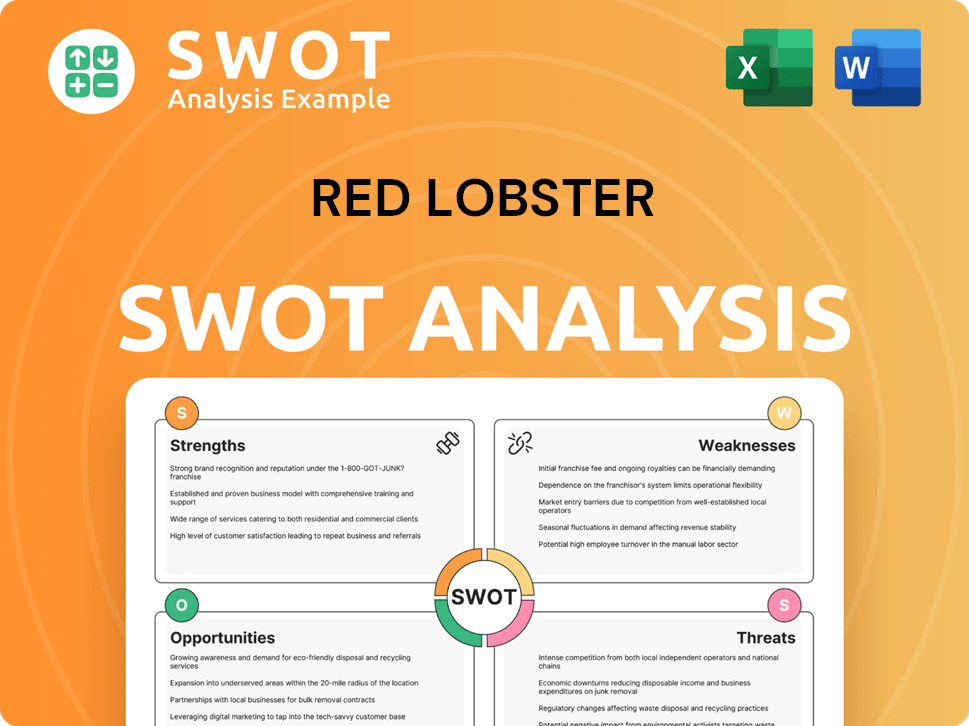
Red Lobster SWOT Analysis
- Complete SWOT Breakdown
- Fully Customizable
- Editable in Excel & Word
- Professional Formatting
- Investor-Ready Format
What Drove the Early Growth of Red Lobster?
Following the success of its initial restaurant, the Red Lobster company quickly entered a phase of early growth and expansion. The initial success of the first restaurant demonstrated the viability of the concept, leading to rapid replication. Recognizing its potential, General Mills acquired Red Lobster by 1973, providing the necessary capital for accelerated expansion. This acquisition marked a pivotal moment in the history of Red Lobster, fueling its growth across the United States.
 Rapid Expansion and Acquisitions
Under General Mills, Red Lobster restaurants expanded significantly, opening numerous locations across the southeastern United States and then nationally. The acquisition by General Mills provided the financial backing needed for this rapid expansion. This allowed the company to establish a strong brand presence in the casual dining market.
Menu Development and Popular Dishes
Early product launches focused on refining and expanding the core seafood menu. Popular dishes like the 'Admiral's Feast' were introduced, alongside new preparations of shrimp and fish. This focus on affordable, quality seafood resonated with a broad customer base. The menu evolution helped shape the Red Lobster's evolution over time.
Operational and Strategic Adjustments
Strategic shifts focused on optimizing operational efficiency and standardizing the dining experience. This ensured consistent quality across all locations as the chain grew. Leadership transitions primarily occurred within the General Mills corporate structure during this period. The company's entry into new geographical markets was strategic, targeting areas with a strong appetite for casual dining.
Market Reception and Competitive Landscape
The market reception was largely positive, as Red Lobster filled a niche for accessible seafood. The competitive landscape, while present, was less saturated with similar concepts, allowing Red Lobster to establish a strong brand presence. This early advantage helped solidify its position in the industry. Read more about the Target Market of Red Lobster.
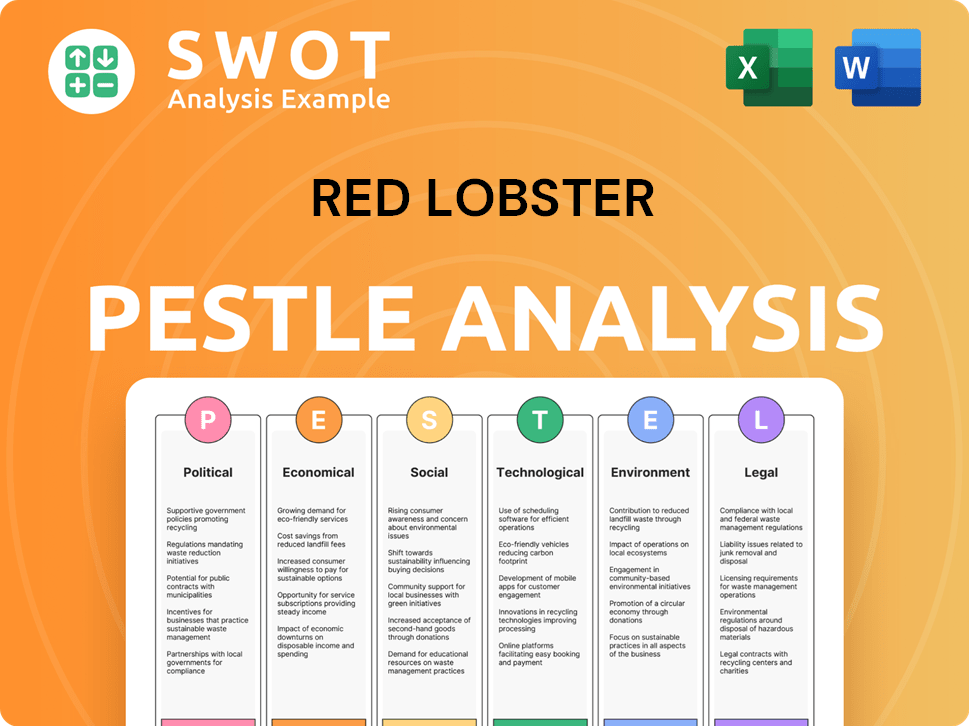
Red Lobster PESTLE Analysis
- Covers All 6 PESTLE Categories
- No Research Needed – Save Hours of Work
- Built by Experts, Trusted by Consultants
- Instant Download, Ready to Use
- 100% Editable, Fully Customizable
What are the key Milestones in Red Lobster history?
The Red Lobster history is marked by significant milestones that have shaped its identity as a leading seafood restaurant chain. From its inception to its present-day operations, the company has navigated various phases of growth, adaptation, and strategic shifts.
| Year | Milestone |
|---|---|
| 1968 | The first Red Lobster restaurant opened in Lakeland, Florida, establishing the foundation for the seafood restaurant chain. |
| 1970s | Red Lobster expanded rapidly across the United States, becoming a prominent player in the casual dining sector. |
| 1980s | The company was acquired by General Mills, which further fueled its expansion and brand development. |
| 1995 | Red Lobster was spun off from General Mills and became part of Darden Restaurants. |
| 2014 | Red Lobster was sold to Golden Gate Capital, marking a significant change in ownership and strategic direction. |
Innovations at Red Lobster have included menu promotions and operational models. The introduction of 'Endless Shrimp' and 'Lobsterfest' showcases the company's commitment to customer engagement.

Endless Shrimp Promotion
This promotion, offering unlimited shrimp, became a signature offering, driving customer traffic and brand recognition. It has been a key element of the Red Lobster restaurants' marketing strategy for years.
Lobsterfest
The annual 'Lobsterfest' promotion introduced a variety of lobster dishes, boosting sales and attracting a loyal customer base. This event has become a staple, enhancing the brand's appeal.
Casual Dining Concept
Red Lobster pioneered the concept of making seafood accessible in a casual dining environment, broadening its appeal. This approach set it apart in the restaurant industry.
Operational Model
The company developed an efficient operational model for high-volume seafood preparation and service. This model enabled it to handle large customer volumes effectively.
The
Economic Recessions
Economic downturns have impacted discretionary spending on dining out, affecting Red Lobster's revenue. The casual dining sector is sensitive to economic fluctuations.
Competitive Pressure
Competition from other casual dining chains and emerging fast-casual seafood concepts has intensified. This has put pressure on its market share.
Menu Adjustments
Product failures or menu items that did not resonate with customers have required adjustments. Menu innovation is crucial for staying relevant.
Changing Consumer Preferences
Evolving consumer demands for healthier options and diverse culinary experiences have necessitated strategic pivots. Adapting to these trends is essential.
Financial Challenges
Financial difficulties, including debt and operational costs, have posed significant challenges. Maintaining financial stability is crucial.
Adaptation to Trends
The casual dining sector continues to adapt to evolving consumer preferences, with a focus on value, convenience, and unique dining experiences. This requires constant innovation.
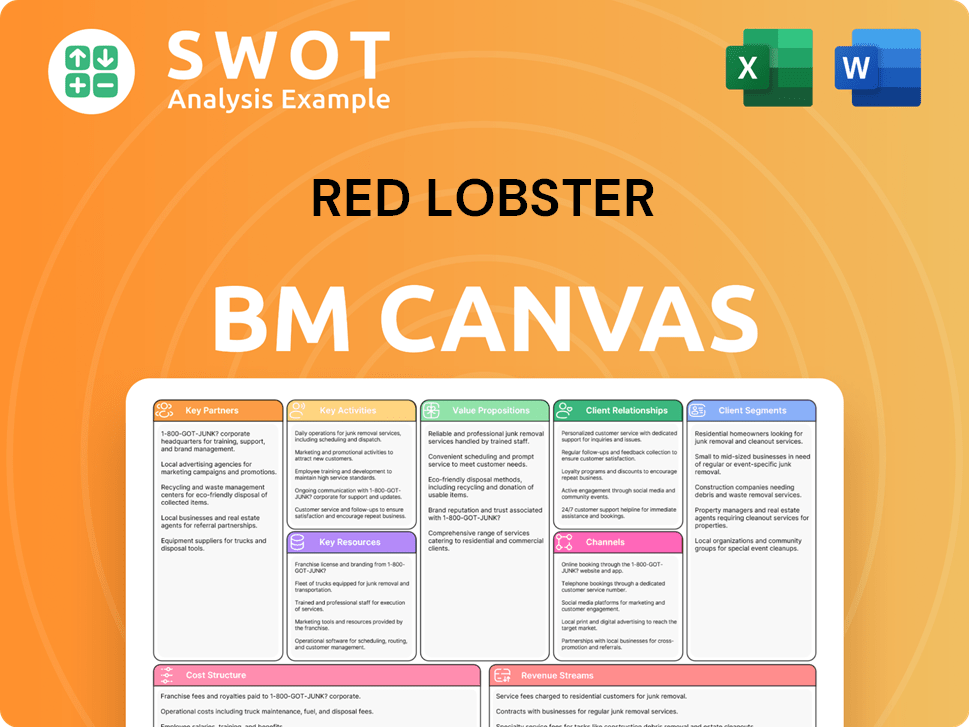
Red Lobster Business Model Canvas
- Complete 9-Block Business Model Canvas
- Effortlessly Communicate Your Business Strategy
- Investor-Ready BMC Format
- 100% Editable and Customizable
- Clear and Structured Layout
What is the Timeline of Key Events for Red Lobster?
The history of Red Lobster is a story of growth and adaptation within the seafood restaurant chain industry. From its humble beginnings to its current status, the company has navigated various challenges and opportunities, shaping its identity and market position.
| Year | Key Event |
|---|---|
| 1968 | The first Red Lobster restaurant opened in Lakeland, Florida, founded by Bill Darden and Harold Allen. |
| 1970s | Expansion began, with new locations opening across the United States, establishing the brand's presence. |
| 1980s | The company was acquired by General Mills, which fueled further growth and menu diversification. |
| 1995 | Red Lobster was spun off from General Mills and became part of Darden Restaurants. |
| 2014 | The company was sold to Golden Gate Capital, marking a significant shift in ownership. |
| 2020-2024 | Red Lobster faced financial challenges, including debt and operational issues, leading to strategic restructuring. In 2024, the company filed for Chapter 11 bankruptcy. |
Financial Restructuring
The recent bankruptcy filing indicates a need for significant financial restructuring. This involves addressing debt, renegotiating contracts, and potentially closing underperforming locations. The goal is to stabilize the company's finances and create a sustainable business model. In 2024, the company reported over $1 billion in debt and had about 600 locations.
Operational Adjustments
Operational changes are likely, including menu adjustments, supply chain optimization, and potential changes to the restaurant format. These adjustments aim to improve profitability and enhance the customer experience. The focus may be on streamlining operations and reducing costs to improve the bottom line.
Brand Repositioning
The company might consider repositioning its brand to better resonate with current consumer preferences. This could involve marketing campaigns, menu innovation, and efforts to attract a broader customer base. This could include a focus on value and affordability to attract more customers.
Market Competition
Red Lobster faces intense competition from other seafood restaurants, casual dining chains, and fast-casual options. Success will depend on how well the company can differentiate itself and offer a compelling value proposition. The company must compete effectively with other seafood restaurants.
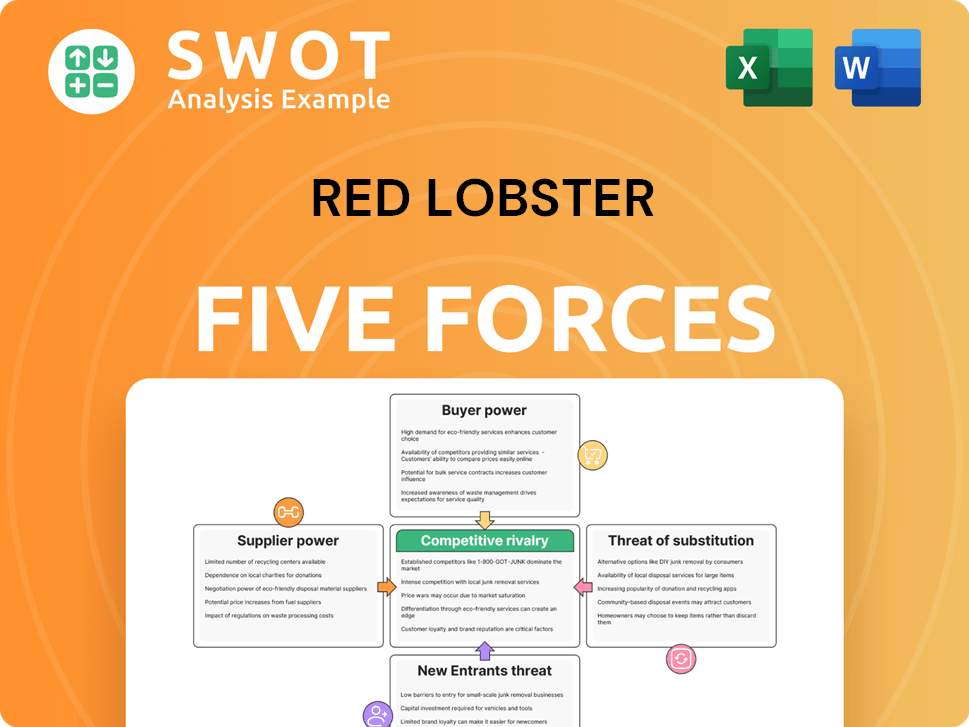
Red Lobster Porter's Five Forces Analysis
- Covers All 5 Competitive Forces in Detail
- Structured for Consultants, Students, and Founders
- 100% Editable in Microsoft Word & Excel
- Instant Digital Download – Use Immediately
- Compatible with Mac & PC – Fully Unlocked
Related Blogs

- What is Competitive Landscape of Red Lobster Company?
- What is Growth Strategy and Future Prospects of Red Lobster Company?
- How Does Red Lobster Company Work?
- What is Sales and Marketing Strategy of Red Lobster Company?
- What is Brief History of Red Lobster Company?
- Who Owns Red Lobster Company?
- What is Customer Demographics and Target Market of Red Lobster Company?
Disclaimer
All information, articles, and product details provided on this website are for general informational and educational purposes only. We do not claim any ownership over, nor do we intend to infringe upon, any trademarks, copyrights, logos, brand names, or other intellectual property mentioned or depicted on this site. Such intellectual property remains the property of its respective owners, and any references here are made solely for identification or informational purposes, without implying any affiliation, endorsement, or partnership.
We make no representations or warranties, express or implied, regarding the accuracy, completeness, or suitability of any content or products presented. Nothing on this website should be construed as legal, tax, investment, financial, medical, or other professional advice. In addition, no part of this site—including articles or product references—constitutes a solicitation, recommendation, endorsement, advertisement, or offer to buy or sell any securities, franchises, or other financial instruments, particularly in jurisdictions where such activity would be unlawful.
All content is of a general nature and may not address the specific circumstances of any individual or entity. It is not a substitute for professional advice or services. Any actions you take based on the information provided here are strictly at your own risk. You accept full responsibility for any decisions or outcomes arising from your use of this website and agree to release us from any liability in connection with your use of, or reliance upon, the content or products found herein.