

Red Lobster Bundle

Can Red Lobster Navigate the Turbulent Seafood Restaurant Industry?
The seafood restaurant industry is currently experiencing significant shifts, and Red Lobster's recent bankruptcy filing in May 2024 is a stark reminder of these challenges. This strategic move, including restaurant closures and Chapter 11 protection, highlights the pressures faced by even well-established brands. Understanding the Red Lobster SWOT Analysis and its competitive landscape is crucial for grasping the dynamics at play.

This analysis dives deep into the Red Lobster competitive landscape, examining its market share analysis, and the strategies employed to compete within the seafood restaurant industry. We will explore who Red Lobster's main rivals are, assess its strengths and weaknesses, and evaluate its financial performance compared to competitors. Furthermore, we'll analyze restaurant industry trends and how Red Lobster can carve out a competitive advantage in a rapidly evolving market.
Where Does Red Lobster’ Stand in the Current Market?
Red Lobster, despite recent financial difficulties, has historically held a significant position within the casual dining seafood segment. As of early 2024, the company operated over 600 locations across the United States and internationally, demonstrating its widespread presence. Its core offerings revolve around seafood dishes, including lobster, shrimp, crab, and fish, catering to a broad customer base seeking a casual dining experience.
The company has attempted to modernize its menu and restaurant aesthetics to attract a younger demographic. However, these efforts have faced challenges. A Brief History of Red Lobster reveals the evolution of the brand. Red Lobster has struggled with profitability and customer traffic in recent years, reporting a net loss of $76 million in 2023. This contrasts with the performance of many casual dining peers.
Its financial health, as reflected in its recent bankruptcy filing, indicates a weakened position compared to major competitors who have maintained stronger balance sheets and demonstrated more effective operational efficiencies. The Red Lobster competitive landscape is shaped by these factors, influencing its market share and strategic decisions.
 Market Share and Presence
Red Lobster's market share is difficult to pinpoint precisely due to its current private ownership. However, its extensive geographic presence, with over 600 locations, highlights its scale within the seafood restaurant industry. This widespread presence is a key factor in its competitive positioning.
Financial Performance
The company reported a net loss of $76 million in 2023, indicating financial strain. This contrasts with the generally robust performance of many casual dining peers. This financial performance directly impacts its ability to compete effectively and maintain its market position.
Customer Demographics
Red Lobster targets a broad customer segment, including families and those seeking a casual dining experience. Efforts to attract a younger demographic have been ongoing. Understanding these demographics is crucial for effective marketing and competitive strategies.
Menu and Offerings
The menu focuses on a variety of seafood dishes, including lobster, shrimp, crab, and fish. Pricing strategies and menu offerings are critical components of its competitive approach. Menu innovation and value are essential for attracting and retaining customers.

Key Market Position Insights
Red Lobster's market position is influenced by its size, financial performance, and competitive environment. The Red Lobster market analysis reveals that it faces challenges in profitability and customer traffic. Understanding these factors is critical for assessing its future prospects.
- Widespread geographic presence, with over 600 locations.
- Reported a net loss of $76 million in 2023.
- Focus on casual dining and family-friendly experiences.
- Menu includes a variety of seafood dishes.
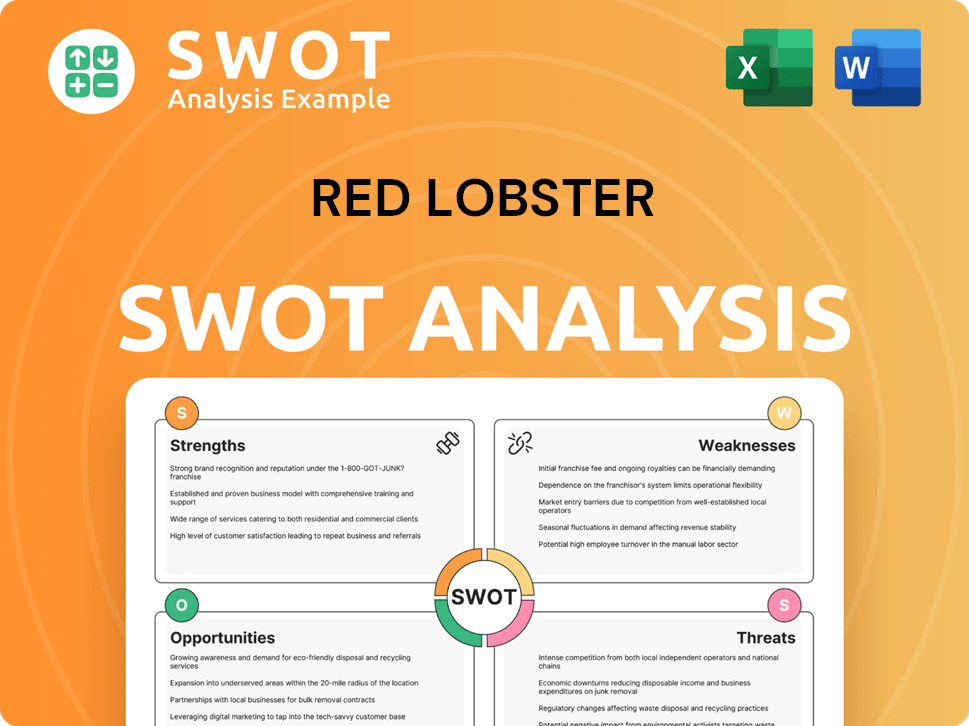
Red Lobster SWOT Analysis
- Complete SWOT Breakdown
- Fully Customizable
- Editable in Excel & Word
- Professional Formatting
- Investor-Ready Format
Who Are the Main Competitors Challenging Red Lobster?
Understanding the Red Lobster competitive landscape requires a close look at its rivals within the seafood restaurant industry and the broader casual dining market. The company faces competition from various types of establishments, each with its own strengths and strategies. Analyzing these competitors helps to understand Red Lobster's market analysis and identify opportunities for differentiation.
Red Lobster competitors range from direct seafood chains to broader casual dining restaurants and even emerging fast-casual concepts. These competitors challenge Red Lobster on multiple fronts, including menu offerings, pricing, and marketing. The competitive environment is dynamic, with constant shifts driven by consumer preferences, economic conditions, and industry trends.
The ability to adapt and innovate is crucial for Red Lobster to maintain its position. A key aspect of this adaptation involves understanding the strategies of its competitors and how they impact Red Lobster's market share analysis and overall financial performance.

Direct Seafood Chains
Direct competitors include other casual seafood chains that offer similar menus and dining experiences. These rivals often compete on price, menu innovation, and localized appeal. The seafood restaurant industry is highly competitive, with chains constantly striving to attract customers.
Casual Dining Restaurants
Broader casual dining chains like Olive Garden, Applebee's, and Chili's also compete for customers. These restaurants offer diverse menus and aggressive promotional strategies. They draw away potential customers who might otherwise choose seafood.
Fast-Casual and Quick-Service Seafood
Fast-casual seafood concepts and upscale quick-service restaurants provide quicker service and often lower prices. These emerging players disrupt the traditional competitive landscape. They appeal to customers seeking convenience and value.
Meal Kits and Grocery Prepared Meals
Meal kit services and grocery store prepared meals offer convenient at-home dining alternatives. These options indirectly compete with Red Lobster. They influence consumer choices and dining habits.
Regional Seafood Restaurants
Regional players may source seafood more locally, appealing to consumers' growing preference for sustainability and freshness. These restaurants often have a strong local presence. They cater to specific regional tastes.
Mergers and Alliances
Mergers and alliances among larger restaurant groups further consolidate market power. This increases pressure on standalone chains like Red Lobster. The competitive dynamics are constantly shifting.
Analyzing Red Lobster's strengths and weaknesses in comparison to its competitors is crucial. Understanding the pricing strategy compared to competitors, menu offerings, and marketing approaches helps to identify areas for improvement and innovation. For instance, Red Lobster's ability to compete with fast-casual restaurants depends on its ability to offer value and convenience. The impact of inflation on Red Lobster and its competitors also plays a significant role, influencing pricing and consumer behavior. Furthermore, insights into the Red Lobster's customer demographics and target market are essential. If you want to know more about the customer, read about the Target Market of Red Lobster.
Key Competitive Factors
Several factors significantly influence Red Lobster's competitive landscape. These include menu variety, pricing, location, and marketing efforts. Understanding these factors is key to evaluating Red Lobster's competitive advantage.
- Menu Innovation: Constantly updating menu offerings to stay relevant.
- Pricing Strategies: Balancing value with profitability.
- Marketing and Promotions: Attracting customers through various campaigns.
- Customer Experience: Providing excellent service and ambiance.
- Operational Efficiency: Managing costs and improving service speed.
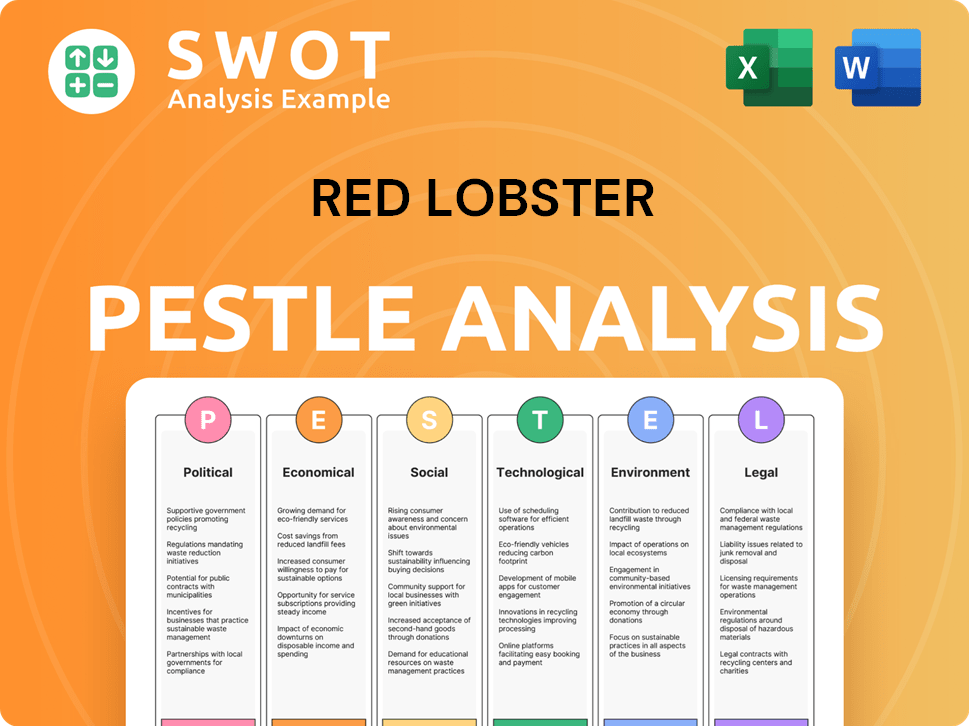
Red Lobster PESTLE Analysis
- Covers All 6 PESTLE Categories
- No Research Needed – Save Hours of Work
- Built by Experts, Trusted by Consultants
- Instant Download, Ready to Use
- 100% Editable, Fully Customizable
What Gives Red Lobster a Competitive Edge Over Its Rivals?
Historically, the company's competitive advantages have been rooted in its brand recognition and established distribution network. For many consumers, the brand has evoked feelings of familiarity and comfort, especially for those seeking a traditional seafood dining experience, which has fostered repeat business. Its extensive supply chain and distribution network, developed over years of operation, have enabled consistent sourcing of seafood products across its hundreds of locations, providing a degree of economies of scale. This has allowed the company to maintain a presence in the seafood restaurant industry.
Signature offerings, like the Cheddar Bay Biscuits, have also contributed to a unique identity and customer draw. However, the sustainability of these advantages has faced threats. Brand loyalty has been eroded by changing consumer preferences and increased competition. Economies of scale have been challenged by rising food and labor costs, and the company has struggled to leverage its distribution network into cost efficiencies that translate to competitive pricing or healthier margins. The Growth Strategy of Red Lobster provides further insights into the company's evolution.
The competitive landscape has seen rivals increasingly focus on fresh, sustainable sourcing and innovative menu development, areas where the company has sometimes lagged. Understanding the Red Lobster competitive landscape requires a deep dive into these evolving dynamics and market analysis.
Brand Recognition and Customer Loyalty
The company has benefited from strong brand recognition, creating customer loyalty over the years. This familiarity has been a significant asset in attracting repeat customers. However, this advantage is being tested by changing consumer preferences and increasing competition within the seafood restaurant industry.
Established Distribution Network
The company's extensive supply chain and distribution network has enabled it to source seafood consistently across its locations. This network has provided a degree of economies of scale. Despite this, rising costs and competitive pressures have challenged the ability to leverage this network effectively.
Signature Menu Items
Iconic menu items, such as the Cheddar Bay Biscuits, have created a unique identity and customer draw. These offerings have contributed to a distinct dining experience. However, the competitive landscape requires continuous innovation to maintain this appeal.
Challenges and Threats
The company faces challenges from shifting consumer preferences, rising costs, and increased competition. Rivals are increasingly focusing on fresh, sustainable sourcing and innovative menu development. The company's ability to adapt to these trends will be crucial for its future outlook.
Key Competitive Advantages and Weaknesses
The company's strengths include brand recognition and an established distribution network. However, weaknesses include the erosion of brand loyalty and challenges in cost management. Understanding these strengths and weaknesses is critical for a thorough Red Lobster SWOT analysis.
- Brand Recognition: High customer awareness and loyalty.
- Distribution Network: Established supply chain across numerous locations.
- Menu Innovation: Introduction of new items to attract customers.
- Cost Pressures: Rising food and labor costs impacting profitability.
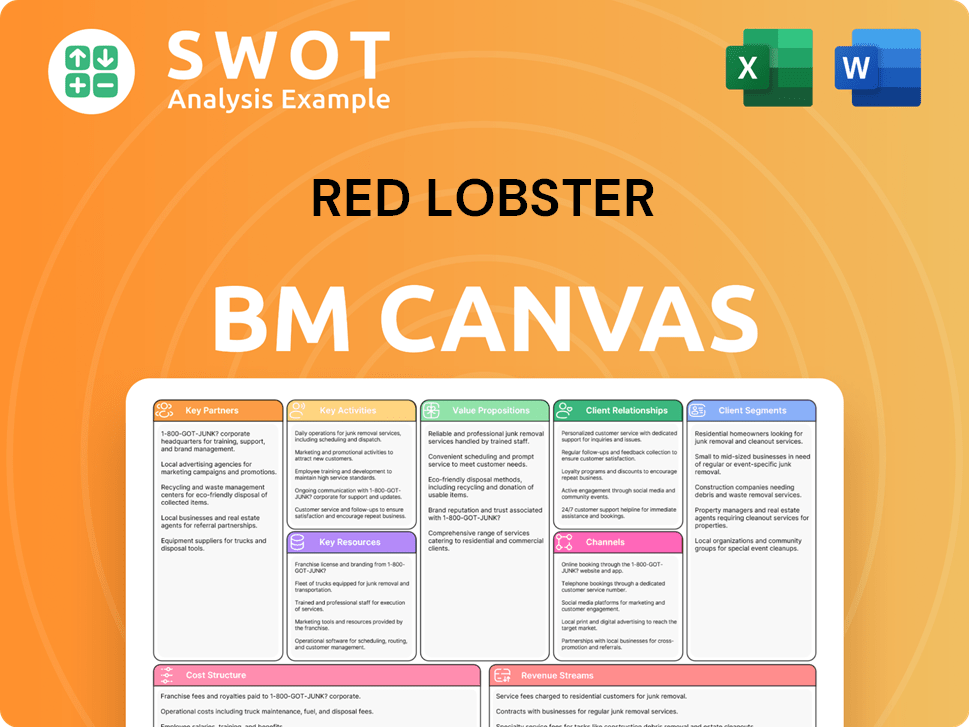
Red Lobster Business Model Canvas
- Complete 9-Block Business Model Canvas
- Effortlessly Communicate Your Business Strategy
- Investor-Ready BMC Format
- 100% Editable and Customizable
- Clear and Structured Layout
What Industry Trends Are Reshaping Red Lobster’s Competitive Landscape?
The casual dining sector, including the seafood segment, is undergoing significant changes. Restaurants must adapt to technological advancements like online ordering and delivery platforms to stay competitive. Consumer preferences are shifting towards healthier options and sustainable sourcing, while operational costs continue to climb, impacting profit margins. This dynamic environment shapes the Red Lobster competitive landscape, presenting both challenges and opportunities.
For Red Lobster, navigating these industry shifts is crucial. The company's recent bankruptcy filing underscores the need for strategic restructuring. Declining customer traffic and intense competition from various dining options pose ongoing threats. However, there are chances for innovation in digital presence, menu development, and strategic partnerships. This analysis of the Red Lobster market analysis will consider these factors.
Industry Trends
The seafood restaurant industry is influenced by technological advancements, including online ordering and delivery services. Consumer demand is increasing for healthier and sustainably sourced food options. Rising operational costs, particularly for labor and food, are putting pressure on profit margins across the board. These trends significantly impact the Red Lobster competitive landscape.
Future Challenges
Red Lobster faces significant challenges, including its ongoing bankruptcy proceedings and the need for financial restructuring. Competition from a wide array of dining options, and the need to source sustainable seafood, are additional hurdles. Inflation and rising food prices are also major concerns for the company. Addressing these challenges is critical for future success.
Opportunities
Opportunities exist for Red Lobster to refine its digital presence and innovate its menu to attract a broader audience. Exploring new restaurant formats and strategic partnerships could also be beneficial. The company's brand recognition presents a significant advantage. Leveraging these opportunities can help improve its competitive advantage.
Strategic Actions
Red Lobster must focus on cost optimization, menu revitalization, and enhancing the customer experience. Adapting to evolving industry dynamics and addressing operational and financial challenges is essential. A successful Red Lobster market analysis will consider these factors. The ability to adapt to these changes will determine the company's future competitive position.
Key Strategies for Red Lobster
Red Lobster needs to focus on several key areas to improve its position. These include cost optimization, menu innovation, and enhancing the customer experience. The company must also adapt to changing consumer preferences and address operational challenges. For more details, see the Marketing Strategy of Red Lobster.
- Cost Optimization: Streamlining operations to reduce expenses.
- Menu Innovation: Introducing new, appealing menu items.
- Customer Experience: Improving service and ambiance.
- Digital Presence: Enhancing online ordering and delivery.
- Strategic Partnerships: Exploring collaborations for growth.
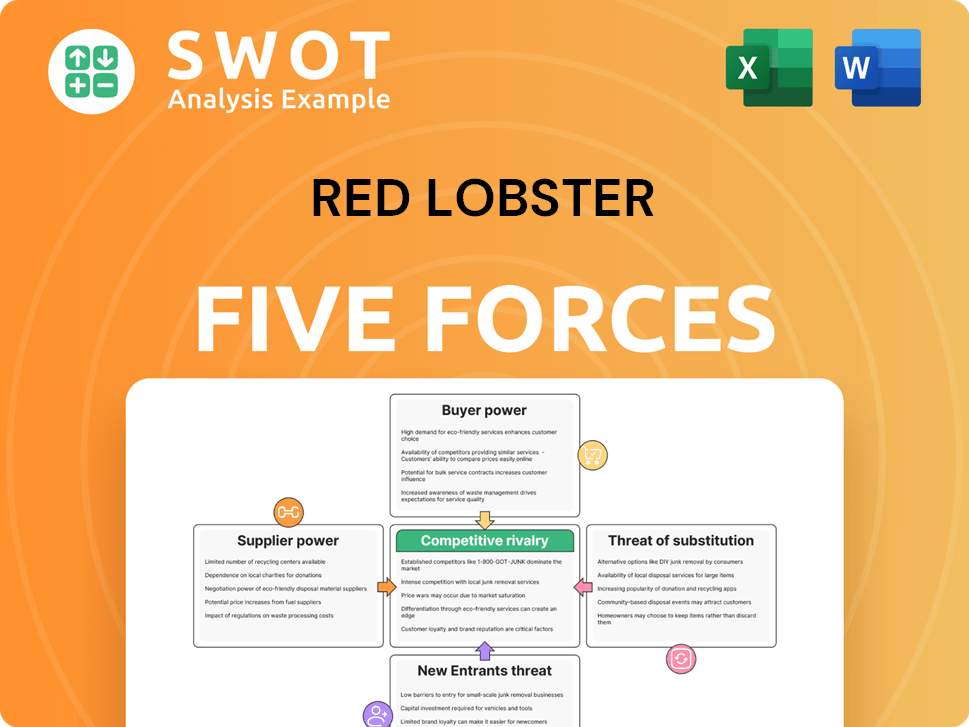
Red Lobster Porter's Five Forces Analysis
- Covers All 5 Competitive Forces in Detail
- Structured for Consultants, Students, and Founders
- 100% Editable in Microsoft Word & Excel
- Instant Digital Download – Use Immediately
- Compatible with Mac & PC – Fully Unlocked
Related Blogs

- What are Mission Vision & Core Values of Red Lobster Company?
- What is Growth Strategy and Future Prospects of Red Lobster Company?
- How Does Red Lobster Company Work?
- What is Sales and Marketing Strategy of Red Lobster Company?
- What is Brief History of Red Lobster Company?
- Who Owns Red Lobster Company?
- What is Customer Demographics and Target Market of Red Lobster Company?
Disclaimer
All information, articles, and product details provided on this website are for general informational and educational purposes only. We do not claim any ownership over, nor do we intend to infringe upon, any trademarks, copyrights, logos, brand names, or other intellectual property mentioned or depicted on this site. Such intellectual property remains the property of its respective owners, and any references here are made solely for identification or informational purposes, without implying any affiliation, endorsement, or partnership.
We make no representations or warranties, express or implied, regarding the accuracy, completeness, or suitability of any content or products presented. Nothing on this website should be construed as legal, tax, investment, financial, medical, or other professional advice. In addition, no part of this site—including articles or product references—constitutes a solicitation, recommendation, endorsement, advertisement, or offer to buy or sell any securities, franchises, or other financial instruments, particularly in jurisdictions where such activity would be unlawful.
All content is of a general nature and may not address the specific circumstances of any individual or entity. It is not a substitute for professional advice or services. Any actions you take based on the information provided here are strictly at your own risk. You accept full responsibility for any decisions or outcomes arising from your use of this website and agree to release us from any liability in connection with your use of, or reliance upon, the content or products found herein.