

Jungheinrich Bundle

How Does Jungheinrich Navigate the Intralogistics Battlefield?
The intralogistics sector is undergoing a transformation, fueled by automation and digitalization, and at the forefront of this change is Jungheinrich AG. Founded in 1953, Jungheinrich has evolved from a forklift manufacturer into a global leader in warehouse solutions. This evolution begs the question: How does Jungheinrich compete in such a dynamic market?

To understand Jungheinrich's position, we must delve into its Jungheinrich SWOT Analysis, examining its competitors and the broader Jungheinrich market analysis. This analysis will reveal the key players in the forklift industry, the company's competitive advantages, and the strategies employed to maintain its market share. Understanding the Jungheinrich competitive landscape is crucial for any investor or strategist.
Where Does Jungheinrich’ Stand in the Current Market?
Jungheinrich AG holds a strong market position within the global intralogistics industry. The company is a key player in the forklift industry, offering a wide range of material handling equipment and warehouse automation solutions. Their core operations focus on manufacturing and providing a comprehensive portfolio of products and services designed to optimize warehouse and logistics processes.
The value proposition of Jungheinrich lies in its ability to provide integrated intralogistics solutions. They offer a full suite of products, from electric pallet trucks and reach trucks to automated guided vehicles (AGVs) and warehouse management software. This holistic approach allows them to cater to diverse customer needs across various sectors, including manufacturing, retail, e-commerce, and logistics service providers.
 Market Share and Ranking
Jungheinrich consistently ranks among the top three global players in the material handling equipment sector. While specific global market share figures for 2024-2025 are still emerging, the company remains a significant competitor. This strong market position is particularly evident in Europe, where they hold a dominant position.
Product Portfolio Overview
The product portfolio includes a wide range of forklift trucks, from electric pallet trucks to very narrow aisle trucks. They also offer integrated logistics systems, encompassing racking, warehouse management software, and automated guided vehicles (AGVs). This diverse product range allows Jungheinrich to serve various customer needs effectively.
Financial Performance
In 2023, Jungheinrich reported a significant increase in revenue to EUR 5.5 billion, demonstrating robust financial health. The company also reported a strong order intake of EUR 4.9 billion, indicating continued demand for its products and services. This strong financial performance reflects the company's strategic focus on high-value solutions.
Geographic Presence
Jungheinrich has a significant geographic presence across Europe, Asia, and North America. The company maintains a particularly strong hold in the European market. They are also actively expanding their footprint in emerging markets. This global presence supports their overall market position.

Competitive Advantages
Jungheinrich's competitive advantages include a comprehensive product portfolio, a strong focus on automation and digitalization, and a robust financial performance. They also benefit from a well-established global presence, particularly in Europe. The company's strategic shift to offer more holistic intralogistics solutions, moving beyond equipment sales to providing integrated systems and services, enhances its competitive edge.
- Strong market position in the forklift industry.
- Comprehensive product range including electric forklifts and warehouse solutions.
- Focus on warehouse automation and digitalization.
- Global presence with a particularly strong hold in Europe.
- Robust financial performance with increasing revenue.
For further insights into the company's strategic direction, consider reading about the Growth Strategy of Jungheinrich.
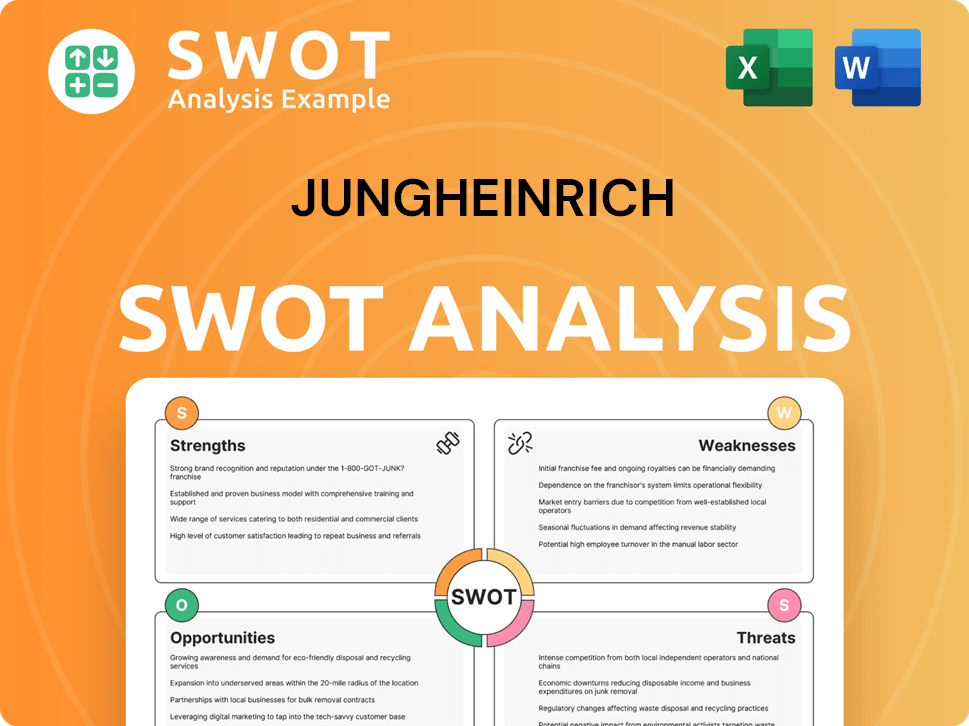
Jungheinrich SWOT Analysis
- Complete SWOT Breakdown
- Fully Customizable
- Editable in Excel & Word
- Professional Formatting
- Investor-Ready Format
Who Are the Main Competitors Challenging Jungheinrich?
The Jungheinrich competitive landscape is shaped by a mix of direct and indirect rivals in the intralogistics sector. Understanding these competitors is crucial for assessing Jungheinrich's market analysis and strategic positioning. The company faces challenges and opportunities in a dynamic market environment, requiring continuous adaptation and innovation.
Jungheinrich's success depends on its ability to differentiate itself from its competitors. This involves offering innovative products, providing excellent customer service, and efficiently managing its global operations. The intralogistics market is constantly evolving, influenced by technological advancements and changing customer needs. Analyzing the competitive landscape helps Jungheinrich make informed decisions.
The competitive environment for Jungheinrich is complex, encompassing both established industry leaders and emerging players. The company's ability to navigate this landscape will determine its future growth and profitability. For a deeper look into the company's target audience, you can check out the Target Market of Jungheinrich.

Key Competitors
Jungheinrich's direct competitors are primarily other major players in the forklift industry and material handling equipment market. These companies offer similar products and services, competing for market share across various geographic regions.
KION Group
The KION Group, a German multinational, is a significant direct competitor. It owns brands such as Linde Material Handling and Still. KION offers a broad portfolio of industrial trucks and warehouse technology, competing directly with Jungheinrich across product categories and markets, particularly in Europe.
Toyota Industries Corporation
Toyota Industries Corporation, a Japanese multinational, is another major competitor. Through its Toyota Material Handling brand, it competes aggressively, especially in the forklift truck segment. Toyota leverages its global manufacturing scale and brand reputation, often emphasizing reliability and global distribution.
Crown Equipment Corporation
Crown Equipment Corporation is known for its strong presence in North America. It focuses on high-quality, durable lift trucks, competing with Jungheinrich in this segment. Crown's focus on quality and durability is a key differentiator in the market.
Hyster-Yale Materials Handling, Inc.
Hyster-Yale Materials Handling, Inc. competes with Jungheinrich through its diverse range of forklifts and aftermarket services. This company offers a wide variety of products to meet different customer needs, including comprehensive service and support.
Indirect Competition
Indirect competition includes specialized automation providers and software companies. These companies offer components of intralogistics solutions, such as warehouse automation systems or advanced robotics. They can integrate into existing operations or replace traditional material handling equipment.
Competitive Dynamics and Market Trends
The intralogistics market is dynamic, influenced by technological advancements and changing customer demands. Jungheinrich's ability to adapt to these trends is crucial for maintaining its competitive edge. The rise of automation and the increasing importance of software solutions are key factors shaping the industry.
- Market Growth: The global material handling equipment market is projected to reach $195.8 billion by 2024, growing at a CAGR of 6.2% from 2017 to 2024.
- Automation: The warehouse automation market is expected to reach $32.0 billion by 2025, with a CAGR of 14.6% from 2019 to 2025.
- Electric Forklifts: The electric forklift market is growing due to environmental concerns and operational efficiencies. In 2023, electric forklifts accounted for a significant portion of the market.
- Regional Analysis: Europe and North America are key markets for material handling equipment, with Asia-Pacific showing rapid growth.
- Strategic Partnerships: Companies are forming alliances to offer comprehensive intralogistics solutions, including software and automation.
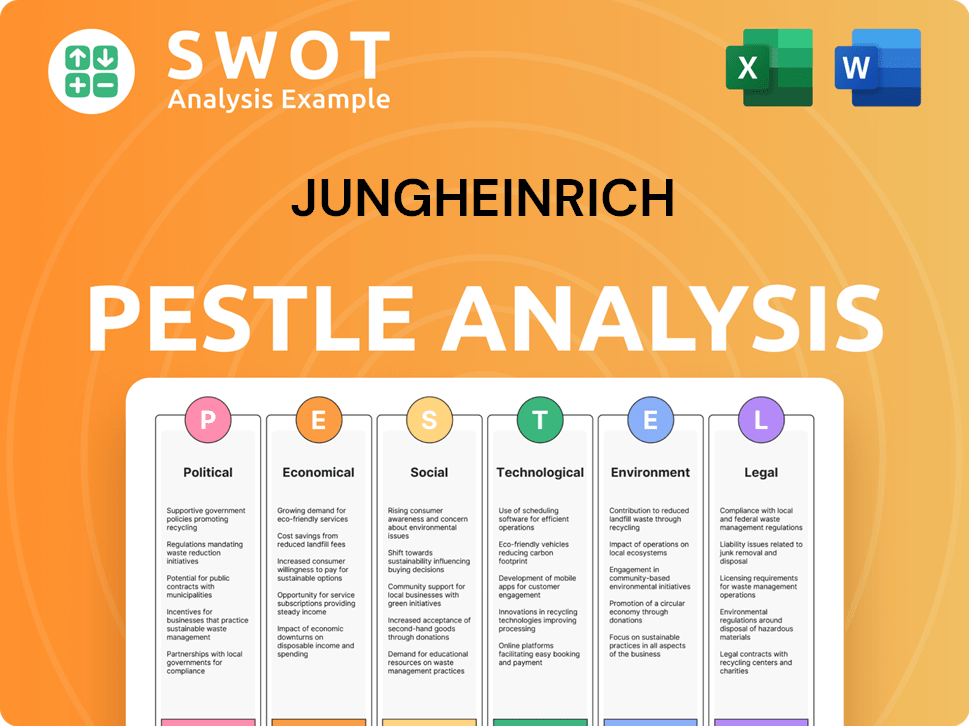
Jungheinrich PESTLE Analysis
- Covers All 6 PESTLE Categories
- No Research Needed – Save Hours of Work
- Built by Experts, Trusted by Consultants
- Instant Download, Ready to Use
- 100% Editable, Fully Customizable
What Gives Jungheinrich a Competitive Edge Over Its Rivals?
The competitive landscape for Jungheinrich is shaped by its strengths in engineering, a broad product range, and a focus on customer-centric solutions. Key advantages include proprietary technologies, especially in automation and energy efficiency. The company's electric forklifts and lithium-ion battery technology are key differentiators in the environmentally conscious market. This positions Jungheinrich effectively within the forklift industry.
Jungheinrich's brand equity and reputation for quality and reliability foster customer loyalty. Its direct sales and service network, particularly in Europe, ensure close customer relationships and efficient after-sales support. Economies of scale in manufacturing and procurement also contribute to cost efficiencies, allowing competitive pricing. For more insights, explore the Growth Strategy of Jungheinrich.
These advantages have evolved from mechanical excellence to integrated digital and automated solutions, leveraging continuous R&D investment. The focus on advanced robotics and AI-powered software for warehouse optimization highlights Jungheinrich's commitment to technological leadership. However, the company faces threats from rapid technological advancements by competitors and potential market shifts towards highly specialized, niche solutions.
Technological Leadership
Jungheinrich invests heavily in R&D, particularly in automation and energy efficiency. This includes advanced robotics and AI-powered software for warehouse optimization. The company's focus on innovation helps it maintain a competitive edge in the material handling equipment market.
Comprehensive Product Portfolio
Jungheinrich offers a wide range of products, including electric forklifts, automated guided vehicles (AGVs), and warehouse management systems. This extensive portfolio allows it to cater to various customer needs and applications. The diverse product range supports its strong position in the Jungheinrich competitive landscape.
Strong Customer Relationships
The company's direct sales and service network ensures close customer relationships and efficient after-sales support. This focus on customer service enhances customer loyalty and provides a competitive advantage. This is a key factor in Jungheinrich's success in the global market.
Sustainable Solutions
Jungheinrich's electric forklifts and advanced lithium-ion battery technology provide sustainable and cost-effective solutions. This focus on sustainability differentiates the company in an increasingly environmentally conscious market. This is crucial for long-term success in the forklift industry.
Key Competitive Advantages
Jungheinrich's competitive advantages are rooted in technological innovation, a broad product range, and strong customer relationships. The company’s focus on sustainability and efficiency further strengthens its market position. These advantages support its growth and success in the material handling equipment sector.
- Proprietary Technologies: Advanced automation and energy-efficient solutions.
- Extensive Product Portfolio: Wide range of forklifts, AGVs, and warehouse management systems.
- Strong Brand Reputation: Known for quality and reliability.
- Customer-Centric Approach: Direct sales and service network.
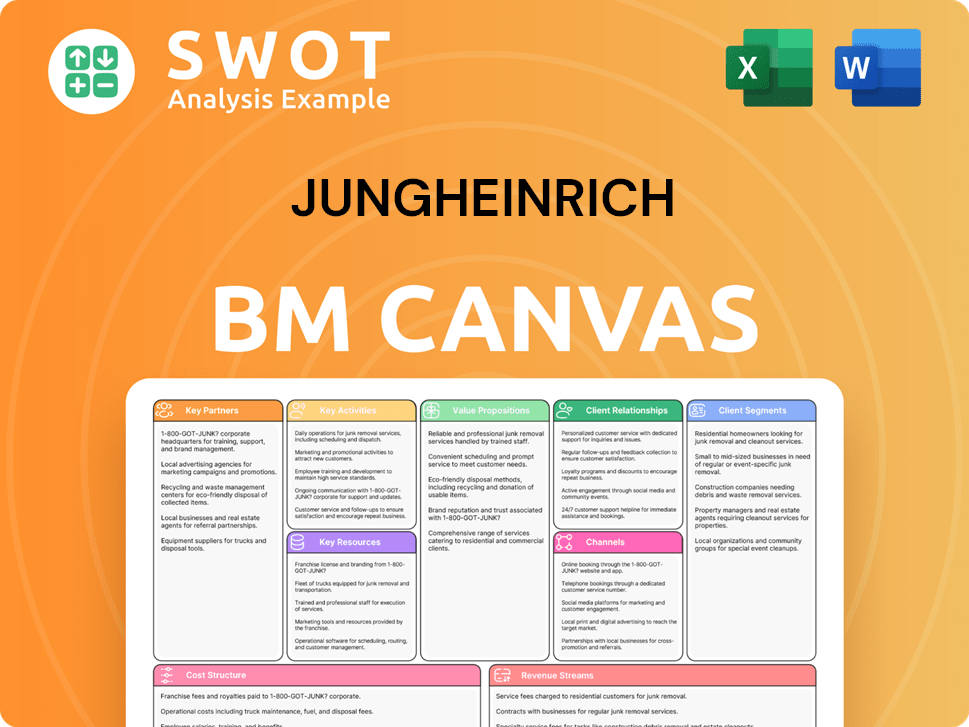
Jungheinrich Business Model Canvas
- Complete 9-Block Business Model Canvas
- Effortlessly Communicate Your Business Strategy
- Investor-Ready BMC Format
- 100% Editable and Customizable
- Clear and Structured Layout
What Industry Trends Are Reshaping Jungheinrich’s Competitive Landscape?
The intralogistics industry, where Jungheinrich operates, is experiencing significant transformations driven by automation, digitalization, and sustainability demands. The company faces both challenges and opportunities in this dynamic environment. This analysis explores the industry trends, future challenges, and opportunities for Jungheinrich, providing insights into its competitive landscape and strategic positioning.
The Jungheinrich competitive landscape is shaped by evolving technological advancements and market dynamics. Understanding these elements is crucial for assessing the company's strategic direction and potential for growth. This includes analyzing its Jungheinrich competitors and assessing its position within the forklift industry and the broader material handling equipment market. Moreover, this analysis will help to understand the impact of warehouse automation trends on the company.
Industry Trends
Key trends include accelerated automation, digitalization, and sustainability. The rise of e-commerce is boosting demand for efficient warehouse solutions. The focus on sustainability drives the need for electric and energy-efficient equipment. These trends create both opportunities and challenges for Jungheinrich.
Future Challenges
Keeping pace with rapid technological evolution requires substantial R&D investments. Stricter emissions standards and safety regulations increase operational costs. Aggressive new competitors specializing in niche automation technologies pose a threat. Economic downturns could impact capital expenditures on industrial equipment.
Opportunities
The growing e-commerce sector fuels demand for highly automated warehouses. The push for sustainability allows leveraging expertise in electric equipment. Emerging markets, especially in Asia and North America, offer growth potential. Strategic partnerships and acquisitions can enhance market position.
Strategic Responses
Jungheinrich is expanding its automation and digital solutions. The company is strengthening its global service network. Investments in sustainable technologies are a priority. These strategies aim to solidify its position as a leading provider of end-to-end intralogistics solutions.
Market Dynamics and Strategic Positioning
The intralogistics market is competitive, with Jungheinrich facing established players and emerging competitors. The company's strategic focus on automation, digitalization, and sustainability is crucial for maintaining its market share. Understanding the Jungheinrich market analysis and its competitive advantages is essential for long-term success.
- Jungheinrich vs. KION Group comparison: Both companies are major players in the forklift and intralogistics market, with KION Group being a significant competitor.
- Jungheinrich product portfolio overview: Jungheinrich offers a comprehensive range of material handling equipment, including forklifts, automated guided vehicles (AGVs), and warehouse solutions.
- Jungheinrich global presence: Jungheinrich has a strong global presence, with manufacturing facilities and sales networks worldwide.
- Jungheinrich regional market analysis: Key regions include Europe, North America, and Asia, each presenting unique opportunities and challenges.
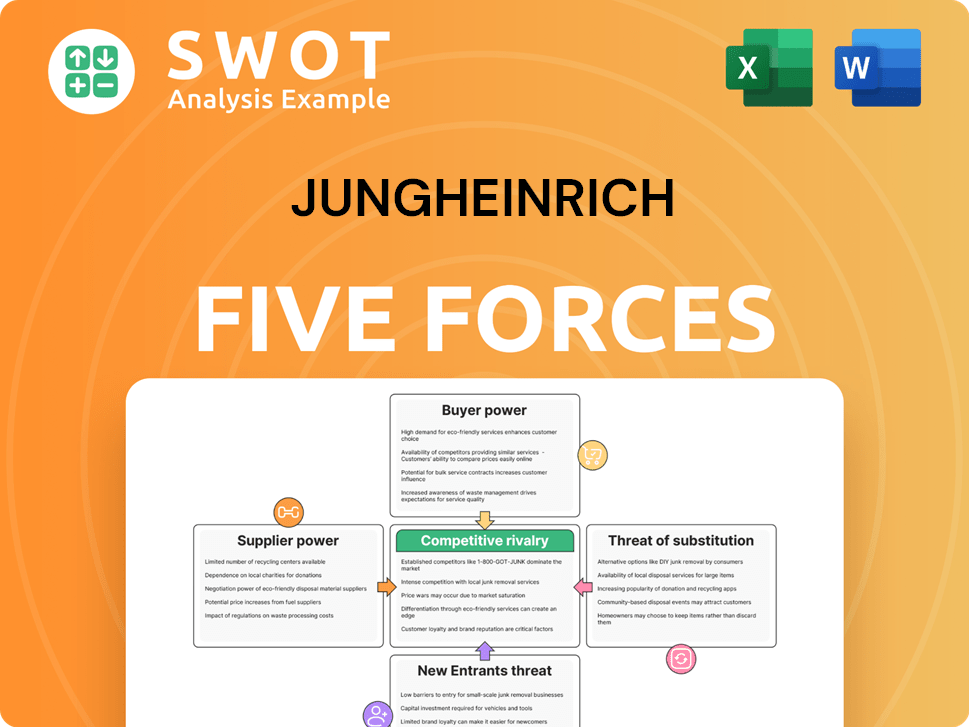
Jungheinrich Porter's Five Forces Analysis
- Covers All 5 Competitive Forces in Detail
- Structured for Consultants, Students, and Founders
- 100% Editable in Microsoft Word & Excel
- Instant Digital Download – Use Immediately
- Compatible with Mac & PC – Fully Unlocked
Related Blogs

- What are Mission Vision & Core Values of Jungheinrich Company?
- What is Growth Strategy and Future Prospects of Jungheinrich Company?
- How Does Jungheinrich Company Work?
- What is Sales and Marketing Strategy of Jungheinrich Company?
- What is Brief History of Jungheinrich Company?
- Who Owns Jungheinrich Company?
- What is Customer Demographics and Target Market of Jungheinrich Company?
Disclaimer
All information, articles, and product details provided on this website are for general informational and educational purposes only. We do not claim any ownership over, nor do we intend to infringe upon, any trademarks, copyrights, logos, brand names, or other intellectual property mentioned or depicted on this site. Such intellectual property remains the property of its respective owners, and any references here are made solely for identification or informational purposes, without implying any affiliation, endorsement, or partnership.
We make no representations or warranties, express or implied, regarding the accuracy, completeness, or suitability of any content or products presented. Nothing on this website should be construed as legal, tax, investment, financial, medical, or other professional advice. In addition, no part of this site—including articles or product references—constitutes a solicitation, recommendation, endorsement, advertisement, or offer to buy or sell any securities, franchises, or other financial instruments, particularly in jurisdictions where such activity would be unlawful.
All content is of a general nature and may not address the specific circumstances of any individual or entity. It is not a substitute for professional advice or services. Any actions you take based on the information provided here are strictly at your own risk. You accept full responsibility for any decisions or outcomes arising from your use of this website and agree to release us from any liability in connection with your use of, or reliance upon, the content or products found herein.