

Samyang Bundle

How does Samyang Corporation navigate the cutthroat global market?
Samyang Corporation, a South Korean powerhouse, has transformed from a sugar producer to a multifaceted industrial leader. With a history dating back to 1924, Samyang's strategic evolution showcases its remarkable adaptability. This analysis dives deep into the Samyang SWOT Analysis, exploring its competitive standing in a dynamic global environment.

This exploration of the Samyang competitive landscape will dissect the company's market position and its key competitors across its diverse business segments. We'll investigate Samyang's industry dynamics, pinpointing its strengths and weaknesses through a detailed Samyang company analysis. Understanding Samyang's competitive advantages and challenges is crucial for anyone looking to grasp the nuances of its global market presence and future growth potential.
Where Does Samyang’ Stand in the Current Market?
Samyang Corporation holds a significant Samyang market position across its diverse business segments, particularly within South Korea and increasingly in international markets. The company's presence is well-established in key areas like food ingredients and engineering plastics. For example, in the food industry, Samyang is a strong player in specialty ingredients, while its engineering plastics division is a notable supplier for various industrial applications.
Geographically, the company's main presence is in South Korea, where it benefits from a well-developed distribution network and established brand recognition. Samyang has been actively expanding its international footprint, especially in Southeast Asia and other emerging markets, through strategic investments and partnerships. This expansion reflects a shift towards globalizing its operations and diversifying its revenue streams beyond its domestic market. Customer segments include large industrial clients in the chemical and packaging sectors and consumer-facing businesses in the food industry.
Financially, Samyang has shown consistent performance, supported by its diversified portfolio, which helps mitigate risks associated with fluctuations in any single industry. The company faces intense competition in each of its segments, but its diversified structure and continuous investment in R&D and global expansion aim to solidify its market position and drive future growth. For a deeper dive, you can explore the Brief History of Samyang.
 Core Operations
Samyang's core operations span food, chemicals, packaging, and IT sectors. Within food, they specialize in ingredients like starch and sweeteners. The chemical segment focuses on engineering plastics for automotive, electronics, and industrial applications. Their diverse portfolio helps mitigate risks.
Value Proposition
Samyang offers a value proposition built on product diversification and innovation. They provide essential ingredients and materials to various industries. Their strategy includes continuous investment in R&D and global expansion to strengthen their competitive position.
Market Presence
Samyang's primary market is South Korea, with growing international presence. They are expanding in Southeast Asia and other emerging markets. This expansion includes strategic investments and partnerships to diversify revenue streams. The company serves large industrial clients and consumer-facing businesses.
Financial Performance
For the fiscal year ending December 31, 2024, Samyang Corporation reported consolidated sales of KRW 3,346.5 billion. The operating profit for the same period was KRW 131.6 billion. This demonstrates a solid financial standing relative to industry averages for diversified conglomerates.

Samyang Competitive Landscape and Market Position
The Samyang competitive landscape is characterized by strong players in each of its segments. The company focuses on product diversification and continuous innovation. Samyang's focus on R&D and global expansion aims to solidify its market position.
- Strong position in food ingredients and engineering plastics.
- Geographic focus on South Korea with international expansion.
- Consistent financial performance supported by a diversified portfolio.
- Continuous investments in R&D and global expansion.
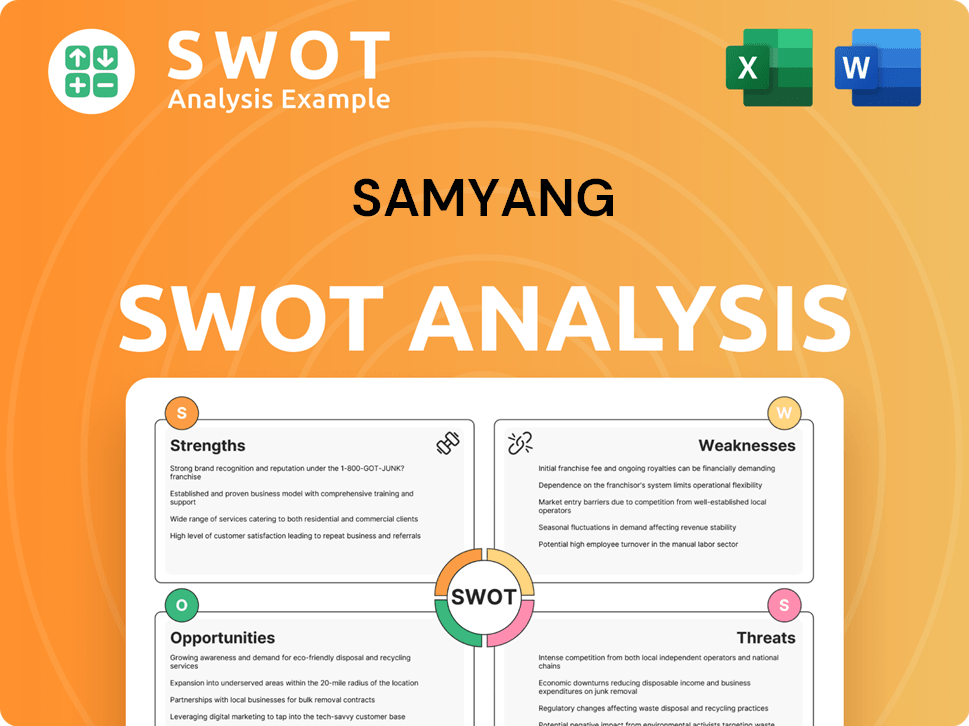
Samyang SWOT Analysis
- Complete SWOT Breakdown
- Fully Customizable
- Editable in Excel & Word
- Professional Formatting
- Investor-Ready Format
Who Are the Main Competitors Challenging Samyang?
The Samyang competitive landscape is shaped by its diverse business segments, which include food, chemicals, packaging, and IT services. This diversification means the company faces competition from various players, ranging from large conglomerates to specialized firms. Understanding these competitors is crucial for assessing Samyang's market position and strategic challenges.
In the food sector, Samyang competes with major South Korean food companies and international brands, particularly in the instant noodle and specialty ingredients markets. The chemical and packaging divisions contend with global chemical giants and specialized packaging solution providers. The IT services segment faces competition from various IT service providers. These competitive dynamics influence Samyang's strategic decisions and its ability to maintain and grow its market share.
Samyang Corporation's competitive environment is multifaceted, with different players dominating various segments. This analysis provides a deep dive into the key competitors impacting Samyang's performance and market strategy.

Food Sector Competitors
In the food sector, Samyang faces strong competition from CJ CheilJedang and Daesang Corporation. These companies have extensive distribution networks and brand recognition. They compete in areas such as processed foods, bio-ingredients, and fermented products.
Chemical Materials Competitors
In chemical materials, Samyang competes with LG Chem, Lotte Chemical, and Hanwha Solutions. These companies are major players in the petrochemical and advanced materials industries. They often possess greater economies of scale and advanced technological capabilities.
Packaging Sector Competitors
The packaging sector sees competition from both domestic and international packaging solution providers. Innovation in sustainable materials and cost-effectiveness are key competitive factors. The competitive landscape is constantly evolving due to changing consumer preferences and environmental regulations.
IT and Related Services Competitors
In the IT and related services segment, Samyang faces competition from numerous IT service providers. These range from large system integrators to specialized software development firms. Competition is fierce, with bidding wars and marketing campaigns being common.
Emerging Competitors
Emerging players focusing on sustainable solutions in packaging and specialized biotech in food ingredients are disrupting the traditional competitive landscape. These new entrants bring innovative products and services, challenging established market positions. These companies often focus on niche markets and sustainable practices.
Competitive Strategies
Samyang's competitors employ various strategies, including product innovation, aggressive pricing, and extensive marketing. They leverage their strengths in R&D, distribution, and brand recognition to gain market share. These strategies highlight the dynamic nature of the competitive environment.
Key Competitive Dynamics
The
- Market Trends: Consumer preferences, especially in the food sector, drive product innovation and diversification.
- Technological Advancements: New materials and processes in chemicals and packaging impact product development and efficiency.
- Regulatory Changes: Environmental regulations and food safety standards influence product formulations and packaging solutions.
- Competitive Tactics: Competitors use various strategies, including aggressive pricing, extensive marketing, and strategic partnerships.
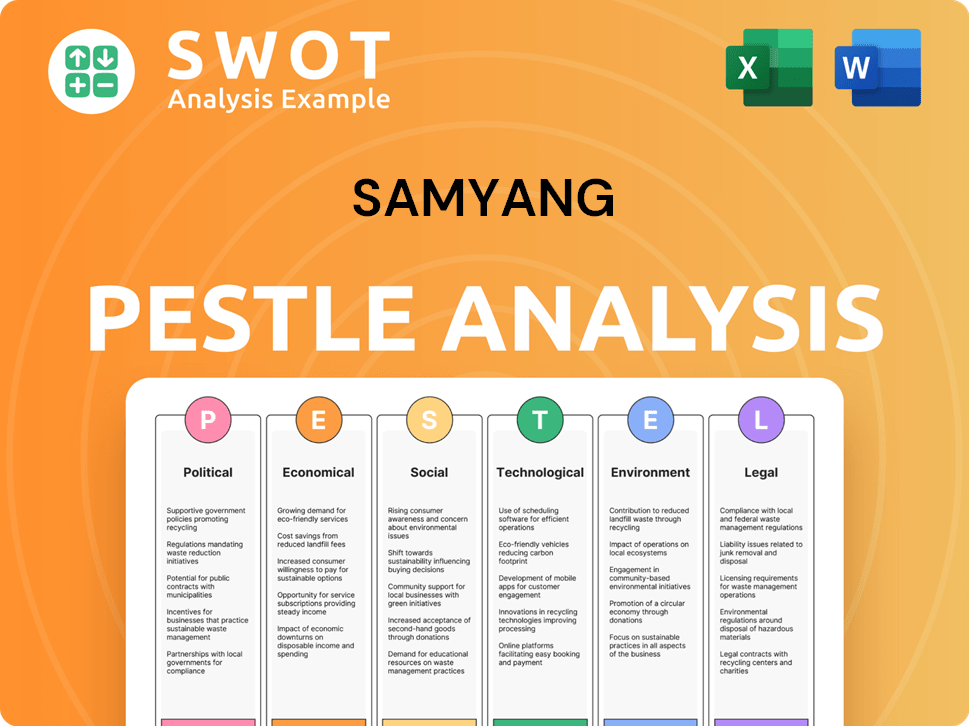
Samyang PESTLE Analysis
- Covers All 6 PESTLE Categories
- No Research Needed – Save Hours of Work
- Built by Experts, Trusted by Consultants
- Instant Download, Ready to Use
- 100% Editable, Fully Customizable
What Gives Samyang a Competitive Edge Over Its Rivals?
The competitive advantages of Samyang Corporation are rooted in its diverse business model and a strong emphasis on research and development. The company's proprietary technologies and intellectual property in specialty chemical materials and advanced food ingredients provide a significant edge in the market. This technological prowess allows Samyang to offer differentiated products that meet specific industrial demands and consumer preferences, particularly in the eco-friendly solutions sector. A thorough Growth Strategy of Samyang reveals how these strengths are leveraged.
Brand equity and customer loyalty, especially in South Korea, are significant advantages, built over decades of consistent product quality. Samyang's established distribution networks, both domestically and internationally, ensure efficient market penetration. Furthermore, economies of scale, derived from its large-scale production capabilities, enable cost efficiencies. The integrated supply chain, from raw material sourcing to finished product delivery, provides greater control over quality and cost, enhancing operational efficiency.
Continuous investment in R&D, supported by various research centers and collaborations, allows Samyang to innovate and adapt to new market demands. These advantages have evolved over time, with the company strategically leveraging its manufacturing strengths to expand into higher-value segments. However, these advantages face threats from rapid technological advancements and potential imitation, requiring continuous innovation and strategic vigilance.
Diversification and Integrated Model
Samyang's diversification across food and chemical sectors reduces risk. The integrated model, from raw materials to finished products, boosts efficiency. This approach allows for better control over quality and costs, enhancing its competitive edge in the Samyang competitive landscape.
Technological Prowess and Innovation
The company holds patents in bioplastics and high-performance engineering plastics. Continuous R&D ensures the product portfolio remains competitive. This focus on innovation is crucial for sustaining its market position.
Brand Equity and Customer Loyalty
Strong brand recognition, especially in South Korea, boosts sales. Consistent product quality and reliability build customer trust. This loyalty is a key factor in the Samyang company analysis.
Efficient Distribution and Market Penetration
Established distribution networks ensure product availability. The company efficiently reaches both domestic and international markets. This widespread reach supports robust sales and market share.
Key Advantages Summarized
Samyang’s competitive advantages include diversification, technological innovation, and strong brand recognition. These factors allow the company to maintain a strong position in the Samyang industry. The company's ability to adapt and innovate is crucial for long-term success.
- Diversified business model reduces risk and enhances resilience.
- Proprietary technologies and continuous R&D drive innovation.
- Strong brand equity and customer loyalty support market share.
- Efficient distribution networks ensure product availability.
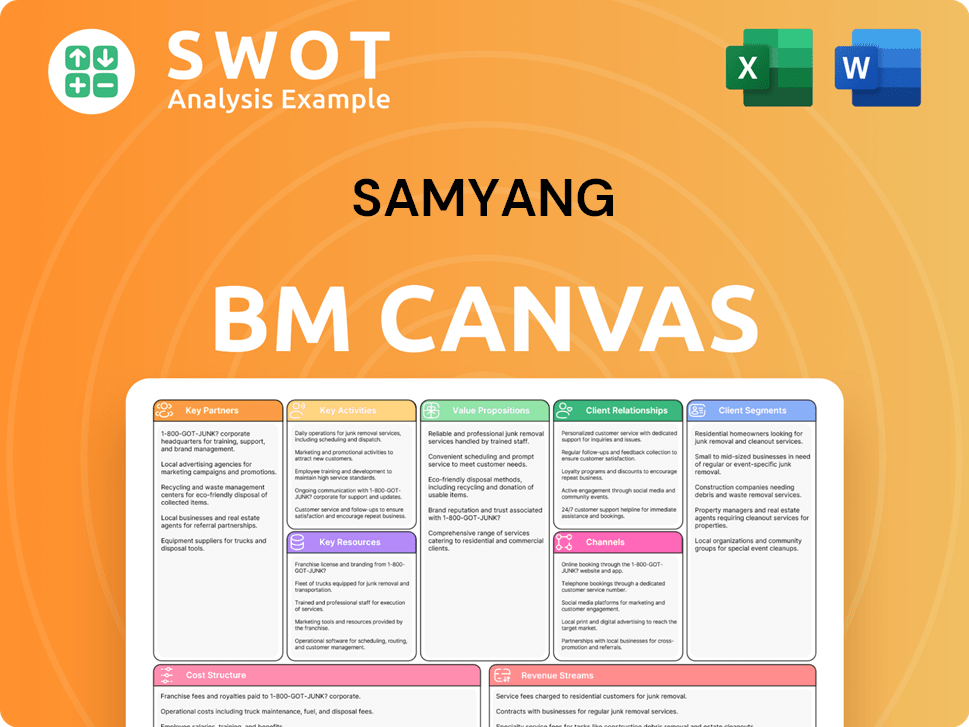
Samyang Business Model Canvas
- Complete 9-Block Business Model Canvas
- Effortlessly Communicate Your Business Strategy
- Investor-Ready BMC Format
- 100% Editable and Customizable
- Clear and Structured Layout
What Industry Trends Are Reshaping Samyang’s Competitive Landscape?
The Samyang competitive landscape is shaped by evolving industry trends, including technological advancements, regulatory changes, and shifting consumer preferences. These factors influence the company's market position across its food, chemical, and packaging divisions. Understanding these dynamics is crucial for assessing the company's future prospects and strategic direction, making a thorough Samyang company analysis essential.
The industry faces challenges such as intense price competition and the need for sustainable practices. Simultaneously, opportunities exist in emerging markets and through product innovation. A detailed Samyang SWOT analysis helps to identify strengths, weaknesses, opportunities, and threats, guiding strategic decisions. The company's ability to adapt to these changes will determine its long-term success.
Industry Trends
Technological advancements, especially in smart manufacturing and biotechnology, are reshaping production. Demand for plant-based alternatives and functional foods is increasing. Regulatory changes, including environmental protection and food safety, are becoming stricter. Consumer preferences are shifting towards health-conscious, sustainable, and ethically produced goods.
Future Challenges
Increased R&D costs and capital expenditure for sustainable manufacturing are significant challenges. The rise of agile startups in niche markets and disruptive technologies pose threats. Intense price competition in commodity chemical markets and declining demand for traditional products are also concerns. Aggressive expansion by global competitors in key markets adds further pressure.
Opportunities
Leveraging expertise in bioplastics and eco-friendly packaging solutions presents opportunities. Growth in emerging markets, particularly in Southeast Asia, offers expansion potential. Product innovations, such as new functional food ingredients, can drive growth. Strategic partnerships with technology firms or companies in complementary sectors can enhance market reach.
Strategic Focus
The company is likely to focus on strengthening R&D, expanding its global presence, and investing in sustainable solutions. This strategic approach aims to maintain a resilient and evolving competitive position. These initiatives are crucial for long-term growth and market leadership in the dynamic food and chemical industries.
Detailed Analysis
Examining the Samyang company analysis reveals several key aspects. The company’s strengths include its established brand and product portfolio. Weaknesses may include reliance on specific markets or product categories. Opportunities lie in expanding into new markets and innovating in product development. Threats involve increased competition and changing consumer preferences.
- Samyang's competitive environment in the food industry is intense, with numerous players vying for market share.
- Samyang instant noodle market share is significant, but it faces competition from both domestic and international brands.
- Samyang's product portfolio analysis shows a focus on innovation, but it must adapt to changing consumer tastes.
- Samyang's challenges in the global market include navigating diverse regulatory environments and cultural preferences.
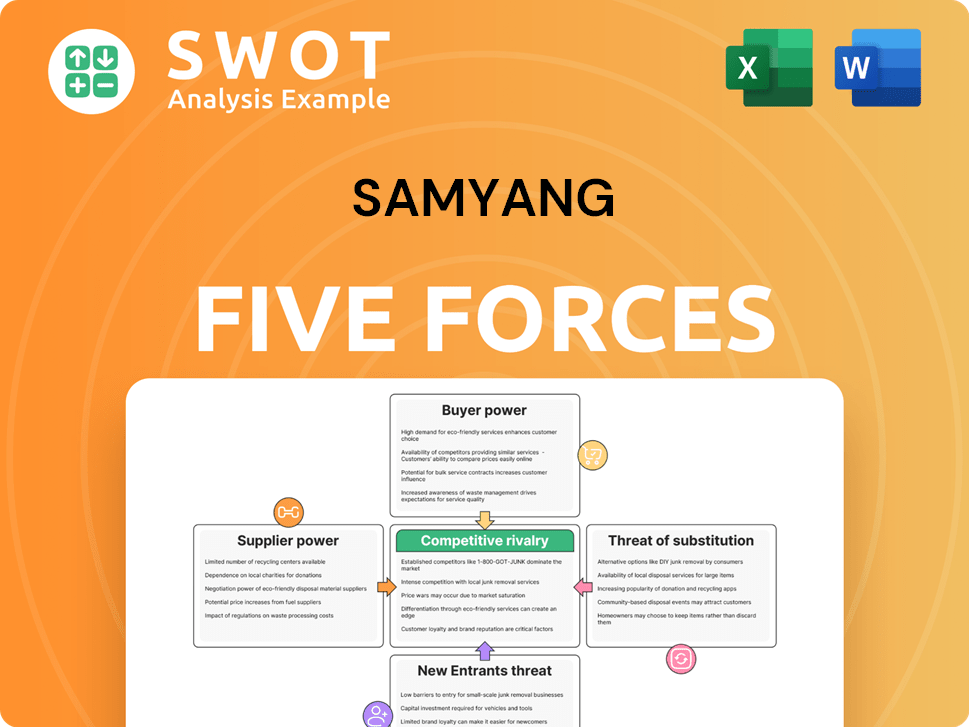
Samyang Porter's Five Forces Analysis
- Covers All 5 Competitive Forces in Detail
- Structured for Consultants, Students, and Founders
- 100% Editable in Microsoft Word & Excel
- Instant Digital Download – Use Immediately
- Compatible with Mac & PC – Fully Unlocked
Related Blogs

- What are Mission Vision & Core Values of Samyang Company?
- What is Growth Strategy and Future Prospects of Samyang Company?
- How Does Samyang Company Work?
- What is Sales and Marketing Strategy of Samyang Company?
- What is Brief History of Samyang Company?
- Who Owns Samyang Company?
- What is Customer Demographics and Target Market of Samyang Company?
Disclaimer
All information, articles, and product details provided on this website are for general informational and educational purposes only. We do not claim any ownership over, nor do we intend to infringe upon, any trademarks, copyrights, logos, brand names, or other intellectual property mentioned or depicted on this site. Such intellectual property remains the property of its respective owners, and any references here are made solely for identification or informational purposes, without implying any affiliation, endorsement, or partnership.
We make no representations or warranties, express or implied, regarding the accuracy, completeness, or suitability of any content or products presented. Nothing on this website should be construed as legal, tax, investment, financial, medical, or other professional advice. In addition, no part of this site—including articles or product references—constitutes a solicitation, recommendation, endorsement, advertisement, or offer to buy or sell any securities, franchises, or other financial instruments, particularly in jurisdictions where such activity would be unlawful.
All content is of a general nature and may not address the specific circumstances of any individual or entity. It is not a substitute for professional advice or services. Any actions you take based on the information provided here are strictly at your own risk. You accept full responsibility for any decisions or outcomes arising from your use of this website and agree to release us from any liability in connection with your use of, or reliance upon, the content or products found herein.