

Origin Energy Bundle

Who Really Owns Origin Energy?
Understanding the Origin Energy SWOT Analysis is key to grasping its market position, but have you ever wondered about the power dynamics behind this energy giant? Origin Energy's ownership structure is a complex web that directly impacts its strategic decisions and future direction. From its initial public offering to recent takeover attempts, the story of who owns Origin Energy is a fascinating tale of corporate influence and market forces.

The evolution of Origin Energy ownership, from its founding as a Boral spin-off in 2000, reveals a company shaped by both public and private interests. Examining Origin Energy shareholders, including major institutional investors and the impact of significant events like the Brookfield and EIG consortium bid, provides critical insights. This exploration will also touch upon the company's market capitalization and the influence of key executives, offering a comprehensive view of Origin Energy's ownership details and its implications for investors and stakeholders.
Who Founded Origin Energy?
The story of Origin Energy began on February 18, 2000. It emerged from a demerger of the Australian conglomerate, Boral Limited. This corporate restructuring set the stage for what would become a major player in the energy sector.
This demerger meant that the initial ownership of Origin Energy was distributed to the existing shareholders of Boral. This is a key detail in understanding the company's early ownership structure. SAGASCO, previously known as the South Australian Gas Company, also became part of Origin Energy during this period.
Specific details about individual founders' equity or shareholdings at the start are not publicly available. This is because Origin Energy was formed through a corporate spin-off, not a startup with individual founders taking initial equity stakes.

Early Acquisitions and Expansion
Following its formation, Origin Energy quickly expanded its portfolio. This was achieved through strategic acquisitions and partnerships, which shaped its asset base and business model.
- Between 2001 and 2002, Origin Energy acquired a Victorian electricity retailer license.
- In 2004, the SEAGas pipeline was completed, integrating the Victorian and South Australian gas markets.
- During this time, Origin gained a 50% interest in the Kupe Gas Field.
- Origin Energy acquired Edison Mission Energy's 51.4% interest in New Zealand's Contact Energy, which was later sold in 2015.
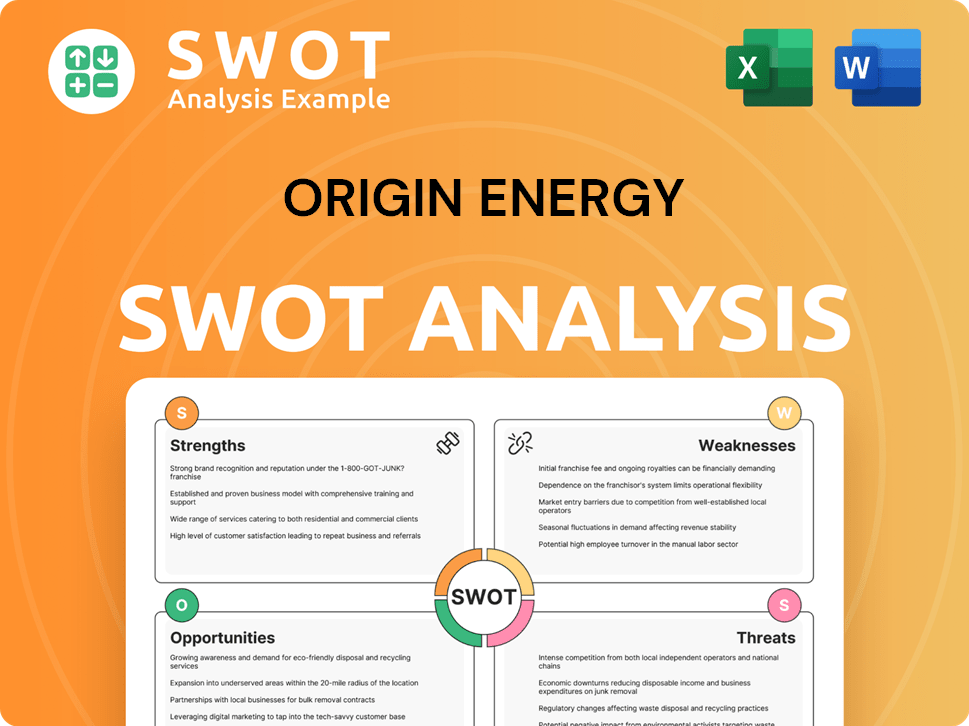
Origin Energy SWOT Analysis
- Complete SWOT Breakdown
- Fully Customizable
- Editable in Excel & Word
- Professional Formatting
- Investor-Ready Format
How Has Origin Energy’s Ownership Changed Over Time?
Origin Energy, a publicly listed entity on the Australian Securities Exchange (ASX: ORG), has experienced shifts in its ownership landscape since its inception. The company's ownership structure reflects a dynamic interplay between institutional and individual investors, with significant events shaping its shareholder base. Understanding the evolution of Origin Energy ownership provides insights into its strategic direction and the influence of various stakeholders.
Institutional investors play a significant role in Origin Energy's ownership. As of April 2025, there were 221 institutional owners and shareholders, collectively holding 140,037,501 shares. Key institutional shareholders include Vanguard Total International Stock Index Fund Investor Shares (VGTSX), Vanguard Developed Markets Index Fund Admiral Shares (VTMGX), iShares Core MSCI EAFE ETF (IEFA), and Fidelity International Index Fund (FSPSX). The company's ownership structure is characterized by a diverse group of institutional investors, indicating a broad base of support.
| Shareholder | Stake | Date |
|---|---|---|
| AustralianSuper Pty Ltd | 17% | November 2024 |
| State Street Global Advisors Trust Co. | Significant | Various |
| First Sentier Investors RQI Pty Ltd | Significant | Various |
Individual investors also hold a substantial portion of Origin Energy's shares. As of November 2024, individual investors held the largest share, with 50% ownership. This suggests a widely distributed ownership structure, where no single shareholder has dominant control over executive compensation, dividend policies, or proposed business acquisitions. This contrasts with the 49% held by institutions. The involvement of individual investors highlights the company's appeal to a broad range of stakeholders.
Key Events in Origin Energy's Ownership History
In November 2022, a consortium comprising Brookfield Asset Management and EIG Global Energy Partners proposed an A$18 billion takeover of Origin Energy. The board agreed to the offer in March 2023, and it received approval from the Australian Competition and Consumer Commission in October 2023. However, the acquisition was terminated in December 2023.
- The termination was due to opposition from Origin shareholders, led by AustralianSuper.
- The deal failed to meet the required 75% shareholder approval threshold.
- This event underscored the power of collective shareholder influence.
- This event highlights the importance of understanding the Target Market of Origin Energy.
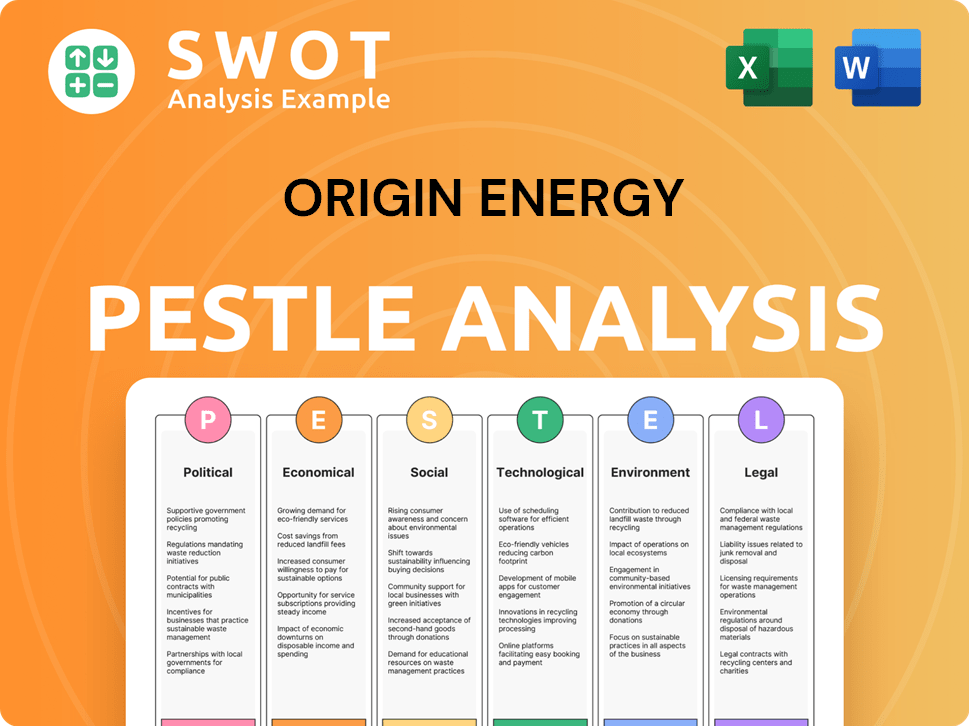
Origin Energy PESTLE Analysis
- Covers All 6 PESTLE Categories
- No Research Needed – Save Hours of Work
- Built by Experts, Trusted by Consultants
- Instant Download, Ready to Use
- 100% Editable, Fully Customizable
Who Sits on Origin Energy’s Board?
The current board of directors of Origin Energy plays a critical role in the company's governance. As of May 2024, the board includes Mr. Scott Perkins as the Independent Non-Executive Chairman, and Mr. Frank Calabria as the Chief Executive Officer & Managing Director. The board's composition balances independent directors with representatives from major shareholders, ensuring a blend of oversight and representation of significant ownership interests. The Brief History of Origin Energy provides context on the company's evolution and governance.
Specific details on each board member's direct shareholding or the exact equity split among directors are not readily available in public summaries. However, the board's structure aims for a balance between independent oversight and representation of significant ownership interests. The composition reflects an effort to align the interests of management, independent directors, and major shareholders in guiding Origin Energy's strategic direction and ensuring accountability.
| Board Member | Title | As of May 2024 |
|---|---|---|
| Scott Perkins | Independent Non-Executive Chairman | May 2024 |
| Frank Calabria | Chief Executive Officer & Managing Director | May 2024 |
Origin Energy's voting structure typically operates on a one-share-one-vote basis, common for ASX-listed companies. There is no publicly available information indicating dual-class shares or special voting rights that would grant outsized control to specific individuals or entities beyond their proportional shareholding. The rejection of the Brookfield/EIG consortium's offer by a significant portion of shareholders in late 2023, particularly AustralianSuper, demonstrates the collective voting power of the shareholder base in influencing major corporate decisions.
Key Takeaways on Origin Energy Ownership
The board of directors at Origin Energy includes independent directors and representatives from major shareholders.
- The voting structure operates on a one-share-one-vote basis.
- Shareholder votes significantly influence major corporate decisions, as seen in the 2023 takeover bid.
- The Australian Shareholders' Association (ASA) provides voting intention reports.
- The board's composition aims for a balance between independent oversight and representation of significant ownership interests.
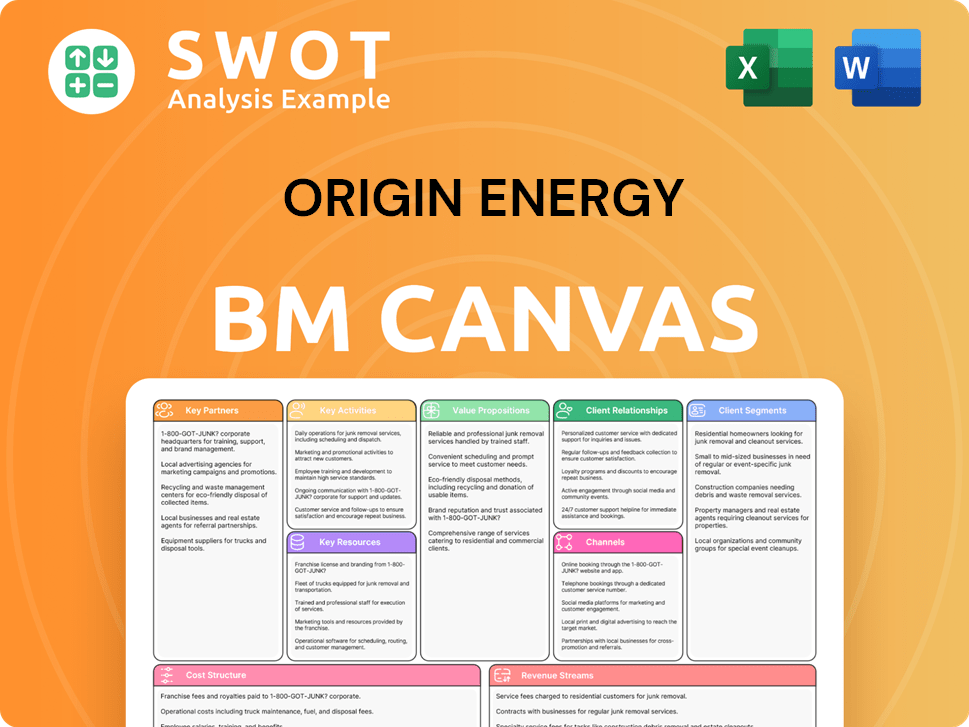
Origin Energy Business Model Canvas
- Complete 9-Block Business Model Canvas
- Effortlessly Communicate Your Business Strategy
- Investor-Ready BMC Format
- 100% Editable and Customizable
- Clear and Structured Layout
What Recent Changes Have Shaped Origin Energy’s Ownership Landscape?
In the past few years, the Origin Energy ownership landscape has seen significant shifts. The most notable event was the attempted A$18 billion takeover bid by a consortium led by Brookfield Asset Management and EIG Global Energy Partners, which lasted from August 2021 to December 2023. The deal ultimately failed due to insufficient shareholder support, particularly from AustralianSuper, leaving Origin Energy as a publicly listed entity.
Beyond the failed takeover, Origin Energy has been actively investing in the energy transition. For example, in April 2024, they acquired the development rights for the Yanco Delta Wind Farm project in New South Wales. This is part of a broader strategy that includes the acquisition of wind farm projects like Ruby Hills and Northern Tablelands, and the Salisbury Solar Farm development project during FY24. The company has also approved construction of large-scale batteries at Eraring and Mortlake, building a 1.5 GW portfolio of owned and tolled battery storage systems. These moves reflect an industry-wide trend toward increasing renewable energy generation and storage.
| Financial Metric | FY23 | FY24 |
|---|---|---|
| Statutory Profit ($ million) | $1,055 | $1,397 |
| Dividends per Share (cents) | 36.5 | 55 |
Financially, Origin Energy reported a statutory profit of $1,397 million for the fiscal year ended June 30, 2024, a rise from $1,055 million the previous year. The company also increased its total dividends for FY24 to 55 cents per share, up from 36.5 cents per share in FY23. While there was no on-market buy-back of shares reported as of August 2024, the company did purchase 5,280,000 shares on-market for employee incentive plans during the reporting period. For more details on Origin Energy ownership and its financial performance, you can find comprehensive information in the company's annual reports and investor relations materials.
 Ownership Structure
Origin Energy is a publicly traded company, meaning its shares are available for purchase on the stock market. The ownership is distributed among various shareholders, including institutional investors and individual investors. The largest shareholders can significantly influence the company's direction.
Key Developments
The failed takeover bid by Brookfield and EIG was a major event. Origin Energy is actively investing in renewable energy projects, such as wind and solar farms, and large-scale battery storage systems. These investments are crucial for the company's future.
Financial Performance
Origin Energy reported a strong financial performance in FY24, with increased profits and dividends. The company's focus on the energy transition is expected to drive future growth. The company also purchased shares for employee incentive plans.
Industry Trends
The energy sector continues to see interest in mergers and acquisitions, though not for large gentailers like Origin Energy. Consolidation remains a key driver in the oil and gas sector. Origin Energy is well-positioned to benefit from the energy transition.
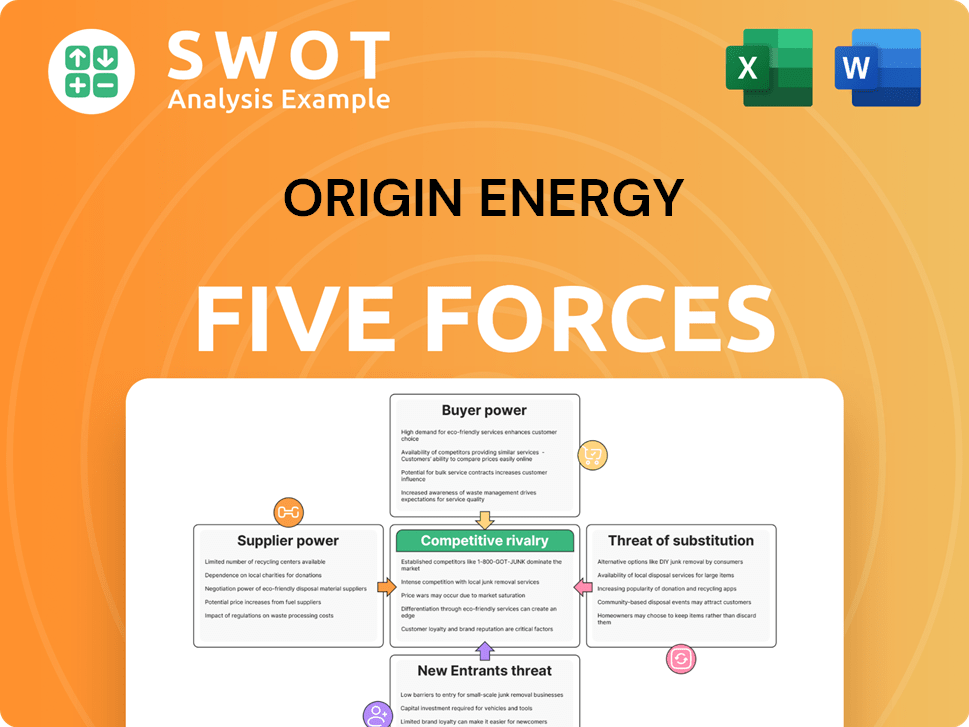
Origin Energy Porter's Five Forces Analysis
- Covers All 5 Competitive Forces in Detail
- Structured for Consultants, Students, and Founders
- 100% Editable in Microsoft Word & Excel
- Instant Digital Download – Use Immediately
- Compatible with Mac & PC – Fully Unlocked
Related Blogs

- What are Mission Vision & Core Values of Origin Energy Company?
- What is Competitive Landscape of Origin Energy Company?
- What is Growth Strategy and Future Prospects of Origin Energy Company?
- How Does Origin Energy Company Work?
- What is Sales and Marketing Strategy of Origin Energy Company?
- What is Brief History of Origin Energy Company?
- What is Customer Demographics and Target Market of Origin Energy Company?
Disclaimer
All information, articles, and product details provided on this website are for general informational and educational purposes only. We do not claim any ownership over, nor do we intend to infringe upon, any trademarks, copyrights, logos, brand names, or other intellectual property mentioned or depicted on this site. Such intellectual property remains the property of its respective owners, and any references here are made solely for identification or informational purposes, without implying any affiliation, endorsement, or partnership.
We make no representations or warranties, express or implied, regarding the accuracy, completeness, or suitability of any content or products presented. Nothing on this website should be construed as legal, tax, investment, financial, medical, or other professional advice. In addition, no part of this site—including articles or product references—constitutes a solicitation, recommendation, endorsement, advertisement, or offer to buy or sell any securities, franchises, or other financial instruments, particularly in jurisdictions where such activity would be unlawful.
All content is of a general nature and may not address the specific circumstances of any individual or entity. It is not a substitute for professional advice or services. Any actions you take based on the information provided here are strictly at your own risk. You accept full responsibility for any decisions or outcomes arising from your use of this website and agree to release us from any liability in connection with your use of, or reliance upon, the content or products found herein.