

Sime Darby Bundle

Who Buys From Sime Darby?
Understanding the Sime Darby SWOT Analysis is crucial, but equally vital is knowing its customers. This involves a deep dive into their customer demographics and the company's target market. From industrial equipment to healthcare, Sime Darby's diverse portfolio caters to a wide array of consumers and businesses across the Asia Pacific region.

This exploration of Sime Darby's customer base will uncover market segmentation strategies, revealing the consumer profile of each business segment. We'll delve into demographic analysis, examining factors such as customer location, income levels, and buying habits to understand how Sime Darby tailors its offerings. Ultimately, this analysis provides valuable insights into how Sime Darby defines its target market and adapts to evolving customer needs.
Who Are Sime Darby’s Main Customers?
Understanding the customer demographics and target market of Sime Darby is crucial for investors and business strategists. The company operates across diverse sectors, including industrial equipment, automotive, healthcare, and property, each with distinct customer profiles. Analyzing these segments provides insights into Sime Darby's revenue streams, growth potential, and market positioning. This analysis helps in making informed decisions about investment and strategic planning.
Sime Darby's market segmentation strategy reflects its diverse business portfolio, targeting both business-to-consumer (B2C) and business-to-business (B2B) customers. The company's ability to effectively cater to these varied segments is a key factor in its financial performance. The Owners & Shareholders of Sime Darby benefit from this strategic approach.
The company's success hinges on its understanding of its customer demographics and the ability to adapt to evolving market trends. This adaptation is particularly important in sectors like automotive, where the shift towards electric vehicles (EVs) is reshaping the consumer profile and buying habits. This adaptability ensures that Sime Darby remains competitive and relevant in its target markets.
 Industrial Segment Customers
The industrial segment primarily serves B2B clients, including construction, mining, forestry, and agricultural companies. These customers, often large corporations or government entities, prioritize equipment reliability, after-sales service, and the total cost of ownership. Demand is driven by infrastructure projects; for example, the construction sector in Malaysia is projected to grow by approximately 5.3% in 2024, driving demand for heavy machinery.
Motors Division Customers
The Motors division caters to both B2C and B2B customers. B2C customers include individual consumers seeking passenger vehicles across various income levels, from luxury brands to more accessible options. The B2B segment involves fleet sales to corporations and government agencies. The customer age range for luxury vehicles typically skews towards higher-income individuals aged 35-65.
Healthcare Segment Customers
The healthcare segment, operated through Ramsay Sime Darby Health Care, serves B2C customers (patients) of all ages and income levels. It also serves B2B customers through corporate healthcare programs and insurance providers. The focus is on providing quality medical services. The healthcare sector continues to grow, with increasing demand for medical services.
Property Division Customers
The Property division targets both B2C customers (homebuyers, often families or young professionals) and B2B customers (commercial tenants, investors in development projects). This division benefits from real estate market trends and development opportunities. The property market sees shifts in demand based on economic conditions and demographic changes.

Key Customer Demographic Trends
Sime Darby's target market is evolving, with increased emphasis on sustainability and digitalization. The industrial segment is adapting to client demand for fuel-efficient and technologically advanced equipment. The Motors division is expanding its EV offerings and charging infrastructure in response to rising demand for EVs. These shifts reflect broader trends in consumer behavior and market dynamics.
- Sustainability: Increasing demand for eco-friendly products and services across all segments.
- Digitalization: Adoption of technology in equipment, automotive, and healthcare services.
- EV Adoption: Growing demand for electric vehicles, influencing the Motors division's strategy.
- Healthcare Demand: Rising healthcare needs due to an aging population and increased health awareness.
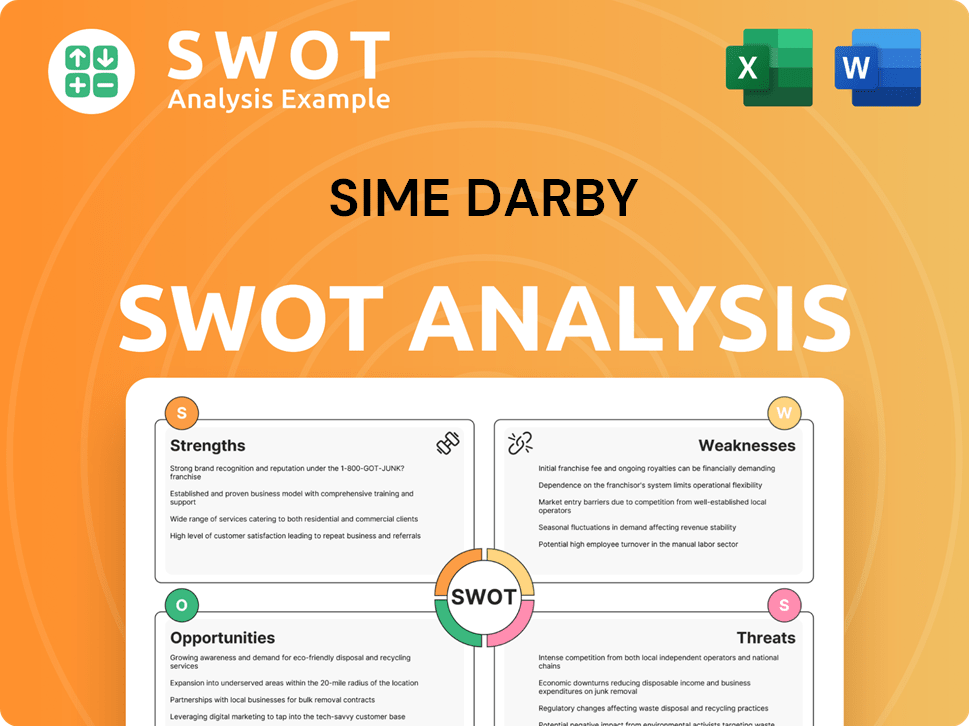
Sime Darby SWOT Analysis
- Complete SWOT Breakdown
- Fully Customizable
- Editable in Excel & Word
- Professional Formatting
- Investor-Ready Format
What Do Sime Darby’s Customers Want?
Understanding the customer needs and preferences is crucial for the success of any business. For Sime Darby, a diversified conglomerate, this understanding is particularly complex due to its varied business segments. Analyzing the customer demographics and target market allows Sime Darby to tailor its products and services effectively, ensuring customer satisfaction and driving growth.
The company's approach to its target market involves a deep understanding of the specific needs and preferences within each sector. This involves detailed market segmentation and consumer profile analysis to identify the key drivers behind customer decisions. This customer-centric approach enables Sime Darby to maintain a competitive edge in the market.
Sime Darby's ability to adapt to evolving customer preferences is a key factor in its long-term success. By continuously monitoring market trends and customer feedback, the company can proactively adjust its strategies and offerings to meet the changing demands of its diverse customer base, from industrial clients to healthcare patients.

Industrial Division
Customers in the Industrial division prioritize reliability, efficiency, and after-sales support. Purchasing decisions are long-term investments, driven by project timelines and operational needs. Decision-making hinges on brand reputation, parts availability, and financing options.
Motors Segment
B2C customers in the Motors segment are driven by brand prestige, performance, safety, and technology. Luxury brands see emotional purchasing, while mass-market vehicles focus on practicality. The rise of EVs reflects environmental consciousness and cost savings.
Healthcare Sector
Patients in the healthcare sector prioritize quality of care, doctor expertise, facility comfort, and accessibility. Feedback often influences the expansion of specialized medical services or the upgrading of patient facilities.
Property Division
Homebuyers in the Property division seek security, lifestyle amenities, connectivity, and value appreciation. Sime Darby addresses these needs by designing integrated townships with amenities and focusing on sustainable building practices.
Key Customer Needs and Preferences
Sime Darby's approach to understanding its customer base is multifaceted, focusing on specific needs within each business segment. This includes detailed market segmentation and demographic analysis to tailor its offerings effectively.
- Industrial: Reliability, efficiency, and robust after-sales support are key. Customers value quick response times for maintenance and specialized training.
- Motors: Brand prestige, performance, safety, and technology drive purchasing decisions. The demand for EVs is increasing, reflecting environmental concerns. In 2024, the sales of EVs increased by 15% in key markets.
- Healthcare: Quality of care, doctor expertise, facility comfort, and accessibility are paramount. Feedback influences service expansion and facility upgrades.
- Property: Homebuyers seek security, amenities, connectivity, and value appreciation. Sustainable building practices are increasingly important. In 2024, sustainable projects accounted for 40% of new developments.
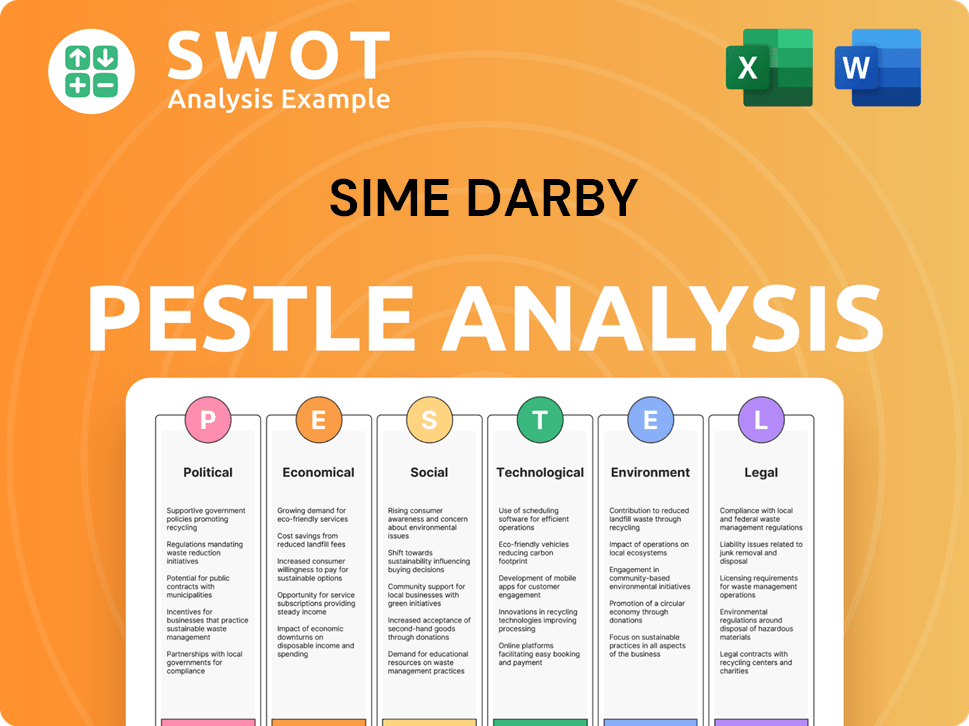
Sime Darby PESTLE Analysis
- Covers All 6 PESTLE Categories
- No Research Needed – Save Hours of Work
- Built by Experts, Trusted by Consultants
- Instant Download, Ready to Use
- 100% Editable, Fully Customizable
Where does Sime Darby operate?
Sime Darby's geographical market presence is predominantly in the Asia Pacific region. Key markets include Malaysia, Australia, New Zealand, China, Singapore, and Papua New Guinea. The company's operations are diverse, spanning industrial equipment distribution, motor vehicle sales, and property development, showcasing a wide reach across various sectors.
In Malaysia, Sime Darby holds a strong market share and brand recognition. Australia and New Zealand are significant for its Industrial division, particularly through its Caterpillar dealership. China is a crucial market for the Motors division, focusing on luxury automotive brands. This widespread presence highlights the company's strategic focus on the Asia Pacific region.
The company's approach involves adapting its offerings and marketing strategies to suit the diverse customer demographics and preferences across these markets. This includes tailoring vehicle specifications, property designs, and industrial equipment offerings to meet the specific needs of each region. Recent expansions in the electric vehicle market further demonstrate its adaptability to global trends and local incentives.
Market Segmentation
Sime Darby employs market segmentation to cater to different customer groups within its geographical markets. This involves understanding the unique needs and preferences of consumers in each region. For example, the demand for heavy equipment varies significantly between countries like Australia and Malaysia, influencing the company's product offerings and marketing strategies. This approach is crucial for effective Marketing Strategy of Sime Darby.
Customer Demographics
Understanding customer demographics is key to Sime Darby's success. This includes analyzing factors such as age range, income levels, and lifestyle. For instance, the Motors division in China targets affluent consumers with luxury vehicles, while in Singapore, the focus might be on premium compact vehicles due to high car ownership costs. These insights help tailor products and marketing efforts effectively.
Target Market Analysis
Sime Darby conducts thorough target market analysis to identify its ideal customer profile. This involves assessing buying habits, customer location, and preferences. For example, in property development, the company adapts designs to local cultural preferences, ensuring that its offerings resonate with the target audience in each market. This strategic approach enhances market penetration and customer satisfaction.
Geographic Distribution of Sales
Sime Darby continually analyzes the geographic distribution of its sales to inform strategic decisions. This data-driven approach helps in market entry and withdrawal decisions, ensuring resources are allocated effectively. By monitoring sales performance across different regions, the company can identify growth opportunities and address challenges promptly. This is crucial for maintaining a competitive edge in the dynamic Asia Pacific market.
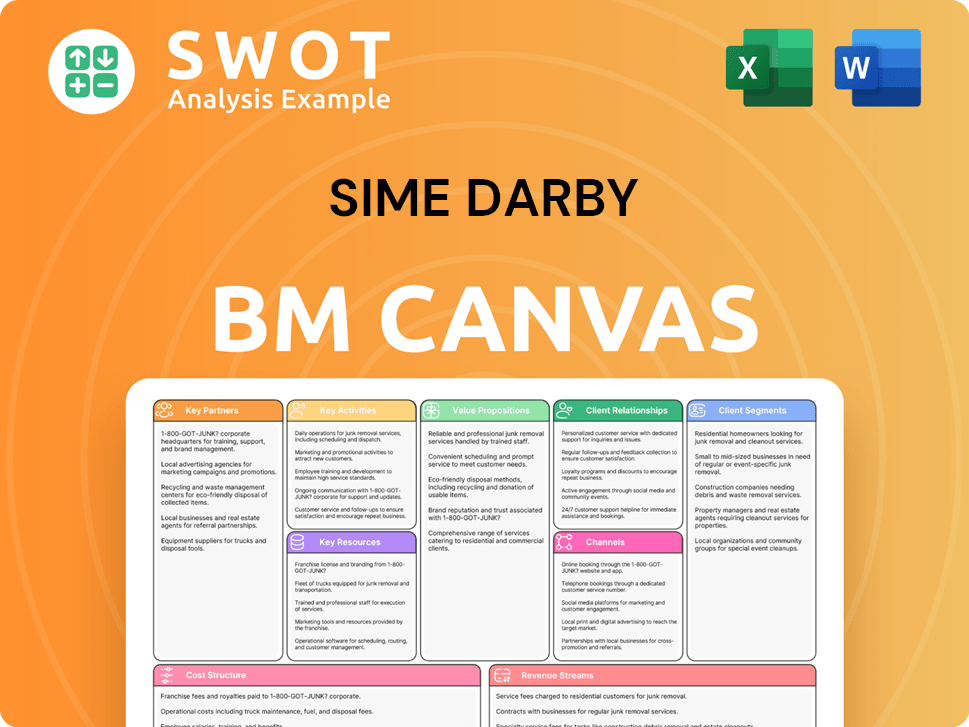
Sime Darby Business Model Canvas
- Complete 9-Block Business Model Canvas
- Effortlessly Communicate Your Business Strategy
- Investor-Ready BMC Format
- 100% Editable and Customizable
- Clear and Structured Layout
How Does Sime Darby Win & Keep Customers?
Sime Darby implements a multi-faceted approach to customer acquisition and retention, utilizing various marketing channels, sales strategies, and customer relationship management (CRM) initiatives across its diverse business units. These strategies are tailored to the specific needs of each sector, including industrial equipment, automotive, property, and healthcare. The company focuses on understanding its customer demographics and tailoring its offerings to meet the demands of its target market, ensuring a strong customer base and sustained market presence.
For customer acquisition, digital marketing is a crucial element, involving targeted online advertising, search engine optimization (SEO), and engaging content marketing via social media platforms. Traditional marketing channels, such as industry trade shows for industrial equipment and automotive showrooms for vehicle sales, remain essential for direct customer engagement and product showcasing. Referral programs, especially in the property and luxury automotive segments, also contribute significantly to acquiring new customers. This blend of digital and traditional methods allows the company to reach a broad spectrum of potential customers.
To foster customer retention, Sime Darby emphasizes strong after-sales service across all its divisions. This includes comprehensive maintenance contracts for industrial equipment, readily available spare parts, and efficient service centers for vehicles. Loyalty programs are implemented, particularly in the Motors segment, offering exclusive benefits, service discounts, and early access to new models to encourage repeat purchases and brand loyalty. The company also utilizes customer data and CRM systems to segment its customer base and personalize marketing campaigns, service reminders, and promotional offers, enhancing the customer lifetime value.
Digital Marketing Strategies
Sime Darby leverages digital marketing through targeted online advertising, SEO, and content marketing on social media. This approach is crucial for reaching a wide audience and driving customer acquisition across various business segments. These strategies are constantly updated to align with the latest digital trends and consumer behaviors.
Traditional Marketing Methods
Traditional marketing methods, such as trade shows and automotive showrooms, remain important for direct customer engagement. These channels provide opportunities for face-to-face interactions, product demonstrations, and building relationships with potential customers. They are particularly effective in the B2B sector.
Sales Tactics and Customer Engagement
Sales tactics involve highly trained sales teams who provide in-depth product knowledge and tailored solutions. In the Motors division, personalized experiences such as test drives and bespoke vehicle customization options are key acquisition tools. These personalized approaches improve customer satisfaction and drive sales.
After-Sales Service and Support
Sime Darby emphasizes strong after-sales service, including maintenance contracts, readily available spare parts, and efficient service centers. This commitment to customer support enhances customer loyalty and encourages repeat business. For example, vehicle service centers are often rated highly by customers.
Loyalty Programs
Loyalty programs, particularly in the Motors segment, offer exclusive benefits and service discounts to encourage repeat purchases. These programs help to build brand loyalty and increase customer lifetime value. The programs often include early access to new models and special offers.
CRM and Data Analytics
Customer data and CRM systems are used to segment the customer base and personalize marketing campaigns. This data-driven approach allows for targeted service reminders and promotional offers, enhancing customer engagement. Data analytics helps to understand customer behavior and preferences.
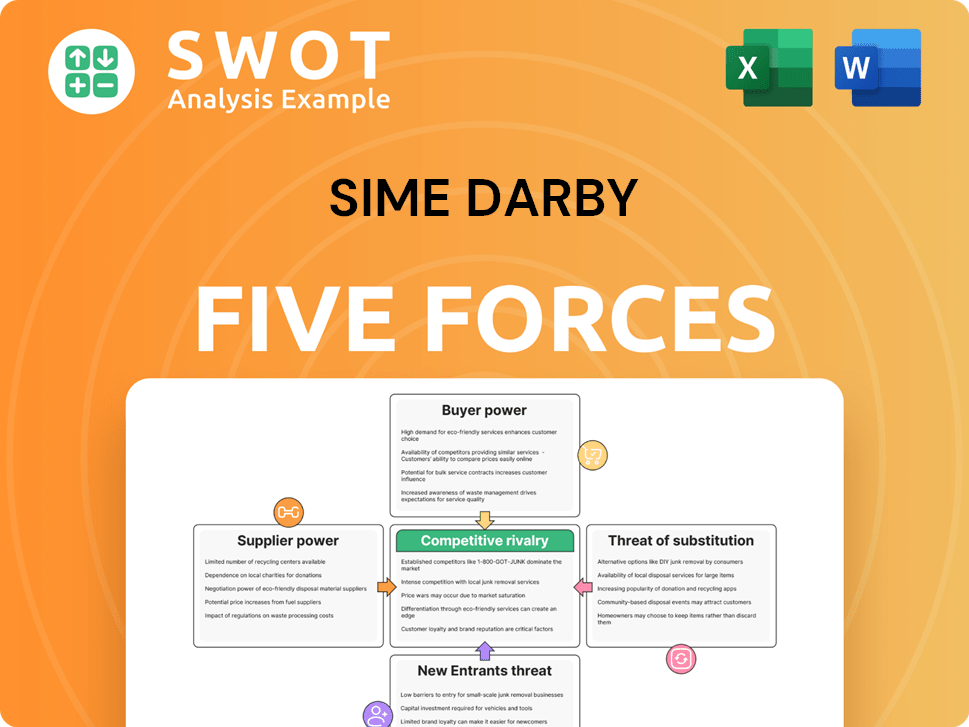
Sime Darby Porter's Five Forces Analysis
- Covers All 5 Competitive Forces in Detail
- Structured for Consultants, Students, and Founders
- 100% Editable in Microsoft Word & Excel
- Instant Digital Download – Use Immediately
- Compatible with Mac & PC – Fully Unlocked
Related Blogs

- What are Mission Vision & Core Values of Sime Darby Company?
- What is Competitive Landscape of Sime Darby Company?
- What is Growth Strategy and Future Prospects of Sime Darby Company?
- How Does Sime Darby Company Work?
- What is Sales and Marketing Strategy of Sime Darby Company?
- What is Brief History of Sime Darby Company?
- Who Owns Sime Darby Company?
Disclaimer
All information, articles, and product details provided on this website are for general informational and educational purposes only. We do not claim any ownership over, nor do we intend to infringe upon, any trademarks, copyrights, logos, brand names, or other intellectual property mentioned or depicted on this site. Such intellectual property remains the property of its respective owners, and any references here are made solely for identification or informational purposes, without implying any affiliation, endorsement, or partnership.
We make no representations or warranties, express or implied, regarding the accuracy, completeness, or suitability of any content or products presented. Nothing on this website should be construed as legal, tax, investment, financial, medical, or other professional advice. In addition, no part of this site—including articles or product references—constitutes a solicitation, recommendation, endorsement, advertisement, or offer to buy or sell any securities, franchises, or other financial instruments, particularly in jurisdictions where such activity would be unlawful.
All content is of a general nature and may not address the specific circumstances of any individual or entity. It is not a substitute for professional advice or services. Any actions you take based on the information provided here are strictly at your own risk. You accept full responsibility for any decisions or outcomes arising from your use of this website and agree to release us from any liability in connection with your use of, or reliance upon, the content or products found herein.