

Polaris Bundle

How Did Polaris Conquer the Powersports World?
Imagine a company born from the harsh realities of Minnesota winters, driven by a need for innovation and a spirit of adventure. This is the captivating story of Polaris Company, a global leader in powersports, whose journey began with a revolutionary idea: a vehicle designed to conquer snow. From its humble beginnings in 1954, Polaris Industries has evolved into a diversified powerhouse, shaping the landscape of recreation and transportation.

This article delves into the brief history of Polaris, exploring its pivotal moments and groundbreaking innovations. Discover the evolution of Polaris from its snowmobile roots to its current dominance in the off-road vehicles (ORVs) market, including ATVs and Polaris SWOT Analysis. Uncover the key milestones that shaped Polaris history, examining its expansion, acquisitions, and the driving forces behind its enduring success in the powersports industry. Learn about the early Polaris snowmobile models and understand the company's mission statement.
What is the Polaris Founding Story?
The story of the Polaris Company began in 1954, rooted in the ingenuity of three men in Roseau, Minnesota: Edgar Hetteen, his brother Allan, and David Johnson. Their journey, however, started even earlier, in 1945, with a machine shop called Hetteen Hoist & Derrick. This shop initially focused on repairing farm equipment, setting the stage for their future innovations.
Their inspiration stemmed from a practical need: to access remote hunting locations in the harsh winter conditions of Minnesota. This challenge led them to develop a solution where existing vehicles fell short. The company's name, Polaris, was chosen to reflect its northern Minnesota origins, referencing the North Star, a fitting symbol for a company aiming to lead in a new industry.
The first prototype snow machine was created in 1954 by David Johnson, along with employees Paul Knochenmus and Orlen Johnson, while Edgar was away. They used a grain silo conveyor belt for the track, a Briggs and Stratton motor, and an old Chevy bumper for skis. The first production model, the Polaris Sno Traveler, was released in 1956. These early snowmobiles weighed nearly 1,000 pounds and could reach speeds of around 20 mph. Initial funding for the company was largely through their existing machine shop business, with the first snowmobile selling for $465.

Founding Story of Polaris
The company was founded in 1954 in Roseau, Minnesota, by Edgar Hetteen, Allan Hetteen, and David Johnson. Their initial focus was on repairing farm equipment.
- The first prototype snow machine was created in 1954.
- The first production model, the Polaris Sno Traveler, was released in 1956.
- The company's name, Polaris, references the North Star, reflecting its northern Minnesota roots.
- Initial funding came from their existing machine shop, with the first snowmobile selling for $465.
The cultural context of their founding in a snow-rich region of Minnesota heavily influenced their pursuit of a vehicle that could conquer winter conditions, laying the groundwork for an entirely new industry. The company's early success in snowmobiles paved the way for its expansion into other off-road vehicles. Today, the company has grown significantly, but its roots remain firmly planted in innovation and a deep understanding of its customers' needs. For a look at how it stacks up against its rivals, check out the Competitors Landscape of Polaris.
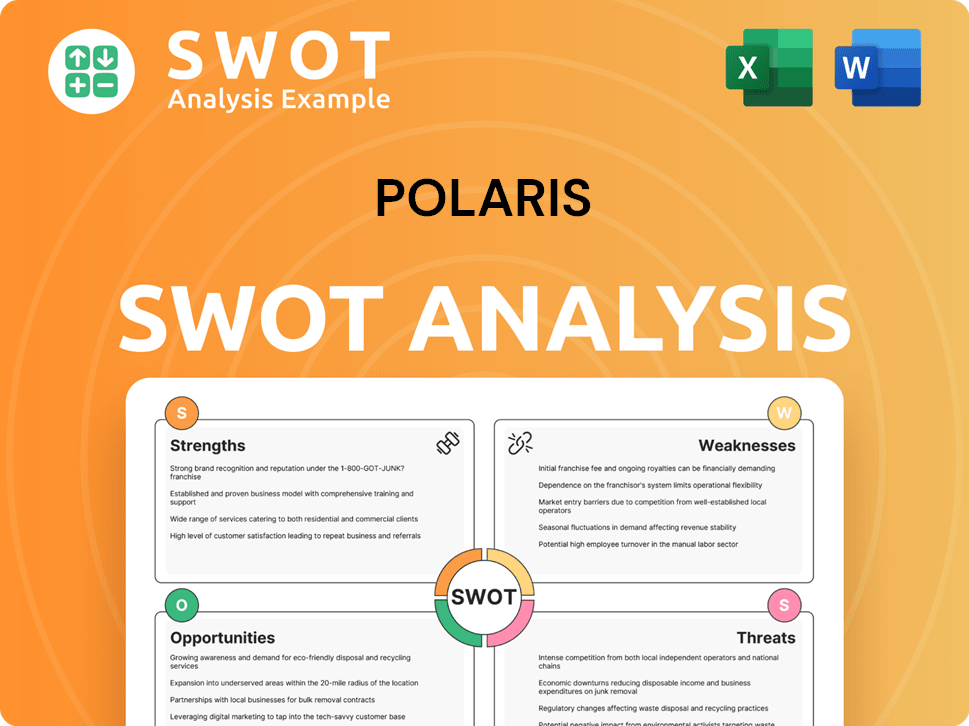
Polaris SWOT Analysis
- Complete SWOT Breakdown
- Fully Customizable
- Editable in Excel & Word
- Professional Formatting
- Investor-Ready Format
What Drove the Early Growth of Polaris?
The early growth of the Polaris Company was significantly fueled by the burgeoning snowmobile market. Following the initial success of the Polaris Sno Traveler, the company continually refined its snowmobile designs. This focus on innovation and adaptation would become a hallmark of Polaris Industries as it expanded into new markets. The company's strategic decisions during this period laid the groundwork for its future success and diversification.
 Snowmobile Market Dominance
In the early 1960s, Polaris history saw the development of a smaller, consumer-sized, front-engine snowmobile to compete with rivals. The 1964 Comet model faced initial challenges, but the company quickly addressed these issues. This led to the successful release of the 1965 Mustang, which became a popular family snowmobile, significantly boosting sales and solidifying Polaris's leadership in the snowmobile industry throughout the 1960s and 1970s.
Entry into ATVs
A pivotal moment came in 1985 when Polaris introduced the Scrambler ATC and the Trail Boss, marking the company's entry into the all-terrain vehicle (ATV) market. These were the first American-made production ATVs. This strategic move expanded Polaris's product offerings beyond snowmobiles and opened up new avenues for growth in the off-road vehicles sector. For more information about the company's strategic approach, check out Target Market of Polaris.
Financial and Operational Expansion
By 1995, Polaris achieved $1 billion in sales, a testament to its growing product lines and market penetration. The company also expanded its manufacturing footprint, opening an engine plant in Wisconsin in 1994 and starting in-house engine production in 1995. Further diversification occurred with entry into the personal watercraft market in 1992, though this segment was exited in 2004.
Leadership and Strategic Shifts
After being acquired by Textron in 1968, Polaris management led a leveraged buyout in 1981, regaining independence. This period saw strategic expansion beyond snowmobiles, market analysis for new products like ATVs, and pivotal decisions to diversify its portfolio. These actions shaped its trajectory as a broader powersports manufacturer. The company's ability to adapt and innovate has been crucial.
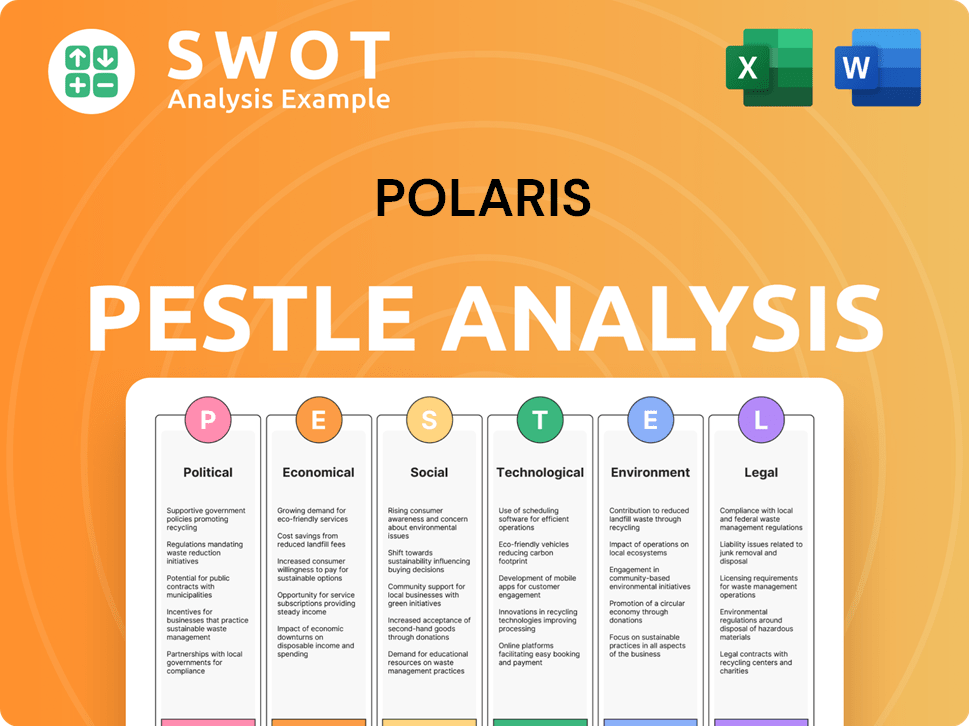
Polaris PESTLE Analysis
- Covers All 6 PESTLE Categories
- No Research Needed – Save Hours of Work
- Built by Experts, Trusted by Consultants
- Instant Download, Ready to Use
- 100% Editable, Fully Customizable
What are the key Milestones in Polaris history?
The Polaris Company has a rich history, marked by significant milestones in the powersports industry. From its early days to its current status, Polaris Industries has consistently innovated and adapted to market changes.
| Year | Milestone |
|---|---|
| 1956 | Development of the first commercially available snowmobile, the Polaris Sno Traveler, establishing the company's foundation. |
| 1985 | Introduction of the first American-made production ATV, the Trail Boss, diversifying product offerings. |
| 1997 | Launch of the RANGER side-by-side vehicle, expanding the company's product line. |
| 2007 | Introduction of the RANGER RZR, the first trail-capable and fastest-accelerating side-by-side vehicle. |
| 2023 | Launch of the all-electric Ranger XP Kinetic, showcasing innovation in electric vehicles. |
Polaris has consistently pushed the boundaries of innovation in the powersports sector. This includes pioneering designs in snowmobiles, ATVs, and off-road vehicles, leading to increased performance and user experience.

Snowmobile Innovation
Polaris's early snowmobile models, like the Sno Traveler, set the stage for future advancements. The company continuously refined its snowmobile designs, improving both performance and reliability.
ATV Advancements
The introduction of the Trail Boss marked a significant step in ATV technology. Polaris continued to enhance its ATV offerings, focusing on power, handling, and rider comfort.
Side-by-Side Evolution
The RANGER and RZR lines revolutionized the side-by-side market. These vehicles offered enhanced capabilities and performance, catering to a wide range of uses.
Electric Vehicle Initiatives
The launch of the Ranger XP Kinetic demonstrates Polaris's commitment to electric vehicle technology. This move reflects the company's focus on sustainable and innovative products.
Engine Technology
Polaris has consistently improved its engine technology, enhancing the power and efficiency of its vehicles. This includes advancements in both gasoline and electric powertrains.
Design and Ergonomics
Polaris has focused on vehicle design and ergonomics to improve rider experience. This includes comfortable seating, intuitive controls, and stylish aesthetics.
The
Market Downturns
The snowmobile market significantly shrunk in the late 1970s and early 1980s, leading to flagging sales. Polaris navigated this through a management-led leveraged buyout in 1981.
Competitive Threats
The powersports industry is highly competitive, requiring continuous innovation and strategic adaptation. Polaris faces competition from both established and emerging players.
Economic Fluctuations
Economic downturns and consumer uncertainty can impact sales and profitability. Polaris must adapt to changing economic conditions to maintain stability.
Tariff Environment
Dynamic tariff environments can increase costs and impact profitability. Potential gross tariff costs are projected between $320 million and $370 million.
Operational Challenges
Polaris has faced challenges in managing operational efficiencies and dealer inventory. Strategic responses include reducing dealer inventory.
Consumer Uncertainty
Consumer uncertainty can affect demand and sales volumes. Polaris has to focus on promotional activity to address the consumer uncertainty.
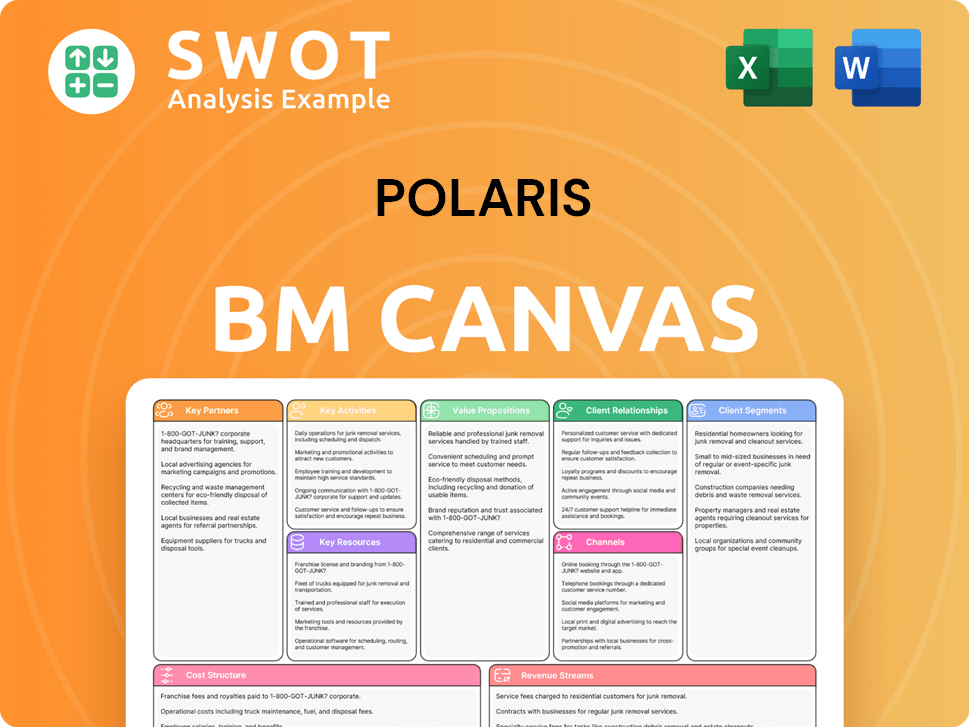
Polaris Business Model Canvas
- Complete 9-Block Business Model Canvas
- Effortlessly Communicate Your Business Strategy
- Investor-Ready BMC Format
- 100% Editable and Customizable
- Clear and Structured Layout
What is the Timeline of Key Events for Polaris?
The Polaris Company has a rich history marked by innovation and strategic shifts. Founded in 1954 by Edgar Hetteen, Allan Hetteen, and David Johnson, the company initially focused on snowmobiles, and has since expanded into a diverse range of off-road vehicles. Here's a look at some key moments in the
| Year | Key Event |
|---|---|
| 1954 | Polaris is founded in Roseau, Minnesota. |
| 1956 | The first production snowmobile, the Polaris Sno Traveler, is released. |
| 1960 | Edgar Hetteen leads a 1,200-mile snowmobile trek across Alaska. |
| 1965 | The popular Mustang snowmobile, designed for families, is introduced. |
| 1968 | Textron, Inc. acquires Polaris. |
| 1981 | Polaris management leads a leveraged buyout, making the company independent again. |
| 1985 | Polaris introduces the Trail Boss, the first American-made production ATV. |
| 1987 | Polaris Industries goes public. |
| 1995 | Annual sales exceed $1 billion for the first time. |
| 1997 | The Polaris RANGER side-by-side vehicle debuts. |
| 2007 | Polaris introduces the RANGER RZR, the first trail-capable and fastest-accelerating side-by-side. |
| 2011 | Polaris acquires the legendary Indian Motorcycle brand. |
| 2014 | Polaris opens its first manufacturing facility outside North America in Opole, Poland. |
| 2018 | Polaris acquires Boat Holdings, expanding its marine division. |
| 2019 | The company officially changes its name from Polaris Industries Inc. to Polaris Inc. |
| 2023 | Polaris launches the all-electric Ranger XP Kinetic. |
| Q1 2025 | Polaris reports worldwide sales of $1.56 billion, down 12% from Q1 2024, and a net loss of $67 million. |
Navigating Market Challenges
Polaris is currently facing a tough market, with North American retail sales down 7% in Q1 2025. Despite these challenges, the company is focused on innovation and operational efficiency. CEO Mike Speetzen is emphasizing strategies to strengthen the company during this downturn.
Financial Outlook and Strategy
Polaris has withdrawn its full-year 2025 guidance due to economic uncertainty, but projects Q2 2025 sales between $1.6 billion and $1.8 billion. The company is investing in new product development, such as the Indian Scout and the 2025 RANGER lineup. Sustainability efforts are also a key focus.
Innovation and Product Development
Recent launches like the Indian Scout and the 2025 RANGER lineup highlight Polaris' commitment to innovation. The RANGER Kinetic Pro XD has received industry awards. These developments show Polaris' dedication to providing innovative solutions for outdoor enthusiasts.
Long-Term Vision
Polaris' long-term strategy, detailed at its 2025 Capital Markets Day, centers on dealers, innovation, and customers. The goal is to reinforce its position as an industry leader and improve financial strength. This approach reflects the company's ongoing commitment to adapting to market demands.
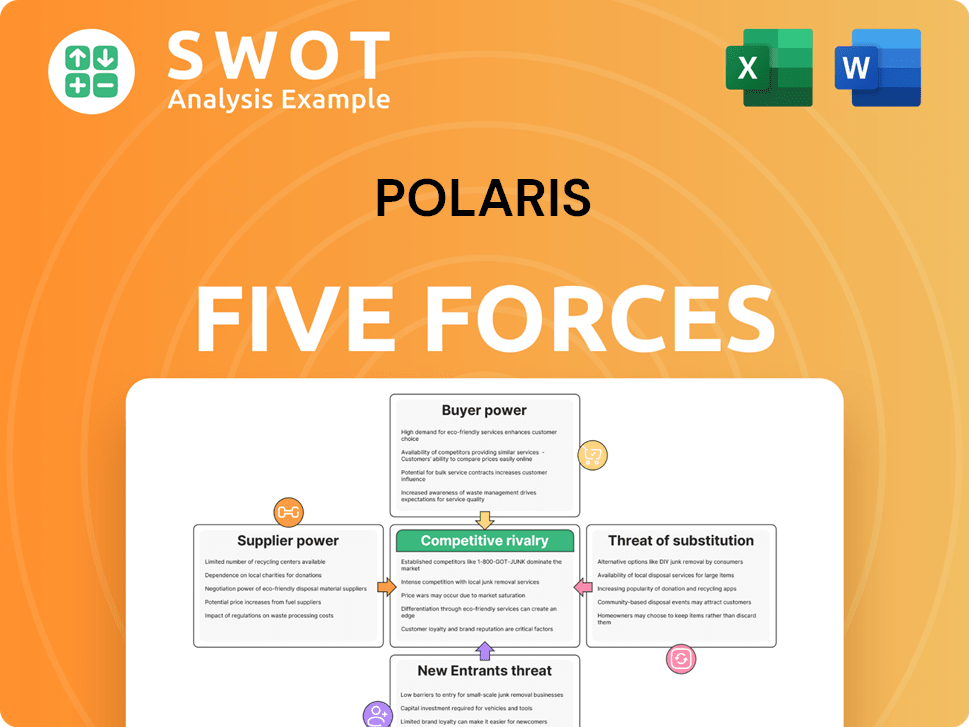
Polaris Porter's Five Forces Analysis
- Covers All 5 Competitive Forces in Detail
- Structured for Consultants, Students, and Founders
- 100% Editable in Microsoft Word & Excel
- Instant Digital Download – Use Immediately
- Compatible with Mac & PC – Fully Unlocked
Related Blogs

- What is Competitive Landscape of Polaris Company?
- What is Growth Strategy and Future Prospects of Polaris Company?
- How Does Polaris Company Work?
- What is Sales and Marketing Strategy of Polaris Company?
- What is Brief History of Polaris Company?
- Who Owns Polaris Company?
- What is Customer Demographics and Target Market of Polaris Company?
Disclaimer
All information, articles, and product details provided on this website are for general informational and educational purposes only. We do not claim any ownership over, nor do we intend to infringe upon, any trademarks, copyrights, logos, brand names, or other intellectual property mentioned or depicted on this site. Such intellectual property remains the property of its respective owners, and any references here are made solely for identification or informational purposes, without implying any affiliation, endorsement, or partnership.
We make no representations or warranties, express or implied, regarding the accuracy, completeness, or suitability of any content or products presented. Nothing on this website should be construed as legal, tax, investment, financial, medical, or other professional advice. In addition, no part of this site—including articles or product references—constitutes a solicitation, recommendation, endorsement, advertisement, or offer to buy or sell any securities, franchises, or other financial instruments, particularly in jurisdictions where such activity would be unlawful.
All content is of a general nature and may not address the specific circumstances of any individual or entity. It is not a substitute for professional advice or services. Any actions you take based on the information provided here are strictly at your own risk. You accept full responsibility for any decisions or outcomes arising from your use of this website and agree to release us from any liability in connection with your use of, or reliance upon, the content or products found herein.