

Polaris Bundle

How Does Polaris Navigate the Powersports Arena?
Polaris Inc., a titan in the powersports industry since 1954, faces a dynamic Polaris SWOT Analysis in a market driven by innovation and consumer preferences. From snowmobiles to off-road vehicles, the company's journey reflects its strategic expansion and ability to adapt to the changing demands of the recreational and utility vehicle sectors. But who are its main rivals, and how does Polaris maintain its competitive edge?

Understanding the Polaris competitive landscape is crucial for investors and industry watchers alike. This Polaris market analysis will dissect the company's strategies, evaluate its Polaris competitors, and explore its market position within the powersports industry. We'll delve into the snowmobiles market and off-road vehicles sectors, providing insights into Polaris's market share off-road vehicles and its ability to compete in an environment shaped by technological advancements and evolving consumer needs, including a Polaris vs. Can-Am comparison.
Where Does Polaris’ Stand in the Current Market?
The Polaris competitive landscape in the powersports industry is defined by its strong market position, particularly within the off-road vehicle (ORV) segment. The company is a leader in North America for ORVs, including ATVs and side-by-sides, with a history of holding a dominant market share. Their product lines, such as RANGER, RZR, and GENERAL side-by-sides, and Sportsman ATVs, are widely recognized and contribute significantly to its revenue. A deep dive into the Marketing Strategy of Polaris reveals how they maintain this position.
Beyond ORVs, Polaris market analysis shows it competes in the snowmobile market and the motorcycle segment with brands like Indian Motorcycle and Slingshot. Polaris's geographic presence is global, with strong footholds in North America, Europe, and Asia-Pacific, serving a diverse customer base. The company has strategically emphasized premium offerings and technological advancements to cater to evolving consumer preferences.
Financial health is a key indicator of its market standing. In the first quarter of 2024, Polaris reported sales of $1.86 billion, a 1% increase from the prior year, indicating resilience in a challenging market. While North America remains its strongest market, Polaris is actively pursuing growth in international markets and expanding its presence in adjacent sectors like marine with its Bennington, Godfrey, and Hurricane boat brands.
 Market Share Leadership
Polaris has historically held a dominant market share in the ORV category in North America. While specific figures for 2024-2025 are subject to market dynamics, the company's strong position remains evident. Despite a slight decline in retail sales in Q1 2024, Polaris maintained a significant market share in key segments.
Product Portfolio Strength
The company's diverse product portfolio, including RANGER, RZR, and GENERAL side-by-sides, and Sportsman ATVs, contributes significantly to its revenue. These products are widely recognized and highly regarded within the powersports industry. The variety helps Polaris cater to a wide range of customer needs and preferences.
Global Presence
Polaris has a global presence with strong footholds in North America, Europe, and Asia-Pacific. This international reach allows Polaris to serve a diverse customer base. Expanding into international markets is a key part of Polaris's growth strategy.
Financial Performance
In Q1 2024, Polaris reported sales of $1.86 billion, a 1% increase from the prior year, demonstrating resilience. This indicates the company's ability to navigate challenging market conditions. The financial performance is a critical factor in maintaining its market position.

Key Market Dynamics
Understanding the Polaris competitive landscape involves recognizing the key market dynamics. The company faces competition from various players in different segments of the powersports industry. The Polaris competitors include both established and emerging brands, each vying for market share.
- The ORV segment is highly competitive, with major players constantly innovating and introducing new models.
- The snowmobile market presents unique challenges due to seasonal demand and regional preferences.
- The motorcycle segment, with brands like Indian Motorcycle, competes with established brands in a crowded market.
- Technological advancements and evolving consumer preferences drive product development and marketing strategies.
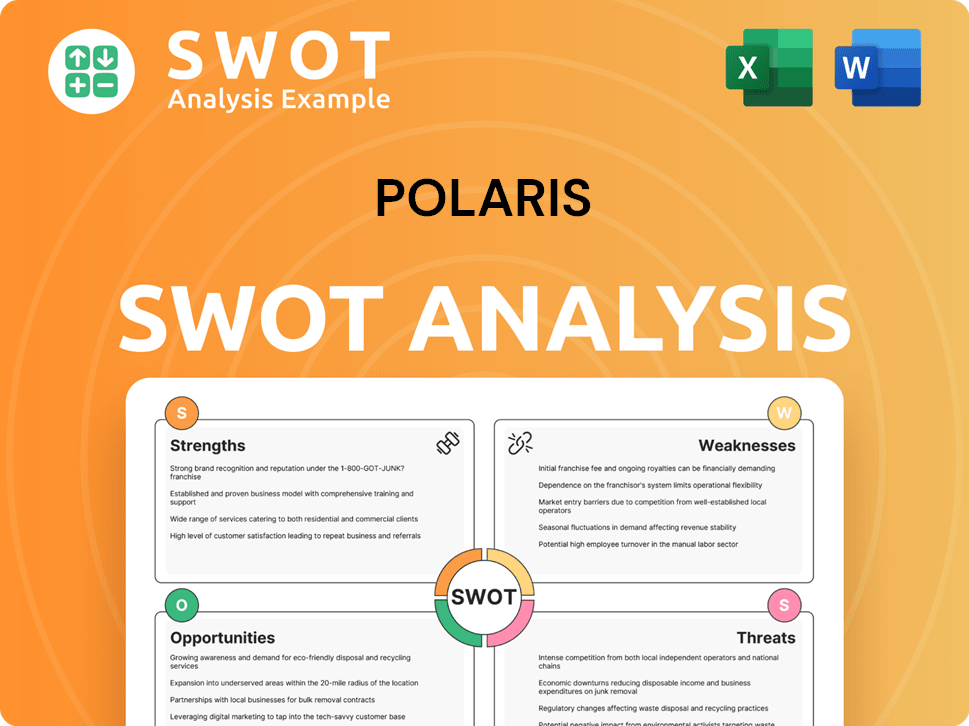
Polaris SWOT Analysis
- Complete SWOT Breakdown
- Fully Customizable
- Editable in Excel & Word
- Professional Formatting
- Investor-Ready Format
Who Are the Main Competitors Challenging Polaris?
The Revenue Streams & Business Model of Polaris reveals the company's significant presence in the powersports industry. Understanding the Polaris competitive landscape is crucial for investors and industry analysts alike. This analysis delves into the key competitors challenging Polaris across its diverse product segments.
Polaris Inc. faces a dynamic competitive environment. The company's success depends on its ability to innovate, maintain competitive pricing, and effectively manage its dealer networks. This competitive analysis will help understand the challenges and opportunities facing Polaris in the market.

Off-Road Vehicle (ORV) Competitors
In the off-road vehicle (ORV) market, Polaris faces direct competition from several key players. These competitors continuously innovate and adapt to maintain their market share. Understanding the competitive landscape is vital for assessing Polaris's market position.
Key ORV Rivals
Primary competitors in the ORV segment include Arctic Cat (Textron Inc.), Can-Am (BRP Inc.), Honda, Kawasaki, and Yamaha. These companies offer a range of vehicles, from ATVs to side-by-sides, challenging Polaris's dominance. BRP Inc., with its Can-Am brand, is a significant competitor, particularly in the side-by-side segment.
Snowmobile Market Competitors
The snowmobile market presents a different set of competitors for Polaris. These rivals focus on advancements in engine technology, chassis design, and rider comfort. The competition in this segment is intense, with companies constantly striving to improve their offerings.
Snowmobile Market Rivals
Arctic Cat and Ski-Doo (BRP Inc.) are the primary competitors in the snowmobile market. These companies compete with Polaris through product innovation and marketing strategies. The snowmobile market is highly competitive, with continuous product improvements.
Motorcycle Segment Competition
Polaris's Indian Motorcycle brand competes in the motorcycle segment. This market is characterized by strong brand heritage and loyal customer bases. The motorcycle industry is highly competitive, with various brands vying for market share.
Motorcycle Competitors
The Indian Motorcycle brand competes with Harley-Davidson, Honda, Yamaha, and European brands like BMW and KTM. Harley-Davidson often leverages its brand heritage and loyal customer base. The motorcycle market is diverse, with various brands competing for market share.
Market Dynamics and Competitive Strategies
The powersports industry is subject to continuous changes, driven by technological advancements, consumer preferences, and economic conditions. Understanding these dynamics is crucial for assessing Polaris's competitive position. The competitive landscape is influenced by factors such as product innovation, pricing strategies, and dealer network expansion.
- Product Innovation: Competitors continuously introduce new features and technologies to attract customers.
- Pricing Strategies: Competitive pricing is essential for attracting and retaining customers in the powersports industry.
- Dealer Networks: Expanding and maintaining strong dealer networks is crucial for market reach and customer service.
- Mergers and Alliances: The industry has seen mergers and alliances, such as Textron's acquisition of Arctic Cat, which reshapes the competitive dynamics.
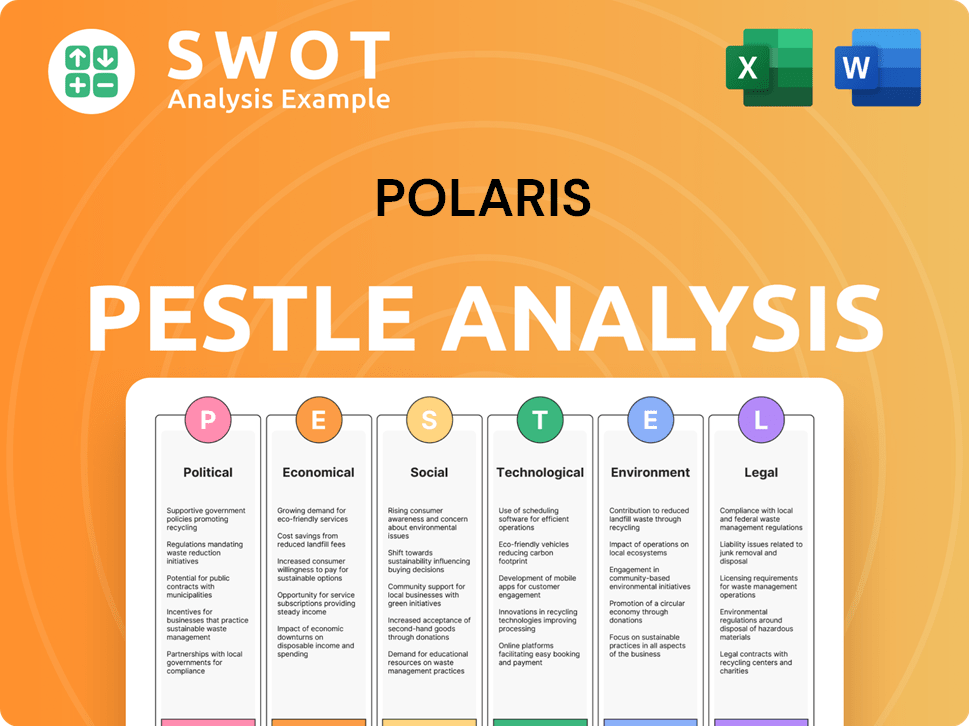
Polaris PESTLE Analysis
- Covers All 6 PESTLE Categories
- No Research Needed – Save Hours of Work
- Built by Experts, Trusted by Consultants
- Instant Download, Ready to Use
- 100% Editable, Fully Customizable
What Gives Polaris a Competitive Edge Over Its Rivals?
Understanding the Brief History of Polaris is crucial to grasping its competitive advantages. The company has consistently demonstrated its ability to innovate and adapt within the dynamic powersports industry. This agility, combined with strategic investments, has allowed it to maintain a strong market position and navigate industry challenges effectively.
Polaris Inc. has cultivated several core competitive advantages that distinguish it from its rivals. A significant asset is its strong brand equity and reputation for innovation, particularly in the off-road vehicle (ORV) segment. Polaris’s commitment to product development is supported by substantial investment in research and development, leading to proprietary technologies and a robust patent portfolio.
Another key advantage is the company's extensive dealer network. This global network provides widespread market access, offering sales, service, and parts support, which is crucial for customer satisfaction and brand loyalty. The ability to offer a diverse product portfolio, spanning ORVs, snowmobiles, motorcycles, and marine products, allows it to cater to a broad range of consumer preferences and mitigate risks.
Brand Recognition and Innovation
Polaris is recognized for its strong brand equity, particularly in the ORV market. This is supported by consistent innovation, with products like the RANGER and RZR setting industry benchmarks. The company invests heavily in R&D, leading to proprietary technologies and a strong patent portfolio.
Extensive Dealer Network
Polaris benefits from a well-established global dealer network, providing widespread market access. This network offers sales, service, and parts support, enhancing customer satisfaction and brand loyalty. This extensive network is crucial for maintaining a competitive edge in the powersports industry.
Diverse Product Portfolio
Polaris offers a diverse product portfolio, including ORVs, snowmobiles, motorcycles, and marine products. This diversification allows the company to cater to a broad range of consumer preferences. It also helps mitigate risks associated with over-reliance on a single product category.
Economies of Scale
Polaris benefits from economies of scale in manufacturing and procurement, leading to cost efficiencies. These efficiencies contribute to the company's ability to offer competitive pricing. This is a key factor in maintaining profitability and market share.
Key Competitive Strengths
Polaris's competitive advantages are multifaceted, including brand strength, a robust dealer network, and a diverse product line. These factors collectively contribute to its strong position in the powersports industry. The company's focus on customer-centric design and adaptability further enhances its competitiveness.
- Strong Brand Equity: Recognized for innovation and quality in ORVs and other segments.
- Extensive Dealer Network: Provides widespread market access and customer support.
- Diverse Product Portfolio: Mitigates risk and caters to a broad consumer base.
- Economies of Scale: Enhances cost efficiencies in manufacturing and procurement.
- Customer-Centric Approach: Focuses on adapting to evolving consumer preferences.
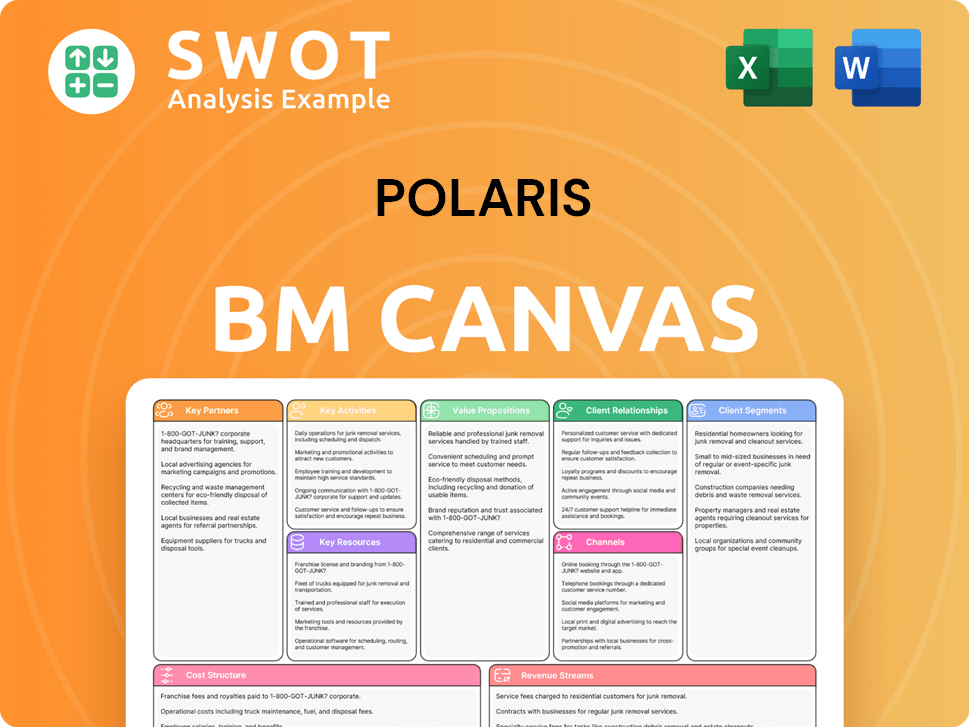
Polaris Business Model Canvas
- Complete 9-Block Business Model Canvas
- Effortlessly Communicate Your Business Strategy
- Investor-Ready BMC Format
- 100% Editable and Customizable
- Clear and Structured Layout
What Industry Trends Are Reshaping Polaris’s Competitive Landscape?
The powersports industry, including the off-road vehicles and snowmobiles market, is experiencing significant shifts, influencing the Polaris competitive landscape. Technological advancements, evolving consumer preferences, and global economic conditions are key factors shaping the industry. Understanding these trends is crucial for assessing Polaris's future performance and its ability to navigate the competitive environment. This analysis provides a detailed look at the current state and future outlook for Polaris, including a Polaris market analysis and a review of its main rivals.
Polaris faces both challenges and opportunities. The transition to electric vehicles, changing consumer demands, and economic uncertainties present hurdles. However, these also create opportunities for innovation, market expansion, and strategic partnerships. This in-depth examination will help you understand Polaris's position within the powersports industry and its strategies for maintaining a competitive edge.
Industry Trends
The powersports industry is seeing significant technological advancements, especially in electric powertrains and autonomous features. Regulatory changes, such as emissions and noise standards, are also influencing product design. Consumer preferences are shifting toward connected vehicles and customizable options. These trends require Polaris to adapt through innovation and strategic product development.
Future Challenges
Key challenges include the need for significant R&D investments in electric vehicle technology and compliance with new regulations. Economic factors like inflation and supply chain disruptions also impact production costs and consumer spending. Increased competition from new market entrants and shifts in recreational spending habits pose additional risks for Polaris.
Opportunities
Growth opportunities exist in emerging markets and through expanding the marine segment. Further diversification of the product portfolio through strategic partnerships or acquisitions can also boost growth. Enhancing digital offerings and developing experiential marketing strategies can help Polaris meet evolving consumer demands and strengthen its market position.
Strategic Focus
Polaris must focus on adapting to industry trends, investing in innovative technologies, and maintaining strong relationships with its dealer network. Leveraging established brands and expanding into adjacent markets will also be crucial for resilience. The company's ability to navigate these factors will determine its future success.
Key Considerations for Polaris
Polaris needs to balance its investments in traditional internal combustion engine vehicles with its electric vehicle initiatives, like the Ranger XP Kinetic. Managing costs and supply chain disruptions is critical to maintain profitability. Strengthening its dealer network and customer relationships will be essential for navigating market changes.
- Electric Vehicle Transition: Investing in electric vehicle technology while managing the transition from internal combustion engines.
- Economic Factors: Addressing inflation and supply chain issues to control costs and maintain profitability.
- Customer Engagement: Enhancing digital offerings and creating personalized experiences to meet evolving consumer demands.
- Market Expansion: Exploring growth opportunities in emerging markets and expanding into adjacent segments.
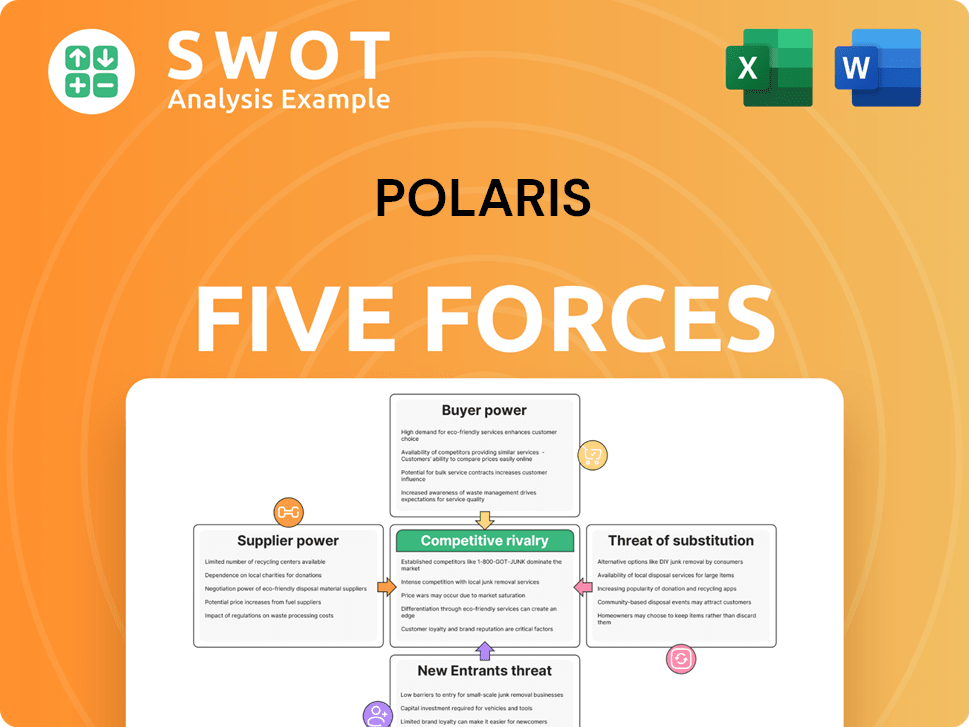
Polaris Porter's Five Forces Analysis
- Covers All 5 Competitive Forces in Detail
- Structured for Consultants, Students, and Founders
- 100% Editable in Microsoft Word & Excel
- Instant Digital Download – Use Immediately
- Compatible with Mac & PC – Fully Unlocked
Related Blogs

- What are Mission Vision & Core Values of Polaris Company?
- What is Growth Strategy and Future Prospects of Polaris Company?
- How Does Polaris Company Work?
- What is Sales and Marketing Strategy of Polaris Company?
- What is Brief History of Polaris Company?
- Who Owns Polaris Company?
- What is Customer Demographics and Target Market of Polaris Company?
Disclaimer
All information, articles, and product details provided on this website are for general informational and educational purposes only. We do not claim any ownership over, nor do we intend to infringe upon, any trademarks, copyrights, logos, brand names, or other intellectual property mentioned or depicted on this site. Such intellectual property remains the property of its respective owners, and any references here are made solely for identification or informational purposes, without implying any affiliation, endorsement, or partnership.
We make no representations or warranties, express or implied, regarding the accuracy, completeness, or suitability of any content or products presented. Nothing on this website should be construed as legal, tax, investment, financial, medical, or other professional advice. In addition, no part of this site—including articles or product references—constitutes a solicitation, recommendation, endorsement, advertisement, or offer to buy or sell any securities, franchises, or other financial instruments, particularly in jurisdictions where such activity would be unlawful.
All content is of a general nature and may not address the specific circumstances of any individual or entity. It is not a substitute for professional advice or services. Any actions you take based on the information provided here are strictly at your own risk. You accept full responsibility for any decisions or outcomes arising from your use of this website and agree to release us from any liability in connection with your use of, or reliance upon, the content or products found herein.