

Newell Brands Bundle

How Does Newell Brands Navigate Its Competitive Arena?
Newell Brands, a century-old titan in the consumer goods sector, faces a dynamic market shaped by shifting consumer demands and fierce rivals. From its humble beginnings manufacturing curtain rods, the company has evolved into a global force, wielding a vast portfolio of iconic brands. Understanding the Newell Brands SWOT Analysis is key to grasping its position.

This exploration will dissect the Newell Brands competitive landscape, providing a detailed Newell Brands market analysis to identify its key players and competitive strategies. We'll examine the company's Newell Brands competitors, evaluate its Newell Brands business strategy, and assess its diverse Newell Brands portfolio to understand its market position and future prospects within the Newell Brands industry.
Where Does Newell Brands’ Stand in the Current Market?
Newell Brands holds a significant position within the consumer goods sector, with a diverse portfolio of well-known brands. This includes names like Rubbermaid, Sharpie, Graco, Coleman, and Yankee Candle, which contribute to its strong presence across various segments. A detailed Newell Brands market analysis reveals the company's broad reach, serving individual consumers and large commercial clients alike.
The company's market share varies across its product categories. For instance, in the writing instruments category, Newell Brands has a strong foothold with its Sharpie and Paper Mate brands. This diversified approach allows the company to navigate different market dynamics and customer preferences. The company's strategic focus involves streamlining its portfolio and concentrating on core categories that offer higher growth potential and profitability.
Geographically, Newell Brands operates globally, with a substantial presence in North America, Europe, Asia, and Latin America. The company's Newell Brands business strategy includes strategic realignments, such as divesting certain businesses to optimize its portfolio. This approach aims to enhance financial health and market competitiveness.
 Market Share Overview
Newell Brands holds varying market shares across its diverse product categories. While specific figures are proprietary, the company maintains a strong presence in areas like food storage and organization (Rubbermaid), writing and art supplies (Sharpie, Paper Mate), and baby products (Graco).
Financial Performance (2023)
Newell Brands reported net sales of $8.15 billion for the full year 2023. The Q4 2023 earnings showed net sales of $2.09 billion, indicating shifts in market dynamics. This financial performance positions Newell Brands as a major player in the consumer goods sector.
Geographic Presence
Newell Brands has a global footprint, with significant operations in North America, Europe, Asia, and Latin America. This broad geographic reach allows the company to serve diverse customer segments and adapt to regional market trends.
Strategic Focus
The company's strategy includes divesting certain businesses to concentrate on core categories with higher growth potential. This strategic realignment aims to improve financial health and market competitiveness, as highlighted in a detailed analysis of Owners & Shareholders of Newell Brands.

Key Market Dynamics
Newell Brands faces a dynamic competitive landscape, with its market position influenced by various factors. These include consumer preferences, economic conditions, and the strategies of its competitors. The company's performance is closely tied to its ability to innovate and adapt to evolving market demands.
- Competitive Pressure: Intense competition from both established and emerging players in various product categories.
- Economic Factors: Sensitivity to economic cycles, impacting consumer spending and demand.
- Strategic Initiatives: Ongoing portfolio optimization and brand building efforts to enhance market position.
- Geographic Diversification: Balancing global presence with regional market-specific strategies.
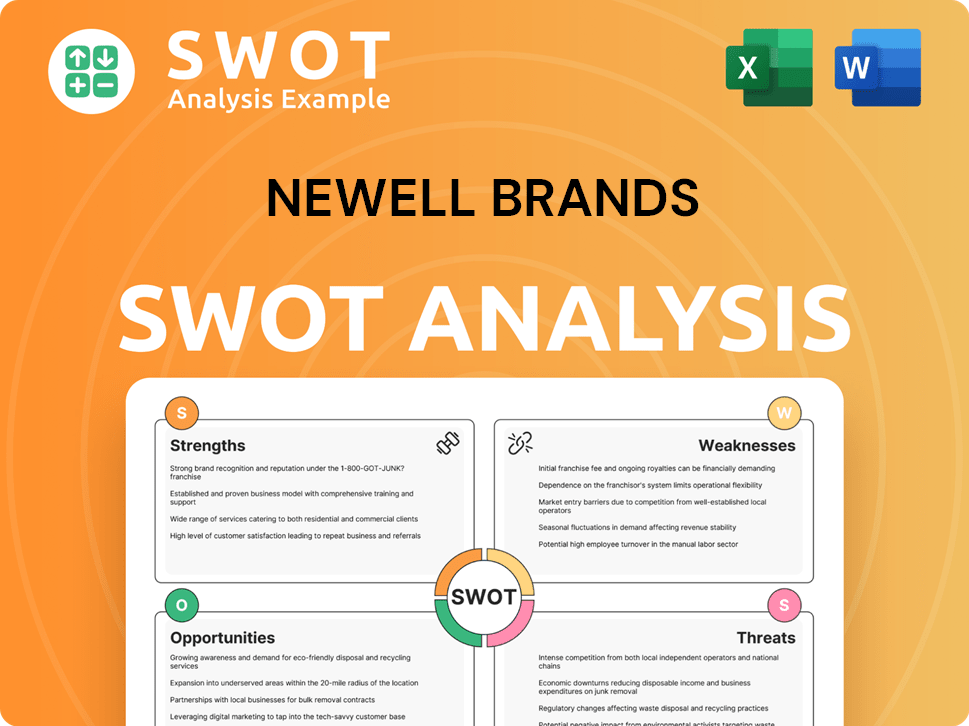
Newell Brands SWOT Analysis
- Complete SWOT Breakdown
- Fully Customizable
- Editable in Excel & Word
- Professional Formatting
- Investor-Ready Format
Who Are the Main Competitors Challenging Newell Brands?
The Newell Brands competitive landscape is characterized by a broad and diverse set of rivals across its extensive product portfolio. A thorough Newell Brands market analysis reveals that the company faces both direct and indirect competition in various sectors, from home and commercial products to writing instruments and baby goods. Understanding these competitors is crucial for evaluating Newell Brands' business strategy and market position.
The competition is further intensified by the emergence of smaller, niche players and direct-to-consumer brands. These entities leverage e-commerce to target specific consumer segments, thus challenging the established market share of larger companies like Newell Brands. Moreover, the competitive environment is constantly reshaped by mergers and acquisitions, which can create stronger rivals with expanded product offerings and distribution networks. For a deeper understanding of the company's marketing approach, consider reading about the Marketing Strategy of Newell Brands.
The competitive dynamics also involve a strong emphasis on sustainability and eco-friendly products, pushing companies like Newell Brands to innovate in these areas. This focus is driven by consumer demand and regulatory pressures, requiring continuous adaptation and investment in sustainable practices to maintain a competitive edge. The following sections will delve into the key competitors across different segments, providing insights into their strategies and market positions.

Home and Commercial Products
In the home and commercial products segment, Newell Brands competitors include The Clorox Company, which competes with brands like Glad for food storage. Private label brands offered by major retailers also pose a significant challenge.
Writing Instruments
In the writing instruments market, Newell Brands' Sharpie and Paper Mate brands face competition from Faber-Castell, BIC, and Pilot Corporation. These rivals offer a wide array of pens, markers, and art supplies.
Baby Products
The baby products sector sees Newell Brands' Graco and Baby Jogger brands competing with companies like Britax, Chicco, and Evenflo. These competitors focus on safety features and brand trust.
Outdoor and Recreation
The outdoor and recreation segment pits Newell Brands' Coleman and Contigo brands against Igloo, Yeti, and various sporting goods manufacturers. Competition centers on product durability and brand loyalty.
Indirect Competition
Indirect competition also arises from smaller, niche players and direct-to-consumer brands. These entities utilize e-commerce to reach specific consumer segments, challenging established market positions.
Mergers and Alliances
Mergers and alliances, such as acquisitions by larger conglomerates, reshape the competitive landscape. These actions create more formidable rivals with expanded product offerings and distribution networks.
Key Competitive Strategies
Key competitive strategies include innovation in product design, ink technology, and ergonomic features. Aggressive pricing strategies and brand loyalty programs are also crucial.
- Innovation in ink technology and design.
- Aggressive pricing and promotional strategies.
- Focus on sustainability and eco-friendly products.
- Building brand loyalty through marketing and customer engagement.
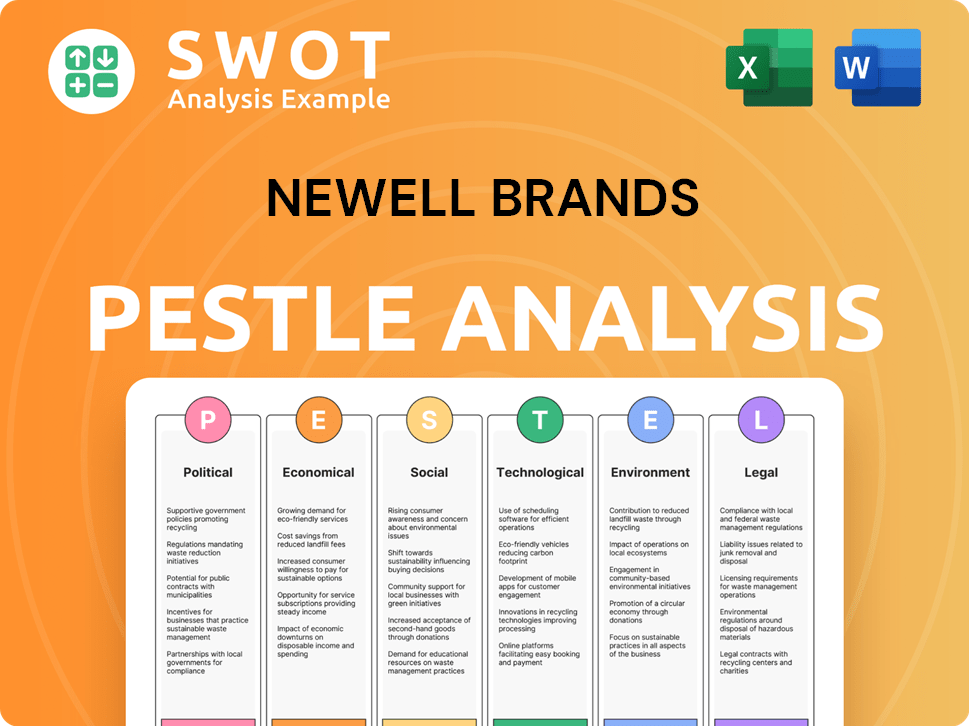
Newell Brands PESTLE Analysis
- Covers All 6 PESTLE Categories
- No Research Needed – Save Hours of Work
- Built by Experts, Trusted by Consultants
- Instant Download, Ready to Use
- 100% Editable, Fully Customizable
What Gives Newell Brands a Competitive Edge Over Its Rivals?
Understanding the Newell Brands competitive landscape involves recognizing its key strengths. The company has built a robust portfolio of well-known brands, such as Sharpie, Rubbermaid, and Coleman, which have established strong brand recognition and customer loyalty over many years. This brand equity significantly reduces marketing costs and encourages repeat purchases, giving it a competitive edge.
Another critical advantage is its extensive distribution network. Newell Brands' market analysis shows its products are available through various channels, including mass merchandisers, warehouse clubs, and e-commerce platforms. This broad reach ensures wide consumer accessibility, presenting a significant barrier to entry for smaller competitors. Furthermore, economies of scale in manufacturing and procurement contribute to cost efficiencies.
Newell Brands' business strategy also includes a focus on innovation. While not always at the forefront of tech breakthroughs, the company invests in product innovation and design, particularly in areas like smart home products under the Rubbermaid brand. Adapting and introducing new product iterations, often driven by consumer insights, helps maintain relevance. Its global presence allows for diversified revenue streams and risk mitigation.
Brand Recognition and Loyalty
Newell Brands benefits from a portfolio of iconic brands, fostering strong customer loyalty. Brands like Sharpie and Rubbermaid have been trusted by consumers for decades. This brand recognition translates into lower marketing costs and higher customer retention rates, as highlighted in the Growth Strategy of Newell Brands.
Extensive Distribution Network
The company's vast distribution network ensures its products are widely available. This includes partnerships with major retailers and online platforms. This extensive reach provides a significant barrier to entry for smaller competitors.
Economies of Scale
Due to its size and diverse product lines, Newell Brands achieves cost efficiencies. These economies of scale in manufacturing and procurement help to reduce overall costs. This enables the company to maintain competitive pricing.
Product Innovation and Design
Newell Brands invests in product innovation, especially in areas like smart home products. This commitment to innovation helps the company stay relevant. Adapting to consumer insights enables the introduction of new product iterations.
Key Competitive Advantages
Newell Brands competitive advantages include a strong brand portfolio, extensive distribution, and economies of scale. The company's brand recognition and customer loyalty are significant assets. Its broad distribution network ensures wide product availability, while its size enables cost efficiencies.
- Strong Brand Portfolio: Iconic brands with high consumer recognition and loyalty.
- Extensive Distribution Network: Wide reach through multiple retail channels.
- Economies of Scale: Cost efficiencies in manufacturing and procurement.
- Product Innovation: Investment in new product development and design.
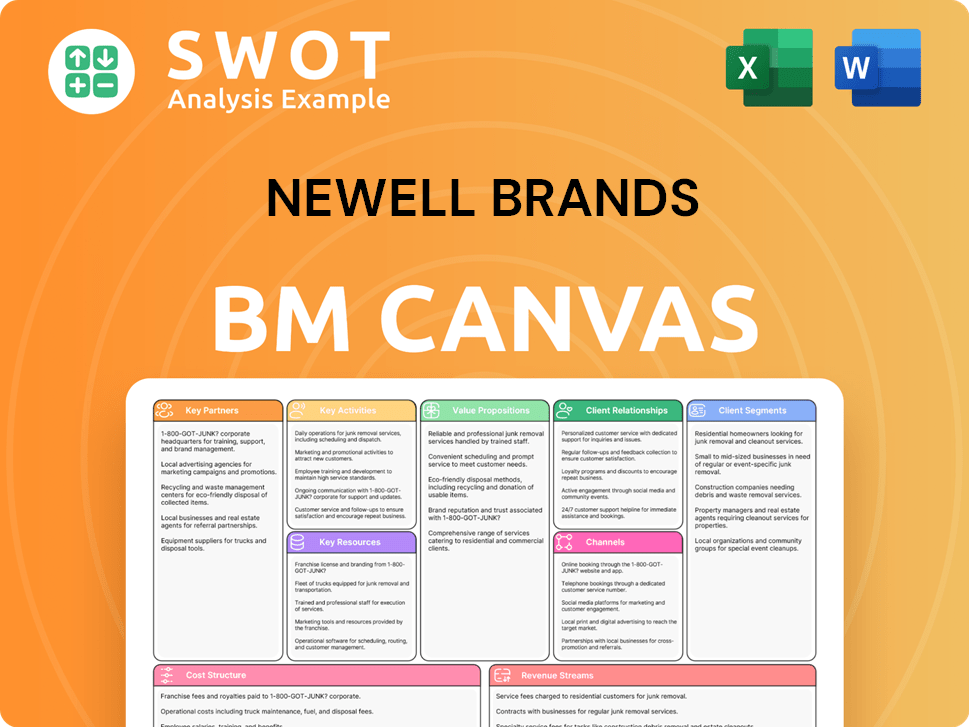
Newell Brands Business Model Canvas
- Complete 9-Block Business Model Canvas
- Effortlessly Communicate Your Business Strategy
- Investor-Ready BMC Format
- 100% Editable and Customizable
- Clear and Structured Layout
What Industry Trends Are Reshaping Newell Brands’s Competitive Landscape?
The consumer goods sector is experiencing significant shifts, influencing the Newell Brands competitive landscape. Technological advancements, particularly in e-commerce and digital marketing, are reshaping consumer purchasing behaviors. Simultaneously, there's a growing demand for sustainable and ethically produced goods, alongside evolving regulatory requirements.
Newell Brands' market analysis reveals challenges such as managing inflationary pressures and intense competition from established and digitally native brands. Geopolitical instability and supply chain disruptions add further complexity. However, opportunities exist in emerging markets, product innovation, and strategic partnerships, presenting a dynamic environment for the company.
Industry Trends
The Newell Brands industry is influenced by digital transformation, sustainability demands, and evolving regulatory environments. E-commerce and digital marketing are critical for reaching consumers. There's increasing emphasis on eco-friendly products and transparent supply chains. Regulatory changes impact product safety and environmental standards.
Future Challenges
Newell Brands' key competitors analysis includes managing inflationary pressures, intense competition from established and agile brands. Geopolitical instability and supply chain disruptions pose risks. Adapting to evolving consumer preferences and regulatory changes requires strategic agility.
Opportunities
Emerging markets offer avenues for growth as disposable incomes rise. Product innovation, particularly in smart home solutions and sustainable alternatives, can unlock new revenue streams. Strategic partnerships with technology or e-commerce companies could enhance reach.
Strategic Focus
Newell Brands' business strategy involves portfolio optimization, digital transformation, and sustainable innovation. Recent earnings calls highlight efforts to reduce complexity and improve operational efficiency. These strategic moves aim to strengthen the company's competitive position. For a deeper dive into the company's history, check out the Brief History of Newell Brands.
Strategic Implications
Newell Brands' market share 2024 and beyond depends on adapting to industry trends and addressing challenges. The company's Newell Brands competitive advantages will be determined by its ability to innovate, optimize its portfolio, and form strategic partnerships. Focusing on sustainability and digital transformation is crucial for future success.
- Prioritize digital capabilities to enhance e-commerce and marketing efforts.
- Invest in sustainable product development and supply chain practices.
- Explore strategic partnerships to expand market reach and innovation capabilities.
- Continuously monitor and adapt to evolving consumer preferences and regulatory changes.
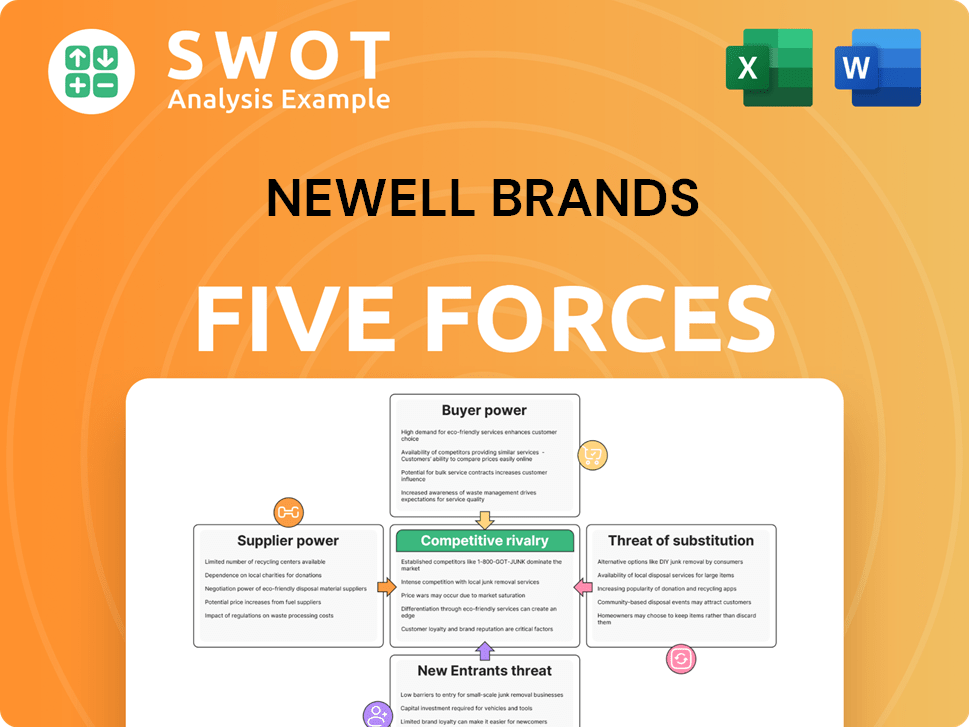
Newell Brands Porter's Five Forces Analysis
- Covers All 5 Competitive Forces in Detail
- Structured for Consultants, Students, and Founders
- 100% Editable in Microsoft Word & Excel
- Instant Digital Download – Use Immediately
- Compatible with Mac & PC – Fully Unlocked
Related Blogs

- What are Mission Vision & Core Values of Newell Brands Company?
- What is Growth Strategy and Future Prospects of Newell Brands Company?
- How Does Newell Brands Company Work?
- What is Sales and Marketing Strategy of Newell Brands Company?
- What is Brief History of Newell Brands Company?
- Who Owns Newell Brands Company?
- What is Customer Demographics and Target Market of Newell Brands Company?
Disclaimer
All information, articles, and product details provided on this website are for general informational and educational purposes only. We do not claim any ownership over, nor do we intend to infringe upon, any trademarks, copyrights, logos, brand names, or other intellectual property mentioned or depicted on this site. Such intellectual property remains the property of its respective owners, and any references here are made solely for identification or informational purposes, without implying any affiliation, endorsement, or partnership.
We make no representations or warranties, express or implied, regarding the accuracy, completeness, or suitability of any content or products presented. Nothing on this website should be construed as legal, tax, investment, financial, medical, or other professional advice. In addition, no part of this site—including articles or product references—constitutes a solicitation, recommendation, endorsement, advertisement, or offer to buy or sell any securities, franchises, or other financial instruments, particularly in jurisdictions where such activity would be unlawful.
All content is of a general nature and may not address the specific circumstances of any individual or entity. It is not a substitute for professional advice or services. Any actions you take based on the information provided here are strictly at your own risk. You accept full responsibility for any decisions or outcomes arising from your use of this website and agree to release us from any liability in connection with your use of, or reliance upon, the content or products found herein.