

Public Storage Bundle

How Does Public Storage Dominate the Self-Storage Arena?
The self-storage industry is booming, but who's leading the charge? Public Storage, a giant in this space, has quietly built a massive empire. Understanding the Public Storage SWOT Analysis and its competitive landscape is crucial for anyone looking to understand this dynamic market.

This exploration dives deep into the Public Storage competitive landscape, examining its key rivals and dissecting the strategies that fuel its success. We'll conduct a thorough self-storage market analysis, revealing how Public Storage navigates the challenges and opportunities within the storage facility competition. Prepare to uncover the secrets behind Public Storage's sustained growth and its ability to thrive in an ever-evolving market.
Where Does Public Storage’ Stand in the Current Market?
Public Storage holds a significant market position in the self-storage industry, consistently ranking as one of the largest operators globally. The company's primary offerings include a diverse range of storage unit sizes designed to meet various customer needs, from personal belongings to business inventory. Its extensive geographic presence, spanning across the United States and several European countries, allows it to serve a broad customer base including residential, commercial, and student segments.
The company has demonstrated strategic shifts, including a focus on technology integration to enhance customer experience and operational efficiency. This includes investments in digital transformation initiatives, such as online rentals and advanced security features. Public Storage's financial health remains robust, providing a strong foundation for expansion and competitive maneuvers. The company holds a particularly strong position in densely populated urban and suburban areas, where demand for self-storage is consistently high.
As of early 2024, Public Storage maintained its leadership with a substantial portfolio of self-storage facilities. In 2023, the company reported revenues of approximately $4.3 billion, showcasing its strong financial performance in the self-storage market. This financial scale surpasses many industry averages, highlighting its competitive advantage. While strong across many regions, competition remains intense in certain localized markets, requiring continuous strategic adaptation. For a deeper dive into its strategic approach, consider the Growth Strategy of Public Storage.
 Market Share and Size
Public Storage is a dominant player in the self-storage market. The company's vast portfolio and extensive geographic reach contribute to its significant market share. The company's size allows it to leverage economies of scale and maintain a competitive edge in the self-storage business overview.
Geographic Footprint
Public Storage operates across 40 states in the United States and several European countries, including France and the United Kingdom. This broad geographic presence allows it to serve a diverse customer base and capitalize on market trends. The company's strategic locations are crucial for its success.
Customer Segments
The company caters to a wide range of customers, including residential, commercial, and student segments. This diversification helps to mitigate risks associated with economic fluctuations. Understanding the needs of these segments is key to Public Storage's customer acquisition strategies.
Technological Integration
Public Storage has invested in technology to improve customer experience and operational efficiency. This includes online rentals, contactless move-ins, and advanced security features. These innovations help the company stay competitive in the self-storage market analysis.

Key Strengths
Public Storage's strengths include its large market share, extensive geographic reach, and strong financial performance. The company's focus on technology and customer service also contributes to its competitive advantages.
- Market Leadership: Commanding market share in the self-storage industry.
- Financial Stability: Robust revenue and a healthy balance sheet.
- Strategic Locations: Strong presence in high-demand urban and suburban areas.
- Technological Advancement: Integration of digital tools for enhanced customer experience.
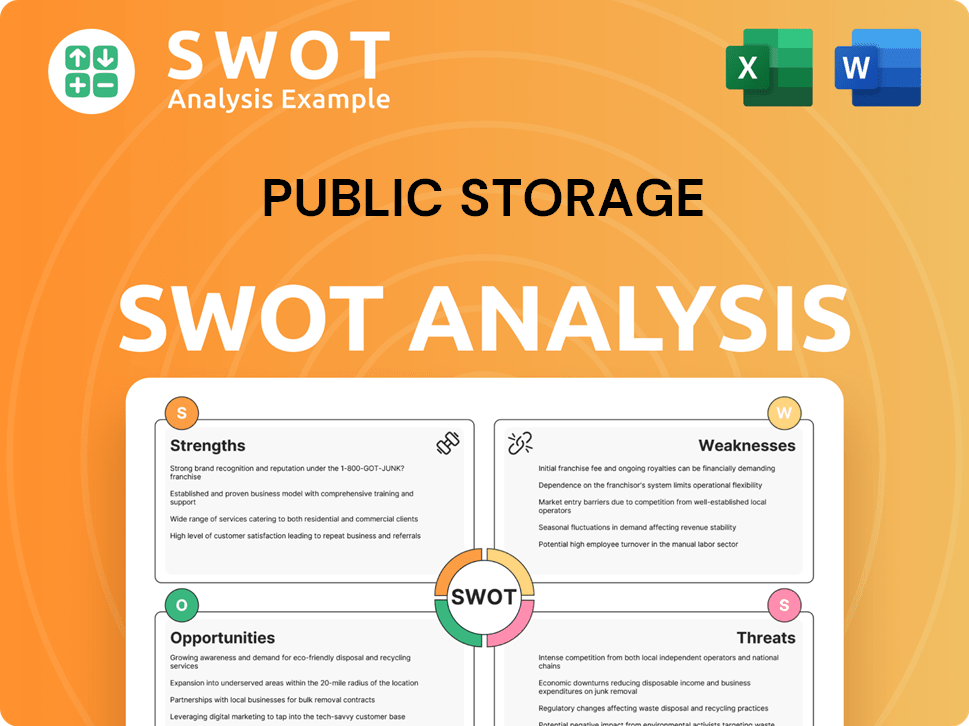
Public Storage SWOT Analysis
- Complete SWOT Breakdown
- Fully Customizable
- Editable in Excel & Word
- Professional Formatting
- Investor-Ready Format
Who Are the Main Competitors Challenging Public Storage?
The Public Storage competitive landscape is shaped by a diverse array of players in the self-storage market. This sector is highly competitive, with significant challenges arising from both large, publicly traded real estate investment trusts (REITs) and a multitude of smaller, regional, and independent operators. A thorough self-storage market analysis reveals the multifaceted nature of this competition, which influences pricing, expansion strategies, and customer acquisition.
Understanding the dynamics of storage facility competition is crucial for assessing Public Storage's position. The company must navigate a market where competitors employ various strategies to gain market share and attract customers. This includes aggressive acquisition tactics, technological innovations, and leveraging brand recognition to offer comprehensive services. The ongoing consolidation within the industry, such as mergers and acquisitions, further reshapes the competitive environment, creating both opportunities and challenges for Public Storage.
Public Storage's primary competitors include major self-storage REITs and other significant players in the market. These competitors challenge Public Storage through various means, including strategic acquisitions, technological advancements, and leveraging brand recognition. The industry also experiences consolidation, with mergers and acquisitions impacting competitive dynamics. Beyond these large players, the market is fragmented with smaller, independent facilities, which often compete on localized pricing and personalized service. Emerging players, particularly those leveraging proptech innovations or offering specialized storage solutions, also pose a potential disruption to the traditional competitive landscape.

Extra Space Storage Inc. (EXR)
Extra Space Storage is a major competitor, known for its aggressive acquisition strategy and strong presence in key markets. The company often competes on market share through strategic acquisitions and a focus on operational efficiencies.
CubeSmart (CUBE)
CubeSmart presents a significant challenge, particularly with its focus on technology-driven solutions and third-party management services. CubeSmart emphasizes technology and customer convenience, offering a seamless digital experience that appeals to modern consumers.
U-Haul International (Amerco)
U-Haul, while primarily known for truck rentals, operates a substantial self-storage business that leverages its existing customer base and widespread locations. It leverages its brand recognition and integrated moving services to attract customers who need both transportation and storage.
Smaller, Independent Facilities
The market is fragmented with many smaller, independent facilities, which often compete on localized pricing and personalized service. These facilities offer a more localized and often personalized approach to customer service, competing on convenience and community presence.
Emerging Players
Emerging players, particularly those leveraging proptech innovations or offering specialized storage solutions, also pose a potential disruption to the traditional competitive landscape. These companies often focus on niche markets or innovative service models to gain a competitive edge.
Life Storage
Extra Space Storage's acquisition of Life Storage in 2023 further solidified its position as a major player. This consolidation has reshaped the competitive landscape, increasing the market share of the combined entity.
Competitive Dynamics and Strategies
The self-storage market is characterized by intense competition, with various strategies employed by key players. These strategies include acquisitions, technological advancements, and leveraging brand recognition. Analyzing how Public Storage compares to Extra Space Storage and other rivals reveals insights into their competitive advantages.
- Acquisitions: Extra Space Storage's acquisition strategy has significantly expanded its market share, as seen with the Life Storage acquisition.
- Technology: CubeSmart's focus on technology enhances customer experience and operational efficiency.
- Brand Recognition: U-Haul leverages its established brand and integrated services to attract customers.
- Pricing Strategies: Competitors often engage in aggressive marketing campaigns and bidding wars for prime properties.
- Market Consolidation: Mergers and acquisitions continue to reshape the competitive landscape, impacting market share and strategic positioning.
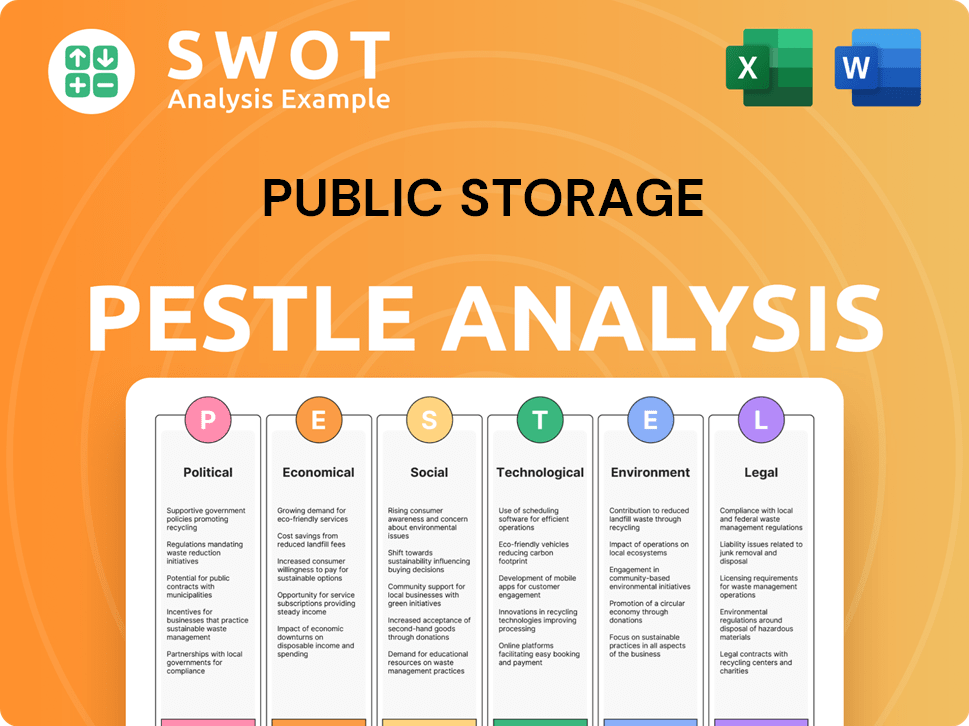
Public Storage PESTLE Analysis
- Covers All 6 PESTLE Categories
- No Research Needed – Save Hours of Work
- Built by Experts, Trusted by Consultants
- Instant Download, Ready to Use
- 100% Editable, Fully Customizable
What Gives Public Storage a Competitive Edge Over Its Rivals?
The competitive landscape of Public Storage is shaped by its significant advantages in the self-storage market. These advantages include a vast geographic footprint and strong brand recognition. Public Storage has cultivated a loyal customer base over time, making it a go-to choice for storage solutions. Understanding these competitive advantages is crucial for a comprehensive self-storage market analysis.
Public Storage leverages its scale to achieve operational efficiencies and cost savings. Its extensive network of facilities across the United States and Europe allows for optimized marketing strategies and streamlined property management. This large-scale operation provides a significant edge over smaller competitors, contributing to its market leadership. For a deeper dive, explore the Brief History of Public Storage.
Furthermore, the company's robust financial position and investment in technology enhance its competitive edge. Public Storage's ability to access capital allows for strategic acquisitions, facility development, and the implementation of advanced technologies. These investments contribute to a superior customer experience and operational efficiency, reinforcing its position in the storage industry.
Scale and Geographic Reach
Public Storage operates thousands of facilities across the United States and Europe. This extensive network provides significant economies of scale. Its broad presence enhances brand recognition and customer convenience, key factors in the self-storage business overview.
Brand Equity and Customer Loyalty
The company's long-standing presence has built strong brand equity. This leads to high customer loyalty and repeat business. Public Storage's brand is often the first choice for storage needs, creating a competitive advantage over storage industry rivals.
Financial Strength and Capital Access
Public Storage's financial strength enables strategic acquisitions and new facility development. Its REIT status provides tax advantages and attracts investors. This ensures a steady flow of capital for growth and expansion, crucial for competitor analysis Public Storage.
Technological Innovation
The company invests in technology to improve customer experience and operational efficiency. This includes online rentals, digital access controls, and enhanced security. Continuous innovation is key to staying ahead in the competitive self-storage market.
Key Competitive Advantages
Public Storage's competitive advantages include its vast scale, strong brand, and financial strength. These factors contribute to its market leadership and ability to withstand competition. The company's focus on technology and operational efficiency further enhances its position.
- Extensive Geographic Footprint: Thousands of facilities across the US and Europe.
- Strong Brand Recognition: High customer loyalty and top-of-mind awareness.
- Financial Stability: Access to capital for acquisitions and development.
- Technological Advancements: Online rentals, digital access, and enhanced security.
- Operational Efficiency: Optimized pricing and effective customer service.
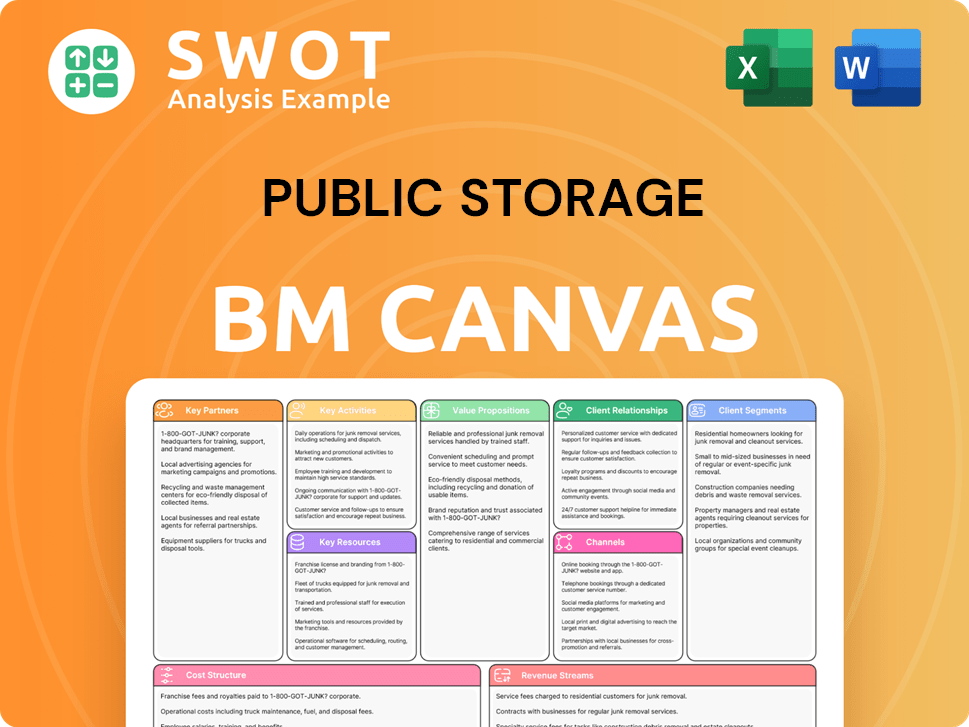
Public Storage Business Model Canvas
- Complete 9-Block Business Model Canvas
- Effortlessly Communicate Your Business Strategy
- Investor-Ready BMC Format
- 100% Editable and Customizable
- Clear and Structured Layout
What Industry Trends Are Reshaping Public Storage’s Competitive Landscape?
The self-storage market is dynamic, influenced by technological advancements, evolving consumer preferences, and economic conditions. Understanding the competitive landscape for companies like Public Storage requires a deep dive into industry trends, potential challenges, and future opportunities. This analysis will shed light on the strategies Public Storage can employ to maintain its market position and capitalize on growth prospects.
The competitive landscape of Public Storage is shaped by its position within the self-storage market, the risks associated with its operations, and the future outlook for the industry. This includes factors such as technological integration, market consolidation, and the impact of economic fluctuations on demand. The company's ability to adapt to these changes will be critical in determining its long-term success.
Industry Trends
Technological advancements are reshaping the self-storage industry. Smart access systems, AI-driven customer service, and data analytics are being increasingly adopted. Consumer preferences are evolving, with a growing demand for flexible rental terms and specialized storage solutions. Regulatory changes, particularly regarding zoning and development, can impact expansion.
Future Challenges
Potential disruptions include new market entrants with innovative business models. Economic shifts, such as interest rate fluctuations, can influence demand. Increased competition from other large REITs and the risk of oversupply in certain markets pose threats. Declining demand in specific regions due to demographic shifts could also present challenges.
Opportunities
Significant growth opportunities lie in emerging markets, particularly in international expansion. Strategic partnerships can broaden service offerings. Product innovations, such as specialized storage solutions or integrated moving and storage services, represent avenues for growth. There's also potential in leveraging data analytics to improve operational efficiency.
Public Storage Competitive Strategy
Public Storage's competitive position is evolving towards a more technologically integrated and customer-centric model. Strategies include continuous digital transformation, strategic acquisitions in high-growth areas, and exploring new service lines. The company is focused on adapting to changing market dynamics to maintain its leadership position.
Key Market Dynamics and Public Storage's Response
The self-storage market is experiencing rapid changes, driven by technology and evolving consumer expectations. Public Storage must adapt its strategies to remain competitive. The company's ability to leverage data analytics for pricing and occupancy optimization is crucial.
- Technological Integration: Implementing smart access systems and AI-driven customer service to improve operational efficiency.
- Market Expansion: Exploring international markets and strategic acquisitions to fuel growth.
- Customer-Centric Approach: Offering flexible rental terms and specialized storage solutions to meet evolving consumer needs.
- Financial Performance: Public Storage's revenue reached approximately $4.3 billion in 2024, reflecting its strong market position.
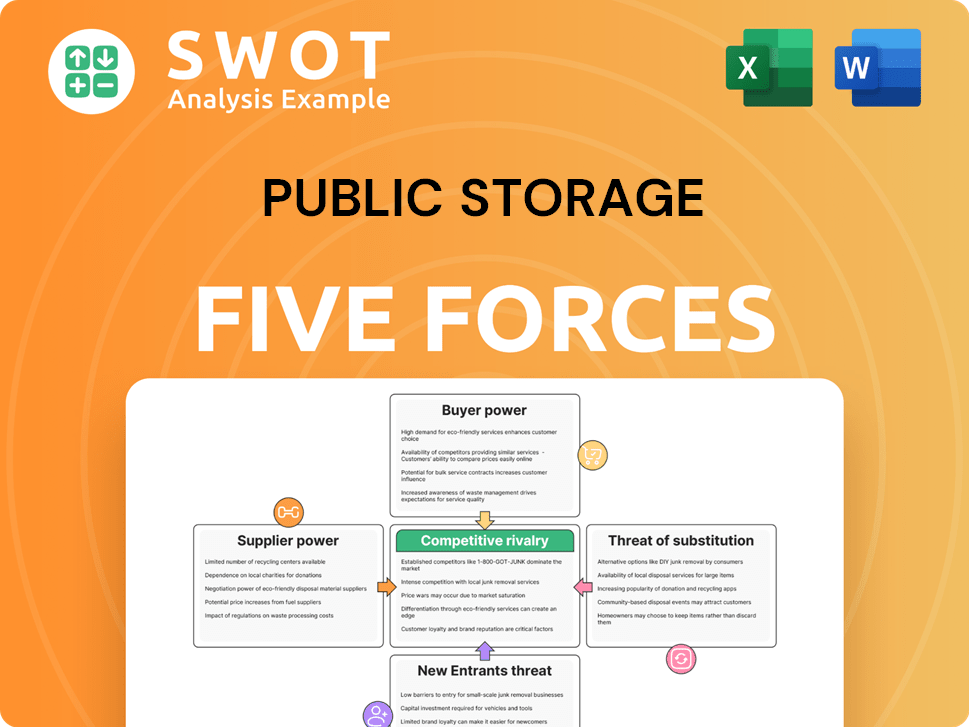
Public Storage Porter's Five Forces Analysis
- Covers All 5 Competitive Forces in Detail
- Structured for Consultants, Students, and Founders
- 100% Editable in Microsoft Word & Excel
- Instant Digital Download – Use Immediately
- Compatible with Mac & PC – Fully Unlocked
Related Blogs

- What are Mission Vision & Core Values of Public Storage Company?
- What is Growth Strategy and Future Prospects of Public Storage Company?
- How Does Public Storage Company Work?
- What is Sales and Marketing Strategy of Public Storage Company?
- What is Brief History of Public Storage Company?
- Who Owns Public Storage Company?
- What is Customer Demographics and Target Market of Public Storage Company?
Disclaimer
All information, articles, and product details provided on this website are for general informational and educational purposes only. We do not claim any ownership over, nor do we intend to infringe upon, any trademarks, copyrights, logos, brand names, or other intellectual property mentioned or depicted on this site. Such intellectual property remains the property of its respective owners, and any references here are made solely for identification or informational purposes, without implying any affiliation, endorsement, or partnership.
We make no representations or warranties, express or implied, regarding the accuracy, completeness, or suitability of any content or products presented. Nothing on this website should be construed as legal, tax, investment, financial, medical, or other professional advice. In addition, no part of this site—including articles or product references—constitutes a solicitation, recommendation, endorsement, advertisement, or offer to buy or sell any securities, franchises, or other financial instruments, particularly in jurisdictions where such activity would be unlawful.
All content is of a general nature and may not address the specific circumstances of any individual or entity. It is not a substitute for professional advice or services. Any actions you take based on the information provided here are strictly at your own risk. You accept full responsibility for any decisions or outcomes arising from your use of this website and agree to release us from any liability in connection with your use of, or reliance upon, the content or products found herein.