

Genuine Parts Bundle

How Does Genuine Parts Company Dominate the Automotive Aftermarket?
In the ever-changing landscape of the automotive industry, understanding the Genuine Parts SWOT Analysis is crucial for investors and strategists alike. Genuine Parts Company (GPC) has consistently adapted its sales strategy and marketing strategy to maintain its leading position. Discover how GPC leverages its iconic NAPA Auto Parts brand and a vast distribution network to thrive in a competitive market.

Genuine Parts Company's success story, dating back to 1928, highlights the importance of a robust GPC sales and marketing approach. This company's strategy has evolved from a focus on automotive parts to a diversified portfolio, including industrial products. By examining GPC's distribution channels, brand awareness strategies, and digital marketing initiatives, we can gain valuable insights into its sustained market share and competitive advantage in 2025 and beyond.
How Does Genuine Parts Reach Its Customers?
The sales and marketing strategy of Genuine Parts Company (GPC) relies on a multi-channel approach to reach its diverse customer base in the automotive and industrial sectors. This strategy is crucial for maintaining its market position and driving growth. GPC's ability to effectively manage and optimize its sales channels is a key factor in its overall success.
GPC's sales channels include physical retail locations, wholesale distributors, and e-commerce platforms. As of 2024, the company operates a vast network of over 10,700 locations across 17 countries, supported by more than 60,000 teammates. This extensive network enables GPC to serve its customers efficiently and effectively.
The evolution of these channels includes a strategic focus on strengthening its owned store network. A deeper understanding of Revenue Streams & Business Model of Genuine Parts can provide further insights into GPC's strategic approach. This expansion is part of GPC's broader strategy to enhance its market presence and improve customer service.
 Automotive Sales Channels
GPC's automotive sales network includes 6,818 locations in North America, 2,615 in Europe, and 575 in Australasia. In North America, the company operates 191 distribution centers and 1,150 NAPA Auto Parts stores in the United States. This extensive infrastructure supports efficient distribution and customer service for automotive parts.
Industrial Sales Channels
The industrial segment, through Motion Industries, serves MRO and OEM customers. This segment distributes industrial bearings, mechanical and fluid power transmission equipment, and related supplies. GPC's distribution network and local inventory availability are key to meeting time-sensitive demand from its industrial customer base.
Recent Acquisitions and Expansion
In 2024, GPC added 41 net new stores, including the acquisition of over 500 NAPA stores and the acquisition of Motor Parts & Equipment Corporation (MPEC), adding 181 locations. These strategic acquisitions are part of GPC's initiative to own more NAPA stores in key markets, enhancing its sales and distribution capabilities.
Key Strategic Shifts
GPC's strategy emphasizes strengthening its owned store network and expanding its presence in priority markets. The company's focus on owned stores and strategic acquisitions reflects its commitment to long-term growth and market dominance. This approach allows for greater control over customer service and brand experience.

GPC's Sales Strategy Highlights
GPC's sales strategy leverages a multi-channel approach, including physical retail, wholesale, and e-commerce. This strategy allows GPC to reach a broad customer base and adapt to changing market dynamics. The company's focus on owned stores and strategic acquisitions supports its long-term growth objectives.
- Extensive network of over 10,700 locations globally.
- Strategic acquisitions to expand owned store network.
- Focus on both automotive and industrial sectors.
- Emphasis on efficient distribution and customer service.
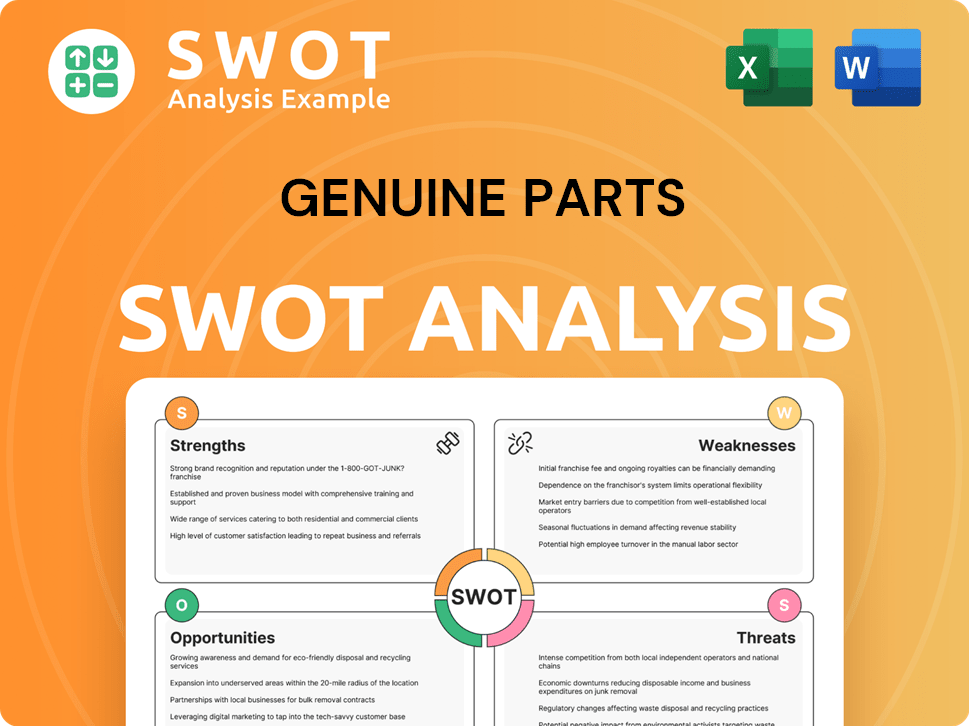
Genuine Parts SWOT Analysis
- Complete SWOT Breakdown
- Fully Customizable
- Editable in Excel & Word
- Professional Formatting
- Investor-Ready Format
What Marketing Tactics Does Genuine Parts Use?
The Sales strategy and Marketing strategy of Genuine Parts Company (GPC) are designed to boost brand recognition, generate leads, and drive sales across its automotive and industrial sectors. GPC uses a mix of digital and traditional marketing tactics. While specific details of their 2024-2025 marketing budget and campaigns are not widely available, their strategic initiatives point to a clear direction.
Digital marketing is a growing focus for GPC. They are investing in technology and digital platforms to improve customer access and streamline operations. For example, in 2023, GPC invested $12.5 million in digital marketing strategies aimed at automotive professionals. Digital advertising accounted for 18% of the total marketing budget. This indicates a move towards data-driven marketing and leveraging online channels for lead generation. The company is also adapting its marketing mix to changing consumer behaviors and technological advancements.
Traditionally, GPC has relied on its extensive physical presence and strong brand recognition, particularly with the NAPA Auto Parts brand, to reach customers. Their marketing efforts likely leverage their vast network of company-owned and independently owned stores to promote products and services. The company's commitment to providing quality parts and solutions, as well as fostering strong customer relationships, serves as an underlying marketing tactic.

Digital Marketing Initiatives
GPC is increasing its focus on digital marketing to improve customer accessibility and streamline operations. This includes investments in digital advertising and leveraging online channels for lead generation. The company is adapting its marketing mix to changing consumer behaviors and technological advancements.
Traditional Marketing Tactics
GPC relies on its extensive physical footprint and brand recognition, especially through the NAPA Auto Parts brand. They use their network of stores to promote products and services. Customer relationships and providing quality parts are key marketing tactics.
Strategic Realignment
GPC is strategically realigning its global tools and equipment inventory strategy. This includes targeting a new generation of installers with a new global branding initiative set for 2025. The company is also focusing on sustainability and inclusivity in its marketing efforts.
Sustainability and Inclusivity
GPC's sustainability report highlights its commitment to minimizing environmental impact and fostering an inclusive culture. This is leveraged in their marketing to appeal to environmentally conscious consumers. This focus aligns with broader consumer trends.
Adaptation to Market Changes
The company's marketing mix has evolved with the industry, adapting to changing consumer behaviors and technological advancements. This includes strategic realignments and new branding initiatives to stay relevant in the market. GPC is constantly evolving its GPC sales and GPC marketing strategies.
Focus on Automotive Professionals
In 2023, GPC invested $12.5 million in digital marketing strategies specifically targeting automotive professionals. Digital advertising spend reached 18% of the total marketing budget. This demonstrates a strong focus on reaching this key demographic.
The company's approach reflects a comprehensive strategy to maintain and grow its market position. The focus on digital marketing, combined with its established traditional methods, positions GPC to adapt to evolving market dynamics. For more insights into the company's overall strategy, see the Growth Strategy of Genuine Parts.
Key Marketing Tactics
GPC's marketing strategy combines digital and traditional tactics to reach customers. Their approach includes a focus on digital marketing, leveraging their physical presence, and adapting to market changes. The company's Automotive parts sales and marketing efforts are designed to maintain and grow market share.
- Digital Advertising: Investing in digital marketing to reach automotive professionals.
- Brand Recognition: Utilizing the strong NAPA Auto Parts brand.
- Customer Relationships: Fostering strong relationships with customers.
- Strategic Initiatives: Realignment of global tools and equipment inventory strategy.
- Sustainability: Highlighting environmental and inclusivity efforts.
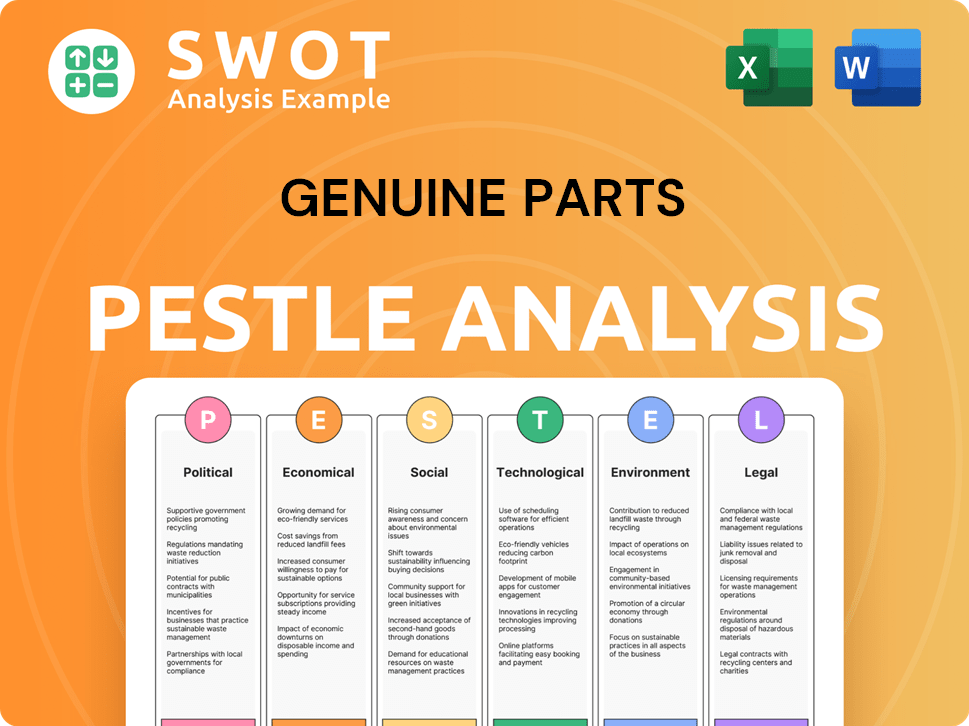
Genuine Parts PESTLE Analysis
- Covers All 6 PESTLE Categories
- No Research Needed – Save Hours of Work
- Built by Experts, Trusted by Consultants
- Instant Download, Ready to Use
- 100% Editable, Fully Customizable
How Is Genuine Parts Positioned in the Market?
The brand positioning of Genuine Parts Company (GPC) centers on being a leading global service provider for automotive and industrial replacement parts and solutions. This positioning is built upon a long history, emphasizing reliability, quality, and comprehensive solutions. The company's goal is to ensure customer satisfaction and profitability, which is a key element of its Sales strategy and Marketing strategy.
GPC differentiates itself through its extensive distribution network and strong supplier relationships, particularly with its well-known automotive brand. The focus on quick sourcing and local inventory availability is a key unique selling proposition, especially in the automotive aftermarket and industrial sectors. This approach helps GPC maintain a strong position in the competitive market for Automotive parts.
The company actively adapts to market changes, such as the growing demand for electric vehicle (EV) parts. This responsiveness ensures that GPC remains relevant and competitive. The commitment to long-term value is demonstrated by consistent dividend increases, which have occurred for 69 consecutive years, positively influencing brand perception among investors and business partners. For more insights, you can explore the Growth Strategy of Genuine Parts.
Extensive Distribution Network
GPC's widespread distribution network is a cornerstone of its brand positioning. This extensive reach enables quick and efficient delivery of parts to customers. This robust network supports the company's GPC sales and marketing efforts by ensuring product availability.
Supplier Relationships
Strong relationships with suppliers are crucial for maintaining quality and availability. These relationships help GPC secure a reliable supply of parts. Effective supplier management contributes to GPC's competitive advantage.
Brand Consistency
GPC maintains brand consistency across its network to reinforce its reputation. This consistency helps build customer trust and brand recognition. Consistent branding supports the company's GPC marketing initiatives.
Adaptation to Market Changes
The company's ability to adapt to market changes, such as the rise of EVs, is essential. This adaptability ensures that GPC remains relevant and competitive. Investing in EV parts demonstrates a forward-thinking approach.
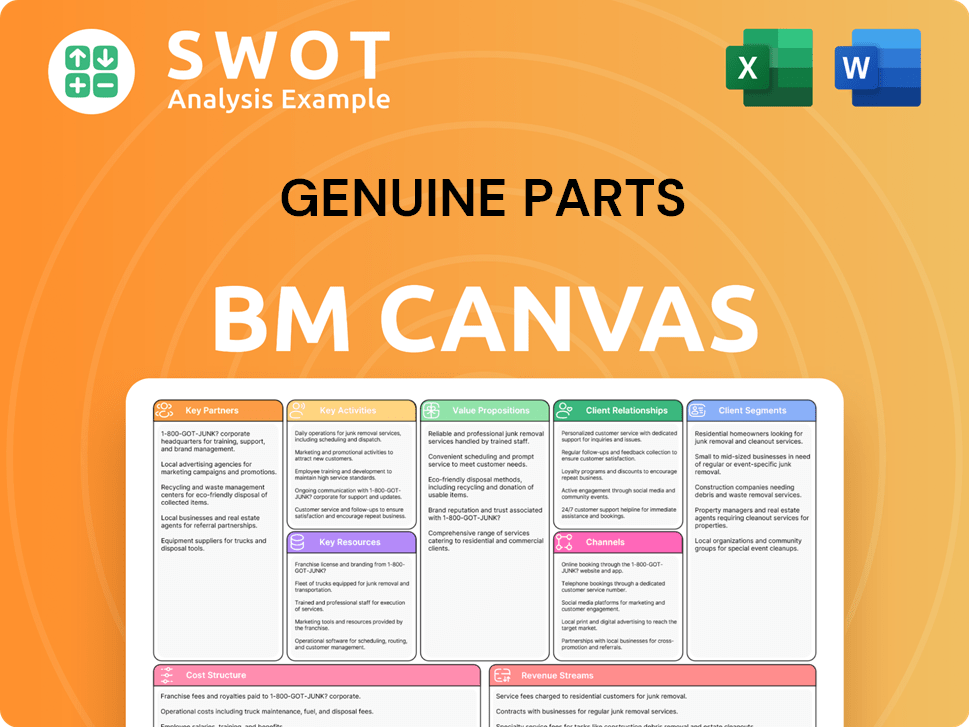
Genuine Parts Business Model Canvas
- Complete 9-Block Business Model Canvas
- Effortlessly Communicate Your Business Strategy
- Investor-Ready BMC Format
- 100% Editable and Customizable
- Clear and Structured Layout
What Are Genuine Parts’s Most Notable Campaigns?
The sales strategy and marketing strategy of Genuine Parts Company (GPC) are multifaceted, focusing on both organic growth and strategic acquisitions within the automotive parts industry. While specific, large-scale marketing campaigns are not always publicly detailed, GPC's actions reveal a consistent approach to expanding market presence and improving operational efficiency. This includes a continuous focus on strategic acquisitions, such as the 2024 purchase of Motor Parts & Equipment Corporation (MPEC), which significantly impacts their sales effectiveness and market share.
GPC's approach to marketing strategy involves a blend of internal initiatives and external actions. The company's commitment to enhancing customer experience through technology and supply chain improvements is a continuous effort to strengthen its market position. Moreover, the sustained increase in dividends, with a 3% rise in the regular quarterly cash dividend for 2025, demonstrates financial health and builds investor confidence, effectively acting as a long-term brand-building campaign. For more information, see Target Market of Genuine Parts.
Furthermore, GPC's global restructuring, initiated in 2024, represents a significant strategic campaign aimed at improving business efficiency and aligning assets. These restructuring efforts are projected to generate approximately $100 million to $125 million in additional savings in 2025. These savings are expected to reach approximately $200 million on a fully annualized basis by 2026, directly supporting sales and profitability goals. This internal focus on efficiency and alignment directly impacts the customer experience and ultimately sales effectiveness. The company's focus on its automotive parts sales strategy is key to its success.
Strategic Acquisitions
GPC's sales strategy heavily relies on strategic acquisitions to expand its market reach. The acquisition of MPEC in 2024, including 181 NAPA Auto Parts stores, is a prime example. This directly supports objectives related to market share expansion and increased sales performance.
Global Restructuring
The ongoing global restructuring initiative is a key element in GPC's marketing strategy, aimed at improving operational efficiency. Projected savings from these efforts are estimated at $100 million to $125 million for 2025, and $200 million fully annualized in 2026, which enhances customer experience.
Dividend Growth
GPC's consistent dividend increases, with a 3% rise in the regular quarterly cash dividend for 2025, are a strong indicator of financial health. This strategy boosts investor confidence and underscores the company's long-term outlook, supporting brand strength.
Technology and Supply Chain Investments
Continuous investments in technology and supply chain improvements are a core part of the company's strategy. These investments are designed to enhance customer experience and operational efficiencies, strengthening GPC's market position.
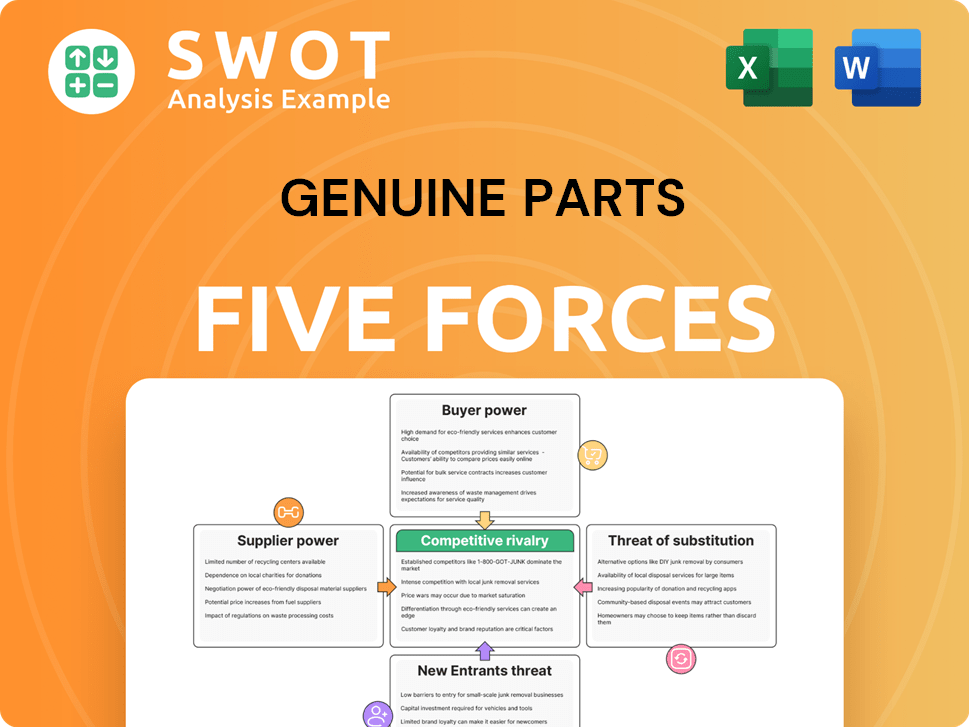
Genuine Parts Porter's Five Forces Analysis
- Covers All 5 Competitive Forces in Detail
- Structured for Consultants, Students, and Founders
- 100% Editable in Microsoft Word & Excel
- Instant Digital Download – Use Immediately
- Compatible with Mac & PC – Fully Unlocked
Related Blogs

- What are Mission Vision & Core Values of Genuine Parts Company?
- What is Competitive Landscape of Genuine Parts Company?
- What is Growth Strategy and Future Prospects of Genuine Parts Company?
- How Does Genuine Parts Company Work?
- What is Brief History of Genuine Parts Company?
- Who Owns Genuine Parts Company?
- What is Customer Demographics and Target Market of Genuine Parts Company?
Disclaimer
All information, articles, and product details provided on this website are for general informational and educational purposes only. We do not claim any ownership over, nor do we intend to infringe upon, any trademarks, copyrights, logos, brand names, or other intellectual property mentioned or depicted on this site. Such intellectual property remains the property of its respective owners, and any references here are made solely for identification or informational purposes, without implying any affiliation, endorsement, or partnership.
We make no representations or warranties, express or implied, regarding the accuracy, completeness, or suitability of any content or products presented. Nothing on this website should be construed as legal, tax, investment, financial, medical, or other professional advice. In addition, no part of this site—including articles or product references—constitutes a solicitation, recommendation, endorsement, advertisement, or offer to buy or sell any securities, franchises, or other financial instruments, particularly in jurisdictions where such activity would be unlawful.
All content is of a general nature and may not address the specific circumstances of any individual or entity. It is not a substitute for professional advice or services. Any actions you take based on the information provided here are strictly at your own risk. You accept full responsibility for any decisions or outcomes arising from your use of this website and agree to release us from any liability in connection with your use of, or reliance upon, the content or products found herein.