

Spectrum Brands Bundle

How Does Spectrum Brands Dominate the Consumer Goods Market?
Spectrum Brands, a titan in the consumer products arena, has continually reshaped its strategies to stay ahead. Following the strategic divestiture of its Hardware and Home Improvement segment, the company sharpened its focus on core areas like Home & Garden, Global Pet Care, and Home & Personal Care. This pivotal shift underscores the dynamic nature of its Spectrum Brands SWOT Analysis, and market approach.

Understanding the Spectrum Brands sales strategy and Spectrum Brands marketing strategy is key to grasping its success. The company’s strategic evolution, from its origins as French Battery Company to a global powerhouse, highlights the importance of adapting to changing market demands. This includes leveraging both traditional retail channels and the growing e-commerce landscape, showcasing a robust Spectrum Brands business model that fuels its brand portfolio and competitive advantage.
How Does Spectrum Brands Reach Its Customers?
The sales strategy of Spectrum Brands relies on a multi-channel approach, blending both online and offline methods to reach its diverse global customer base. This strategy includes a strong presence in traditional retail environments like mass merchandisers, home improvement centers, and specialty retailers. The company's product portfolio, which spans categories such as pet care, home and garden, and personal care, benefits from this wide retail distribution, ensuring broad accessibility for consumers.
In addition to its brick-and-mortar presence, Spectrum Brands has significantly invested in its e-commerce capabilities. This includes sales through major online retailers such as Amazon, as well as leveraging its own brand websites for direct-to-consumer (DTC) sales where applicable. This dual approach allows the company to cater to the evolving preferences of consumers, who increasingly shop online. This is a key component of its overall sales and marketing plan.
The evolution of these sales channels reflects a strategic shift toward omnichannel integration, with the goal of providing a seamless customer experience across all touchpoints. This includes investments in digital capabilities to support both retail partners and direct online sales. While physical retail remains a cornerstone, the growth of digital channels has led to increased focus on e-commerce platforms. Key partnerships with major retailers and online marketplaces are critical to Spectrum Brands' market share and growth, allowing it to leverage established distribution networks and reach a wider audience. For more insights, consider exploring the Growth Strategy of Spectrum Brands.
 Retail Partnerships
Spectrum Brands maintains strong partnerships with major retailers like Walmart, Target, Lowe's, and The Home Depot. These partnerships provide extensive distribution networks, ensuring its products are widely available to consumers. The company's sales performance is closely tied to these relationships, which are continuously monitored and optimized.
E-commerce Expansion
E-commerce is a significant growth area for Spectrum Brands, with sales through Amazon and its own brand websites. The company focuses on digital marketing strategies to drive online sales and enhance the customer experience. This includes targeted advertising, search engine optimization, and user-friendly website design.
Direct-to-Consumer (DTC) Sales
Spectrum Brands utilizes DTC sales through its brand websites to build direct relationships with consumers. This allows for greater control over the customer experience and provides valuable data for marketing and product development. DTC sales also offer opportunities for personalized marketing and promotions.
Omnichannel Integration
The company aims for omnichannel integration to provide a seamless experience across all touchpoints, both online and offline. This involves investments in digital capabilities to support retail partners and direct online sales. This strategy ensures that customers can easily find and purchase products through their preferred channels.

Key Sales Channel Strategies
Spectrum Brands' sales channel optimization involves continuous monitoring and strategic adjustments. The company focuses on maximizing reach and profitability across its various product segments. This includes analyzing sales performance data and making data-driven decisions to improve channel effectiveness.
- Retail Partnerships: Maintaining strong relationships with key retailers to ensure product availability.
- E-commerce Growth: Expanding online sales through major platforms and DTC channels.
- Omnichannel Approach: Integrating online and offline channels for a seamless customer experience.
- Data-Driven Decisions: Using sales performance reviews and market analysis to optimize strategies.
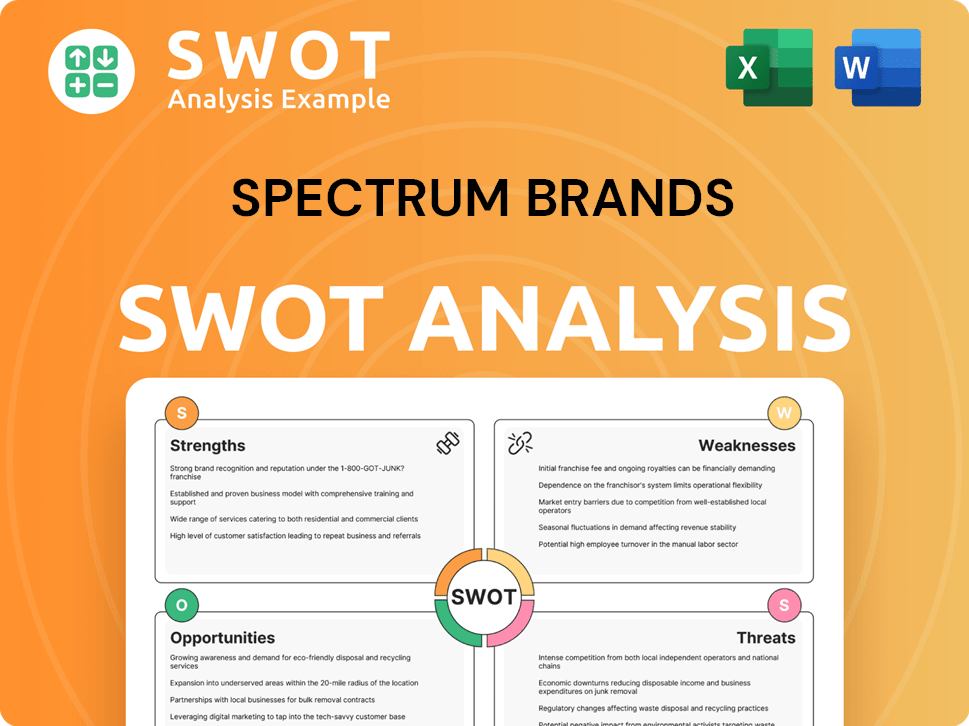
Spectrum Brands SWOT Analysis
- Complete SWOT Breakdown
- Fully Customizable
- Editable in Excel & Word
- Professional Formatting
- Investor-Ready Format
What Marketing Tactics Does Spectrum Brands Use?
The Spectrum Brands sales strategy and Spectrum Brands marketing strategy are multifaceted, designed to reach diverse consumer segments across its extensive brand portfolio. This approach includes a blend of digital and traditional marketing tactics to build brand awareness, generate leads, and drive sales. The company leverages data-driven insights to personalize its marketing efforts and optimize its return on investment.
The company's marketing efforts are also heavily influenced by shifts in consumer behavior, with a strong emphasis on digital channels. This digital focus allows for more targeted advertising, improved customer engagement, and better measurement of campaign effectiveness. The company's ability to adapt to changing market dynamics is a key component of its long-term success.
The company's marketing strategy is crucial for maintaining its Spectrum Brands competitive advantage in a dynamic market. By understanding its target audience and tailoring its marketing messages accordingly, the company aims to build strong brand loyalty and increase market share. This approach is supported by a commitment to innovation and a deep understanding of consumer preferences.

Digital Marketing
The company utilizes content marketing, SEO, and paid advertising on platforms like Google and social media. Email marketing is used for customer retention and promotions. Social media platforms, such as Instagram and Facebook, are key for engaging with target audiences.
Traditional Media
Television, radio, and print advertising are used for broader brand awareness campaigns, especially for established brands. This helps maintain visibility and reach a wider audience.
Industry Events
Participation in industry events and trade shows allows the company to connect with retailers and consumers directly. This provides opportunities for product demonstrations and relationship building.
Data-Driven Marketing
Customer segmentation and personalization are core components, tailoring marketing messages to specific consumer groups. This approach improves the relevance of marketing efforts and enhances customer engagement.
Marketing Analytics
Robust marketing analytics are used to measure campaign effectiveness and optimize marketing spend. This helps ensure that marketing investments are yielding the desired results.
Evolving Strategies
The marketing mix has shifted to favor digital strategies, reflecting changing consumer habits. Traditional channels are still integrated for a holistic approach, ensuring comprehensive reach.
The company's approach to marketing is designed to support its Spectrum Brands business model, focusing on a diversified brand portfolio and a broad market reach. The ability to adapt its strategies to changing market conditions is a key factor in its continued success. For a deeper dive into the company's strategies, you can refer to an article discussing the company's strategies here.
Key Elements
The marketing tactics employed by the company are a blend of digital and traditional methods, designed to maximize reach and impact. The focus on data-driven insights and customer segmentation allows for personalized marketing messages, enhancing customer engagement and driving sales. The company's approach to marketing is crucial for maintaining its competitive advantage and achieving its business objectives.
- Digital marketing, including content marketing, SEO, and paid advertising.
- Traditional media, such as television, radio, and print advertising.
- Participation in industry events and trade shows.
- Data-driven marketing with customer segmentation and personalization.
- Use of marketing analytics to measure and optimize campaign effectiveness.
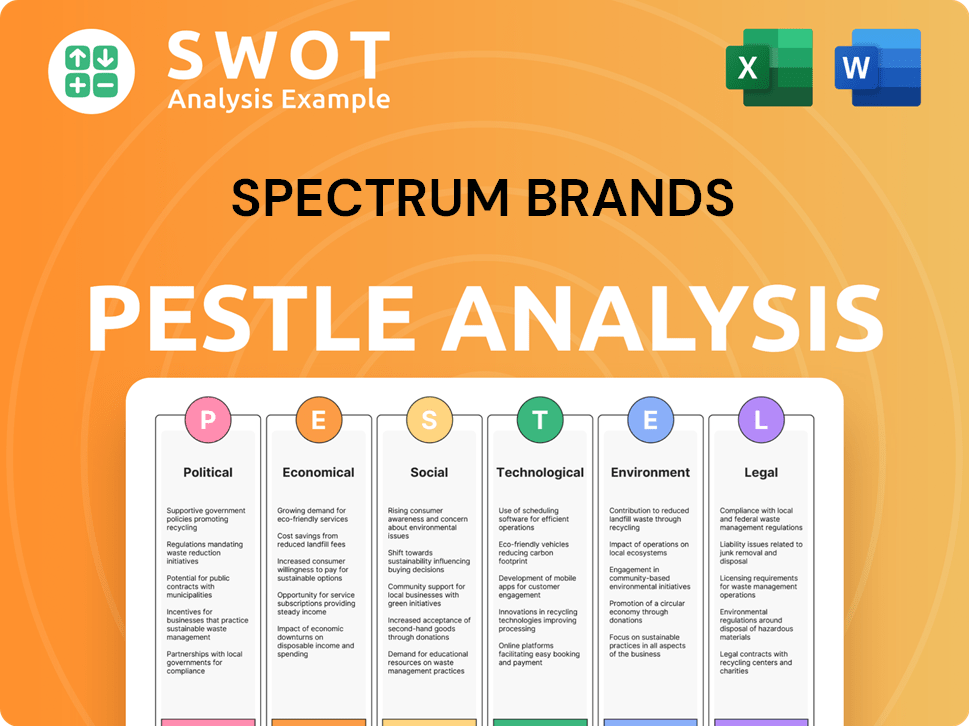
Spectrum Brands PESTLE Analysis
- Covers All 6 PESTLE Categories
- No Research Needed – Save Hours of Work
- Built by Experts, Trusted by Consultants
- Instant Download, Ready to Use
- 100% Editable, Fully Customizable
How Is Spectrum Brands Positioned in the Market?
The brand positioning strategy of Spectrum Brands centers on a portfolio approach, where each brand maintains a distinct identity. This strategy allows the company to target diverse consumer needs effectively. Brands like George Foreman and Rayovac, for example, each have unique market positions and target audiences, showcasing the breadth of the company's brand portfolio.
Spectrum Brands' core message consistently revolves around providing practical, reliable, and innovative solutions. This is evident across its home, garden, pet, and personal care segments. The company carefully tailors its visual identity, tone of voice, and customer experience to resonate with the specific target audience of each brand.
The company focuses on value, reliability, and innovation in its marketing efforts. Brand consistency is maintained across all channels for each brand, from product packaging to digital marketing. Spectrum Brands actively monitors consumer sentiment and competitive threats to adapt its brand messaging and product offerings, ensuring it remains relevant and competitive in the market. For further insights into the company, you can explore Owners & Shareholders of Spectrum Brands.
Key Differentiators
Spectrum Brands differentiates itself through its diverse brand portfolio. Each brand has a unique identity and targets specific consumer needs. This approach allows for a broader market reach and caters to varied consumer preferences.
Target Audience Focus
The company targets its audience by emphasizing value, reliability, and innovation. This strategy is consistent across its various brands and product categories. Consistent messaging and branding help build trust.
Brand Consistency
Brand consistency is maintained across all channels and touchpoints. This includes product packaging and digital marketing efforts. This ensures a cohesive brand experience for consumers.
Market Adaptation
Spectrum Brands actively monitors consumer sentiment and competitive threats. It adapts its brand messaging and product offerings to stay relevant. This helps maintain a competitive edge in the market.
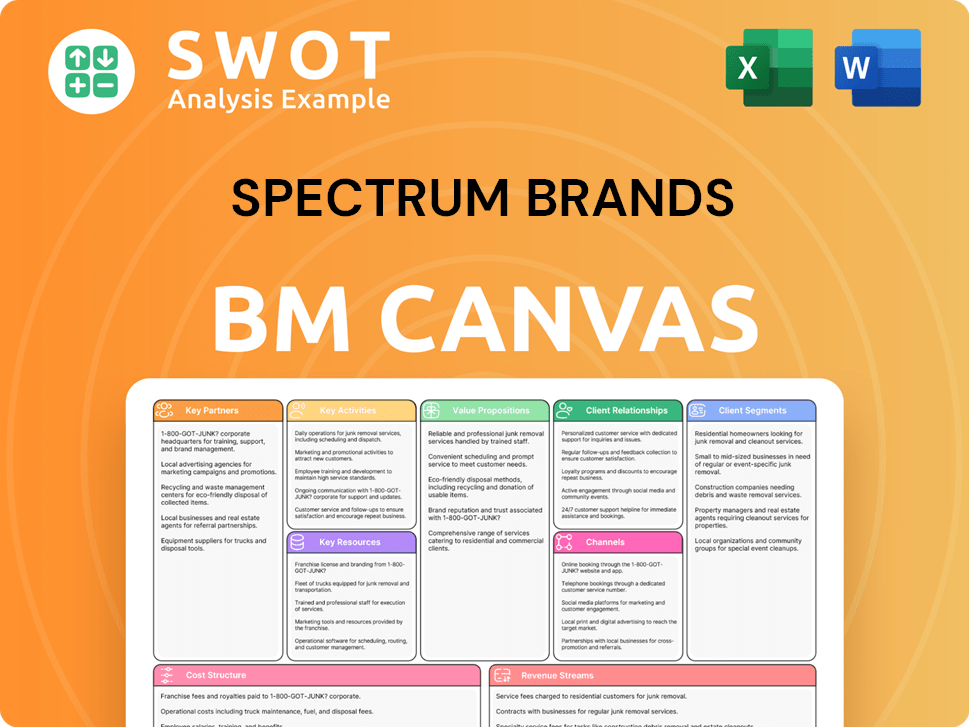
Spectrum Brands Business Model Canvas
- Complete 9-Block Business Model Canvas
- Effortlessly Communicate Your Business Strategy
- Investor-Ready BMC Format
- 100% Editable and Customizable
- Clear and Structured Layout
What Are Spectrum Brands’s Most Notable Campaigns?
A significant focus of the sales and marketing efforts of Spectrum Brands revolves around its Global Pet Care segment. Following strategic divestitures, the company has been concentrating on strengthening its brands, such as Tetra and Nature's Miracle, to maintain their leadership in their respective categories. These campaigns aim to boost brand awareness, increase product adoption, and cultivate brand loyalty among pet owners.
The Tetra campaigns often highlight the brand's heritage in aquatic nutrition and care. They emphasize the benefits of their products, such as clear water and healthy fish. The marketing strategies typically involve a mix of digital advertising, social media content, and partnerships with pet care influencers. These initiatives are carefully designed to reach the target audience effectively. Overall, the company's approach reflects a broader strategy of leveraging its brand portfolio for growth.
In Q1 2024, the Global Pet Care segment saw an increase in organic net sales. This growth was partly driven by robust demand for dog and cat treats and aquatic products, which indicates the success of the company's marketing and sales strategies in these areas. These campaigns often use compelling visuals and educational content to inform consumers about the benefits of the products. Moreover, the company engages in promotional activities with its retail partners to drive sales at the point of purchase. For more on the company's history and evolution, see the Brief History of Spectrum Brands.
Targeted Messaging
Spectrum Brands employs targeted messaging to reach specific consumer segments. This involves crafting messages that resonate with the needs and preferences of different pet owner groups. The goal is to create a deeper connection with the target audience.
Leveraging Consumer Trends
The company capitalizes on consumer trends, such as pet humanization. This means that the campaigns often focus on the emotional connection between pets and their owners. The marketing efforts reflect how consumers view and interact with their pets.
Optimizing Digital Channels
Digital channels are optimized for engagement and conversion. Spectrum Brands uses social media and online advertising to drive traffic and sales. The company's focus is on making the digital experience as effective as possible.
Promotional Activities
Promotional activities with retail partners play a key role in driving sales. These partnerships help to increase product visibility and encourage purchases. The company works closely with retailers to create effective promotions.
Key Campaign Objectives
The primary objectives of Spectrum Brands' marketing campaigns include driving brand awareness and increasing product adoption. The company aims to strengthen its market position and generate revenue growth. These objectives are supported by a well-defined sales and marketing plan.
- Increase Brand Awareness: Enhance visibility and recognition of Spectrum Brands' brands.
- Drive Product Adoption: Encourage consumers to try and purchase Spectrum Brands' products.
- Foster Brand Loyalty: Build long-term relationships with customers.
- Boost Market Share: Capture a larger portion of the market in key product categories.
- Improve Sales Performance: Achieve financial targets and drive revenue growth.
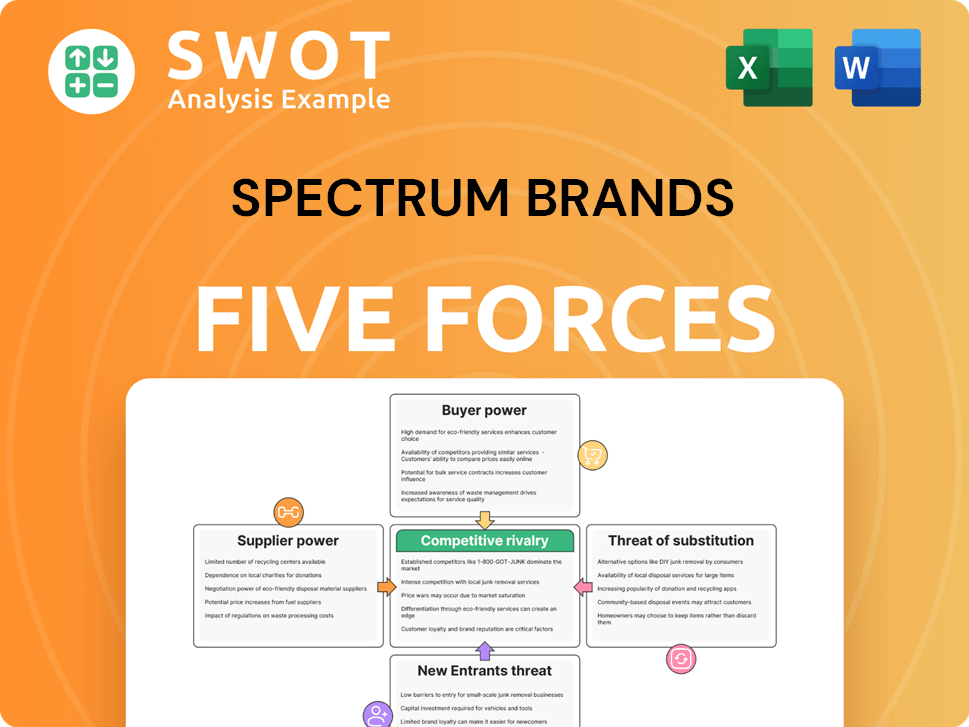
Spectrum Brands Porter's Five Forces Analysis
- Covers All 5 Competitive Forces in Detail
- Structured for Consultants, Students, and Founders
- 100% Editable in Microsoft Word & Excel
- Instant Digital Download – Use Immediately
- Compatible with Mac & PC – Fully Unlocked
Related Blogs

- What are Mission Vision & Core Values of Spectrum Brands Company?
- What is Competitive Landscape of Spectrum Brands Company?
- What is Growth Strategy and Future Prospects of Spectrum Brands Company?
- How Does Spectrum Brands Company Work?
- What is Brief History of Spectrum Brands Company?
- Who Owns Spectrum Brands Company?
- What is Customer Demographics and Target Market of Spectrum Brands Company?
Disclaimer
All information, articles, and product details provided on this website are for general informational and educational purposes only. We do not claim any ownership over, nor do we intend to infringe upon, any trademarks, copyrights, logos, brand names, or other intellectual property mentioned or depicted on this site. Such intellectual property remains the property of its respective owners, and any references here are made solely for identification or informational purposes, without implying any affiliation, endorsement, or partnership.
We make no representations or warranties, express or implied, regarding the accuracy, completeness, or suitability of any content or products presented. Nothing on this website should be construed as legal, tax, investment, financial, medical, or other professional advice. In addition, no part of this site—including articles or product references—constitutes a solicitation, recommendation, endorsement, advertisement, or offer to buy or sell any securities, franchises, or other financial instruments, particularly in jurisdictions where such activity would be unlawful.
All content is of a general nature and may not address the specific circumstances of any individual or entity. It is not a substitute for professional advice or services. Any actions you take based on the information provided here are strictly at your own risk. You accept full responsibility for any decisions or outcomes arising from your use of this website and agree to release us from any liability in connection with your use of, or reliance upon, the content or products found herein.