

Spectrum Brands Bundle

Who Buys from Spectrum Brands?
Understanding the "who" behind Spectrum Brands' success is key to grasping its market dominance. From home and garden enthusiasts to pet owners, and those prioritizing personal care, Spectrum Brands caters to a diverse customer base. This deep dive into Spectrum Brands' customer demographics and target market will reveal how the company strategically positions itself for continued growth.

The Spectrum Brands SWOT Analysis offers a glimpse into the company's strategic approach, which is heavily influenced by its understanding of its customer base. Analyzing the company's consumer profile through market segmentation and demographic analysis provides critical insights into its success. This includes examining Spectrum Brands' customer age range, gender, income levels, and geographic market analysis to understand its customer buying behavior. Ultimately, knowing who the ideal customer for Spectrum Brands is and how the company acquires them is essential.
Who Are Spectrum Brands’s Main Customers?
Understanding the customer demographics and target market of Spectrum Brands is crucial for grasping its market position. The company primarily operates in the Business-to-Consumer (B2C) market, though it also engages in Business-to-Business (B2B) relationships through its distribution channels. Its diverse portfolio of brands targets a wide array of demographic segments, reflecting its strategy to cater to varied consumer needs.
Spectrum Brands' approach to market segmentation is evident across its different divisions. The Home & Garden, Pet Care, and Personal Care segments each cater to distinct consumer profiles. This segmentation allows the company to tailor its products and marketing efforts to specific consumer needs and preferences, maximizing its market reach and effectiveness. The company continuously adapts its strategies to meet evolving consumer demands and market trends.
The company's ability to adapt to changing consumer preferences and market dynamics is key to its sustained success. Through ongoing market research and a focus on innovation, Spectrum Brands aims to maintain and expand its market share across its various segments. The following sections detail the primary customer segments for each of the main divisions.
 Home & Garden Customer Demographics
The Home & Garden division, featuring brands like Spectracide and Cutter, primarily targets homeowners and garden enthusiasts. This segment typically includes individuals and families in suburban and rural areas. The customer base often falls within the middle to higher income brackets. These consumers are generally aged between 35 and 65, with a strong focus on home maintenance and outdoor living.
Pet Care Customer Demographics
The Pet Care segment, including brands such as Tetra and Whisper, caters to pet owners across various age groups and income levels. This demographic ranges from young adults with their first pets to established families with multiple animals. These consumers have a strong emotional connection to their pets and are willing to invest in their well-being. They seek products that promote health, safety, and enjoyment for their companions.
Personal Care Customer Demographics
The Personal Care division, featuring brands like Remington, often targets a younger, style-conscious demographic. This segment typically includes individuals ranging from late teens to middle-aged adults. These consumers seek grooming and personal care solutions that offer innovation, performance, and affordability. The focus is on products that meet their evolving needs and preferences.
Market Trends and Adaptations
Spectrum Brands has observed shifts in its target segments, particularly with the increased focus on digital commerce and the growing importance of sustainability. The company has adapted its strategies to reach younger, digitally native consumers through online channels and has introduced more environmentally friendly product options to cater to a growing segment of eco-conscious consumers. These shifts are prompted by ongoing market research, evolving consumer lifestyles, and the company's continuous efforts to innovate and expand its product offerings.

Key Takeaways on Spectrum Brands' Customer Base
Spectrum Brands' success hinges on its ability to understand and cater to diverse customer demographics. The company's focus on innovation and adaptation ensures it remains relevant in a dynamic market. For more insights into the competitive landscape, consider exploring the Competitors Landscape of Spectrum Brands.
- The Home & Garden segment targets homeowners aged 35-65, emphasizing product efficacy and value.
- The Pet Care segment focuses on pet owners of all ages and income levels, prioritizing pet health and enjoyment.
- The Personal Care segment caters to a younger, style-conscious demographic, seeking innovation and affordability.
- Spectrum Brands adapts to market trends by focusing on digital commerce and sustainability.
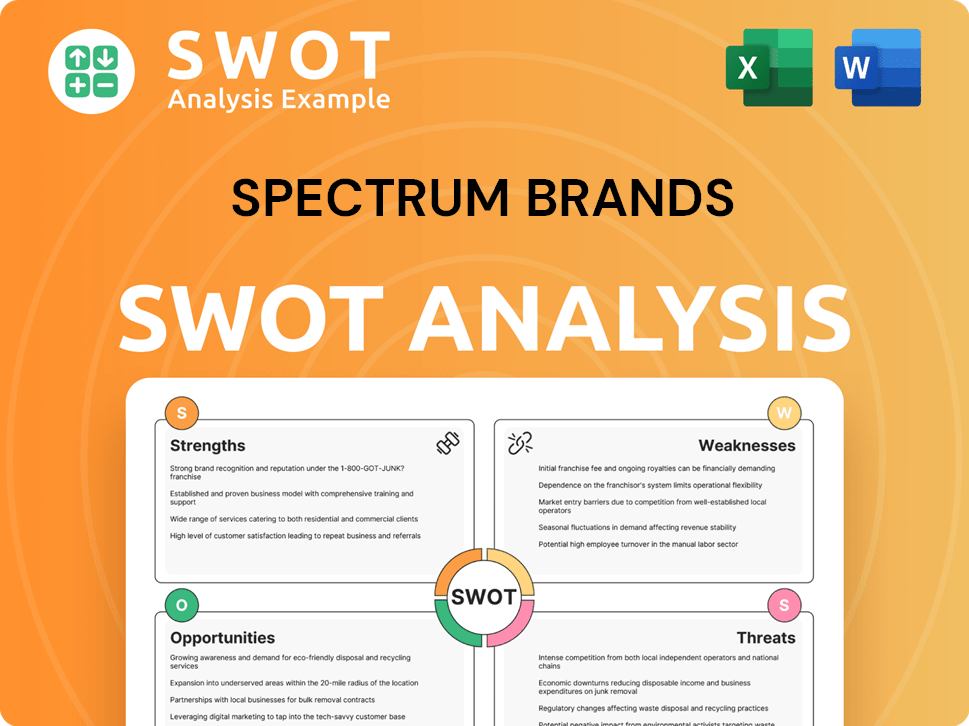
Spectrum Brands SWOT Analysis
- Complete SWOT Breakdown
- Fully Customizable
- Editable in Excel & Word
- Professional Formatting
- Investor-Ready Format
What Do Spectrum Brands’s Customers Want?
Understanding the customer needs and preferences is critical for the success of Spectrum Brands. Analyzing the customer base, including their demographics and buying behaviors, allows for effective market segmentation. This understanding helps tailor product offerings and marketing strategies to resonate with the target audience, driving sales and brand loyalty.
The company's diverse product portfolio caters to various customer segments, each with distinct needs and motivations. Factors like product efficacy, ease of use, and brand reputation significantly influence purchasing decisions. By focusing on these key drivers, Spectrum Brands can maintain its competitive edge and meet the evolving demands of its consumers.
Spectrum Brands' success relies on its ability to meet customer needs across its diverse product categories. By understanding the specific preferences and motivations of each customer segment, the company can enhance its product offerings, marketing strategies, and overall customer experience. This approach ensures that Spectrum Brands remains relevant and competitive in the market.

Home & Garden Needs
Customers in the Home & Garden segment seek practical solutions for property maintenance and outdoor living. They prioritize product effectiveness, ease of use, and value for money. The psychological drivers include pride in their homes and gardens and a desire for a comfortable living environment.
Pet Care Motivations
Pet owners are often driven by emotional factors, prioritizing their pets' health and happiness. Product quality, nutritional value, and brand reputation are key influencers. Loyalty is built on consistent product performance and trust in the brand.
Personal Care Desires
Customers in the Personal Care segment are motivated by personal grooming, hygiene, and self-expression. They seek products that offer performance, durability, and style. Feedback mechanisms like customer reviews and market trends significantly influence product development.
Marketing Tailoring
Spectrum Brands tailors its marketing messages to highlight the specific benefits relevant to each segment. This includes emphasizing the effectiveness of weed killers, the nutritional benefits of pet food, or the styling capabilities of personal care appliances. The company adapts product features and packaging to align with regional preferences.
Product Innovation
Product innovation addresses customer pain points, such as pet health concerns or the desire for easier pet care routines. This includes developing advanced filtration systems or specialized pet nutrition. The company focuses on continuous improvement and adapting to market changes.
Customer Feedback
Customer reviews and market trends are crucial in influencing product development across all segments. Understanding and responding to customer feedback allows Spectrum Brands to refine its offerings and maintain a competitive edge. This data-driven approach ensures products meet consumer needs.
Key Customer Needs
The Spectrum Brands target market encompasses diverse segments with varying needs. Understanding these needs is vital for effective market segmentation and product development. The company's approach involves tailoring its offerings to meet specific customer preferences and motivations.
- Home & Garden: Customers seek effective solutions for property maintenance, with a focus on product efficacy and ease of use.
- Pet Care: Pet owners prioritize the health and well-being of their animals, valuing product quality and nutritional value.
- Personal Care: Customers desire products that offer performance, durability, and style, with a focus on personal grooming and hygiene.
- Market Segmentation: Spectrum Brands segments its market based on these distinct needs, allowing for targeted marketing and product development.
- Brand Positioning: The company's brand positioning is designed to resonate with each segment, highlighting the specific benefits relevant to their needs. For more in-depth information, you can read about Owners & Shareholders of Spectrum Brands.
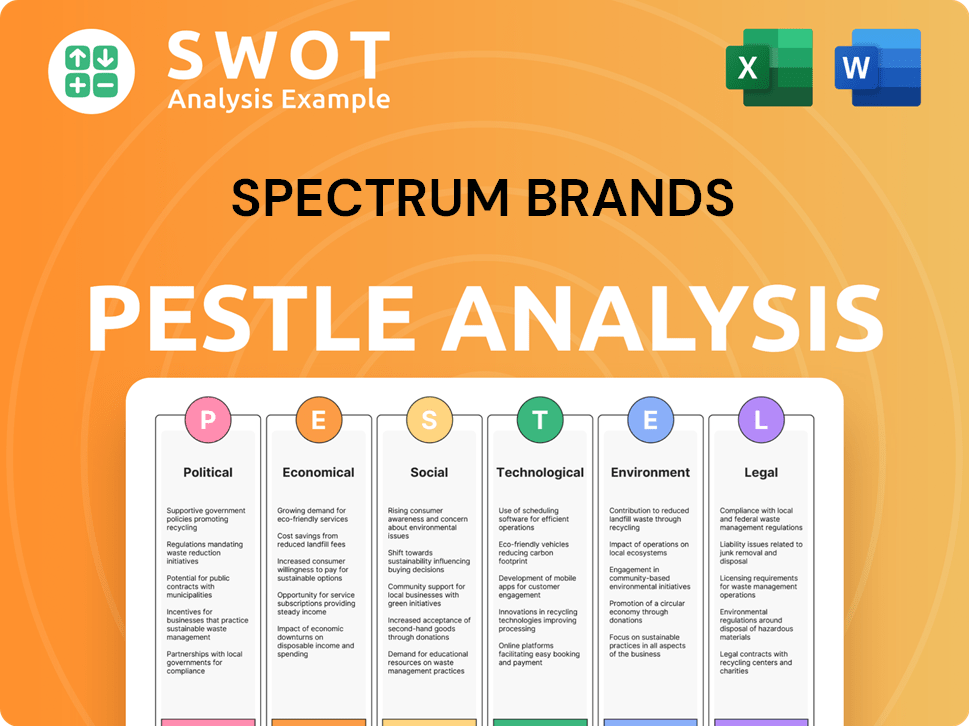
Spectrum Brands PESTLE Analysis
- Covers All 6 PESTLE Categories
- No Research Needed – Save Hours of Work
- Built by Experts, Trusted by Consultants
- Instant Download, Ready to Use
- 100% Editable, Fully Customizable
Where does Spectrum Brands operate?
Spectrum Brands Holdings maintains a significant global presence, selling its products across various regions worldwide. Its primary markets include North America, Europe, Latin America, and the Asia Pacific region. Within these areas, the company often holds strong market shares and brand recognition in specific product categories. This diverse geographical footprint allows Spectrum Brands to reach a broad customer base and capitalize on varied market opportunities.
The company's strategic approach involves tailoring its offerings, marketing, and partnerships to succeed in diverse markets. This includes adapting product formulations, customizing marketing campaigns to resonate with local cultures, and establishing strategic partnerships. This localization strategy is crucial for navigating different consumer behaviors and preferences across regions, ensuring effective market penetration and supply chain efficiency.
Spectrum Brands continuously assesses its market presence and adapts its strategies based on geographic sales performance and growth potential. Recent initiatives may involve focusing on high-growth emerging markets or strengthening its position in established regions. Conversely, it may strategically withdraw from underperforming markets to optimize its portfolio and resource allocation. Understanding the nuances of Growth Strategy of Spectrum Brands is key to grasping its market dynamics.
Market Segmentation
Spectrum Brands uses market segmentation to divide its broad customer base into smaller, more manageable groups based on shared characteristics. This allows the company to tailor its marketing efforts and product offerings to meet the specific needs and preferences of each segment. Effective market segmentation helps in optimizing resource allocation and improving the overall efficiency of marketing campaigns.
Geographic Market Analysis
Spectrum Brands conducts geographic market analysis to understand the sales performance and growth potential in different regions. This analysis helps in making strategic decisions, such as expanding into high-growth markets or withdrawing from underperforming ones. Geographic market analysis is crucial for optimizing the company's portfolio and resource allocation.
Customer Demographics
Understanding customer demographics is essential for Spectrum Brands to tailor its products and marketing strategies. Key demographic factors include age, gender, income levels, and lifestyle. Analyzing these factors helps the company create targeted campaigns that resonate with specific consumer groups, enhancing brand loyalty and driving sales.
Consumer Profile
Creating a detailed consumer profile involves gathering information about customer preferences, buying behaviors, and psychographics. This profile helps Spectrum Brands understand who their ideal customer is and how to best reach them. This detailed understanding informs product development, marketing strategies, and customer service initiatives.
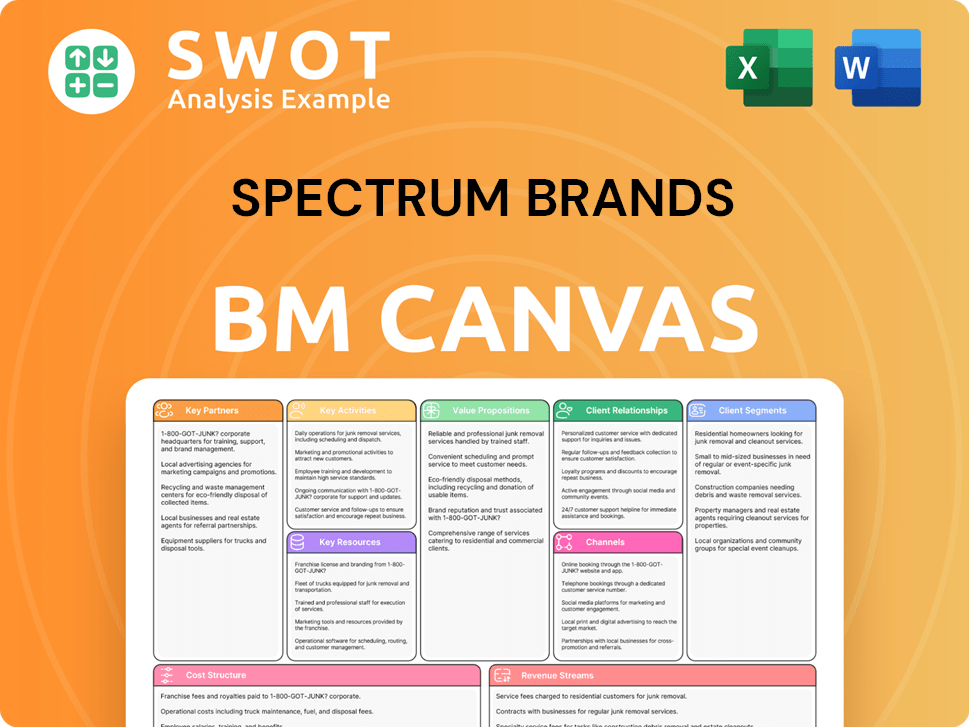
Spectrum Brands Business Model Canvas
- Complete 9-Block Business Model Canvas
- Effortlessly Communicate Your Business Strategy
- Investor-Ready BMC Format
- 100% Editable and Customizable
- Clear and Structured Layout
How Does Spectrum Brands Win & Keep Customers?
Understanding customer acquisition and retention strategies is crucial for the success of any business. For Spectrum Brands, this involves a multi-faceted approach that combines traditional and digital marketing techniques. The company focuses on attracting new customers through various channels while simultaneously implementing strategies to build brand loyalty and encourage repeat purchases. This comprehensive approach helps maintain a strong market position and drive sustainable growth.
Spectrum Brands' approach to customer acquisition includes leveraging mass merchandising channels such as major retailers. Digital marketing efforts, including SEO, PPC advertising, and social media campaigns, are also essential. Furthermore, the company utilizes promotional activities to attract new customers. These efforts are complemented by customer retention strategies that prioritize product quality and customer satisfaction.
The company's focus on customer data analysis, often through retail partnerships and direct-to-consumer interactions, allows for targeted marketing campaigns. Customer relationship management (CRM) systems are utilized to manage interactions and provide after-sales service. These strategies are consistently adapted to align with evolving consumer behaviors and technological advancements, particularly the growth of e-commerce.
Mass Merchandising Channels
Spectrum Brands utilizes mass merchandising channels, including major retailers, to ensure broad product availability. Retail partnerships with companies like Walmart, Home Depot, and Lowe's provide significant visibility. This strategy helps in reaching a wide customer base and driving sales volume.
Digital Marketing
Digital marketing is a key component of Spectrum Brands' customer acquisition strategy. Investments in SEO, PPC advertising, and social media campaigns are made. These efforts are designed to reach online consumers and drive traffic to e-commerce platforms.
Promotional Activities
Promotional activities play a role in customer acquisition. Spectrum Brands employs in-store displays, seasonal sales, and bundled offers. These tactics are used to incentivize purchases and increase sales during specific periods.
Customer Retention Strategies
Customer retention is a key focus, with an emphasis on product quality, performance, and customer satisfaction. The company leverages customer data to understand purchasing patterns. CRM systems are used to manage customer interactions and support after-sales service.
The company's approach to customer acquisition and retention is closely tied to its business model. To learn more about the financial aspects, consider exploring the Revenue Streams & Business Model of Spectrum Brands. This strategy is designed to maintain and expand its customer base, ensuring sustained growth and market leadership.
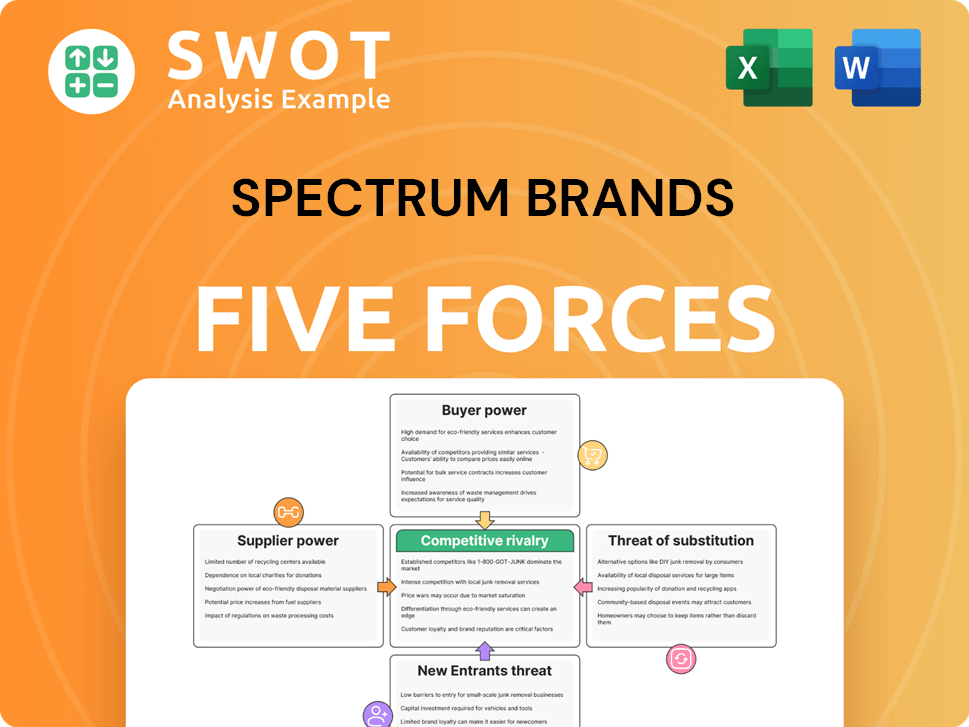
Spectrum Brands Porter's Five Forces Analysis
- Covers All 5 Competitive Forces in Detail
- Structured for Consultants, Students, and Founders
- 100% Editable in Microsoft Word & Excel
- Instant Digital Download – Use Immediately
- Compatible with Mac & PC – Fully Unlocked
Related Blogs

- What are Mission Vision & Core Values of Spectrum Brands Company?
- What is Competitive Landscape of Spectrum Brands Company?
- What is Growth Strategy and Future Prospects of Spectrum Brands Company?
- How Does Spectrum Brands Company Work?
- What is Sales and Marketing Strategy of Spectrum Brands Company?
- What is Brief History of Spectrum Brands Company?
- Who Owns Spectrum Brands Company?
Disclaimer
All information, articles, and product details provided on this website are for general informational and educational purposes only. We do not claim any ownership over, nor do we intend to infringe upon, any trademarks, copyrights, logos, brand names, or other intellectual property mentioned or depicted on this site. Such intellectual property remains the property of its respective owners, and any references here are made solely for identification or informational purposes, without implying any affiliation, endorsement, or partnership.
We make no representations or warranties, express or implied, regarding the accuracy, completeness, or suitability of any content or products presented. Nothing on this website should be construed as legal, tax, investment, financial, medical, or other professional advice. In addition, no part of this site—including articles or product references—constitutes a solicitation, recommendation, endorsement, advertisement, or offer to buy or sell any securities, franchises, or other financial instruments, particularly in jurisdictions where such activity would be unlawful.
All content is of a general nature and may not address the specific circumstances of any individual or entity. It is not a substitute for professional advice or services. Any actions you take based on the information provided here are strictly at your own risk. You accept full responsibility for any decisions or outcomes arising from your use of this website and agree to release us from any liability in connection with your use of, or reliance upon, the content or products found herein.