

BRF Bundle

How Did BRF Company Achieve Record-Breaking Success?
BRF, a global food industry leader, has consistently demonstrated remarkable growth, making its sales and marketing strategies a focal point for understanding its success. Its impressive financial performance in 2024, including a record net revenue of R$61.4 billion, underscores the effectiveness of its strategic initiatives. This analysis delves into the core elements of BRF's approach, offering insights into its market strategies.

From its roots in Brazil to its global presence, BRF Company has strategically evolved its BRF SWOT Analysis, sales strategy and marketing strategy. This evolution is evident in its expansion across 130 countries and a diverse product portfolio. This detailed exploration will uncover the key elements of BRF's sales and distribution channels, innovative marketing tactics, and brand positioning strategies, providing a comprehensive view of its BRF business model.
How Does BRF Reach Its Customers?
The sales and marketing strategy of the company, which is a key player in the food industry, leverages a multifaceted approach to reach its diverse customer base. This strategy encompasses both traditional and modern sales channels, ensuring broad market coverage and efficient distribution. The company's success is significantly influenced by its robust sales and distribution network, which is crucial for its overall performance.
In Brazil, the company maintains a strong physical retail presence. This extensive network allows the company to effectively distribute its products to a large consumer base. The company's strategic investments in international markets, coupled with its strong domestic presence, highlight a well-rounded sales strategy aimed at sustained growth and market leadership.
Internationally, the company supports its sales channels through a global operational footprint. This includes industrial units and distribution centers across various regions. The company's focus on diversifying markets and increasing processed product sales has been a key element of its international strategy. This approach has significantly contributed to its growth and market share, as evidenced by record profitability in international markets in 2024.
 Domestic Sales Channels
In 2024, the company served a record 327,000 customers in Brazil. The company's leading brands, such as Sadia and Perdigão, have gained shelf space. The company reaches consumers through more than 547,000 average monthly deliveries.
International Sales Channels
The company has industrial units in the United Arab Emirates, Turkey, and Saudi Arabia. It operates 28 distribution centers across Asia, the Southern Cone, and the Middle East. In 2024, it secured 84 new export licenses, bringing the total to 175 since 2022, expanding its global reach.

Strategic Partnerships and Acquisitions
The company has strategically expanded its global presence through acquisitions and joint ventures. These moves have been pivotal in enhancing its market share and driving growth. The company's strategic shifts towards international expansion have been key to its success, contributing to record profitability in international markets.
- In November 2024, the company acquired a processing facility in China's Henan province for US$92 million, set to begin operations in early 2025, aiming to double production capacity.
- In Saudi Arabia, the company formed a joint venture, BRF Arabia, with the Halal Products Development Company (HPDC), investing US$84.3 million in Addoha Poultry Company.
- These strategic moves highlight the company's commitment to expanding its global footprint and catering to specific market demands.
- To learn more about the company's overall strategic direction, see Growth Strategy of BRF.
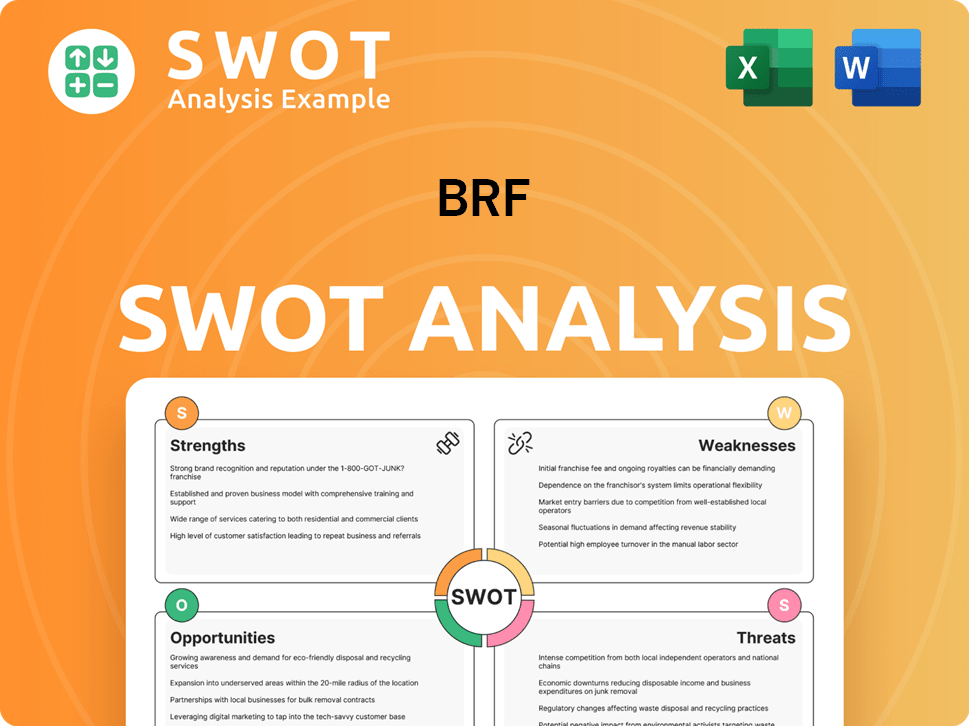
BRF SWOT Analysis
- Complete SWOT Breakdown
- Fully Customizable
- Editable in Excel & Word
- Professional Formatting
- Investor-Ready Format
What Marketing Tactics Does BRF Use?
The BRF Company employs a multifaceted marketing strategy designed to boost brand awareness, generate leads, and drive sales. This approach is adaptable, responding to changes in consumer behavior and technological advancements. The company leverages digital marketing extensively, focusing on social media, short-form videos, and influencer partnerships to engage with younger audiences.
A key aspect of BRF's strategy involves incorporating AI-driven personalized recommendations, particularly within its mobile app. This is complemented by enabling in-app purchases through social media platforms to facilitate direct sales. BRF's marketing approach is increasingly data-driven, utilizing analytics to understand consumer behavior and preferences, thereby enabling hyper-personalized campaigns.
Beyond digital platforms, BRF continues to utilize traditional media, although there's a noticeable shift towards innovative digital strategies. The company's marketing efforts are significantly influenced by data analysis, using tools to understand consumer behavior, preferences, and interactions. Metrics such as website traffic, conversion rates, and social media engagement are crucial for refining strategies. The marketing mix has evolved with a strong focus on local relevance and creativity.

Digital Marketing Initiatives
BRF utilizes digital marketing extensively, focusing on social media, short-form videos, and influencer partnerships to engage with younger audiences. This includes ventures into the gaming space, launching branded gaming experiences. The emphasis is on authentic, value-driven narratives to build trust and loyalty.
AI-Driven Personalization
The company uses AI-driven personalized recommendations, especially within its mobile app. This strategy enhances user experience and drives sales. This approach is supported by the growing trend of mobile app usage.
In-App Purchases and Direct Sales
BRF enables in-app purchases through social media platforms to facilitate direct sales. This streamlined approach simplifies the purchasing process for consumers. This is a key element of their sales strategy.
Data-Driven Marketing
The company's marketing is increasingly data-driven, using tools and analytics to understand consumer behavior, preferences, and interactions. This enables hyper-personalized campaigns. Metrics like website traffic and conversion rates are crucial.
Traditional Media Integration
BRF continues to engage in traditional media, although with a greater emphasis on innovative digital strategies. This blended approach ensures a wide reach. This reflects a comprehensive marketing strategy.
Localized Engagement
The marketing mix has evolved with a strong focus on local relevance and creativity. For instance, in the MENA region, BRF connected with consumers through local food festivals and events. This approach enhances brand visibility.
Key Metrics and Strategies
BRF's marketing tactics are designed to build brand awareness and drive sales. The BRF marketing strategy focuses on digital innovation, data-driven insights, and localized engagement. The company's BRF sales performance is closely monitored through key metrics.
- Website Traffic and Conversion Rates: These metrics are crucial for evaluating the effectiveness of digital campaigns and optimizing user experience.
- Social Media Engagement: Monitoring likes, shares, and comments helps gauge audience interest and refine content strategies.
- Email Open Rates: Analyzing email open rates provides insights into the effectiveness of email marketing campaigns.
- Local Food Festivals and Events: Participating in local events, such as food festivals, allows BRF to connect with consumers directly and showcase products.
- Influencer Partnerships: Collaborating with influencers helps reach target audiences and build brand credibility.
- AI-Driven Personalization: Using AI to provide personalized recommendations enhances user engagement and drives sales.
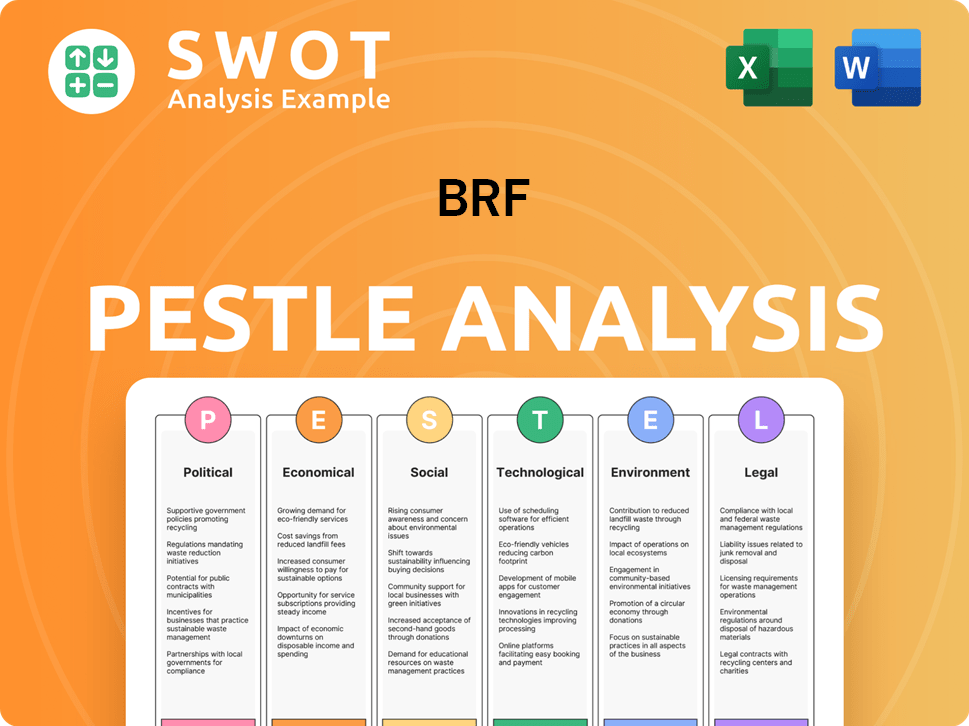
BRF PESTLE Analysis
- Covers All 6 PESTLE Categories
- No Research Needed – Save Hours of Work
- Built by Experts, Trusted by Consultants
- Instant Download, Ready to Use
- 100% Editable, Fully Customizable
How Is BRF Positioned in the Market?
The brand positioning of the company, a major player in the global food market, centers on quality, safety, and integrity. This approach helps it differentiate itself from competitors. The company strategically positions its key brands, such as Sadia and Perdigão, as leaders in Brazil, focusing on visibility and distinctiveness at the point of sale. This Competitors Landscape of BRF highlights the importance of understanding the competitive environment.
The company's sales and marketing strategy emphasizes convenient, ready-to-eat, and healthy products. This strategy is designed to attract its target audience through robust innovation, resulting in high-value-added products. The focus on value-added products is a key differentiator, particularly evident in its strategic investments and market diversification efforts in 2024.
The company's commitment to sustainability is also a key element of its brand positioning, resonating with environmentally conscious consumers. In 2024, the company became the first Brazilian food company to have its climate targets approved by the Science Based Targets Initiative. It also achieved 100% monitoring of its grain suppliers, aligning with global ESG trends and mitigating reputational risks.
BRF Sales Strategy
The company's sales strategy focuses on expanding its presence in both domestic and international markets. This includes optimizing sales channels, enhancing distribution networks, and building strong relationships with retailers. The company's sales growth strategies are crucial for maintaining market share.
BRF Marketing Strategy
The marketing strategy emphasizes brand building, product innovation, and consumer engagement. This involves targeted marketing campaigns, digital marketing initiatives, and consistent brand messaging across all platforms. The company's marketing plan analysis is essential for understanding its effectiveness.
Target Audience
The company targets a broad consumer base, including families, health-conscious individuals, and those seeking convenience. The company's target audience is segmented based on demographics, lifestyle, and purchasing behavior. Understanding the target audience is crucial for effective marketing.
Brand Positioning Strategy
The brand positioning strategy emphasizes quality, safety, and innovation. This involves creating a strong brand identity, differentiating products, and communicating value to consumers. The brand positioning strategy helps the company stand out in the competitive food industry.
Sales and Distribution Channels
The company utilizes a multi-channel distribution network, including direct sales, retail partnerships, and online platforms. This ensures product availability and accessibility for consumers. BRF's sales and distribution channels are vital for reaching a wide customer base.
Digital Marketing Strategy
The company employs a comprehensive digital marketing strategy, including social media, content marketing, and search engine optimization (SEO). This helps enhance brand visibility and engage with consumers online. The company's digital marketing strategy is key for staying relevant.
Product Launch Strategy
The company's product launch strategy involves market research, product development, and targeted marketing campaigns. This approach ensures successful product introductions and market penetration. The company's product launch strategy is critical for innovation.
Customer Relationship Management
The company focuses on building strong customer relationships through excellent service and personalized interactions. This enhances customer loyalty and drives repeat purchases. The company's customer relationship management is essential for long-term success.
Market Expansion Strategies
The company employs various market expansion strategies, including geographic expansion, product diversification, and strategic partnerships. These strategies help the company grow its market share and revenue. The company's market expansion strategies are crucial for overall growth.
Marketing Budget Allocation
The company allocates its marketing budget across various channels, including advertising, promotions, and digital marketing. This ensures effective resource allocation and maximizes the return on investment. The company's marketing budget allocation is essential for efficiency.
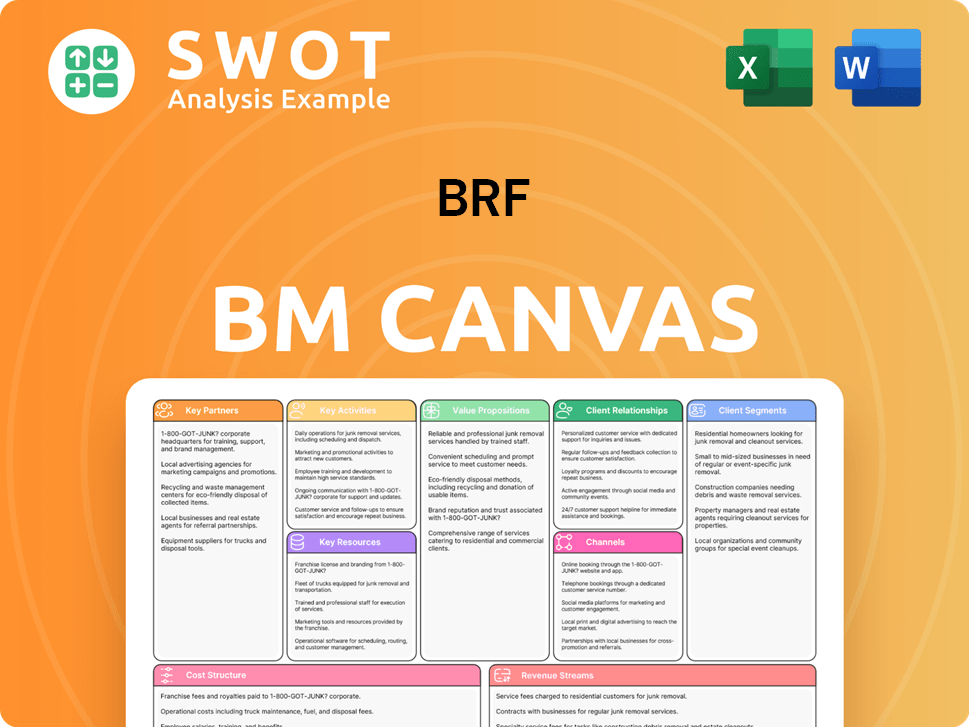
BRF Business Model Canvas
- Complete 9-Block Business Model Canvas
- Effortlessly Communicate Your Business Strategy
- Investor-Ready BMC Format
- 100% Editable and Customizable
- Clear and Structured Layout
What Are BRF’s Most Notable Campaigns?
The sales and marketing strategy of the [Company Name] in 2024 and early 2025 has been heavily influenced by its strong financial performance and strategic market moves. The company's record net revenue of R$61.4 billion and a historic net income of R$3.7 billion in 2024 are clear indicators of successful sales and marketing initiatives. These achievements are driven by effective commercial execution and innovative product launches, solidifying the company's leading brands in the Brazilian market. The focus on market diversification and expansion, especially in international markets, has been a core part of its strategy.
The company’s approach involves significant investments in key regions. This includes acquisitions and joint ventures in strategic markets like China and Saudi Arabia. These moves are designed to boost market share and brand visibility, with a focus on processed products. The 'BRF+ program' also played a crucial role, contributing R$1.5 billion in savings in 2024, which indirectly supports sales and marketing through enhanced profitability and competitiveness. The upcoming launch of Sadia into the international beef market in January 2025 further exemplifies this strategic direction.
The company's sales strategy and marketing strategy are interconnected, with a clear focus on growth and market penetration. The company’s BRF sales and BRF marketing efforts are enhanced by internal efficiencies. The company's overall strategy aims to leverage established brands and expand into new product categories and markets. For more details, explore the Revenue Streams & Business Model of BRF.
Market Diversification and Expansion
The company's sales strategy emphasizes expanding into international markets, notably through strategic acquisitions and joint ventures. The US$92 million acquisition of a processing plant in China and the US$84.3 million investment in Addoha Poultry Company in Saudi Arabia are key examples. These moves aim to increase market share and visibility in key regions.
Strategic Investments and Acquisitions
The company's BRF business strategy includes significant investments in processing plants and joint ventures. The China plant acquisition is expected to double production capacity. The Saudi Arabian venture is designed to meet the growing demand for halal products. These investments are part of a broader BRF Company sales and marketing approach.
Internal Efficiency and Cost Savings
The 'BRF+ program' significantly contributed to cost savings, with R$1.5 billion in savings in 2024. This efficiency campaign indirectly supports sales and marketing by improving profitability and competitiveness. This contributes to the company's BRF sales performance.
Product Launch and Brand Strategy
The planned launch of Sadia into the international beef market starting January 2025 is a significant campaign. This move leverages an established brand in new product categories, contributing to the company's BRF marketing efforts. It is a key part of the BRF Company sales growth strategies.
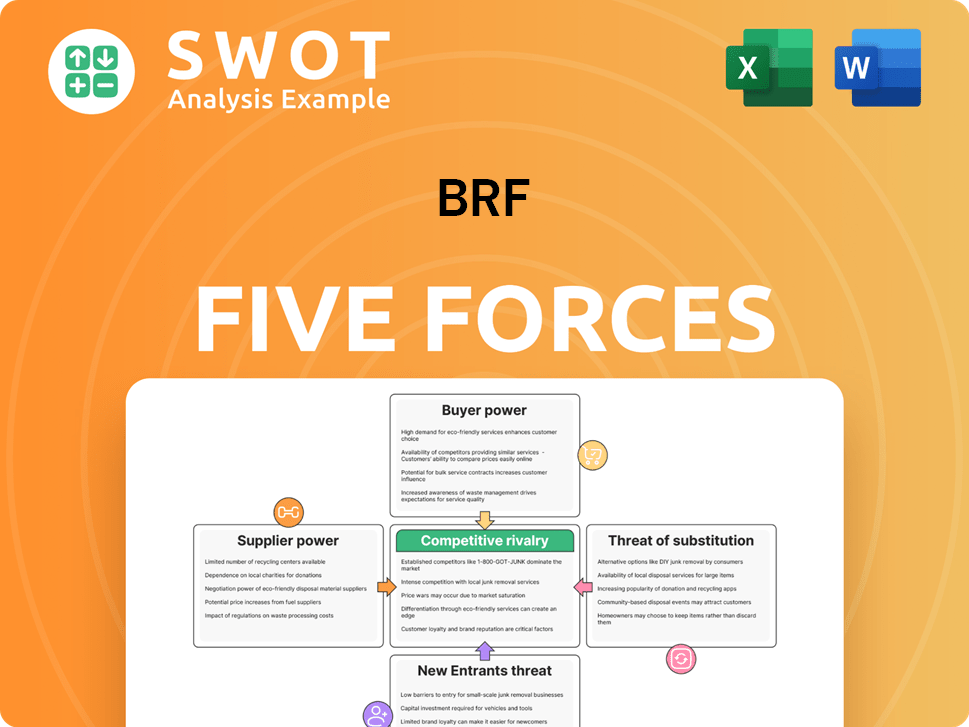
BRF Porter's Five Forces Analysis
- Covers All 5 Competitive Forces in Detail
- Structured for Consultants, Students, and Founders
- 100% Editable in Microsoft Word & Excel
- Instant Digital Download – Use Immediately
- Compatible with Mac & PC – Fully Unlocked
Related Blogs

- What are Mission Vision & Core Values of BRF Company?
- What is Competitive Landscape of BRF Company?
- What is Growth Strategy and Future Prospects of BRF Company?
- How Does BRF Company Work?
- What is Brief History of BRF Company?
- Who Owns BRF Company?
- What is Customer Demographics and Target Market of BRF Company?
Disclaimer
All information, articles, and product details provided on this website are for general informational and educational purposes only. We do not claim any ownership over, nor do we intend to infringe upon, any trademarks, copyrights, logos, brand names, or other intellectual property mentioned or depicted on this site. Such intellectual property remains the property of its respective owners, and any references here are made solely for identification or informational purposes, without implying any affiliation, endorsement, or partnership.
We make no representations or warranties, express or implied, regarding the accuracy, completeness, or suitability of any content or products presented. Nothing on this website should be construed as legal, tax, investment, financial, medical, or other professional advice. In addition, no part of this site—including articles or product references—constitutes a solicitation, recommendation, endorsement, advertisement, or offer to buy or sell any securities, franchises, or other financial instruments, particularly in jurisdictions where such activity would be unlawful.
All content is of a general nature and may not address the specific circumstances of any individual or entity. It is not a substitute for professional advice or services. Any actions you take based on the information provided here are strictly at your own risk. You accept full responsibility for any decisions or outcomes arising from your use of this website and agree to release us from any liability in connection with your use of, or reliance upon, the content or products found herein.