

Formosa Petrochemical Bundle

How is Formosa Petrochemical Navigating the Future of Petrochemicals?
Established in 1992, Formosa Petrochemical (FPCC) has evolved from a raw material supplier to a global force in the petrochemical industry. From its roots within the Formosa Plastics Group, FPCC has expanded its reach, now selling refined petroleum products worldwide. But how has FPCC adapted its Formosa Petrochemical SWOT Analysis to stay competitive?

This analysis explores Formosa Petrochemical's sales and marketing strategy, examining its shift towards sustainable solutions like sustainable aviation fuel (SAF). We'll dissect its Formosa Petrochemical sales strategy, including distribution channels and pricing, and its Formosa Petrochemical marketing strategy, focusing on branding and customer relationships. Understanding FPCC's approach is crucial for anyone interested in the Formosa Petrochemical strategy within the dynamic petrochemical industry sales and petrochemical marketing landscape.
How Does Formosa Petrochemical Reach Its Customers?
The sales and marketing strategy of Formosa Petrochemical (FPCC) revolves around a multi-channel approach, encompassing both direct and indirect sales methods. This strategy is designed to reach a diverse customer base effectively. The company focuses on maximizing its market presence and profitability through strategic channel management.
Domestically, FPCC leverages its network of affiliated gas stations to distribute refined petroleum products, such as gasoline and diesel. This direct channel is a key component of their go-to-market strategy. For petrochemical products, the primary sales channel involves supplying essential raw materials to downstream companies within the Formosa Plastics Group, showcasing a vertically integrated approach.
Internationally, FPCC engages in foreign sales of refined oil and petrochemical products to maximize profit. This includes exporting refined oil products and selling petrochemicals in the international market. The company's strategy includes large-volume, tender-based sales for its bulk products, demonstrating a focus on strategic market penetration and revenue generation. This approach is a critical element of the overall Formosa Petrochemical sales strategy.
 Domestic Sales Channels
FPCC's domestic sales strategy primarily relies on its network of affiliated gas stations for refined petroleum products. As of December 2023, the Formosa Plastics Group held approximately a 22.4% market share in the domestic oil products market. The company also focuses on expanding its sales channels and increasing petroleum sales within the domestic market.
Petrochemical Sales
For petrochemical products, FPCC primarily supplies raw materials to downstream companies within the Formosa Plastics Group. This strategy leverages vertical integration for optimized production and profit maximization. Ethylene and propylene are crucial starting products for plastics, which have wide end uses.
International Sales Channels
FPCC engages in the foreign sales of refined oil products and petrochemicals to maximize profit. In 2021, the company exported 2.8 million kiloliters of gasoline and 7.3 million kiloliters of diesel. Strategic shifts include offering gasoil term supplies via sale tenders, seeking to sell at least one 750,000-barrel cargo of 10ppm sulphur gasoil and one 300,000-barrel cargo of 500ppm sulphur gasoil per month.
Sales Strategy
FPCC's sales strategy includes a focus on expanding its market presence and optimizing its distribution channels. The company's approach to sales and marketing analysis involves a multi-channel strategy. The company aims to improve its competitive advantage strategy through strategic market penetration. For more insight into the company's history, you can read the Brief History of Formosa Petrochemical.
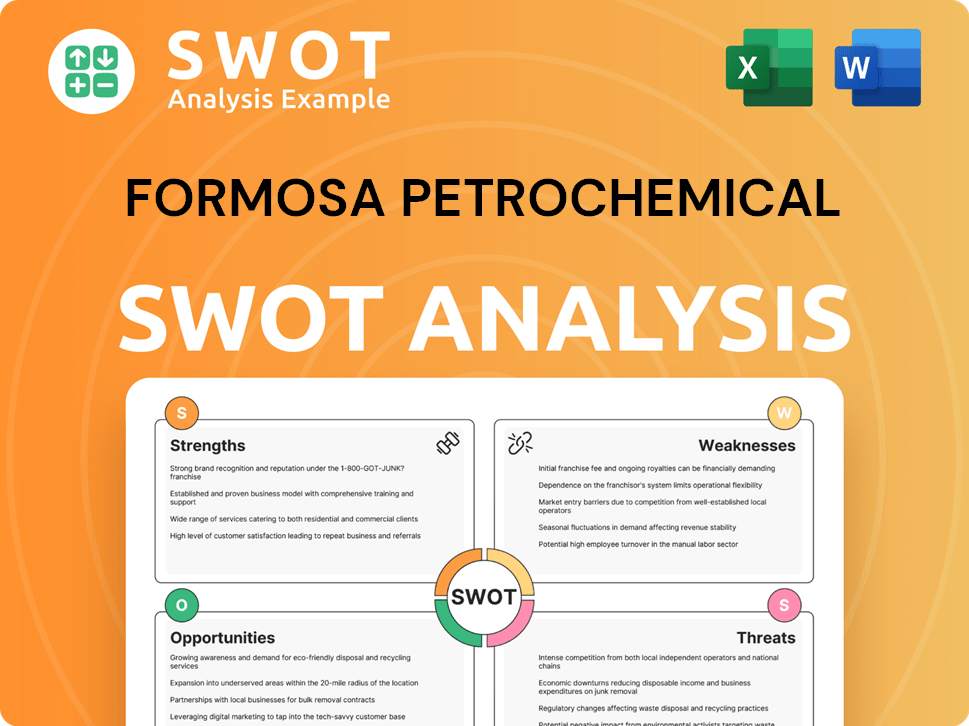
Formosa Petrochemical SWOT Analysis
- Complete SWOT Breakdown
- Fully Customizable
- Editable in Excel & Word
- Professional Formatting
- Investor-Ready Format
What Marketing Tactics Does Formosa Petrochemical Use?
The marketing tactics employed by Formosa Petrochemical (FPCC) are a blend of traditional and digital strategies aimed at enhancing brand visibility, attracting customers, and driving sales. FPCC has actively utilized various marketing channels to increase brand awareness and expand its customer base within its domestic market. These efforts are designed to strengthen the company's market position and foster customer loyalty.
A key aspect of FPCC's digital transformation is the 'Formosa Oil APP,' launched in 2024. This app is central to developing and maintaining target segments and implementing strategic marketing initiatives to reduce related costs. This move towards data-driven marketing and personalization leverages digital platforms for direct consumer engagement and optimizes marketing expenditure. This digital focus is crucial for adapting to evolving consumer behaviors and preferences.
A significant partnership, the 'Formosa Member Day On Saturday' with President Chain Store Corporation, launched in September 2021, served as a key marketing tactic. This initiative aimed to attract members to refuel at Formosa petrol stations, directly influencing sales and customer loyalty. This highlights the company's approach to strategic alliances to gain access to marketing channels and expand its market domain. These collaborations demonstrate FPCC's commitment to innovative marketing strategies.

Traditional Media Tactics
FPCC increases brand exposure by featuring its brand name on popular TV programs. This traditional media tactic helps strengthen its brand image and reach a broad audience.
Digital Transition
The launch of the 'Formosa Oil APP' in 2024 indicates a shift towards digital marketing. This app aims to develop and maintain target segments, implementing strategic marketing initiatives.
Strategic Partnerships
The collaboration with President Chain Store Corporation, initiated in September 2021, is a key marketing tactic. This partnership, 'Formosa Member Day On Saturday,' aimed to boost sales and customer loyalty.
Customer Engagement
The 'Formosa Oil APP' facilitates direct engagement with consumers. This app allows for personalized marketing and optimized marketing expenditure.
Data-Driven Marketing
The focus on the 'Formosa Oil APP' suggests a data-driven approach. This allows FPCC to tailor its marketing efforts to specific customer segments.
Market Expansion
Strategic alliances, like the one with President Chain Store Corporation, help expand FPCC's market domain. This is a key component of the overall Formosa Petrochemical sales strategy.
While specific details on content marketing, SEO, paid advertising, email marketing, or influencer partnerships beyond this collaboration are not extensively detailed in recent public reports, the emphasis on digital transition and direct consumer engagement through the app suggests an evolving marketing mix that incorporates modern digital tools for customer acquisition and retention. The company's focus on digital initiatives and strategic partnerships underscores its commitment to adapting to the changing market dynamics and enhancing its competitive advantage. FPCC’s approach to marketing reflects a strategic blend of traditional and digital methods, aimed at building brand awareness and driving sales within the competitive petrochemical industry.

Key Marketing Tactics
FPCC's marketing strategy combines traditional and digital methods to enhance brand awareness and drive sales. The company focuses on both increasing brand exposure and engaging directly with consumers through digital platforms.
- Traditional Media: Utilizing TV programs to increase brand visibility.
- Digital Initiatives: Launching the 'Formosa Oil APP' for customer engagement and data-driven marketing.
- Strategic Partnerships: Collaborating with President Chain Store Corporation for 'Formosa Member Day On Saturday'.
- Customer Focus: Targeting specific customer segments through digital platforms.
- Market Expansion: Leveraging partnerships to broaden market reach.
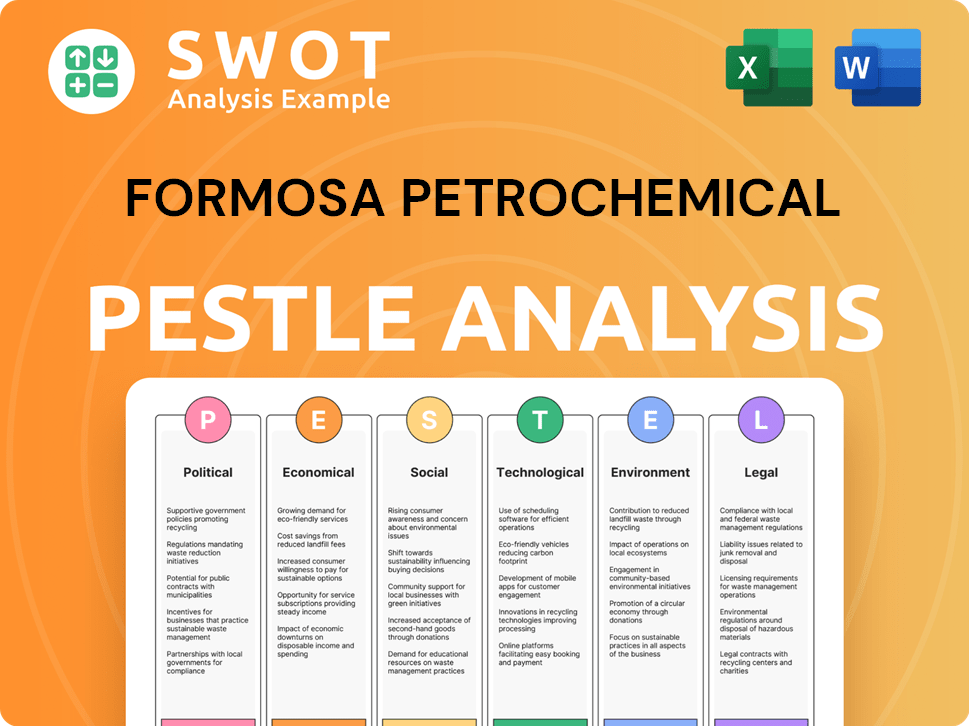
Formosa Petrochemical PESTLE Analysis
- Covers All 6 PESTLE Categories
- No Research Needed – Save Hours of Work
- Built by Experts, Trusted by Consultants
- Instant Download, Ready to Use
- 100% Editable, Fully Customizable
How Is Formosa Petrochemical Positioned in the Market?
The brand positioning of Formosa Petrochemical (FPCC) centers on its pivotal role in the petrochemical industry. As Taiwan's only privately-owned oil refinery and naphtha cracker operator, FPCC has established itself as a key player in the upstream sector. This strategic position is critical for both domestic and international markets, providing essential products and contributing significantly to Taiwan's industrial development.
FPCC distinguishes itself through its integrated operations and the scale of its business, particularly within the Formosa Plastics Group. This integration facilitates optimized production arrangements and enhances profitability through flexible product mixes and feedstock management. The company's core message emphasizes high-quality products, as demonstrated by the development of new formulas like '95 Plus Lead-free Gasoline' and super diesel, which meet international standards.
Historically, FPCC’s brand positioning has emphasized value and reliability as a consistent supplier of essential petrochemical materials and refined fuels. However, the company is increasingly integrating sustainability into its brand narrative. This shift aims to appeal to environmentally conscious stakeholders and enhance its reputation for innovation and responsible operations. For more insights, explore the Growth Strategy of Formosa Petrochemical.
Focus on Quality
FPCC emphasizes high-quality products, as evidenced by the development of new formulas like '95 Plus Lead-free Gasoline' and super diesel. The company's commitment to quality is further underscored by certifications such as JHOSPA for food-grade white oil products and REACH Registration for petrochemical products, supporting sales to the EU.
Sustainability Initiatives
FPCC is expanding its brand narrative to include sustainability. Trial production of sustainable aviation fuel (SAF) began in late 2024, with an expected production of 5,500 metric tons in 2025. This aligns with the Formosa Plastics Group's goal to achieve carbon neutrality by 2050, aiming for a 20% reduction in carbon emissions by 2025 compared to 2007 levels.
Upstream Industry Player
FPCC positions itself as a crucial upstream player in the industrial chain, providing essential petroleum and petrochemical products both domestically and internationally. This strategic positioning is key to its market share strategy within the petrochemical industry sales landscape.
Integrated Operations
The company differentiates itself through the scale and integration of its operations, particularly within the Formosa Plastics Group. This integration allows for optimized production arrangements and profit maximization through flexible product mix and feedstock usage, influencing the petrochemical marketing approach.
Reliability and Value
FPCC's brand positioning historically centered on value and reliability as a consistent supplier of basic petrochemical materials and refined fuels. This focus has helped build strong customer relationship management over time.
Target Market
FPCC’s target market includes both domestic and international customers who require high-quality petrochemical products and refined fuels. The company's product portfolio strategy is designed to meet the diverse needs of these customers.
Competitive Advantage
FPCC's competitive advantage strategy is built on its integrated operations, focus on quality, and increasing emphasis on sustainability. These factors contribute to its strong market position and ability to meet customer demands.
Future Outlook
With the trial production of SAF and its commitment to carbon neutrality by 2050, FPCC is positioning itself for future growth. This includes exploring new market entry strategies and enhancing its digital marketing strategy to reach environmentally conscious customers.
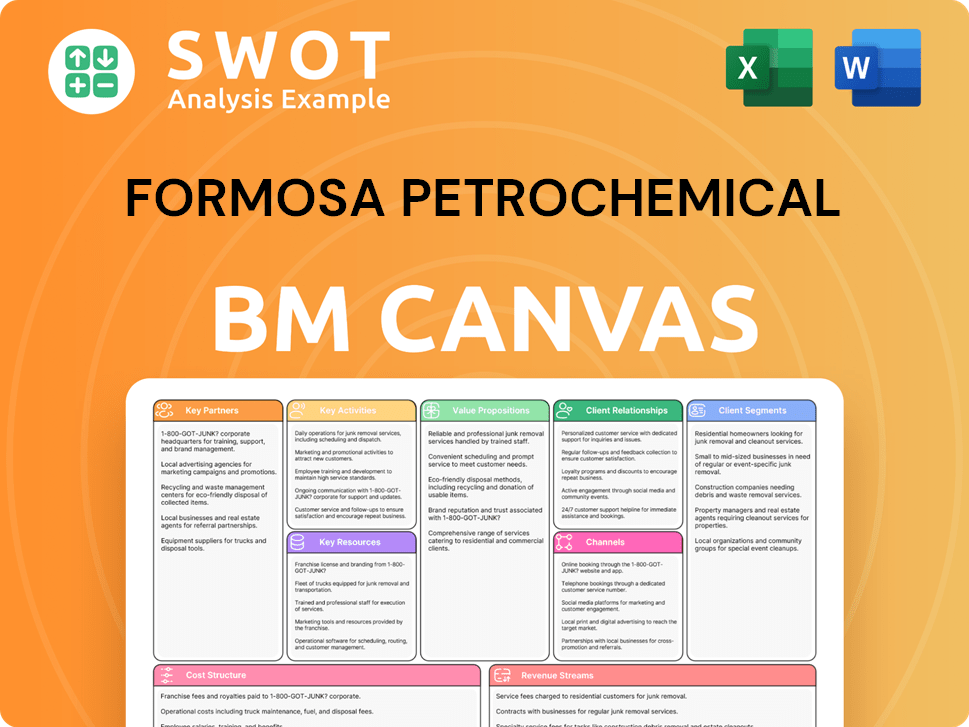
Formosa Petrochemical Business Model Canvas
- Complete 9-Block Business Model Canvas
- Effortlessly Communicate Your Business Strategy
- Investor-Ready BMC Format
- 100% Editable and Customizable
- Clear and Structured Layout
What Are Formosa Petrochemical’s Most Notable Campaigns?
The sales and marketing strategies of Formosa Petrochemical (FPCC) are multifaceted, designed to enhance brand visibility and drive growth within the petrochemical industry. While operating primarily in a B2B environment, several key campaigns and initiatives showcase FPCC's approach to market engagement and expansion. These efforts are crucial for maintaining its competitive advantage and increasing market share.
FPCC's strategies include collaborations, traditional media exposure, and strategic pivots towards sustainable products. These actions aim to solidify its market position and adapt to evolving industry trends. These strategies are essential components of the overall Formosa Petrochemical marketing strategy.
A primary focus is on enhancing brand recognition and customer engagement. The company's approach emphasizes both direct consumer interactions and broader market influence. These efforts are crucial for understanding the Formosa Petrochemical sales strategy.
'Formosa Member Day On Saturday' Program
Launched in September 2021 in partnership with President Chain Store Corporation, this program aimed to attract members to refuel at petrol stations. This campaign expanded the customer base and increased domestic petroleum sales. The collaboration leveraged loyalty programs for direct consumer interaction.
Media Presence via TV Programs
FPCC consistently uses traditional media, particularly TV programs, to increase brand exposure. This ongoing effort strengthens brand image and raises public awareness of its refined petroleum products. Such exposure contributed to a 1.3% growth in market share in 2021 compared to 2020.
Sustainable Aviation Fuel (SAF) Initiative
FPCC's pivot into sustainable aviation fuel (SAF) production is a long-term strategic campaign. Trial production began at the Mailiao facility in late 2024, with an expected output of 5,500 metric tons in 2025. This initiative aims to position FPCC as a key player in the green energy transition.
Strategic Objectives
Objectives include enhancing corporate social responsibility, attracting environmentally conscious clientele, and establishing a foothold in the growing SAF market. The move demonstrates adaptability and a commitment to future-oriented solutions in an industry facing increasing pressure for decarbonization. This is a key aspect of the Formosa Petrochemical strategy.
FPCC's sales and marketing strategies are designed to adapt to market changes. The company's focus is on both immediate sales and long-term brand building. For more insights, consider reading this article on the Formosa Petrochemical.
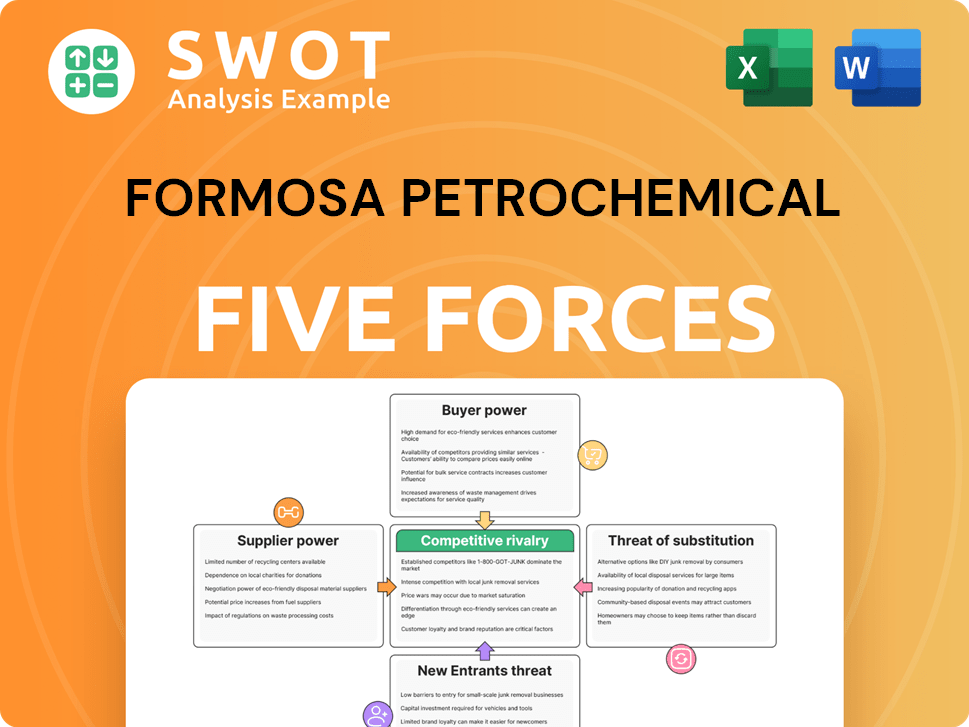
Formosa Petrochemical Porter's Five Forces Analysis
- Covers All 5 Competitive Forces in Detail
- Structured for Consultants, Students, and Founders
- 100% Editable in Microsoft Word & Excel
- Instant Digital Download – Use Immediately
- Compatible with Mac & PC – Fully Unlocked
Related Blogs

- What are Mission Vision & Core Values of Formosa Petrochemical Company?
- What is Competitive Landscape of Formosa Petrochemical Company?
- What is Growth Strategy and Future Prospects of Formosa Petrochemical Company?
- How Does Formosa Petrochemical Company Work?
- What is Brief History of Formosa Petrochemical Company?
- Who Owns Formosa Petrochemical Company?
- What is Customer Demographics and Target Market of Formosa Petrochemical Company?
Disclaimer
All information, articles, and product details provided on this website are for general informational and educational purposes only. We do not claim any ownership over, nor do we intend to infringe upon, any trademarks, copyrights, logos, brand names, or other intellectual property mentioned or depicted on this site. Such intellectual property remains the property of its respective owners, and any references here are made solely for identification or informational purposes, without implying any affiliation, endorsement, or partnership.
We make no representations or warranties, express or implied, regarding the accuracy, completeness, or suitability of any content or products presented. Nothing on this website should be construed as legal, tax, investment, financial, medical, or other professional advice. In addition, no part of this site—including articles or product references—constitutes a solicitation, recommendation, endorsement, advertisement, or offer to buy or sell any securities, franchises, or other financial instruments, particularly in jurisdictions where such activity would be unlawful.
All content is of a general nature and may not address the specific circumstances of any individual or entity. It is not a substitute for professional advice or services. Any actions you take based on the information provided here are strictly at your own risk. You accept full responsibility for any decisions or outcomes arising from your use of this website and agree to release us from any liability in connection with your use of, or reliance upon, the content or products found herein.