

United Parcel Service Bundle

What Drives United Parcel Service's Success?
Understanding a company's core principles is key to grasping its strategy and potential. United Parcel Service (UPS), a global logistics leader, operates with a clear set of guiding principles. Exploring the United Parcel Service SWOT Analysis reveals how these principles shape its competitive advantage.

This exploration of the UPS mission, vision, and core values offers insights into how this industry giant navigates the complexities of the global market and stays focused on its UPS goals. Discover how these elements influence everything from daily operations to long-term planning, shaping its corporate identity and impacting its performance. Delving into UPS's mission, vision, and core values provides a valuable framework for understanding the company's strategic direction and its commitment to excellence.
Key Takeaways
- UPS's mission balances customer focus, financial health, employee empowerment, and corporate responsibility.
- The vision emphasizes sustainability and efficiency, crucial for future market adaptation.
- Core values of excellence, integrity, and teamwork guide strategic decisions.
- Alignment with these principles is key for navigating industry complexities and driving growth.
- 'Moving our world forward by delivering what matters' highlights UPS's impact.
Mission: What is United Parcel Service Mission Statement?
UPS's mission is to 'Grow our global business by serving customers' logistics needs, offering excellence and value in all we do. Maintain a financial company with solid broad employee ownership that provides a long-term competitive return to our shareowners. Inspire our people and business partners to do their best, offering opportunities for personal development and success. Lead by example as a responsible, caring, and sustainable company, making a difference in the communities we serve.'
Let's delve into the multifaceted mission of United Parcel Service (UPS).

Customer-Centric Logistics Solutions
At its core, the UPS company mission revolves around serving customers' logistics needs. This includes a commitment to global growth and providing excellent, valuable services. UPS aims to be a reliable partner for businesses worldwide, ensuring efficient and cost-effective delivery solutions.
Financial Strength and Shareholder Value
A crucial aspect of the UPS mission is maintaining a strong financial position. This involves generating long-term competitive returns for shareowners through solid financial management and broad employee ownership. This focus on financial health is evident in UPS's consistent performance.
Employee Empowerment and Development
UPS strives to inspire its employees and business partners to excel. The company offers opportunities for personal development and success, fostering a culture of growth and achievement. This commitment to its workforce is a key component of the UPS mission.
Corporate Social Responsibility and Sustainability
UPS is committed to being a responsible, caring, and sustainable company. This involves making a positive impact on the communities it serves and leading by example in environmental and social initiatives. This demonstrates how UPS defines its values.
Operational Excellence
UPS's mission is reflected in its operational excellence. For example, in 2023, UPS delivered an average of 24.3 million packages per day. This showcases their commitment to providing efficient and reliable service.
Global Reach and Impact
The UPS mission encompasses a global reach and impact. UPS operates in more than 220 countries and territories. The company’s extensive network and international presence highlight its commitment to serving diverse logistics needs worldwide.
The UPS mission statement underscores the company's dedication to customer satisfaction, financial stability, employee well-being, and corporate responsibility. Understanding the UPS mission is crucial for anyone seeking to analyze the company's strategy and values.
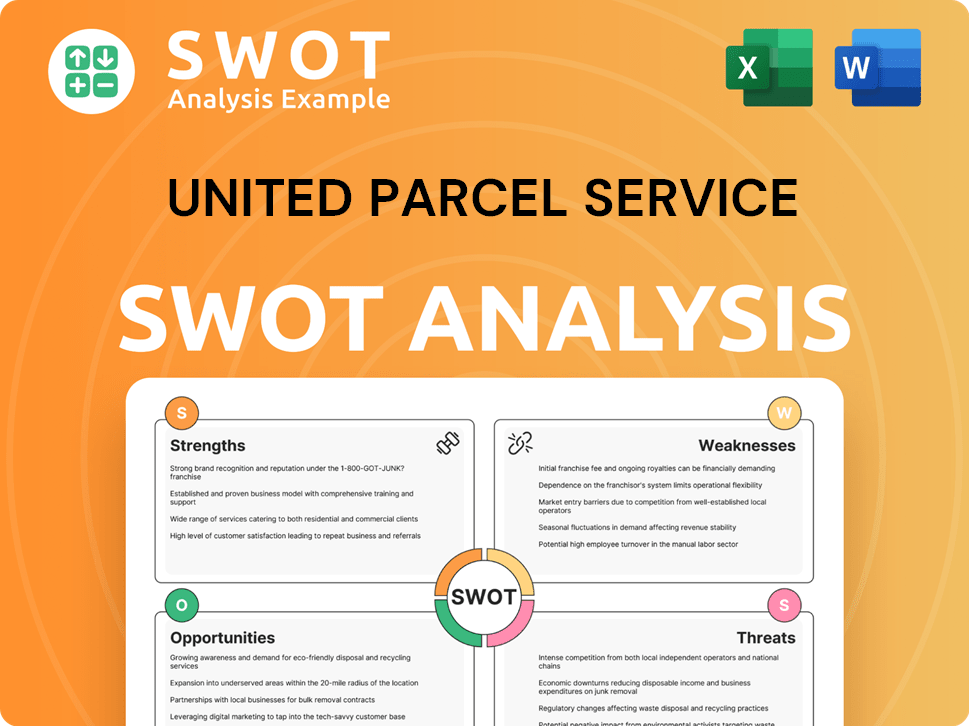
United Parcel Service SWOT Analysis
- Complete SWOT Breakdown
- Fully Customizable
- Editable in Excel & Word
- Professional Formatting
- Investor-Ready Format
Vision: What is United Parcel Service Vision Statement?
UPS's vision is "Helping customers pioneer more sustainable solutions, delivering packages more efficiently, creating more connections around the world and finding more ways to take action and give back."
Let's delve into the vision of United Parcel Service (UPS) and what it entails for the future.
A Forward-Looking Perspective
The UPS vision is decidedly future-focused, emphasizing progress and positive contributions. It's a statement of intent, outlining the company's aspirations for its role in the world. This forward-looking approach is crucial for long-term sustainability and growth.
Pioneering Sustainable Solutions
A core element of the UPS vision is helping customers adopt more sustainable practices. This includes initiatives like investing in electric vehicles, alternative fuels, and optimizing delivery routes to reduce carbon emissions. For example, UPS has committed to purchasing thousands of electric vehicles, demonstrating a tangible commitment to this aspect of its vision. This also aligns with the growing demand for eco-friendly logistics solutions.
Efficiency in Package Delivery
Another key aspect of the UPS vision is the continuous improvement of package delivery efficiency. This involves leveraging technology, optimizing its global network, and streamlining processes. UPS is investing heavily in automation and data analytics to enhance speed and accuracy. This focus is critical in a competitive market where speed and reliability are paramount. The company aims to further reduce delivery times and improve customer satisfaction.
Creating Global Connections
The UPS vision encompasses the expansion of global connectivity, facilitating trade and communication across borders. This involves strengthening its international network, expanding its presence in emerging markets, and providing seamless logistics solutions worldwide. UPS's extensive global infrastructure is a key enabler of this vision. They are continuously expanding their reach to meet the growing demands of international commerce. Consider the impact of UPS on the global economy; its ability to connect businesses and consumers worldwide is a significant factor. Furthermore, understanding the Target Market of United Parcel Service can provide further insights into how UPS achieves its vision.
Giving Back to Communities
The UPS vision also emphasizes social responsibility and giving back to communities. This includes supporting charitable causes, promoting diversity and inclusion, and fostering a positive work environment. UPS actively engages in various philanthropic initiatives and encourages employee volunteerism. This commitment to social responsibility enhances its brand reputation and contributes to a more sustainable business model.
Realistic and Aspirational
Overall, the UPS vision is both realistic and aspirational. It builds upon the company's existing strengths in logistics and its increasing focus on technology and sustainability. The goals are ambitious, reflecting a desire to lead the industry in innovation and positive impact. This balance is crucial for inspiring employees and driving long-term success. The company's investments in electric vehicles and network optimization are concrete steps towards realizing this vision.
In essence, the UPS vision provides a roadmap for the company's future, guiding its strategic decisions and shaping its corporate culture. It's a commitment to innovation, sustainability, and social responsibility, positioning UPS for continued success in a rapidly evolving global landscape.
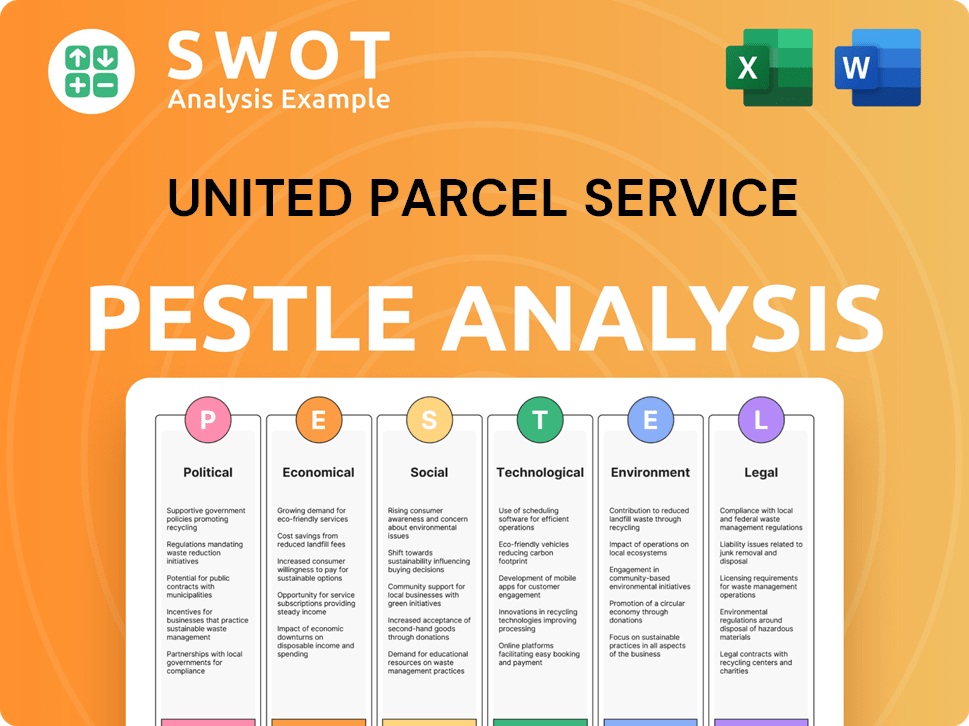
United Parcel Service PESTLE Analysis
- Covers All 6 PESTLE Categories
- No Research Needed – Save Hours of Work
- Built by Experts, Trusted by Consultants
- Instant Download, Ready to Use
- 100% Editable, Fully Customizable
Values: What is United Parcel Service Core Values Statement?
The core values of United Parcel Service (UPS) are the bedrock of its operations, shaping its culture and guiding its employees worldwide. These values are not merely words; they are the principles that drive UPS's actions and define its identity as a global leader in logistics.
 Excellence
Excellence at UPS means a relentless pursuit of high-quality service and continuous improvement. This value is evident in the company's significant investments in technology, such as its advanced package tracking systems, which processed an average of 24.7 million packages and documents per day in 2023. Rigorous training programs for employees further exemplify this commitment, ensuring operational efficiency and reliability in package delivery.
Innovation
Innovation is a cornerstone of UPS's strategy, essential for navigating the dynamic logistics landscape. The company actively explores and implements cutting-edge technologies, including the use of electric vehicles for delivery and drone delivery solutions. UPS has invested heavily in its network, with capital expenditures of $5.3 billion in 2023, showcasing its dedication to staying ahead of industry trends and enhancing its service offerings.
Integrity
Integrity is fundamental to UPS's operations, guiding ethical decision-making at all levels of the company. This commitment to honesty and transparency builds trust with customers, employees, and stakeholders. UPS's adherence to ethical business practices is reflected in its strong corporate governance and its consistent efforts to maintain the highest standards of conduct.
Sustainability
UPS is deeply committed to sustainability, recognizing its responsibility to minimize environmental impact. This commitment is evident in its investments in alternative fuel vehicles, with over 16,000 alternative fuel and advanced technology vehicles in its global fleet as of 2023. The company also focuses on reducing emissions and promoting responsible practices throughout its operations, aligning with its broader Brief History of United Parcel Service and long-term goals.
These core values – Excellence, Innovation, Integrity, and Sustainability – collectively define UPS's corporate identity and guide its strategic decisions, ensuring its continued success in the global logistics market. Understanding these values provides a deeper insight into how UPS operates and achieves its goals. Next, we will explore how the UPS mission and vision influence the company's strategic decisions.
How Mission & Vision Influence United Parcel Service Business?
UPS's mission, vision, and core values serve as the bedrock for its strategic decision-making processes. These guiding principles shape the company's actions and long-term objectives, ensuring alignment across all facets of its operations.

Strategic Alignment with Customer Focus
The "Customer First, People Led, Innovation Driven" strategy directly reflects UPS's core values and mission. This focus is evident in the company's shift towards higher-margin segments and its commitment to providing superior customer service. This strategic shift aims to enhance profitability and build sustainable customer relationships.
- Prioritizing Small and Medium-Sized Businesses (SMBs): UPS is actively targeting SMBs, which offer higher profit margins compared to large-volume contracts.
- Healthcare Logistics Expansion: UPS is investing in healthcare logistics, a growing market segment, to capitalize on its specialized services and expertise.
- Reduced Reliance on Amazon: UPS strategically reduced volume from its largest customer, Amazon, to focus on more profitable and sustainable customer relationships.
- Focus on Customer Needs: The company's mission emphasizes serving customers' logistics needs with excellence and value.
Technological Investments and Operational Efficiency
UPS's commitment to innovation is a direct result of its mission and vision. Investments in technology and operational improvements are designed to enhance efficiency and the customer experience. These initiatives are expected to yield significant cost savings and improve profitability.
RFID Technology Deployment
UPS is utilizing Radio-Frequency Identification (RFID) technology to track packages more efficiently, improving visibility and reducing errors. This technology enhances operational efficiency and customer service. The company aims to improve package tracking accuracy and speed.
'Efficiency Reimagined' Initiative
The 'Efficiency Reimagined' initiative focuses on streamlining operations and reducing costs across the network. This initiative is a key component of UPS's strategy to improve profitability. UPS anticipates approximately $1 billion in annualized savings from these initiatives.
Financial Targets
UPS has set a target of achieving a U.S. operating margin of 12% by the end of 2026. This financial goal reflects the company's commitment to operational efficiency and strategic growth. The company’s financial targets are directly influenced by its strategic initiatives.
Sustainability Initiatives
UPS's mission and vision include a commitment to sustainability, driving investments in alternative fuel vehicles and renewable energy. This approach aligns with the company’s long-term goals of being a responsible corporate citizen. These initiatives demonstrate UPS's dedication to environmental stewardship.
Sustainability Goals
By 2025, UPS aims to have 40% of its ground operations powered by alternative fuels and 25% of its electricity from renewable sources. These goals demonstrate UPS's commitment to reducing its environmental impact. These targets are a key part of the company's sustainability strategy.
The strategic decisions driven by the Growth Strategy of United Parcel Service, UPS mission, and vision are designed to enhance profitability, improve operational efficiency, and strengthen its market position in targeted growth areas. As CEO Carol Tomé has emphasized, these changes are essential for building a more profitable, agile, and differentiated UPS. These actions are crucial for achieving the company's long-term goals and maintaining its competitive advantage in the logistics industry. The company’s core values guide its actions, ensuring a focus on customer satisfaction, innovation, and sustainability. Read the next chapter to discover the Core Improvements to Company's Mission and Vision.
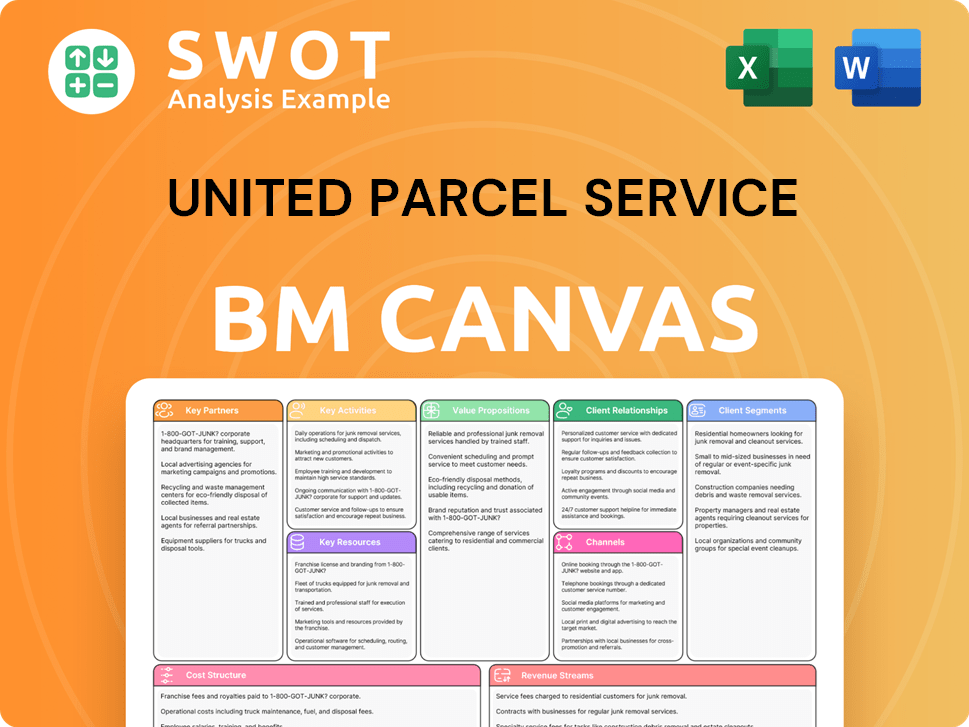
United Parcel Service Business Model Canvas
- Complete 9-Block Business Model Canvas
- Effortlessly Communicate Your Business Strategy
- Investor-Ready BMC Format
- 100% Editable and Customizable
- Clear and Structured Layout
What Are Mission & Vision Improvements?
While the current statements of UPS mission, UPS vision, and UPS core values provide a solid framework, continuous improvement is crucial for sustained success in today's dynamic environment. This section explores potential refinements to ensure their continued relevance and effectiveness, aligning them with emerging trends and future growth opportunities for United Parcel Service.
Enhancing Digital Innovation Focus
To better reflect the importance of technology, UPS could explicitly integrate digital innovation into its mission or vision. This could involve emphasizing the use of AI, automation, and data analytics to enhance operational efficiency and transform the customer experience. For example, UPS has been investing heavily in AI-powered route optimization, which has already resulted in a 10% reduction in fuel consumption and delivery times in certain areas.
Addressing Evolving Consumer Expectations
Given the rapid changes in consumer behavior, UPS could refine its vision to more directly address the future of e-commerce delivery. This includes incorporating elements like speed, transparency, and flexible delivery options to meet the demands of the modern consumer. The e-commerce market is projected to reach $7.4 trillion by 2025, highlighting the need for UPS to adapt to changing consumer preferences.
Strengthening Sustainability Commitments
With increasing emphasis on Environmental, Social, and Governance (ESG) factors, UPS could strengthen its language around sustainability within its core statements. This could involve explicitly stating a commitment to carbon neutrality and circular economy practices. UPS has already made significant strides in this area, including investing in electric vehicles and renewable energy, with goals to reduce its carbon footprint by a significant percentage by 2035.
Aligning Values with Guiding Principles
Reviewing the UPS core values to ensure they are consistently reflected in the company's actions and decision-making processes is vital. This includes aligning the UPS goals with the company's guiding principles to ensure that the company's values are not just words but are actively lived out. To gain a deeper understanding of the company's foundational principles, consider exploring the Mission, Vision & Core Values of United Parcel Service.
How Does United Parcel Service Implement Corporate Strategy?
Implementing a company's mission, vision, and core values is crucial for translating strategic intent into tangible actions and outcomes. This chapter explores how United Parcel Service (UPS) operationalizes its guiding principles across its business practices and stakeholder interactions.
Leadership's Role in Reinforcement
Leadership plays a pivotal role in embedding the UPS mission, UPS vision, and UPS core values within the organization. CEO Carol Tomé’s consistent emphasis on the 'Customer First, People Led, Innovation Driven' strategy serves as a constant reminder of the company's priorities.
- This messaging reinforces the customer-centric approach.
- It highlights the importance of employees in achieving UPS goals.
- It underscores the commitment to innovation.
- This top-down approach ensures that the UPS guiding principles are consistently communicated and modeled throughout the company.
Operational Initiatives Aligned with the Mission and Vision
UPS demonstrates its commitment to its mission and vision through specific operational initiatives. The 'Efficiency Reimagined' program and network reconfiguration, for example, are designed to streamline operations and reduce costs, directly supporting the pursuit of excellence and efficiency outlined in the company's guiding principles.
Strategic Moves to Enhance Service Quality
The insourcing of UPS SurePost is another strategic move. This action aims to enhance control over the delivery process and potentially improve service quality, aligning with the customer-centric aspect of the UPS mission. This move also allows UPS to better manage its resources and adapt to changing market demands.
Communication of Values to Stakeholders
UPS communicates its mission, vision, and values to stakeholders through various channels. These include the official website, investor materials, and employee communications. The emphasis on 'People Led' in its strategy indicates efforts to engage employees and foster a culture aligned with its values.
Embedding Values in Corporate Culture
While specific formal programs for value alignment are not extensively detailed, the consistent messaging from leadership and the focus on employee development suggest ongoing efforts to embed these principles in the corporate culture. This includes initiatives focused on employee training, development, and well-being, as well as programs promoting diversity and inclusion.
Examples of Values in Practice
UPS demonstrates its commitment to its core values through concrete actions. The company's investments in a diverse workforce and its commitment to safety protocols reflect the values of inclusion and safety. Furthermore, its significant investments in sustainable technologies and the setting of ambitious environmental targets demonstrate the integration of sustainability into its business practices.
- In 2023, UPS invested over $1 billion in sustainable technologies and alternative fuel vehicles.
- UPS has set a goal to achieve carbon neutrality by 2050.
- The company's commitment to employee safety is reflected in its comprehensive safety training programs and protocols.
- UPS's focus on diversity and inclusion is demonstrated through its diverse workforce and inclusive workplace policies.
Financial Performance and Strategic Alignment
The alignment of UPS mission, UPS vision, and UPS core values with its strategic initiatives contributes to its financial performance. For example, the focus on efficiency and innovation has helped UPS navigate challenges in the logistics industry and maintain its competitive edge. You can learn more about UPS's business model by reading about the Revenue Streams & Business Model of United Parcel Service.
Continuous Improvement and Adaptation
UPS continually adapts its strategies and practices to align with its mission, vision, and values. This includes ongoing investments in technology, infrastructure, and employee development to meet evolving customer needs and market demands. The company's commitment to sustainability and innovation also drives continuous improvement.
Measuring and Evaluating Performance
UPS uses various metrics to measure its performance against its mission, vision, and values. These include customer satisfaction scores, employee engagement surveys, and environmental impact reports. The company regularly evaluates its progress and makes adjustments as needed to ensure it remains aligned with its guiding principles.
Future Outlook
Looking ahead, UPS will likely continue to emphasize its mission, vision, and values in its strategic decision-making. The company's focus on innovation, sustainability, and customer-centricity will likely remain key drivers of its future growth and success. The company's ability to adapt and evolve will be crucial in navigating the ever-changing landscape of the logistics industry.
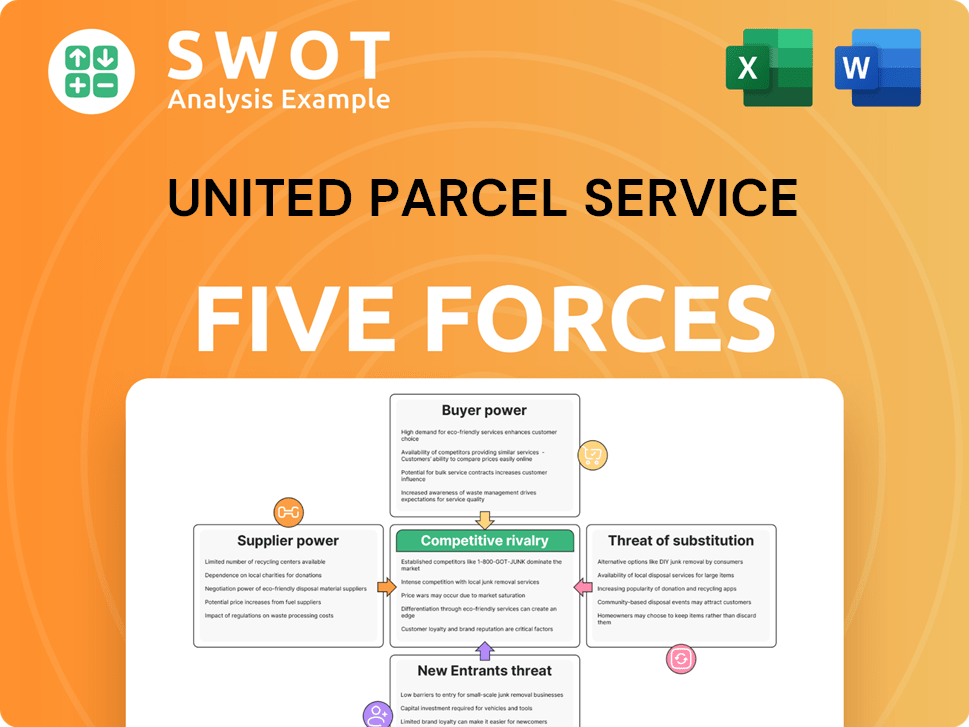
United Parcel Service Porter's Five Forces Analysis
- Covers All 5 Competitive Forces in Detail
- Structured for Consultants, Students, and Founders
- 100% Editable in Microsoft Word & Excel
- Instant Digital Download – Use Immediately
- Compatible with Mac & PC – Fully Unlocked
Related Blogs

- What are Mission Vision & Core Values of United Parcel Service Company?
- What is Competitive Landscape of United Parcel Service Company?
- What is Growth Strategy and Future Prospects of United Parcel Service Company?
- How Does United Parcel Service Company Work?
- What is Sales and Marketing Strategy of United Parcel Service Company?
- Who Owns United Parcel Service Company?
- What is Customer Demographics and Target Market of United Parcel Service Company?
Disclaimer
All information, articles, and product details provided on this website are for general informational and educational purposes only. We do not claim any ownership over, nor do we intend to infringe upon, any trademarks, copyrights, logos, brand names, or other intellectual property mentioned or depicted on this site. Such intellectual property remains the property of its respective owners, and any references here are made solely for identification or informational purposes, without implying any affiliation, endorsement, or partnership.
We make no representations or warranties, express or implied, regarding the accuracy, completeness, or suitability of any content or products presented. Nothing on this website should be construed as legal, tax, investment, financial, medical, or other professional advice. In addition, no part of this site—including articles or product references—constitutes a solicitation, recommendation, endorsement, advertisement, or offer to buy or sell any securities, franchises, or other financial instruments, particularly in jurisdictions where such activity would be unlawful.
All content is of a general nature and may not address the specific circumstances of any individual or entity. It is not a substitute for professional advice or services. Any actions you take based on the information provided here are strictly at your own risk. You accept full responsibility for any decisions or outcomes arising from your use of this website and agree to release us from any liability in connection with your use of, or reliance upon, the content or products found herein.