

TPG Bundle

How is TPG Telecom Dominating the Australian Telecom Market?
TPG Telecom's transformation since the 2020 Vodafone Australia merger showcases a dynamic shift in its sales and marketing approach. Facing fierce competition, the company is strategically expanding its reach, most notably with its January 2025 regional Multi-Operator Core Network (MOCN) partnership with Optus. This move dramatically increases its mobile coverage, impacting its TPG SWOT Analysis and overall market position.

This analysis delves into the evolution of TPG's TPG sales strategy and TPG marketing strategy, exploring how it navigates the complex Australian telecommunications landscape. We'll examine the TPG company strategy, including its TPG business model, TPG target market, and TPG competitive analysis to understand how it aims to become a more streamlined, efficient, and customer-centric integrated telco. Key areas of focus include TPG sales and marketing plan example, TPG's digital marketing approach, TPG marketing campaign analysis, and TPG brand positioning strategy to provide a comprehensive understanding of its current operations.
How Does TPG Reach Its Customers?
The sales channels of TPG Telecom are designed to reach a broad customer base, including residential, business, and wholesale segments. The company uses a multi-faceted approach that combines online and offline strategies. Its primary sales channels include brand-specific websites like TPG, Vodafone, and iiNet, which act as key e-commerce platforms for direct-to-consumer (DTC) sales, facilitating customer acquisition and service management.
The evolution of these channels has seen significant strategic shifts. The merger of Vodafone and TPG in 2020 integrated go-to-market approaches, leading to a more cohesive brand portfolio. TPG Telecom continues to leverage brands such as Vodafone for mobile services and iiNet and Internode for internet, each targeting specific customer segments. This strategy is crucial for maintaining a strong market presence and driving growth across various service offerings.
TPG Telecom's sales strategy focuses on both direct and indirect channels to maximize market reach. Direct channels include its own websites and retail stores, while indirect channels involve partnerships and wholesale agreements. This approach allows the company to cater to different customer preferences and market segments effectively. For example, in FY24, TPG Telecom's total mobile subscriber base grew by 1.8% to 5.51 million, driven by strong demand for its Prepaid digital brands and a significant contract win with mobile virtual network operator (MVNO) Lyca Mobile.
 Direct Sales Channels
TPG Telecom utilizes its brand-specific websites (e.g., TPG, Vodafone, iiNet) as primary e-commerce platforms. These platforms enable direct-to-consumer (DTC) sales for mobile, fixed broadband, voice, and data services. The company also operates retail stores, providing in-person sales and support.
Indirect Sales Channels
TPG Telecom leverages partnerships with third-party retailers and distributors. The company also engages in wholesale agreements, providing services to other telecommunications providers. This multi-channel approach expands TPG's market reach and customer acquisition strategy.
Key Partnerships
TPG Telecom has formed strategic partnerships to enhance its sales and service capabilities. A significant development is the regional network sharing agreement with Optus, activated in January 2025. This agreement doubles TPG Telecom's mobile coverage.
Wholesale Agreements
TPG Telecom offers wholesale services to other telecommunications providers. This allows them to expand their reach and provide services to a wider customer base. These agreements are a key part of their TPG business model.

Strategic Initiatives and Future Outlook
TPG Telecom's go-to-market strategy is influenced by its strategic initiatives. The company's proposed sale of its fibre network infrastructure and Enterprise, Government, and Wholesale (EGW) Fixed business to Vocus Group for AUD 5.25 billion, expected to close in the second half of 2025, will streamline its operations. This will allow TPG Telecom to focus more on its mobile operations.
- The regional network sharing agreement with Optus is a critical move to expand market share, particularly in regional areas where TPG's mobile revenue share was previously less than 10%.
- The company's focus on digital brands and MVNO partnerships demonstrates its commitment to customer acquisition strategy and adapting to market trends.
- The proposed sale of the fibre network and EGW fixed business to Vocus Group is expected to close in the second half of 2025, further streamlining its operations.
- For more information about the company's ownership structure, you can read the article Owners & Shareholders of TPG.
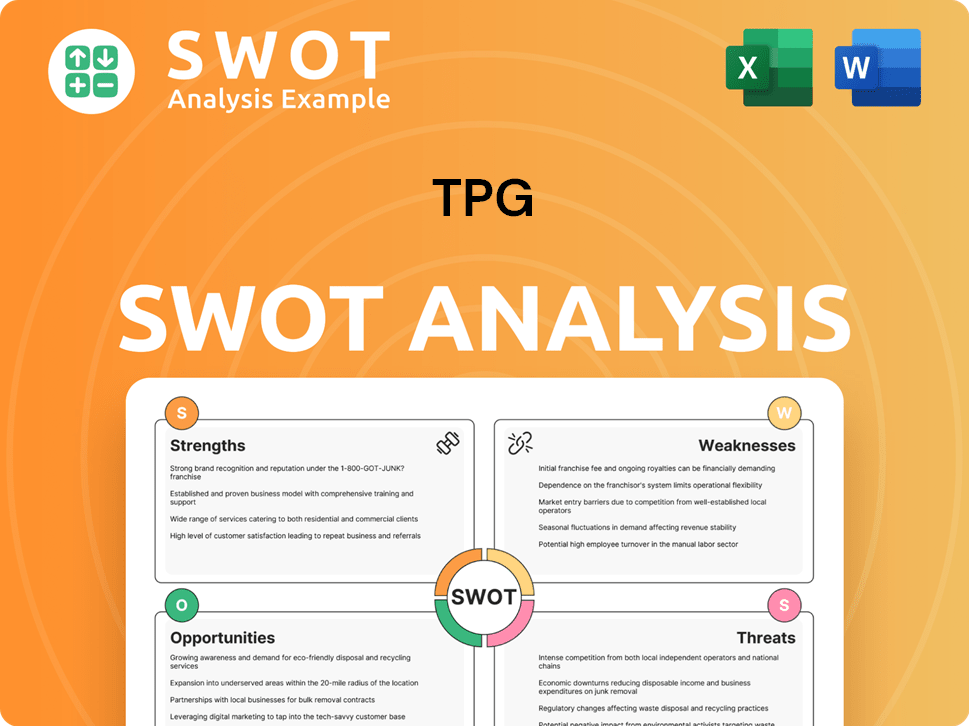
TPG SWOT Analysis
- Complete SWOT Breakdown
- Fully Customizable
- Editable in Excel & Word
- Professional Formatting
- Investor-Ready Format
What Marketing Tactics Does TPG Use?
The company, a major player in the telecommunications industry, employs a multifaceted approach to marketing, encompassing both digital and traditional channels. Their marketing strategy is designed to build brand awareness, generate leads, and drive sales across various brands. The company's focus on customer experience and data-driven decision-making shapes its marketing tactics, ensuring they remain competitive in a dynamic market.
In late 2024, the company strategically delayed some marketing efforts, anticipating the launch of its regional network sharing. Following the network expansion in January 2025, an aggressive marketing campaign was launched to boost mobile growth. This highlights a data-driven approach to campaign timing and a focus on capitalizing on an expanded customer base.
The company's marketing efforts are geared towards making it easy for customers, indicating a customer-centric approach. This is supported by investments in platforms that support data-driven marketing and personalization, which allows for more effective targeting and engagement. The company's recent brand refresh, including a new logo and a '100 years of free internet' campaign, showcases its evolving marketing mix.

Digital Marketing Strategies
Digital marketing is a key component of the company's approach. This includes content marketing, search engine optimization (SEO), paid advertising, email marketing, influencer partnerships, and social media engagement. These tactics are used to engage the target audience effectively.
Traditional Media Presence
While digital marketing is prominent, traditional media channels like TV, radio, and print likely continue to be used. These channels help maintain a broad market presence and reinforce brand recognition. This blend of old and new media helps the company reach a wider audience.
Brand Refresh and Promotions
The company's recent brand refresh in April 2025, including a new logo and promotional offers, demonstrates its commitment to staying relevant. These initiatives highlight the company's focus on value and reliability, adapting to consumer trends and competitive pressures. The '100 years of free internet' campaign is a prime example.
Data-Driven Approach
The strategic delay in marketing efforts and the subsequent aggressive campaign launch indicate a data-driven approach. This allows the company to optimize campaign timing and capitalize on market opportunities. This approach is crucial for effective customer acquisition strategy.
Customer-Centric Focus
The company's emphasis on business simplification and improving the customer digital experience suggests a customer-centric approach. This involves investing in platforms that support data-driven marketing and personalization. This focus is integral to the TPG marketing strategy.
Integrated Marketing Mix
The company's marketing strategy combines digital and traditional methods. This integrated approach allows for a broader reach and greater impact. This mix ensures that the company can engage with its target market effectively. Learn more about the company's Revenue Streams & Business Model of TPG.
Key Marketing Tactics
The company's marketing tactics focus on building awareness and driving sales. The strategic delay in marketing efforts in late 2024, followed by an aggressive campaign, highlights a data-driven approach. The company's customer-centric approach is evident in its marketing efforts.
- Digital Marketing: Content marketing, SEO, paid advertising, email marketing, influencer partnerships, and social media are used to engage the target audience.
- Traditional Media: TV, radio, and print advertising are likely still used to maintain a broad market presence.
- Brand Refresh: The recent brand refresh, including a new logo and promotions, demonstrates a commitment to adapting to consumer trends.
- Customer Focus: The emphasis on business simplification and improved customer experience suggests a customer-centric approach.
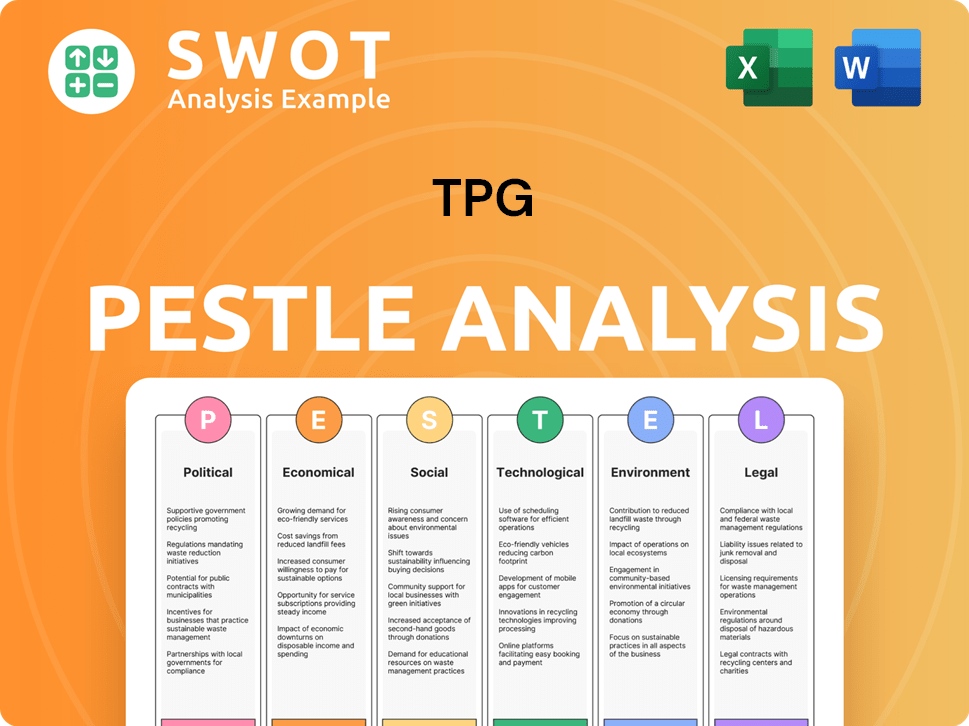
TPG PESTLE Analysis
- Covers All 6 PESTLE Categories
- No Research Needed – Save Hours of Work
- Built by Experts, Trusted by Consultants
- Instant Download, Ready to Use
- 100% Editable, Fully Customizable
How Is TPG Positioned in the Market?
In the competitive Australian telecommunications market, the brand positioning of TPG Telecom is a crucial element of its overall strategy. The company employs a multi-brand approach, with brands like Vodafone, TPG, iiNet, and felix each targeting specific market segments. This strategy allows TPG to broaden its reach and minimize the risk of cannibalization, ensuring each brand has a clear identity and purpose within the market.
A key aspect of TPG's brand positioning involves differentiating its offerings in a crowded marketplace. This is achieved through targeted messaging and brand identities tailored to specific customer needs. For example, felix is positioned as a carbon-neutral telco, appealing to environmentally conscious consumers, while Vodafone targets a broad audience with mobile and fixed broadband services. This approach helps TPG stand out and capture diverse customer segments.
The recent refresh of the TPG brand itself, launched in April 2025, is a prime example of the company's evolving brand strategy. This initiative redefined TPG's purpose to 'In Your Corner,' shifting the focus from transactional services to emphasizing value, reliability, and everyday support. This new identity, complete with a refreshed logo and a dynamic design system, aims to set TPG apart from competitors, particularly those relying on price-driven promotions. This strategic shift is a key component of TPG's overall Brief History of TPG.
TPG's Multi-Brand Strategy
TPG Telecom utilizes a multi-brand strategy to cater to diverse customer segments. This approach includes brands like Vodafone, TPG, iiNet, and felix, each with a distinct market position. This strategy helps TPG to maximize market reach and avoid direct competition between its brands.
Brand Refresh of TPG (April 2025)
In April 2025, TPG underwent a brand refresh, redefining its purpose as 'In Your Corner.' This shift emphasized value, reliability, and customer support. The refresh included a new logo and design system to enhance brand differentiation in the market.
Focus on Sustainability (felix)
felix, a brand under TPG, is positioned as Australia's first carbon-neutral telco. This appeals to environmentally conscious consumers. This focus on sustainability is a key element of TPG's brand strategy, reflecting evolving consumer preferences.
Consistency and Adaptation
TPG maintains brand consistency across all channels and touchpoints. The company uses R/GA's philosophy of building 'brands as operating systems,' which prioritizes adaptability. This approach allows TPG's brands to respond to changing customer needs and competitive pressures.
Key Elements of TPG's Brand Positioning
TPG's brand positioning strategy is multifaceted, encompassing several key elements. These elements work together to create a strong and differentiated presence in the market.
- Multi-Brand Approach: Utilizing multiple brands to target different customer segments.
- Targeted Messaging: Tailoring brand messages to specific customer needs and preferences.
- Sustainability Focus: Positioning brands like felix to appeal to environmentally conscious consumers.
- Brand Refresh: Updating brand identities to reflect changing market dynamics and customer expectations.
- Adaptability: Employing strategies that allow brands to adapt to evolving customer needs and competitive threats.
TPG Business Model Canvas
- Complete 9-Block Business Model Canvas
- Effortlessly Communicate Your Business Strategy
- Investor-Ready BMC Format
- 100% Editable and Customizable
- Clear and Structured Layout

What Are TPG’s Most Notable Campaigns?
The recent sales and marketing efforts of TPG Telecom, or TPG, showcase a dynamic approach aimed at both expanding its customer base and reinforcing its brand identity. Key campaigns launched in early 2025 and April 2025 highlight the company's strategic focus on mobile growth and brand evolution. These initiatives demonstrate TPG's commitment to adapting to market changes and leveraging new opportunities for growth. Understanding these campaigns provides insights into the TPG sales strategy and TPG marketing strategy.
One of the primary goals of TPG's recent campaigns is to capitalize on the expansion of its network coverage. Following the activation of the Multi-Operator Core Network (MOCN) agreement with Optus in January 2025, TPG significantly increased its mobile network reach. This expansion, covering 98.4% of the Australian population and over 1 million square kilometers, is central to its current marketing efforts. The focus is on attracting new mobile subscribers, particularly in regional areas where TPG aims to increase its market share. The TPG company strategy is clearly focused on network expansion and customer acquisition.
The brand refresh campaign, unveiled in April 2025, represents another crucial element of TPG's strategic initiatives. This campaign aimed to redefine the brand's identity, emphasizing value, reliability, and customer support under the new tagline 'In Your Corner.' The rebranding included a revamped logo and a promotional offer of '100 years of free internet.' This campaign is a key component of the TPG brand positioning strategy.
Network Expansion Campaign (Early 2025)
Following the MOCN agreement with Optus, TPG launched a campaign to leverage its expanded mobile network coverage, reaching 98.4% of the Australian population. The goal is to accelerate mobile growth by attracting new subscribers, especially in regional areas. The campaign likely uses digital advertising and traditional media to reach a broad audience. For more details, read about Target Market of TPG.
Brand Refresh Campaign (April 2025)
TPG unveiled a brand refresh in April 2025, aiming to redefine its brand identity and emphasize value and support. The campaign included a new logo and the tagline 'In Your Corner,' along with a promotional offer. This initiative aims to enhance brand perception and customer loyalty, contributing to subscriber growth. This is a key part of the TPG marketing campaign analysis.
MVNO Partnerships
TPG has utilized MVNO partnerships to drive subscriber growth. The contract with Lyca Mobile, for example, added 98,000 new subscribers to TPG's total mobile subscriber base in the first half of 2024. This strategy is part of the TPG customer acquisition strategy.
Direct-to-Cell Messaging Trials
TPG is exploring innovative services through collaborations, such as the partnership with Lynk Global for direct-to-cell messaging trials in 2025. This suggests a forward-looking approach to services and potential future campaigns. This is related to TPG's digital marketing approach.
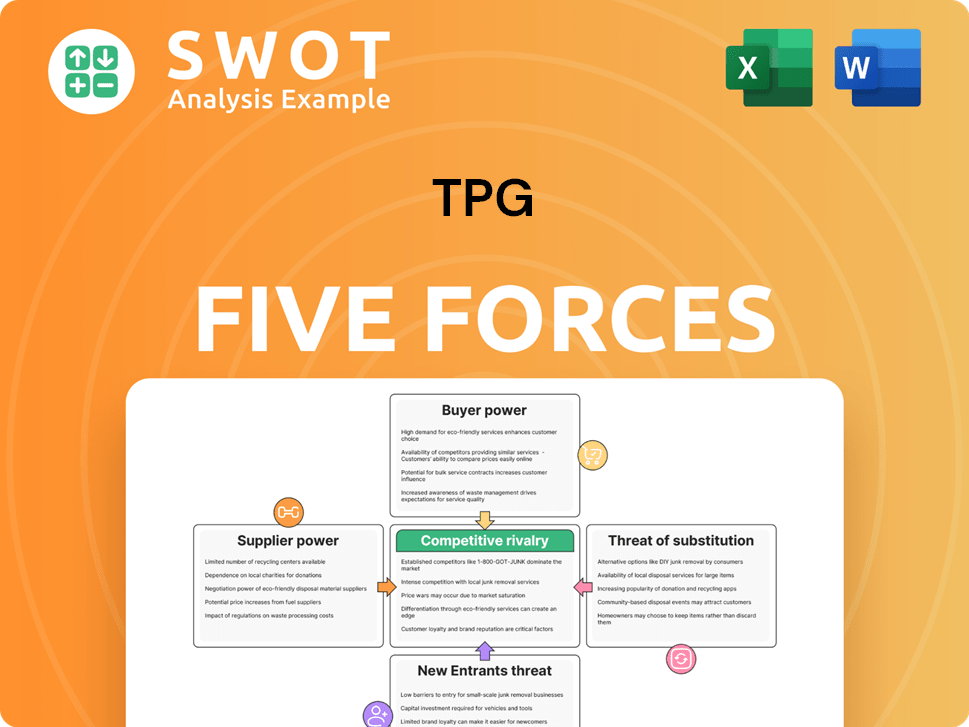
TPG Porter's Five Forces Analysis
- Covers All 5 Competitive Forces in Detail
- Structured for Consultants, Students, and Founders
- 100% Editable in Microsoft Word & Excel
- Instant Digital Download – Use Immediately
- Compatible with Mac & PC – Fully Unlocked
Related Blogs

- What are Mission Vision & Core Values of TPG Company?
- What is Competitive Landscape of TPG Company?
- What is Growth Strategy and Future Prospects of TPG Company?
- How Does TPG Company Work?
- What is Brief History of TPG Company?
- Who Owns TPG Company?
- What is Customer Demographics and Target Market of TPG Company?
Disclaimer
All information, articles, and product details provided on this website are for general informational and educational purposes only. We do not claim any ownership over, nor do we intend to infringe upon, any trademarks, copyrights, logos, brand names, or other intellectual property mentioned or depicted on this site. Such intellectual property remains the property of its respective owners, and any references here are made solely for identification or informational purposes, without implying any affiliation, endorsement, or partnership.
We make no representations or warranties, express or implied, regarding the accuracy, completeness, or suitability of any content or products presented. Nothing on this website should be construed as legal, tax, investment, financial, medical, or other professional advice. In addition, no part of this site—including articles or product references—constitutes a solicitation, recommendation, endorsement, advertisement, or offer to buy or sell any securities, franchises, or other financial instruments, particularly in jurisdictions where such activity would be unlawful.
All content is of a general nature and may not address the specific circumstances of any individual or entity. It is not a substitute for professional advice or services. Any actions you take based on the information provided here are strictly at your own risk. You accept full responsibility for any decisions or outcomes arising from your use of this website and agree to release us from any liability in connection with your use of, or reliance upon, the content or products found herein.