

The Kraft Group Bundle

How Does The Kraft Group Define Its Customers?
The Kraft Group's journey from a paper and packaging firm to a multi-billion dollar entity underscores the critical importance of understanding its The Kraft Group SWOT Analysis. From its 1965 inception, the company has strategically adapted to evolving customer demographics and target markets. Robert Kraft's vision, exemplified by the New England Patriots acquisition, highlights a keen understanding of consumer behavior and market dynamics.

This exploration into the Kraft Group's target market delves into its diverse consumer base, spanning sports fans, real estate clients, and B2B customers. We will analyze the company's strategic shifts, examining how it segments its market and caters to various demographics. Understanding the customer demographics and preferences of the Kraft Group, including aspects like age range, income levels, and geographic location, is key to appreciating its sustained success and future growth potential, especially in comparison to companies like Kraft Heinz.
Who Are The Kraft Group’s Main Customers?
The Kraft Group's customer base is diverse, spanning both business-to-consumer (B2C) and business-to-business (B2B) sectors. Understanding the customer demographics and target market is crucial for the company's strategic planning and growth. This analysis delves into the primary customer segments that drive The Kraft Group's varied business operations.
In the B2C arena, the company's sports and entertainment assets, particularly the New England Patriots and Gillette Stadium events, attract a broad spectrum of consumers. These customers vary in age, income, and occupation, united by their enthusiasm for sports and live entertainment. The B2B segments include businesses served by the paper and packaging divisions and those involved in real estate and private equity ventures.
The evolution of The Kraft Group's customer base reflects a strategic shift towards expanding its B2C presence, especially through its sports and entertainment ventures. This shift has significantly broadened the company's target market, adding millions of sports fans and event attendees to its consumer base. The acquisition of the New England Patriots in 1994 marked a pivotal moment, transforming the company's customer landscape and revenue streams.
 B2C Customer Demographics
The B2C segment primarily includes fans of the New England Patriots and attendees of events at Gillette Stadium. This group showcases a wide range of demographics, including various age groups, income levels, and occupations. The focus is on individuals with a passion for sports and live entertainment, which drives significant revenue for the company.
B2B Customer Demographics
The B2B segment encompasses businesses served by the paper and packaging divisions, such as Rand-Whitney Group and International Forest Products. These customers are primarily manufacturers and distributors requiring packaging solutions. Additionally, the real estate development arm and private equity ventures attract various businesses as tenants and partners.
Market Segmentation
The Kraft Group segments its market based on business type (B2C and B2B) and the specific services or products offered. For B2C, segmentation is driven by interest in sports and entertainment, while B2B segmentation is based on industry and business needs. This approach allows for targeted marketing and service delivery.
Revenue Streams
Key revenue streams include merchandise sales from the New England Patriots, event revenue from Gillette Stadium, and sales from paper and packaging divisions. Real estate and private equity ventures also contribute significantly to the company's financial performance. The diverse revenue streams underscore the importance of understanding the customer demographics across different business segments.

Key Insights into Customer Demographics
The Kraft Group's customer demographics are diverse, spanning from sports fans to businesses across various industries. The company's focus on sports and entertainment has significantly expanded its B2C customer base, while its B2B segments continue to serve a global clientele. Understanding these demographics is crucial for strategic planning and growth, as highlighted in a detailed analysis of the Marketing Strategy of The Kraft Group.
- The New England Patriots' merchandise sales reached $450 million in 2024, demonstrating the strong consumer base.
- Gillette Stadium generated approximately $200 million in revenue from events in 2024, attracting a broad demographic.
- The global paper and packaging market was valued at over $800 billion in 2024, showcasing the scale of the B2B segment.
- Patriot Place generated approximately $800 million in annual revenue in 2024, highlighting the success of the real estate arm.
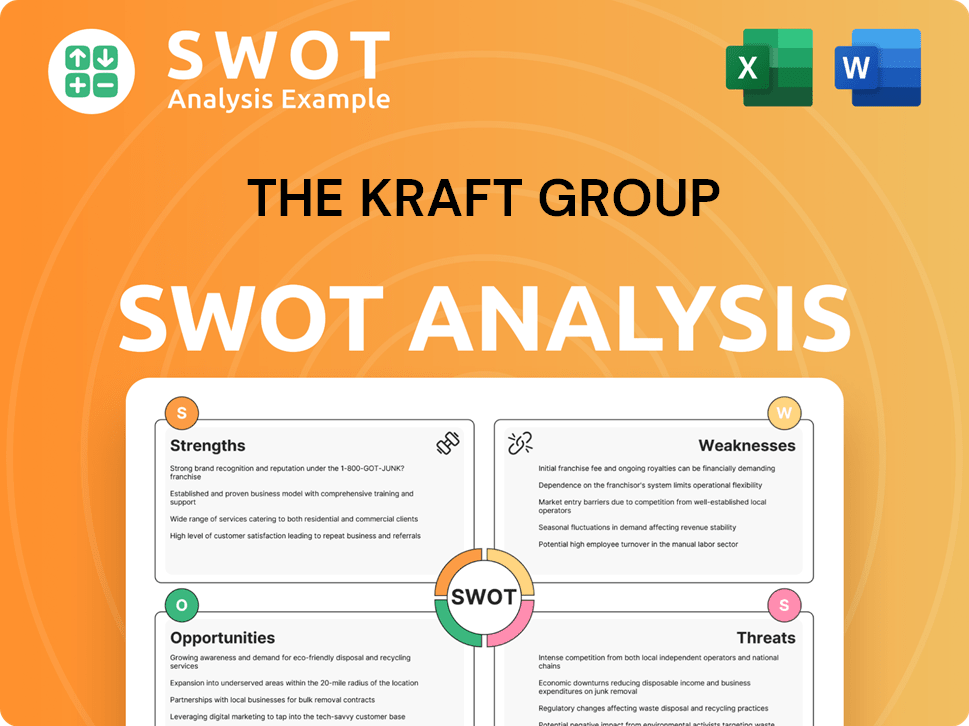
The Kraft Group SWOT Analysis
- Complete SWOT Breakdown
- Fully Customizable
- Editable in Excel & Word
- Professional Formatting
- Investor-Ready Format
What Do The Kraft Group’s Customers Want?
Understanding customer needs and preferences is crucial for the success of the diverse businesses under The Kraft Group. The company's approach involves tailoring its offerings to meet the varied demands of its customer base, from sports fans to B2B clients and real estate tenants. This customer-centric strategy is supported by continuous investment in enhancing customer experiences and adapting to market trends.
The primary drivers for customers vary significantly across different sectors. For instance, sports and entertainment consumers are often motivated by emotional connections and a desire for community. In contrast, B2B customers in the paper and packaging sector prioritize practical needs such as reliable supply chains and competitive pricing. This market segmentation allows The Kraft Group to create targeted strategies to cater to each group effectively.
The company leverages market analysis and feedback to refine its product development and customer engagement strategies. This ensures that its offerings remain relevant and appealing, whether it's enhancing the fan experience at Gillette Stadium or innovating packaging solutions. The ability to adapt and respond to evolving customer preferences is a key factor in the company's sustained success, as highlighted in Revenue Streams & Business Model of The Kraft Group.

Sports and Entertainment Consumers
These customers seek entertainment, a sense of community, and team loyalty. They desire engaging experiences at Gillette Stadium, access to merchandise, and a strong connection to the team's brand. The psychological drive includes shared experiences and excitement.
B2B Customers (Paper and Packaging)
The focus is on practical needs such as reliable supply chains, high-quality products, competitive pricing, and efficient distribution. These businesses require consistent and tailored packaging solutions. The global paper market was valued at approximately $400 billion in 2024.
Real Estate Tenants and Visitors
Needs include convenient retail and dining options, as well as engaging entertainment experiences. For example, Patriot Place saw over 15 million visitors in 2024. The developments blend commercial, retail, and entertainment spaces.
Key Strategies and Metrics
The Kraft Group focuses on understanding and meeting the diverse needs of its customers. This involves continuous investment in fan experience enhancements, diverse event programming, and tailored solutions for B2B clients.
- Customer Demographics: The company analyzes customer demographics to understand age range, gender distribution, geographic location, income levels, and family size.
- Market Segmentation: The company segments its market to address different customer needs effectively.
- Consumer Profile: Creating detailed consumer profiles helps in understanding the psychographics and lifestyle of the target market.
- Customer Behavior: The company studies consumer behavior to improve product preferences and tailor offerings.
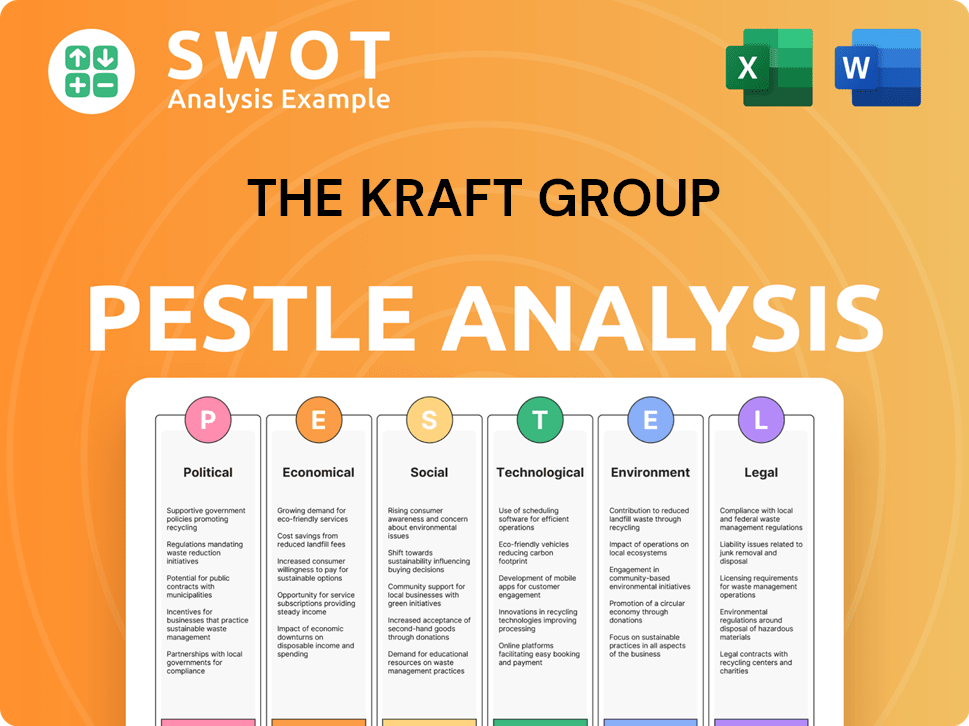
The Kraft Group PESTLE Analysis
- Covers All 6 PESTLE Categories
- No Research Needed – Save Hours of Work
- Built by Experts, Trusted by Consultants
- Instant Download, Ready to Use
- 100% Editable, Fully Customizable
Where does The Kraft Group operate?
The Kraft Group's geographical market presence is primarily concentrated in the United States, particularly within the New England region. Their headquarters in Foxborough, Massachusetts, serves as the operational base for major ventures like the New England Patriots and Gillette Stadium. This area represents a strong market share and brand recognition, especially in sports and entertainment. Understanding the customer demographics and target market within this region is crucial for strategic planning.
Beyond New England, the company's paper and packaging segment, through International Forest Products, extends its reach globally, operating in over 90 countries. This international presence highlights the need for localized approaches to cater to diverse customer demographics and preferences. The company's real estate ventures, such as Patriot Place, are strategically located around core assets, drawing visitors and businesses regionally.
The Kraft Group's strategic vision includes exploring acquisitions or investments in additional sports teams or entertainment ventures globally, showing a potential for future expansion. The global sports market was valued at $482.6 billion in 2024, indicating significant opportunities. The company’s approach to market segmentation and consumer profile is key to its continued success.
New England Focus
The New England Patriots, a key asset, were valued at $7 billion in 2024. Their revenue in 2023 was around $700 million, largely driven by the regional fanbase. Gillette Stadium, another significant asset, generated approximately $250 million in revenue in 2024. This strong regional presence is a key factor in defining the Owners & Shareholders of The Kraft Group.
Global Reach of International Forest Products
International Forest Products operates in over 90 countries, highlighting a diverse customer base. In 2024, the company increased its customer proximity in Poland and the Baltic States. This included a collaboration with PGS (Polska Grupa Serwisowa) to provide local support and test new packaging solutions, demonstrating a commitment to adapting to various regional market needs.
Real Estate and Private Equity
Real estate ventures like Patriot Place are regionally focused. The company's private equity investments diversify its geographical footprint across various sectors and locations. The company's strategy includes exploring acquisitions or investments in additional sports teams or entertainment ventures globally.
Market Expansion Strategies
The company focuses on acquisitions and investments to expand its global presence. The global sports market, valued at $482.6 billion in 2024, presents significant opportunities for growth. These strategies are vital for understanding the Kraft Group's target market analysis and future success.
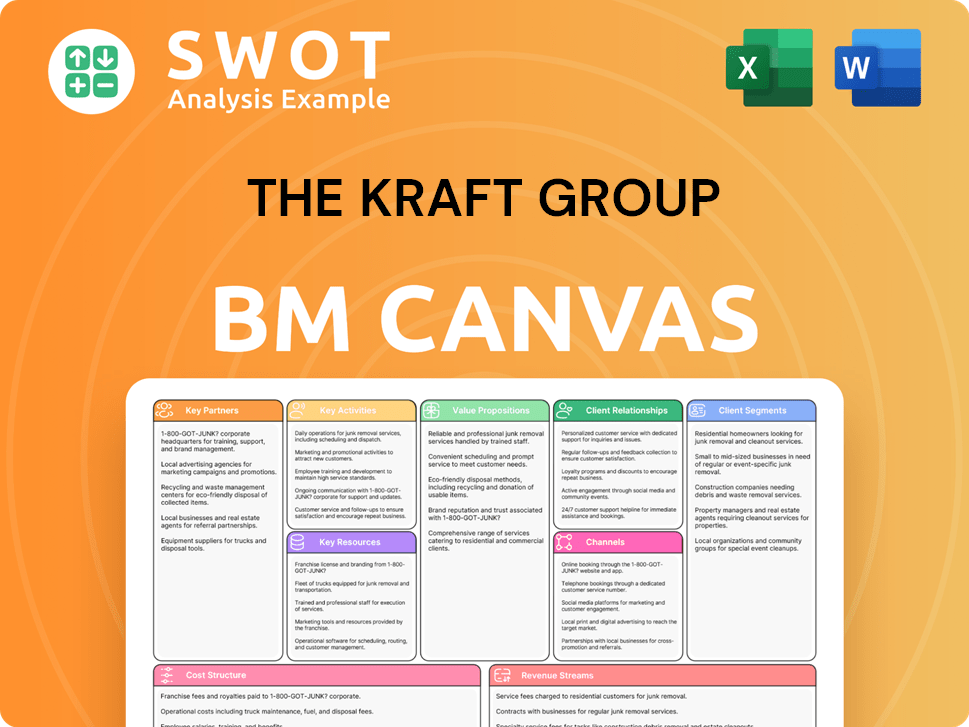
The Kraft Group Business Model Canvas
- Complete 9-Block Business Model Canvas
- Effortlessly Communicate Your Business Strategy
- Investor-Ready BMC Format
- 100% Editable and Customizable
- Clear and Structured Layout
How Does The Kraft Group Win & Keep Customers?
The Kraft Group employs distinct strategies for customer acquisition and retention, tailored to its diverse business sectors. For its sports and entertainment ventures, the focus is on attracting and engaging fans through digital and social media channels. This approach is crucial for building brand visibility and fostering fan loyalty. Merchandise sales, event promotions, and enhancing the fan experience all play vital roles in these efforts.
Customer data and analytics are central to the company's strategies. Through the Kraft Analytics Group (KAGR), the company leverages advanced analytics to understand and retain customers. This data-driven approach is critical for making informed decisions and improving fan engagement. Partnerships and technological investments at venues like Gillette Stadium further enhance the fan experience, contributing to customer retention.
For its B2B segments, such as paper and packaging and private equity, customer acquisition relies on business-to-business (B2B) marketing strategies. This includes participation in industry events, direct sales, and cultivating long-term relationships. Retention in these areas is built on consistent service, reliability, and meeting the specific needs of business clients, as well as strategic investments and partnerships.
Digital Marketing Strategies
The use of digital and social media platforms, such as Facebook, Instagram, and X (formerly Twitter), is a key component in attracting and engaging fans. Digital ad spending in the U.S. reached $238.5 billion in 2024, highlighting the significance of these online channels.
Merchandise and Event Revenue
Merchandise sales and event promotion are key indicators of successful fan acquisition and loyalty. Merchandise sales for the Patriots reached $450 million in 2024. Event revenue from Gillette Stadium contributed approximately $200 million in 2024.
Data-Driven Strategies
Kraft Analytics Group (KAGR) provides advanced analytics and strategic consulting in the sports and entertainment industry. KAGR's partnerships, such as with the NCAA in 2024 to build one of the largest college sports fan databases, demonstrate the company's commitment to data-driven strategies for understanding and retaining customers.
Fan Experience Enhancement
Enhancing the fan experience is a priority, with technological investments at venues like Gillette Stadium. A five-year strategic partnership leveraging AI aims to improve efficiency and guest experience. The multi-year sponsorship with Sports Illustrated Tickets further emphasizes the focus on exclusive fan experiences and retention.
B2B Marketing
For B2B segments, customer acquisition involves industry events and direct sales. Cultivating strong, long-term relationships with other businesses and investors is a key strategy.
Private Equity Market
The private equity market saw robust opportunities in 2024, with approximately $758 billion in deals. This underscores the importance of relationship-driven promotion in this sector.
Customer Retention in B2B
Retention in B2B areas is built on consistent service, reliability, and meeting the specific needs of business clients. Strategic investments and partnerships also contribute to customer retention.
Sustainability and Philanthropy
The Kraft Group's commitment to sustainability and philanthropy also contributes to its brand image. This can indirectly aid in customer retention by aligning with corporate social responsibility values.
Focus on Customer Demographics
Understanding the customer demographics is crucial for effective marketing. The target market is segmented based on various factors, including age, income, and lifestyle. This allows for tailored strategies.
Market Segmentation
Market segmentation allows the company to tailor its marketing efforts effectively. Analyzing the consumer profile helps in creating targeted campaigns. This also impacts the Kraft Group's market share.
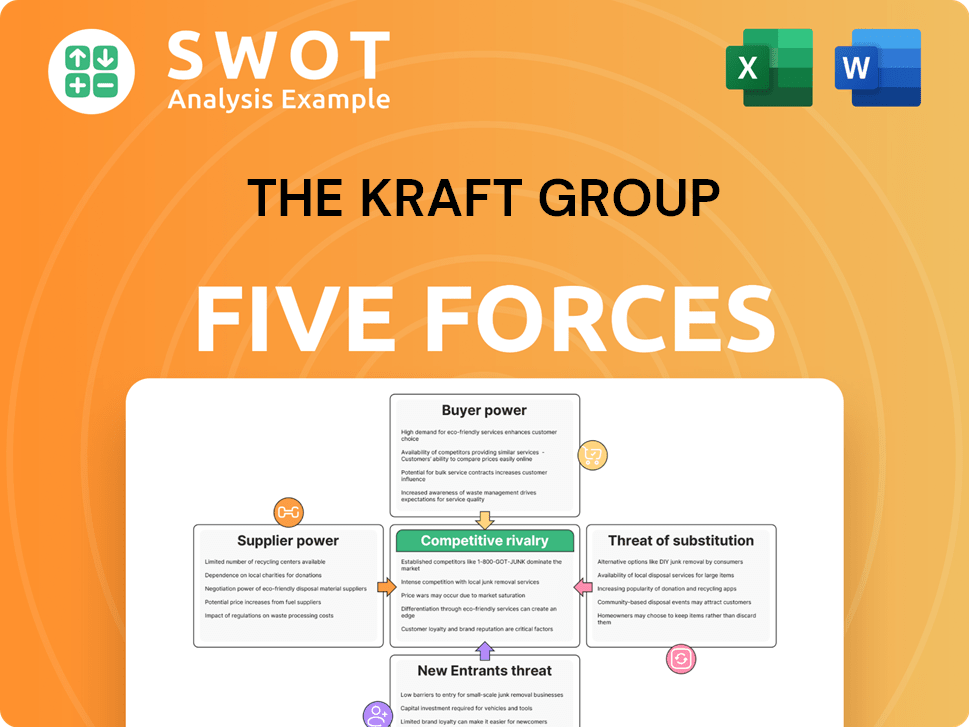
The Kraft Group Porter's Five Forces Analysis
- Covers All 5 Competitive Forces in Detail
- Structured for Consultants, Students, and Founders
- 100% Editable in Microsoft Word & Excel
- Instant Digital Download – Use Immediately
- Compatible with Mac & PC – Fully Unlocked
Related Blogs

- What are Mission Vision & Core Values of The Kraft Group Company?
- What is Competitive Landscape of The Kraft Group Company?
- What is Growth Strategy and Future Prospects of The Kraft Group Company?
- How Does The Kraft Group Company Work?
- What is Sales and Marketing Strategy of The Kraft Group Company?
- What is Brief History of The Kraft Group Company?
- Who Owns The Kraft Group Company?
Disclaimer
All information, articles, and product details provided on this website are for general informational and educational purposes only. We do not claim any ownership over, nor do we intend to infringe upon, any trademarks, copyrights, logos, brand names, or other intellectual property mentioned or depicted on this site. Such intellectual property remains the property of its respective owners, and any references here are made solely for identification or informational purposes, without implying any affiliation, endorsement, or partnership.
We make no representations or warranties, express or implied, regarding the accuracy, completeness, or suitability of any content or products presented. Nothing on this website should be construed as legal, tax, investment, financial, medical, or other professional advice. In addition, no part of this site—including articles or product references—constitutes a solicitation, recommendation, endorsement, advertisement, or offer to buy or sell any securities, franchises, or other financial instruments, particularly in jurisdictions where such activity would be unlawful.
All content is of a general nature and may not address the specific circumstances of any individual or entity. It is not a substitute for professional advice or services. Any actions you take based on the information provided here are strictly at your own risk. You accept full responsibility for any decisions or outcomes arising from your use of this website and agree to release us from any liability in connection with your use of, or reliance upon, the content or products found herein.